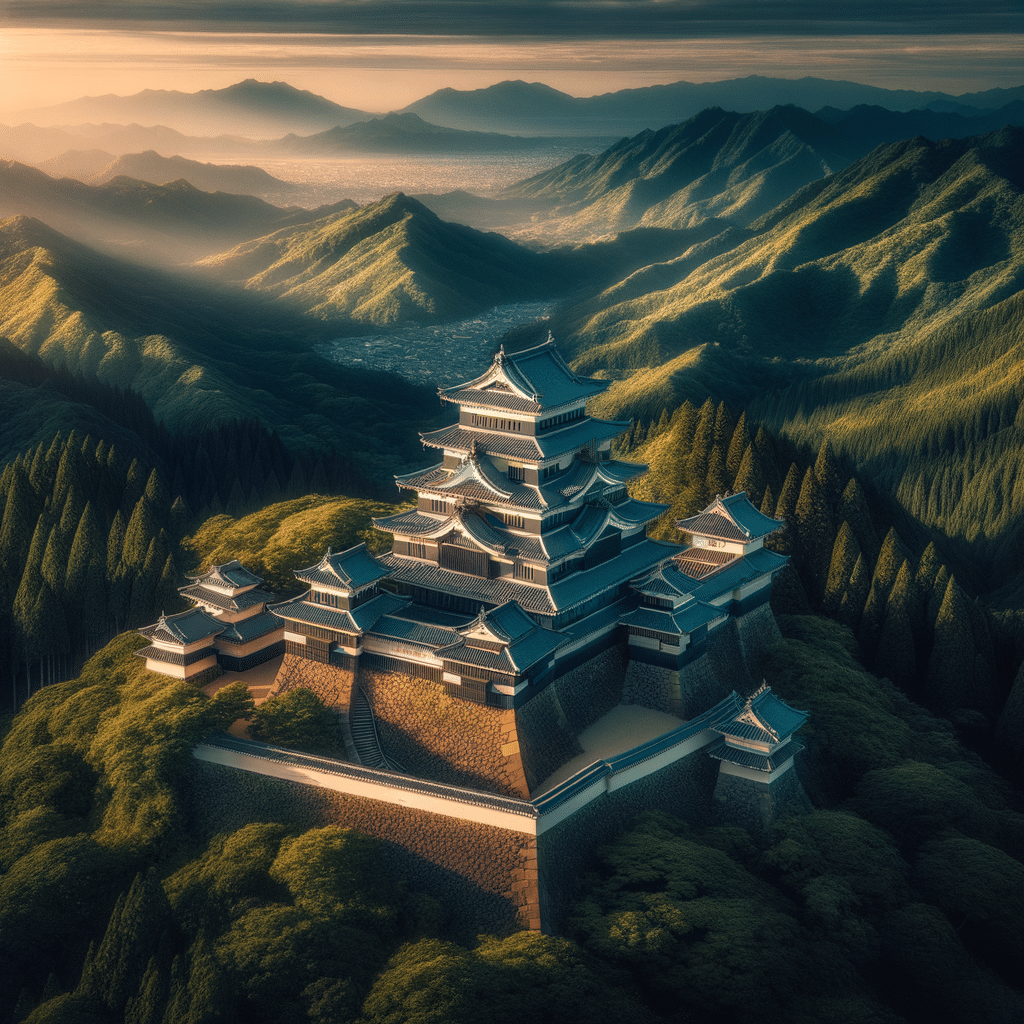
Though many ancient buildings have stood as quiet witnesses to Japan’s long history, few have earned such a name for paranormal activity as Hachiōji Castle. Tucked away in the western part of Tokyo Prefecture, this ancient castle has become famous not just for its historical value but also for the reported strange events inside its deteriorating walls over generations. Raising questions about the thin veil between our world and whatever may lie beyond, the paranormal heritage of Hachiōji Castle fascinates historians, paranormal investigators, and inquisitive tourists alike, from ghostly samurai soldiers to enigmatic lights and unexplainable sounds.

Description
The Hōjō clan originally built Hachiōji Castle in the late 16th century atop Mount Fukasawa at about 445 meters height during Japan’s turbulent Sengoku era. Ujiteru Hōjō particularly guided the mountain stronghold because he recognized the site’s strategic value in protecting the western approaches to Edo (modern-day Tokyo). The castle’s design included a remarkable network of stone walls, several baileys laid out in a step-like pattern up the mountainside, and several defensive buildings that used the natural topography to the maximum. Though now mostly in ruins, the remaining stone foundations and walls highlight the remarkable engineering skills of medieval Japanese castle builders who built the fortress without modern equipment, using the mountain’s natural defenses to produce an imposing military installation (Lim & Lim, 2021).
The story of Hachiōji Castle is as dramatic as the ghostly stories that would eventually surface from its grounds. Toyotomi Hideyoshi’s troops attacked the castle during his drive to unify Japan in 1590, causing the citadel to meet its tragic end. Following a tough fight, the defending garrison accepted their certain loss and chose a sad mass suicide of the castle’s inhabitants and defenders—including women and children—rather than capitulating to Hideyoshi’s troops. Historical sources show that hundreds of individuals died that day, with many opting to plunge themselves from the castle heights or perform ritual suicide. The castle was eventually left alone and fell into disrepair, never to be repaired or reoccupied as a military post. This terrible conclusion to the castle’s somewhat brief operational career has greatly helped shape the supernatural reputation that would follow in the centuries after its demise (Turnbull, 2012).
Haunted Castle
Almost immediately following its cataclysmic collapse, reports of paranormal activity at Hachiōji Castle started and have continued until current times with extraordinary consistency. Particularly on misty evenings or during the Obon season, when spirits are thought to return to the earthly realm, local farmers and Edo period villagers often reported hearing disembodied screams, war cries, and the sounds of clashing swords coming from the abandoned ruins. More particularly, recorded stories from the Meiji era (1868-1912) detail run-ins with ghostly samurai fighters patrolling the castle grounds as if still on duty centuries after their deaths, some appearing headless or with horrific combat injuries. Modern-day visitors have claimed unexpected cold spots even in the summer, strange technological device failures, and the feeling of being watched or followed while touring the remains (Thurgill, 2024).
Among the most often mentioned events at Hachiōji Castle is the emergence of strange lights challenging traditional wisdom. Witnesses say they saw blue-white spheres of light hovering above the castle ruins, especially close to the spots where the main keep formerly stood and where many defenders are thought to have killed themselves. These lights, which some say move with apparent intelligence, sometimes react to verbal commands or inquiries from viewers and sometimes create patterns resembling military formations or processions. While some claim their cameras inexplicably fail or batteries deplete totally when trying to capture particular sections of the castle grounds, others have recorded unusual light anomalies in photographs that were not visible to the naked eye at the time of shooting (Ross, 2020).
These supposed hauntings’ psychological effects have been so strong that they have influenced local development and visitor numbers. Allegedly, several efforts to improve the region surrounding the castle ruins for leisure activities have been abandoned owing to workers undergoing disturbing events, including tool loss, strange accidents, and even allegations of possession-like experiences in which workers would suddenly speak in ancient Japanese dialects before collapsing. Tour guides report that certain sensitive guests become extremely emotional or physically sick in specific areas of the castle, particularly in the former residential quarters and on the cliff sides where many defenders leapt to their deaths. Citing personal encounters with the supernatural that have led them to believe the castle grounds become really hazardous after dark, some guides decline to lead tours after sunset.

Analysis
Skeptics have provided several non-supernatural justifications for the alleged events at Hachiōji Castle. Geologists suggest that the composition of the mountain may create naturally occurring magnetic fields from certain mineral deposits, which could disrupt electronic devices and potentially affect human perception. Environmental scientists have suggested that the peculiar geography produces strange acoustic effects, whereby the stone ruins catch and distort noises from adjacent modern regions, generating the appearance of disembodied voices or combat sounds. Psychological theories highlight how powerful suggestions can influence people and how humans tend to see familiar patterns or images in unclear things, especially when they are at a place with a sad history and expectations of ghosts.
Cultural anthropologists provide another viewpoint, saying that for Japanese society, the ongoing paranormal reputation of Hachiōji Castle fulfills significant social and psychological purposes. Functioning as an informal memorial, the haunting stories commemorate the sacrifice of those who perished there and assist in preserving the memory of historical disasters. The idea of “goryō” in Japanese spiritual tradition—vengeful spirits of persons who died with intense negative emotions or under terrible circumstances—offers a cultural framework for comprehending these events. Some academics contend that believing in the castle’s hauntings reflects a collective cultural processing of historical trauma; the claimed events act as metaphorical reminders of past brutality and the need to remember those who suffered (Finch, 2016).
Interestingly, popular media and folklore have helped to strengthen Hachiōji Castle’s spooky reputation. The place has appeared in several Japanese television shows about haunted sites, paranormal investigations, and horror movies that exaggerate the alleged events. With social media magnifying personal stories of unusual events, urban legends about the castle keep evolving and spreading, especially among high school and university students in the Tokyo area. These cultural depictions create a feedback loop in which visitors come with preconceptions about what they could encounter, maybe priming them to read unclear signals as paranormal in nature and so strengthening the castle’s reputation as one of Japan’s most haunted sites.
Though not missing, scientific study of the claimed events has been scant. Using sophisticated tools, including electromagnetic field detectors, infrared cameras, and audio recording devices, several paranormal research organizations have performed nighttime investigations. Although, scientifically speaking, these studies have had ambiguous outcomes, they have recorded many abnormalities that researchers deem deserving of more examination. While critics argue that these could be due to equipment problems or environmental factors instead of paranormal activity, there have been reports of temperature changes of up to 15 degrees Celsius in specific areas without clear reasons, strange electromagnetic readings that don’t align with known power sources, and audio recordings capturing voices and sounds that investigators did not hear when they were made.
Conclusion
The paranormal heritage of Hachiōji Castle is a captivating crossroads of history, culture, and the human relationship with the unknown, whether seen through the prism of supernatural belief, psychological phenomena, cultural memory, or scientific research. While the ruins remain a sad reminder of Japan’s terrible feudal history, they also provide a canvas on which many have projected their fears, beliefs, and efforts to grasp the line between life and death. Places like Hachiōji Castle retain their ability to disturb and fascinate in a modern world increasingly ruled by scientific explanation and technological certainty since they imply that maybe not everything can be neatly classified or explained away; that some echoes of the past could still resonate in ways we have yet to fully grasp.
References
Finch, T. (2016). Haunted Boundaries: Ghost Stories in Isolationist Japan. Florida Atlantic University.
Lim, T. W., & Lim, T. W. (2021). History of Hachioji. History and Regional Area Studies of Hachioji: Tokyo’s Western Frontier, 9-29.
Ross, C. (2020). Haunted Japan: Exploring the World of Japanese Yokai, Ghosts and the Paranormal. Tuttle Publishing.
Thurgill, J. (2024). Revenant narratives/literary hauntings: on the spectral geography of the Japanese metropolis.
Turnbull, S. (2012). Japanese Castles AD 250–1540. Bloomsbury Publishing.




Leave a Reply