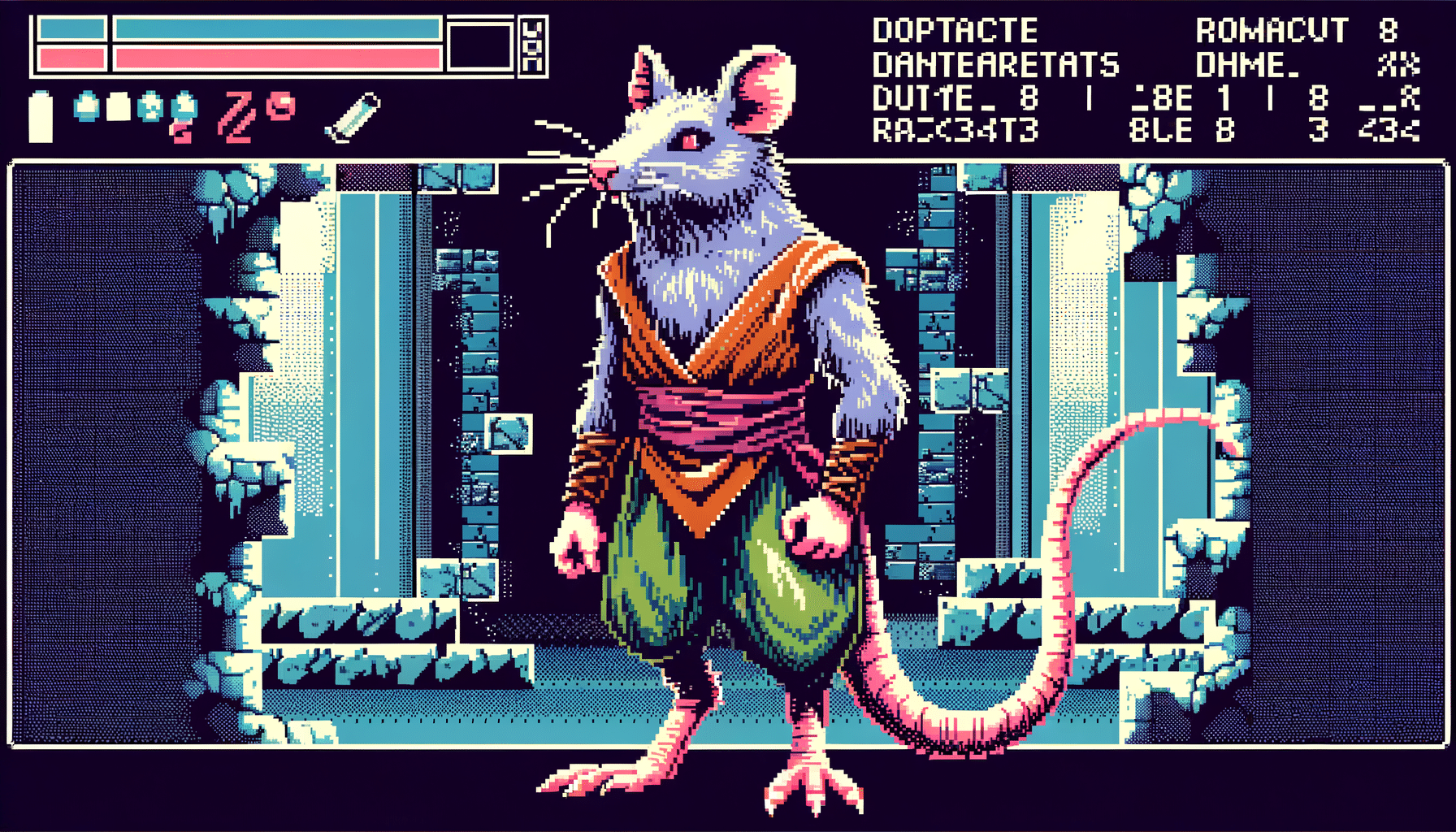
Among all lycanthropes, wererats are among the most misinterpreted and underappreciated ones; they are beings able to change between human and rat forms. Unlike their more well-known counterparts, the werewolves, wererats, rather than the wilds of mountains and woods, prefer to live under the shadow of cities. Living in sewers, abandoned buildings, and the forgotten underbellies of cities where they create sophisticated communities, they reflect a perfect adaptation of the lycanthropic curse to the conditions humans have created. Though their height is less intimidating than other werecreatures, their shrewd nature, pack mentality, and amazing adaptability make them fierceopponents.. Their impact often goes much beyond what their physical ability would imply.

Description
Wererats show up physically in three different forms: human, hybrid, and rat. Though careful viewers would notice rat-like behaviors such as twitching noses, darting eyes, or hunched postures, wererats frequently seem ordinary in their human form. Standing at human height but clothed in patchy fur, their hybrid form reflects the most terrible feature of their curse: enormous incisors, clawed hands, hairless tails, and the unique snouts and ears of their rodent cousins. Retaining a glimmer of human intelligence in their eyes, wererats—in their full rat form—become giant rodents, usually the size of small dogs, gaining the whole physical capabilities of rats, including improved smell, agility, and the capacity to squeeze through quite narrow areas (Stewart, 1993).
Emphasizing survival, opportunity, and community, the behavior of wererats fits quite nicely with their rodent counterparts. To reach their goals, they are remarkably patient and ready to spend hours or even days concealing. Wererats prefer ambush strategies, numerical advantage, or just running away to fight another day when conditions don’t favor them; they rarely direct confrontational behavior. Their pragmatic character also relates to resource acquisition; wererats carefully gather food, tools, and treasures in secret caches over their domain. Unlike werewolves, who might enjoy the excitement of the hunt or metamorphosis, wererats see their condition pragmatically as a weapon for survival and progress (Fusco, 2015).

Wererats in the World
Wererat society is a sophisticated hierarchy inspired by rat pack systems but improved by human knowledge and aspiration. Often referred to as the Rat King or Queen, a powerful alpha leads every colony and keeps control by shrewd rather than forceful means. These societies allow great personal freedom in daily life but yet enforce rigid standards of loyalty with harsh repercussions for betrayal. Wererats assemble in complex networks of tunnels, chambers, and secret passageways where they trade items, share knowledge, and deepen ties to their group. Some wererats lead parallel lives as esteemed traders, information brokers, or criminals; their societies sometimes grow complex links with the human world above.
Unlike other werecreatures, wererats stand out in both their attitude to lycanthropy and their part in supernatural ecosystems. Wererats reflect adaptation and opportunism while werewolves embrace wildness and primordial strength and werebears can represent territorial protection and sheer force. They compensate with better numbers, knowledge, and organizing skills even though they lack the physical might of bigger lycanthropes. Wererats purposefully and methodically distribute their condition, seeing the change as recruitment rather than a curse to be caused in times of fury. Unlike many other wererats, who choose solitude or small packs, wererats create large networks, occasionally establishing commerce and communication between colonies spread over many cities.
Unlike other lycanthropes, the interaction between wererats and humans shows diverse patterns. Wererats live alongside human civilization, studying, invading, and using it for their advantage rather than chasing people as prey or avoiding them totally. Using their capacity to access regions humans cannot, they create sophisticated spy networks, extortion schemes, and smuggling activities. Many wererats keep human identities throughout the day, working regular occupations while accumulating supplies and knowledge for their colonies. Through this symbiotic yet parasitic link with human society, wererats can flourish in habitats where other werecreatures would find survival difficult.
Though several contradicting stories explain their existence, the beginnings of wererats are still unknown. Some stories say they started when a strong witch or wizard cursed thieves who stole from them, while others say they emerged from cities afflicted by plague where the line separating people from the disease-carrying rats became blurry. While occult books describe intentional magical rites carried out by persons seeking the survival capabilities of the rat, urban tales speak of sewer workers who spent so much time near rats that they progressively took on their qualities. Whatever their actual source, wererats have shown amazing endurance across history, adjusting to fit different towns and civilizations but preserving their fundamental character.
Impact
Though they are less common in literature than their lupine counterparts, wererats nevertheless regularly act as potent allegories for urban ruin, corruption, and the threats hiding beneath civilized society. Early references abound in folklore from many nations, especially in tales cautioning of shapeshifters who acquired rat forms to steal or perform other crimes under cover of darkness. Sometimes mentioned in medieval European stories as rat-people living under cities, these stories help to explain unexplained deaths and disease distribution. Early 20th-century weird fiction started to feature more sophisticated literary interpretations, with writers like H.P. Lovecraft hinting at ratlike cultists in stories like The Rats in the Walls without clearly calling them wererats (Wise, 2021). Wererats are often used in modern urban fantasy books as either hesitant friends that give knowledge and access to secret areas of cities other characters cannot enter or as adversaries who rule the criminal underworld.
Though they frequently get less attention than werewolves or vampires, popular culture has embraced wererats across many media. Sometimes films have wererats in secondary parts, usually as members of criminal groups or servants to stronger supernatural beings. Sometimes television shows portraying urban fantasy environments feature wererats as part of their supernatural ecosystem, especially in series delving into the politics and intricate social structures of legendary creatures living alongside humans. With so many games including wererats as foes in sewers, dungeons, and urban settings, video games have maybe given the most realistic representations of wererats. Though their individual weakness relative to other monster types, these digital depictions often highlight their pack tactics, hit-and-run strategies, and ability to swarm opponents, therefore testing their enemies (Hancock, 2016).
With tabletop RPGs offering the most complete depiction of these animals, role-playing games have greatly developed and popularized the wererat notion. Early editions of the classic fantasy role-playing game Dungeons & Dragons included rats, so establishing many of the canonical features now connected with them, including their inclination for urban environments, their organization into thieves’ guilds, and their spread of lycanthropy as a recruitment tool. In such games, wererats typically provide ideal low-to-mid-level foes for urban adventures, testing players with their slyness rather than brute force. With whole campaigns occasionally centered on identifying and destroying wererat networks that have invaded city governments or merchant guilds, game masters regularly use wererats to construct sophisticated urban situations involving espionage, thievery, or political manipulation (Rogers, 2020).
Beyond their hostile roles, the way wererats are portrayed in role-playing environments allows many games to let players embrace either allies or wererats. Usually stressing stealth, knowledge gathering, and social manipulation, these playable wererats appeal to players who would rather be crafty than straightforward in conflict. For weasel rat societies, game systems have evolved sophisticated rules, including hierarchical structures, initiation ceremonies, and the complicated codes of behavior controlling their interactions. Sometimes live-action role-playing games include wererat characters who excel at gathering information and navigating between several social circles, acting as connectors between several factions in the game world and pushing narrative forward through their networks of contacts and secret knowledge.
In narrative and game, wererats’ psychological appeal stems from their portrayal of urban dread and the terror of what lurks invisible in the spaces humans have created. While wererats signify society’s inherent corruption and decay—the natural result of squeezing too many people into a small area— werewolves reflect the wild breaking into civilization. They are ideal models for the invisible forces influencing urban life: criminal groups, governmental corruption, and social disparities festering under the surface of apparently ordered cities. Their ability to live between human and rat forms captures the dual character of metropolitan life itself: the outward, respectable face given to the world, and the covert, occasionally desperate actions necessary to survive in competitive surroundings.
Conclusion
Finally, wererats are the ideal marriage between human cunning and rodent adaptability, producing species especially fit for life in the shadow of civilization. Their morphological changes, behavior patterns, and social systems all mirror a pragmatic survival strategy that has let them create enduring colonies under the very boots of people who would eradicate them. From old mythology to contemporary role-playing games, wererats have emerged as multifarious representations of urban life’s hidden depths, acting as opponent, friend, and sometimes hero in stories probing the dark side of human communities. Although they might lack the raw force and terrible reputation of werewolves or the honorable bearing of werebears, wererats make up for it by numbers, organization, and a readiness to seize every advantage. These flexible lycanthropes will surely keep running across our stories, observing from the shadows and creating their hidden empires under the streets and alleys of our fictional worlds as our collective imagination keeps exploring the boundaries between humanity and animality and between civilization and its discontents.
References
Fusco, V. (2015). Monstrous Figurations: Notes for a Feminist Reading (Doctoral dissertation). Universidad Carlos III de Madrid.
Hancock, M. (2016). Doppelgamers: Video Games and Gothic Choice. American Gothic Culture: An Edinburgh Companion, 166-184.
Rogers, N. L. (2020). “A World Where They Belonged”: Queer Women’s Use of a Dungeons & Dragons Game to Experiment with, Express, and Explore Identity (Master’s thesis, San Diego State University).
Stewart, D. (1993). Monstrous Manual. TSR, Inc.
Wise, D. W. (2021). Just like Henry James (Except with Cannibalism): The International Weird in HP Lovecraft’s ‘The Rats in the Walls’. Gothic Studies, 23(1), 96-110.



Leave a Reply