After-Death Communication: Six Key Points
-
ADCs manifest as sensing presences, hearing voices, feeling touches, smelling familiar scents, and seeing apparitions of deceased loved ones.
-
These experiences show remarkable consistency across diverse cultures and throughout history.
-
Explanations range from surviving consciousness theories to psychological processes like grief and pattern recognition.
-
Most experiencers report significant psychological benefits, including comfort, closure, and reduced fear of death.
-
Research documents consistent patterns across populations and sometimes measurable environmental anomalies during reported communications.
-
Society increasingly acknowledges these experiences through healthcare training and support resources.

Introduction
After-death communication (ADC) has captivated humanity throughout recorded history, transcending cultural boundaries and enduring throughout centuries despite scientific progress. These profound experiences, which are classified as spontaneous connections from loved ones who have died without the use of mediums or psychics, supply solace to millions of people throughout the world who say they can feel their loved ones who have passed away. ADCs can take many forms, from faint sensory impressions to clear apparitions. Each one is a deeply personal link between the living and the dead. Although inherently personal and subjective, these experiences exhibit notable commonalities across various populations, indicating patterns that warrant substantial examination beyond mere coincidence or imagination.
Communication After Death
The most common sort of contact after death is just feeling the presence of a loved one who has died. This experience usually provides people a strong sense that the person who died is close by, and it often makes them feel peaceful, comforted, and reassured during tough times. Another prevalent type of communication is auditory, where some say they can clearly hear their loved one’s voice giving them advice, comfort, or just maintaining their relationship through discussion. Many people say that these voices are recognizable and unique, with the same tone and speech patterns that the person had in life (Daggett, 2005).
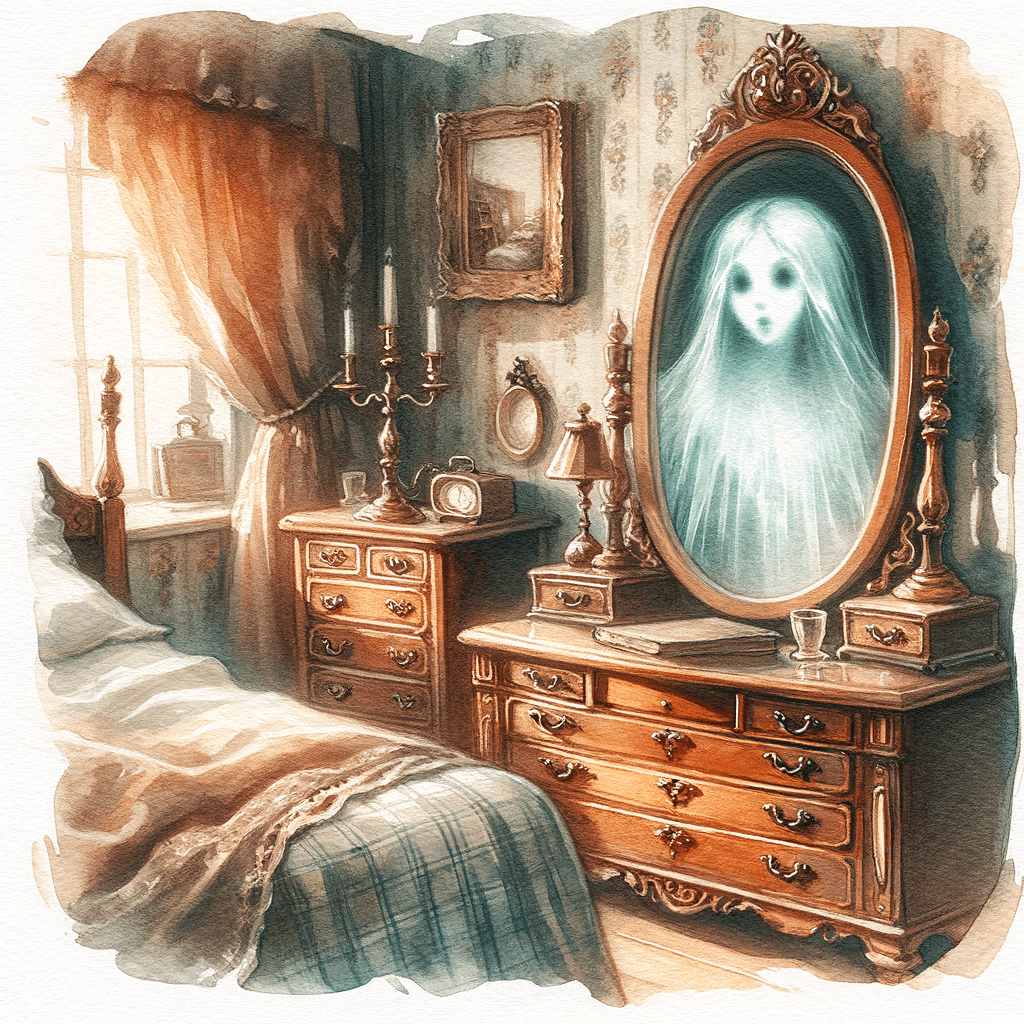
Physical sensations are another important group. Many people say they sense a touch on their shoulder, a caress on their face, or even an embrace that seems very real even if there is no visible person there. Olfactory experiences also forge profound associations when certain scents—such as a grandmother’s distinctive perfume, a father’s pipe smoke, or a spouse’s cologne—unexpectedly manifest in settings devoid of conventional explanations for their presence. Visual manifestations can be anything from quick glances in the corner of your eye to fully formed ghosts that can interact with the person seeing them. Sometimes they look like they did when they were at their best instead of how they looked when they were about to die.
Folklore about communication after death goes back thousands of years and across countries. Traditions all around the world recognize that it is possible to contact someone who has died. Ancient Egyptian writings describe complex ways to stay in touch with the dead, and Celtic traditions celebrate Samhain, which is like Halloween, when the barrier between realms becomes thin enough for communication. In Eastern traditions, honoring ancestors frequently means expecting the dead to come and guide them. Even in modern Western culture, the practice of leaving belongings undisturbed after death or adding additional seats at holiday dinners shows that people still believe in keeping ties with those who have died (Untiedt, 2008).

Analysis
Paranormal hypotheses that try to explain these events include the idea of consciousness that survives death and the idea that strong emotional ties create energetic connections that go beyond physical death. Some parapsychologists suggest that consciousness may survive independently of the brain, persisting beyond physical death and occasionally revealing itself to individuals with whom there were significant emotional connections. Some theories propose that moments of heightened emotion, significant dates, or locations with strong personal connections might temporarily weaken the barriers between dimensions, allowing for brief communication. Some studies suggest that certain individuals may exhibit increased sensitivity to subtle energies or enhanced perceptual capacities, rendering them more susceptible to these experiences.
Skeptical viewpoints provide alternative interpretations grounded in psychology and neuroscience. Researchers who study grief say that the brain’s ability to recognize patterns may work extra hard during times of loss to identify links to the person who died in everyday things. The potent amalgamation of emotional turmoil, sleep deprivation, and the inherent human inclination for sustained connection may engender circumstances conducive to hallucinations or misinterpretations. Confirmation bias makes people pay more attention to and remember events that support their hopes and ignore evidence that goes against them. Critics also highlight the close connection between the prevalence of after-death communication encounters and cultural beliefs and expectations about death (Schwartz, 2002).
The psychological ramifications of these events, irrespective of their ontological classification, are unquestionably profound for the individuals who undergo them. Mental health specialists are coming to understand that ADCs usually bring relief instead of anguish. They can help people cope with profound loss and give them a sense of closure. Many people who have had near-death experiences say they are less afraid of death, feel more connected to their spirituality, and are better able to move on with their lives while still keeping healthy ties to the deceased. The validation these experiences provide—that the relationship continues in some form—often proves therapeutic for individuals dealing with loss. Importantly, these advantageous benefits manifest irrespective of the individual’s interpretation of their experience through religious, spiritual, or psychological lenses (Krippner, 2006).
Research into after-death communication is ongoing and evolving, with modern studies utilizing advanced methodologies to examine these events. Cross-cultural surveys demonstrate significant uniformity in the experiences recorded among many groups, indicating universal patterns that surpass cultural conditioning. Laboratory investigations into environmental variables during reported ADCs have recorded atypical electromagnetic oscillations, temperature variations, and other quantifiable anomalies occurring simultaneously with experienced communications. Neuroscientific studies investigating brain states during these experiences indicate they are markedly distinct from typical imaginative processes or hallucinations; however, the interpretation of these distinctions is still debated within scientific circles (Devers & Robinson, 2002).
Modern society is becoming more open to the idea of communicating with people after they die. Mainstream medical institutions are now training healthcare workers to respond with compassion to patients who say they have had these experiences. There are now support groups all around the world just for people who have had ADCs. These organizations provide a safe space for individuals to open up about their experiences without fear of judgment. The internet has made it easier for people with similar experiences to connect. This has made these encounters more commonplace and less stigmatized. Even if scientific materialism is still the major way of thinking in schools, more and more people are interested in finding out more about the limits of consciousness and the possibility of life beyond death.
Conclusion
Experiences of communication after death challenge our basic ideas about consciousness, relationships, and even the nature of reality itself. These experiences warrant significant scrutiny, whether considered evidence for the persistence of consciousness, expressions of unresolved grief, or phenomena not yet elucidated by contemporary scientific frameworks, due to their frequency and influence. The regularity with which they manifest across cultures, historical epochs, and personal origins indicates they signify a phenomenon more intricate than just wishful thinking or cultural conditioning. As we continue to explore the mysteries of consciousness and human experience, after-death communications stand at the fascinating intersection of personal meaning, cultural belief, and scientific inquiry. They remind us that some of the most important experiences in life are still beyond our full understanding.
References
Daggett, L. M. (2005). Continued encounters: The experience of after-death communication. Journal of Holistic Nursing, 23(2), 191-207.
Devers, E., & Robinson, K. M. (2002). The making of a grounded theory: After death communication. Death Studies, 26(3), 241-253.
Krippner, S. (2006). Getting Through the Grief: After-Death Communication Experiences and Their Effects on Experients.
Schwartz, G. E. (2002). After-Death Communications: A Misleading Critique. Skeptical Inquirer, 26(5), 64-64.
Untiedt, K. L. (Ed.). (2008). Death Lore: Texas Rituals, Superstitions, and Legends of the Hereafter (No. 65). University of North Texas Press.



Leave a Reply