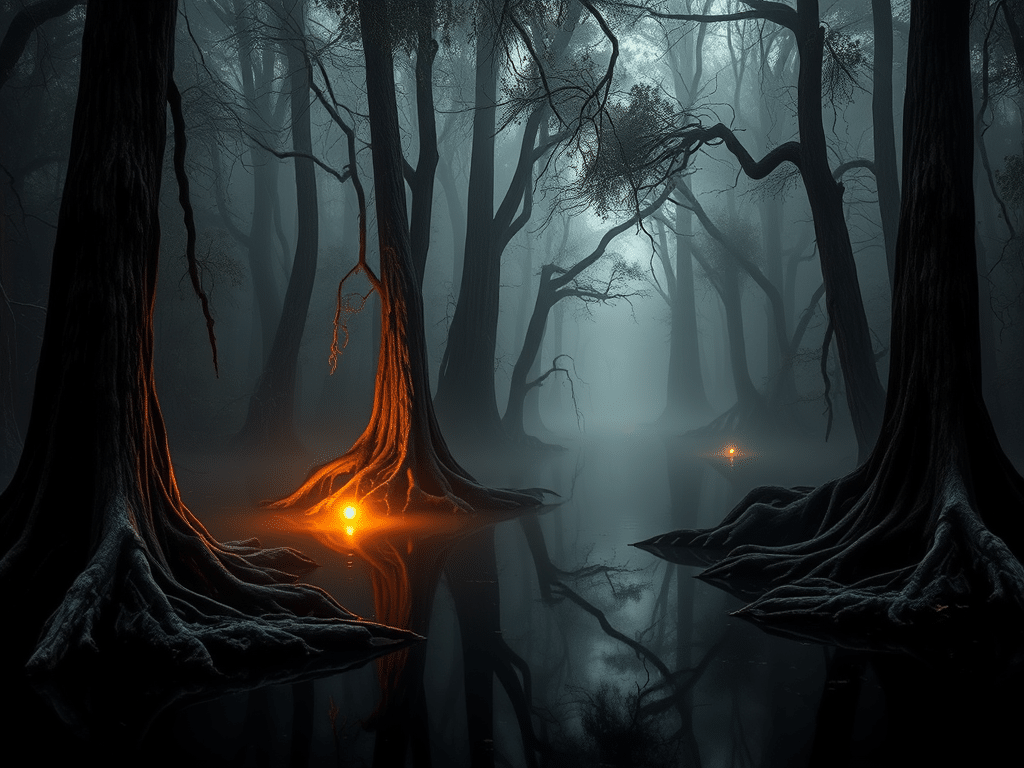
Haunted Great Dismal Swamp: Key Points
-
The Great Dismal Swamp is a 112,000-acre wetland on the North Carolina-Virginia border that transforms from beautiful by day to mysteriously frightening after dark.
-
The swamp’s dark past includes deaths of Native Americans, enslaved laborers, escaped slaves seeking freedom, and Civil War soldiers, which many believe fuels paranormal activity.
-
Common reports include mysterious floating lights, disembodied voices, colonial-era apparitions, and sightings of a foul-smelling, seven-foot-tall Bigfoot-like creature.
-
The famous “Lady of the Lake” legend tells of a deceased bride and her fiancé eternally searching for her, while other stories feature spirits of slaves and lost surveyors.
-
Believers attribute phenomena to spiritual energy from trauma, while skeptics cite natural causes like methane gas, bioluminescence, and distorted animal sounds.
-
The swamp’s haunted reputation attracts paranormal tourism, has inspired centuries of literature and art, and aids conservation efforts but raises safety concerns for unprepared visitors.

Introduction
The Great Dismal Swamp, on the NC-VA border, has long intrigued paranormal enthusiasts. This enormous wetland ecosystem, which covers more than 112,000 acres of thick forest, murky water, and tangled plants, looks like it was made to make people feel scared and mysterious. While day visitors may appreciate the swamp’s natural beauty and ecological significance, the swamp transforms into an entirely different place at night. It becomes the site of many reported encounters with the supernatural that have been going on for generations. The Great Dismal Swamp is one of the most haunted places in the American South because it is far away, has a creepy atmosphere, and has a lot of history.
Great Dismal Swamp
Tannic acid from dying plants stains the dark, tea-colored waters of the Great Dismal Swamp, a beautiful natural feature. Massive bald cypress trees grow out of the water. The trunks of these trees often span several feet, while their roots form twisted, gnarled shapes that pierce the surface like arthritic fingers. The inside of the swamp is still mostly off-limits because of thick underbrush, Atlantic white cedar trees, and floating peat bogs that can barely hold a person’s weight. Lake Drummond is a shallow natural lake in the middle of the swamp that serves as the area’s main attraction. Its still waters reflect the trees around it like a dark mirror. People often say that the swamp is oppressive because of the high humidity, low visibility through the thick canopy, and strange quietness that is only broken by bird calls and the occasional splash of an unseen animal.
Numerous species, including many birds, locate refuge in the Great Dismal Swamp. Environmental threats continue, particularly due to pollution from nearby industrial zones, as research has indicated elevated concentrations of hazardous substances, including polychlorinated biphenyls (PCBs) and heavy metals (Rattner & Ackerson, 2008). Rattner and Ackerson discussed the possible dangers these pollutants pose to bird life in important bird areas, which helped to show how the swamp’s ecosystem is weak (Rattner & Ackerson, 2008). Subsequent studies have recorded the substantial effects of historical fire events on the swamp’s ecology, affecting carbon sequestration and biodiversity within the ecosystem (Wozniak et al., 2023). Findings that estimate the Great Dismal Swamp’s contributions to the overall carbon balance show how important it is for climate regulation (Sleeter et al., 2017).
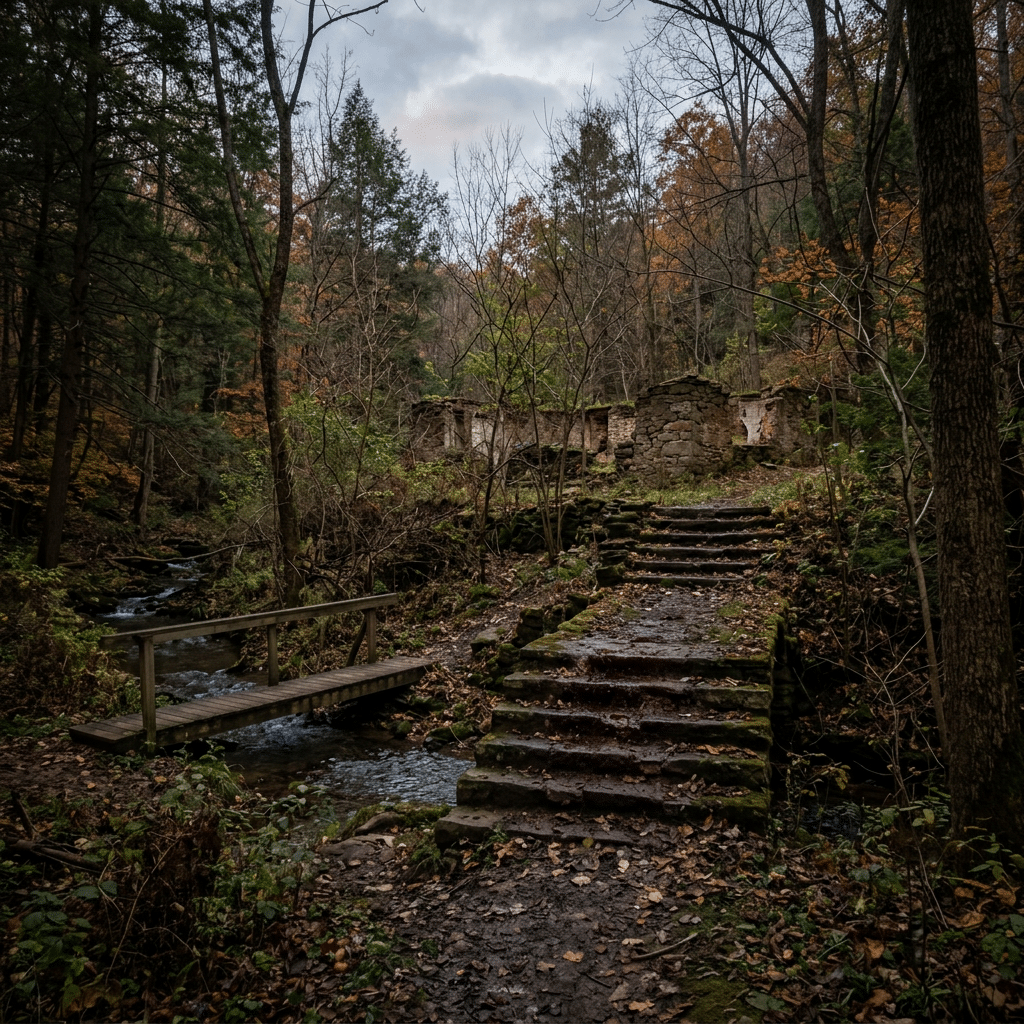
Many people think that the history of tragedy, exploitation, and human suffering in the Great Dismal Swamp is what makes it so paranormal. For thousands of years before Europeans arrived, Native American tribes used the swamp as a place to hunt and pray. Some were forced to go deep into the swamp to escape colonial expansion, and many died because the conditions were so terrible. George Washington and other rich landowners started the Dismal Swamp Land Company in 1763. They used enslaved people to dig the Dismal Swamp Canal and drain parts of the wetland so they could grow crops and cut down trees. Many people died from disease, accidents, and the harsh conditions. The swamp became a safe place for maroons, which are groups of escaped slaves who built hidden settlements in the swamp’s most remote areas. Malaria, snakes, and starvation took their toll on these refugees, who lived in constant fear of capture (Sayers, 2008). During the Civil War, the swamp was a favorable place to hide and plan attacks. Soldiers from both sides died in the swamp when they got lost or were ambushed in the maze-like wilderness. Many people think that the swamp absorbed the psychic energy of these tragedies over the course of hundreds of years, which created the conditions for paranormal events that still happen today.

Paranormal Swamp
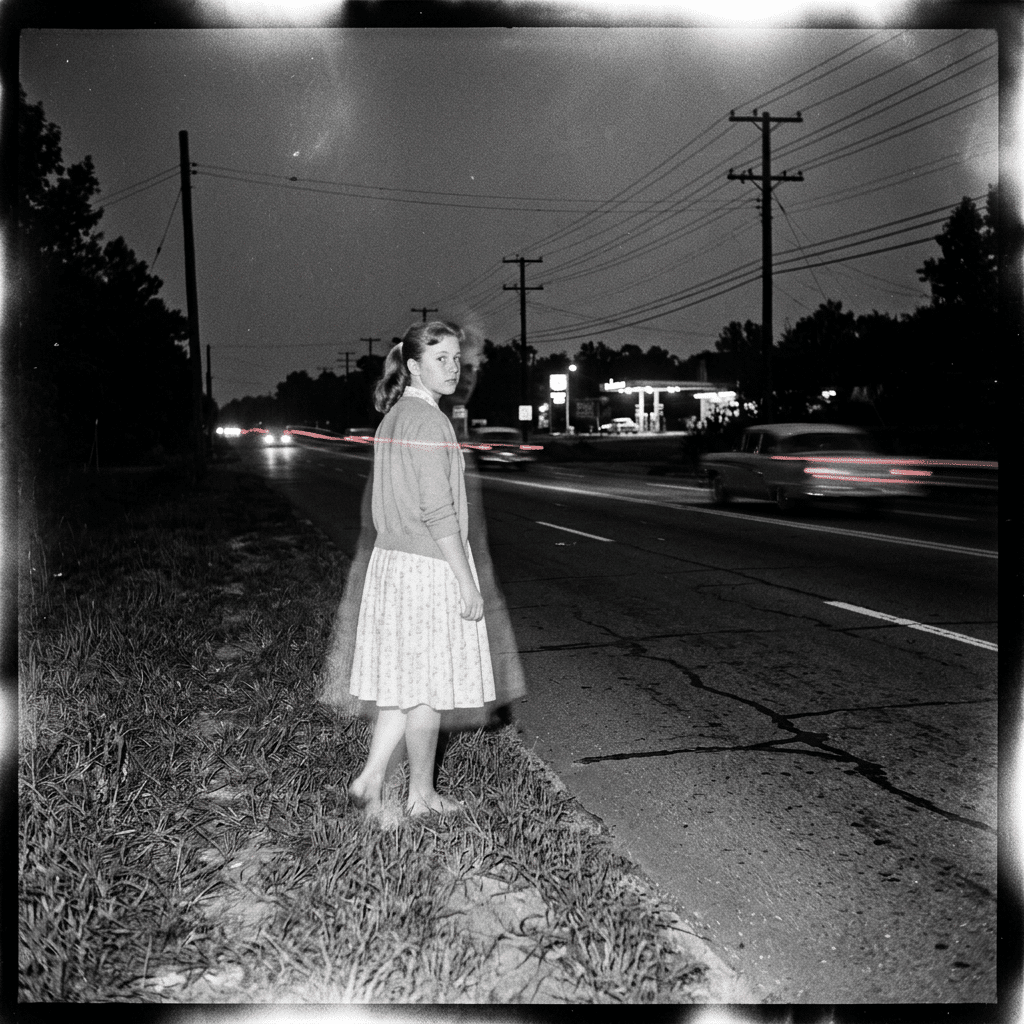
Paranormal activity in the Great Dismal Swamp takes many forms, with the most commonly reported phenomena being mysterious lights that appear to float above the water and between the trees. Witnesses say that these lights look like lanterns or glowing energy balls that move with a purpose. At times, these lights approach individuals and then vanish from sight. After dark, the swamp is full of strange sounds, like disembodied voices, unexplained splashing, phantom footsteps on paths that don’t exist, and wailing that seems to come from everywhere at once. Many tourists and locals have said they saw ghosts of people dressed in clothes from the colonial era. They looked solid and real before disappearing into the mist or simply fading away (Traylor, 2010). There have been many sightings of a creature that looks like Bigfoot, is over seven feet tall, has shaggy hair, and smells like a dirty sewer. This fact adds a cryptozoological element to the swamp’s reputation for being paranormal (Bigfoot Field Researchers Organization, 2002).
There is a lot of ghost folklore about the Great Dismal Swamp, and it is based on the area’s sad past. The most well-known story is about the “Lady of the Lake,” a young woman who was supposed to marry her fiancé but died of an illness the night before the wedding. Her fiancé became frantic, believing she was still alive and awaiting him in the swamp. Every night, he would paddle across the lake in a white canoe looking for his lost love. The story says that their spirits still haunt the waters today. Another long-lasting story is about the spirits of escaped slaves who used the swamp as part of the Underground Railroad and sometimes died in its dangerous interior while trying to get free. People say that the ghost of a colonial surveyor who got lost and died in the swamp is doomed to wander with his tools forever, trying to discover his way out. People who live in the area say they hear chains rattling at night, which they think are the spirits of slaves who used to work there, and they see campfires that disappear when they become close (Struzik, 2021).
Theories and Impact
There are many theories that try to explain the strange things that happen in the Great Dismal Swamp. Some of these theories are based on science and others are based on the supernatural. People who believe in the paranormal say that the swamp’s history as a place where many people suffered, including escaped slaves who died, Native Americans who were forced off their land, and early settlers who died from disease or accidents, suggests that this trauma has left a mark on the area. Some people think the strange lights are spirits or energy anomalies caused by the presence of the dead. Others think they could be the torches or lanterns of ghosts still doing their earthly business. But skeptics have other explanations based on natural events, pointing out that the swamp’s unusual environment could cause strange effects. Scientists think that the lights could be caused by bioluminescent organisms, methane gas that comes from decaying organic matter and catches fire on its own, or even by mistaking the headlights of distant cars or planes that are bent through the swamp’s humid air. The swamp’s acoustics might explain the sounds that people think are ghosts. The swamp can carry and distort natural sounds in strange ways. Animals like owls, foxes, and other wildlife can also make calls that sound very much like human voices.
The haunted reputation of the Great Dismal Swamp affects many aspects of the area’s culture and economy. The swamp is now a popular place for people who want to see ghosts, paranormal investigators, and thrill-seekers who want to see supernatural events in person. This phenomenon has helped boost local tourism. Over the years, the legends have inspired numerous books, paintings, and songs. For example, Thomas Moore’s famous poem The Lake of the Dismal Swamp from 1803 helped spread the Lady of the Lake legend beyond the area where it happened. Conservation efforts have also benefited from the swamp’s reputation for haunting. The stories and air of mystery surrounding the place have made people more interested in protecting this unique ecosystem. However, the swamp’s fame for being haunted has also raised worries that people will go into dangerous parts of it without being ready, which has led to rescue missions and even deaths when inexperienced visitors become lost or hurt while looking for ghosts.
The Great Dismal Swamp is crucial to history. Many African American maroons who were trying to escape slavery found safety in this area, where they built communities that kept their cultural identities (Sayers, 2006; Morris, 2022). The swamps gave maroons a sense of freedom and safety, which helped them create farming methods and social systems even though they were under pressure from slavery and systemic injustices (Morris, 2022). Sayers’ examination of the socio-political dynamics within these communities demonstrates that the swamp served not only as a physical refuge but also as a symbol of resistance and resilience against oppression (Sayers, 2006). This historical legacy strengthens cultural relevance by connecting today’s generations to the struggles and victories of their ancestors. There are ghost stories now, which isn’t surprising.
The potential of the Great Dismal Swamp to become a National Heritage Area (NHA) also shows how important it is to nearby towns like Elizabeth City, Norfolk, and Virginia Beach for cultural education and economic growth (Newton et al., 2023). Such a designation could boost tourism and recreation, which would make it even more important to protect and teach people about the swamp’s ecological and historical stories. The swamp also offers chances for more research and conservation, which shows how important it is to deal with environmental threats while recognizing and protecting its rich cultural history. It is easy for paranormal stories to do this job in a way that people consider interesting.
Conclusion
The Great Dismal Swamp is still a mystery, where the lines between natural beauty and supernatural mystery seem to blur in the shadows under old cypress trees. The stories about these events keep changing with each generation, whether they are real paranormal events, natural events that were misunderstood, or just the power of suggestion working on people in a remote and atmospheric place. The swamp reminds us that people need to discover meaning in things they don’t understand and keep the stories of those who came before us alive, even if those stories are ghost stories or legends. As long as mist rises from the dark waters of Lake Drummond and shadows deepen between the trees at dusk, the Great Dismal Swamp will likely continue to inspire both wonder and unease. It will remain one of America’s most captivating paranormal sites, where history, tragedy, and the unknown come together in a landscape that seems to exist outside of normal time and space.
References
Bigfoot Field Researchers Organization. (2002, August 8). Report # 4788 (Class B): Screams heard in the Great Dismal Swamp. https://www.bfro.net/GDB/show_report.asp?id=4788
Haque, S. E., Tang, J., Bounds, W. J., Burdige, D. J., & Johannesson, K. H. (2007). Arsenic geochemistry of the great dismal swamp, virginia, usa: possible organic matter controls. Aquatic Geochemistry, 13(4), 289-308. https://doi.org/10.1007/s10498-007-9021-0
Morris, J. (2022). From dismal freedom to the free dismal. Dismal Freedom, 176-180. https://doi.org/10.5149/northcarolina/9781469668253.003.0007
Newton, M., Berry, C. J., Arrington, B., Wilson, N., McCormack, C., Wilcox, M. D., … & Zajchowski, C. A. B. (2023). Making the case for the great dismal swamp national heritage area: a scoping review. Sustainability, 15(9), 7262. https://doi.org/10.3390/su15097262
Rattner, B. A. and Ackerson, B. (2008). Potential environmental contaminant risks to avian species at important bird areas in the northeastern united states. Integrated Environmental Assessment and Management, 4(3), 344-357. https://doi.org/10.1897/ieam_2007-091.1
Sayers, D. O. (2006). Diasporan exiles in the great dismal swamp, 1630–1860. Transforming Anthropology, 14(1), 10-20. https://doi.org/10.1525/tran.2006.14.1.10
Sayers, D. O. (2008). The diasporic world of the Great Dismal Swamp, 1630–1860. The College of William and Mary.
Sleeter, R., Sleeter, B. M., Williams, B., Hogan, D. M., Hawbaker, T. J., & Zhu, Z. (2017). A carbon balance model for the great dismal swamp ecosystem. Carbon Balance and Management, 12(1). https://doi.org/10.1186/s13021-017-0070-4
Struzik, E. (2021). Swamplands: tundra beavers, quaking bogs, and the improbable world of peat. Island Press.
Traylor, W. (2010). The Great Dismal Swamp in myth and legend. Dorrance Publishing.
Wozniak, A. S., Mitra, S., Goranov, A. I., Zimmerman, A. R., Bostick, K. W., & Hatcher, P. G. (2023). Effects of environmental aging on wildfire particulate and dissolved pyrogenic organic matter characteristics. ACS Earth and Space Chemistry, 8(1), 104-118. https://doi.org/10.1021/acsearthspacechem.3c00266
Leave a Reply