Six Key Points About Vietnam’s Rock Apes
-
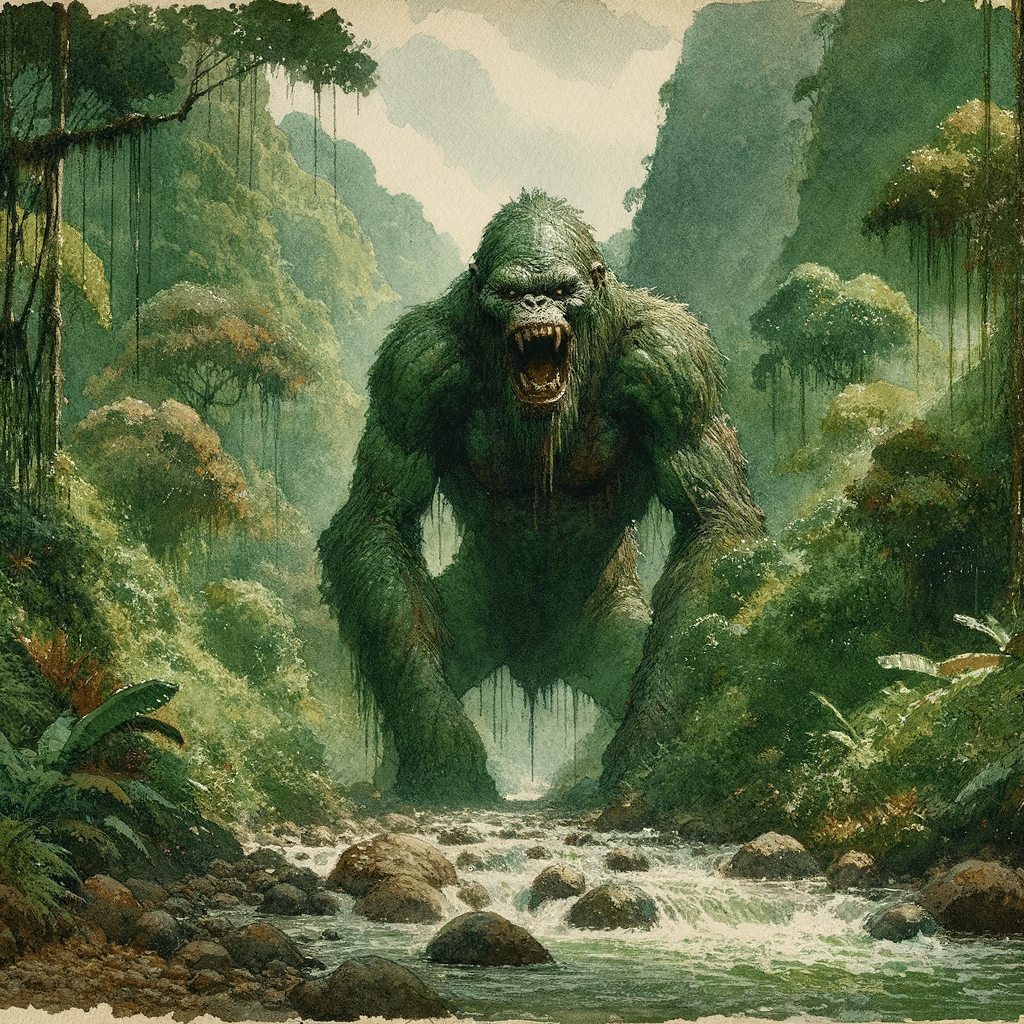
Reported as 5-6-foot-tall, hairy, bipedal primates with ape-like features.
-
Allegedly territorial, they travel in small groups and communicate through vocalizations.
-
Vietnam War soldiers reported multiple encounters, including a notable 1974 firefight.
-
Featured in Vietnamese highland folklore as supernatural forest guardians.
-
Share similarities with other global cryptids like Orang Pendek and Bigfoot.
-
No conclusive evidence exists, though their legend has helped protect biodiversity hotspots.

Introduction
Long-hidden mysteries in Vietnam’s thick, foggy forests continue to fascinate both researchers and enthusiasts. Few of these mysteries are as captivating as the story of the “Rock Apes,” or “Batutut,” cryptid primates that soldiers supposedly saw during the Vietnam War and that local people have known about for centuries. These hard-to-find animals are an intriguing mix of eyewitness tales, cultural folklore, and cryptozoological conjecture that continues even if there is no clear physical evidence. The Rock Ape phenomenon offers an intriguing perspective for analyzing the convergence of warfare, indigenous knowledge, and the human inclination to derive meaning from enigmatic encounters in isolated wilderness regions.
Description
People who have seen Rock Apes say they are about 5 to 6 feet tall, have strong, muscular bodies, and have reddish-brown to dark hair. Some people say they have grayish fur that mixes in with the Rocky Mountains where they live. Their faces look more like apes than humans, with big brow ridges, deep-set eyes, and a flat nose. They look a little bit like gorillas and orangutans, but they are much bigger than the gibbons that live in Vietnam. Witnesses frequently remark on their large shoulders, elongated arms, and their capacity to traverse challenging terrain bipedally with ease, indicating a degree of adaptation to the hilly jungle habitat. People say that their hands are surprisingly nimble, and others say that the creatures employed basic tools or flung pebbles when they felt threatened. This action is what gave them their common moniker (Việt, Hải, & Meldrum, 2021).
Military soldiers and local people have said that Rock Apes behave in ways that suggest they are mostly active at night and move in small family groups of three to five people, although occasionally they join in bigger groups of up to twenty people. They are said to talk to each other using a complicated system of sounds that range from low grunts and cries to high-pitched screams that may be heard echoing through the forest, especially at dawn and twilight (Frechette, 2024). Witnesses say that they are territorial but usually not hostile unless they are provoked. When provoked, they may display intimidation by pounding their chests, shaking branches, and hurling rocks. It is thought that they mostly eat plants, fruits, and small animals. Some reports indicate that these creatures build basic sleeping nests in trees or rock shelters, a behavior more similar to that of great apes than to monkeys or humans.
During the Vietnam War, sightings of these creatures were especially important since American and South Vietnamese forces reported many of them while working in isolated places, particularly in the Central Highlands along the Ho Chi Minh Trail and the Laotian border. The most famous event happened in 1974 at Nui Ba Den (Black Virgin Mountain), where men of the American 101st Airborne Division reportedly fought Rock Apes, thinking they were enemy soldiers because they were in the dark. Military reports from that time say that patrols ran into groups of these beasts several times, and soldiers were often surprised by how brave and territorial they were. Some veterans say that both American and North Vietnamese troops had an unspoken rule to stay away from certain areas where these primates lived because their loud territorial calls could make stealth operations harder and their aggressive reactions to intruders could make things dangerous.

Folklore and Analysis
These creatures have been recognized in Vietnamese folklore for hundreds of years by several names, such as “Người Rừng” (Forest People) and “Batutut.” They are important in the oral traditions of highland indigenous groups, including the Hmong, Jarai, and Sedang. In other stories, they can become invisible or change shape. Local tales typically describe these beings as forest ghosts or guardians that prevent people from entering sacred places. People who believe in these beings say they live in a place between the animal and human worlds, where they have supernatural powers but are still mostly animals. Many native groups made up special rules for traveling through places where they thought Rock Apes lived. For example, they would leave small gifts or say certain phrases to ask for safe passage. This illustration shows how much these beings have changed the way people in the area believe and how they take care of the environment (Gerhard, 2024).
The Rock Apes of Vietnam are very similar to other cryptid primates that have been seen in Southeast Asia and other places. This suggests that either a widespread unknown species exists, or a common psychological condition occurs when people are in the environment. They look a lot like the Orang Pendek from Sumatra, the Yeren from China, and, to some extent, the Yeti from the Himalayas and Sasquatch/Bigfoot from North America. All of these cryptids are part of traditional indigenous knowledge systems, and people who have gone into distant wilderness places have seen them in modern times. Cryptozoologists have put forward a number of ideas to explain these similarities. Some of these ideas are that there are still living populations of known extinct hominids, like Gigantopithecus blacki, or that there are new great ape species that have evolved in different parts of the world. Some experts propose that the Rock Ape may signify an isolated population of orangutans that adapted to the surroundings of mainland Southeast Asia; however, the geographic dispersion complicates this notion (Godfrey, 2016).
The Rock Ape phenomenon has effects that go beyond cryptozoology and into psychology, cultural studies, and even conservation initiatives in Vietnam. For veterans of the fight, Rock Ape sightings often serve as memorable recollections from an otherwise traumatic experience, providing unusual vignettes that humanize discussions of a very divided war (Caputo, 2017). The animals have become small cultural icons in Vietnam, and they are used in tourism ads for places like Vu Quang National Park. In the 1990s, biodiversity surveys found several large mammal species that had never been seen before, which makes it more likely that there are still undiscovered primates. Conservation biologists have pointed out that the legend has unintentionally helped protect some of Vietnam’s most biodiverse areas. This is because places where people saw Rock Apes often stayed undeveloped because people thought they were spiritually important, which made them de facto wildlife preserves during decades of rapid development in other parts of the country.
Even though many amateur and professional researchers have gone on excursions to find them, there is still no definitive proof that Rock Apes exist. Over the years, hair samples, footprint casts, and photos have been collected, but they have not been able to prove anything or have been linked to existing species. Field study is quite challenging in the remote, heavily forested areas where sightings happen. Political restrictions in border areas make systematic examinations even more difficult. The absence of physical evidence has prompted skeptics to suggest that Rock Ape encounters may be attributed to the misidentification of familiar wildlife, specifically gibbons or sun bears observed briefly in low visibility conditions, coupled with the psychological impacts of stress, isolation, and the heightened vigilance experienced by soldiers in combat zones or travelers in unfamiliar jungle settings.
Conclusion
Vietnam’s rock apes are still a mystery, which is a positive reminder of how little we know about the biodiversity of our world, especially in isolated areas that haven’t been studied extensively by scientists. Whether these beings signify an unrecognized primate species, erroneous identifications of established animals, or cultural constructs arising from human psychology’s adaptation to unfamiliar settings, they have attained an enduring status in both Vietnam’s cultural heritage and the global field of cryptozoology. As Vietnam continues to improve its scientific infrastructure and environmental protection systems, maybe future generations of scientists will finally find out if the Rock Apes really exist in physical form or if their true importance lies in what they show us about how we see, imagine, and interact with the natural world and its many mysteries.
References
Caputo, P. (2017). A Rumor of War: The Classic Vietnam Memoir. Picador USA.
Frechette, R. P. (2024). Ron Frechette, interviewed by Gary Waters, Part 1.
Gerhard, K. (2024). A Menagerie of Mysterious Beasts: Encounters with Cryptid Creatures. Llewellyn Worldwide.
Godfrey, L. S. (2016). Monsters Among Us: An Exploration of Otherworldly Bigfoots, Wolfmen, Portals, Phantoms, and Odd Phenomena. Penguin.
Việt, T. H., Hải, T. H., & Meldrum, J. (2021). Research on wildmen in Vietnam. The Relict Hominoid Inquiry, 10, 6-28. https://www.isu.edu/media/libraries/rhi/research-papers/Viet-manuscript_final.pdf



Leave a Reply