
Kentucky Werewolf Folklore: Six Key Points
-
Kentucky werewolf legends blend European myths with Appalachian elements.
-
The LBL Beast is Kentucky’s most famous werewolf, reportedly 6-7 feet tall with wolf-like features.
-
Regional variants include the Appalachian “Hillbilly Beast” and mine-dwelling creatures.
-
These legends serve as cautionary tales while helping communities process unexplained events.
-
Theories include rationalizing crimes, projecting societal fears, and responding to hardship.
-
Werewolf folklore impacts Kentucky’s tourism, arts, storytelling traditions, and cultural identity.

Introduction
For generations, families and communities in Kentucky have passed down stories of strange creatures that live in the forested hills and dark hollows. Among these legends, werewolves are especially intriguing because they mix European traditions with Appalachian and Southern ones. These legendary shapeshifters—people who can turn into wolf-like creatures—have become a part of Kentucky’s culture. They show up in stories told around campfires, quiet conversations on front porches, and more and more in official records of strange events across the Commonwealth.
Overview
In the traditional sense, werewolves are people who have been cursed or blessed with the ability to change into wolf-like creatures, usually during full moons or other important celestial events. People often say that the change is painful and violent, with bones breaking and reshaping, skin stretching, and fur coming out of human flesh. Once they change into werewolves, they are usually shown as strong predators with superhuman strength, heightened senses, and an uncontrollable desire to kill. Silver in the form of bullets, blades, or amulets, according to myth, can injure werewolves (Summers, 2025). The condition can also be spread through bites or scratches, like a supernatural disease. These beings inhabit the threshold between humanity and animality, embodying our fundamental anxieties regarding the loss of control and the capitulation to our more sinister impulses (Otten, 1986).
Kentucky’s connection to werewolf stories is different from other places because of the state’s mix of wilderness and settlement. The thick forests and rough terrain of Kentucky’s eastern mountains and western woodlands are perfect for stories about creatures that live just outside of civilization. Early settlers brought stories about European werewolves with them, but over time these stories changed to include parts of Native American skinwalker legends and fears about the wildness of the frontier. Kentucky’s werewolves often show the state’s contradictions (Mitchell & Smith, 2025). They are creatures that show both the wild freedom of the forest and the dangers of going too far away from established communities. Usually, sightings happen in rural areas, especially those with historical significance or natural features that make people feel awe and fear.
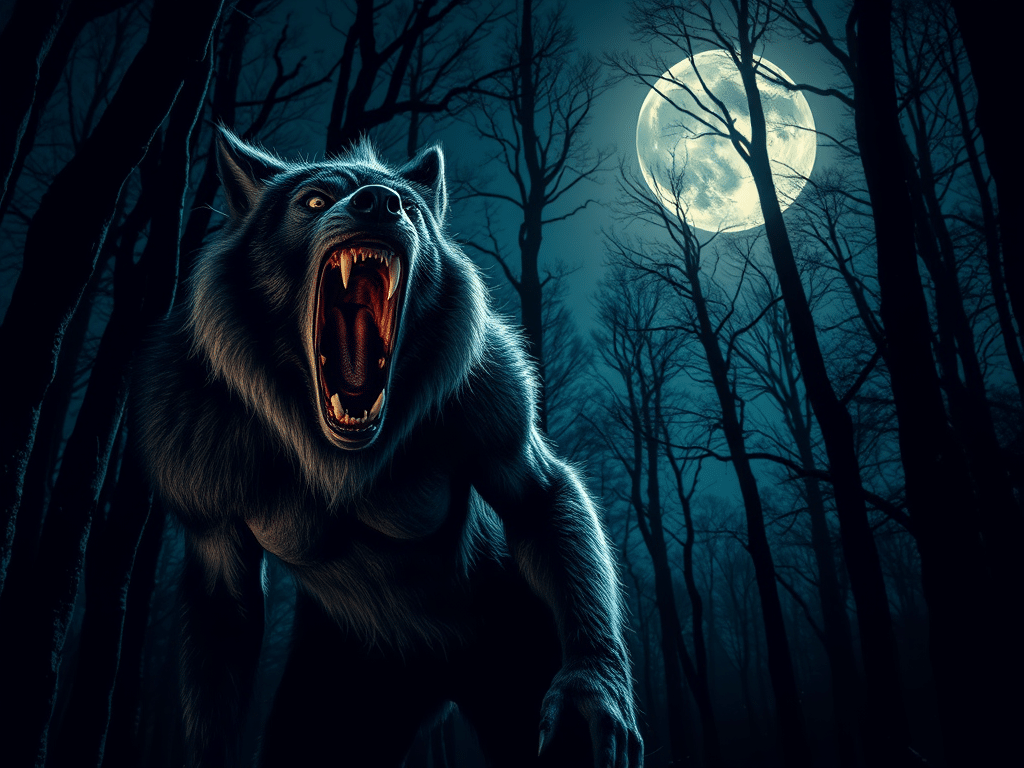
The Beast of Land Between the Lakes, or LBL Beast, is probably the most famous werewolf story from Kentucky. Some people say this creature haunts the 170,000-acre recreation area that runs through Kentucky and Tennessee. It was made when the Tennessee and Cumberland Rivers were dammed to make Kentucky Lake and Lake Barkley. According to local stories, the Beast is to blame for a string of strange disappearances and violent deaths in the area. Some people claim that the creature killed an entire family who were camping there in the 1980s. Witnesses say the LBL Beast is between six and seven feet tall, has reddish-brown or gray fur, a wolf-like head, glowing red or yellow eyes, and arms that are longer than normal and end in sharp claws. People say the creature moves through the woods with unnatural speed and agility. On quiet nights, it often lets out bone-chilling howls that can be heard across the lakes. The LBL Beast is especially intriguing because it combines the traits of werewolves with those of other cryptids to create a monster that is unique to Kentucky (The Evil Cheezman, 2021).
Kentucky has had many other werewolf sightings in addition to the LBL Beast. These sightings have happened all over the state. People in the Appalachian parts of Eastern Kentucky talk about the “Hillbilly Beast,” a werewolf-like creature that is said to hunt livestock and homes that are far away from other people. People say that the creature walks like a man but moves like a wolf, leaving behind mangled bodies and big, strange footprints. Miners in the western coalfields have said that they have seen glowing eyes and huge, shadowy figures at the entrances to abandoned mines. The sighting has led to theories that werewolves use these underground spaces as places to hide during the day. The Bluegrass region experiences a variety of sightings, frequently associated with historic properties and ancestral lands. The evidence suggests that there are generational curses or long-lasting supernatural events. These regional differences show how Kentucky’s geography and culture are different, making a unique tapestry of werewolf stories in the state (Anders, 2025).

Analysis
In Kentucky folklore, werewolves are more than just monsters; they serve important cultural and psychological purposes. These stories often serve as warnings, telling people not to wander alone in the woods, especially at night or when the moon is full. They strengthen community ties by telling stories and managing fear together, which creates shared experiences. In some cases, werewolf stories have been used to explain real-life tragedies or disappearances, giving communities stories that help them confront events that can’t be explained any other way. The werewolf is also a strong symbol of the duality of human nature, especially in a world where many communities have had to achieve a balance between their dependence on nature and their fear of its unpredictability and danger. The werewolf stories from Kentucky illustrate the complex relationship between the state’s people and its wild areas. They show both respect and fear.
Folklorists and anthropologists have come up with different ideas about why werewolf stories are still popular in Kentucky. Some people think that these stories started as ways to explain violent crimes or serial killings in rural areas where these kinds of things didn’t make sense to close-knit communities. Some people believe in the psychological projection theory, which says that werewolves are a way for people to confront their darker sides that communities needed to condemn and externalize. Economic and environmental factors also contribute, as werewolf sightings frequently rise during times of resource scarcity or environmental transformation, when wilderness appears to encroach upon civilized areas. Historically, the isolation of many Kentucky communities may have helped these legends grow and stay alive. This is because there wasn’t much contact with people from other places, which meant that local myths could grow without being questioned or explained in other ways. These theories suggest that Kentucky’s werewolf folklore reveals as much about the narrators as it does about the entities themselves.
The influence of werewolf legends on the cultural landscape of Kentucky is profound. Local artists, writers, and filmmakers have been inspired by these stories, which have led to a long history of horror and supernatural fiction in the area. Cryptid-hunting trips and supernatural tours have also helped tourism by bringing people to places where werewolves have been seen, especially around Land Between the Lakes. Local businesses take advantage of these stories by opening themed restaurants, gift shops, and festivals every year to celebrate the state’s monstrous past. These legends have helped keep oral storytelling alive in a world that is becoming more digital. Young people are still sharing and changing these stories to fit modern audiences. The werewolf is now a part of Kentucky’s culture. It represents the state’s connection to its wild areas and its love of the strange and unexplained.
As Kentucky changes, its werewolf stories change too, as the state tries to find a balance between rural traditions and urban growth and technological progress. People today often use conspiracy theories, government experiments, or environmental contamination to explain where the creatures came from. Online forums and social media have made it easier for people to share stories and theories, bringing together isolated groups and making legends that used to be specific to one area more widely known. Even with these changes, the main parts of Kentucky’s werewolf traditions haven’t changed much. These include the transformation, the wildness, the danger, and the strong connection to the land itself. These lasting traits indicate that as long as Kentucky has its forests, mountains, night skies, and hidden hollows, the concept of werewolves will continue to inhabit the imaginations of its people, linking the Commonwealth’s past to its future.
Conclusion
The werewolves of Kentucky, whether they are real animals or powerful symbols, stand for something important about the state’s history and character. They show the tension between civilization and wilderness that has been a part of Kentucky since the first settlers arrived. They shape our deepest fears of losing control, giving in to our basic instincts, and facing the unknown that waits just outside the light of our campfires and front porches. Perhaps most importantly, they remind us that even though our world is becoming more modern and logical, there will always be mysteries in the shadows of Kentucky’s hills and hollers, stories that are impossible to explain, and reasons to come together to fight the coming darkness. The legend of the Kentucky werewolf will keep changing as long as people keep going into the state’s wild areas and coming back with stories of encounters they can’t explain. The legend will adapt to new fears and interests while staying true to the Commonwealth’s rich storytelling tradition.
References
Anders, T. A. (2025). Campfire tales and stories from Kentucky. Independently published.
Mitchell, M., & Smith, M. (2025). PARANORMAL KENTUCKY: An Uncommon Wealth of Close Encounters with Aliens, Ghosts, and Cryptids. University Press of Kentucky.
Otten, C. F. (Ed.). (1986). The Lycanthropy Reader: Werewolves in Western Culture. Syracuse University Press.
Summers, M. (2025). The werewolf—A study in myth, folklore, and fear: Illustrated and with a new foreword by Nikolas Arhem (Serpent Library Classics). Serpent Books.
The Evil Cheezman. (2021, August 12). The beast of Land Between the Lakes: First the story, then the facts. Werewolves. https://www.werewolves.com/the-beast-of-land-between-the-lakes-first-the-story-then-the-facts/

Leave a Reply