
Myths and traditions abound about the Knights Templar, a Christian military organization from the Middle Ages. One of the more intriguing and lesser-known theories is the belief that the Templars were werewolves. In order to provide readers with greater insight, this essay will examine the history of the Knights Templar and medieval werewolf beliefs. It will also analyze the genesis and evolution of this strange association. Expert analysis will be incorporated throughout.

Knights Templar
A group of knights under the leadership of Hugues de Payens established the Knights Templar, formerly known as the Poor Fellow-Soldiers of Christ and of the Temple of Solomon, in 1119. During the Crusades, their primary objective was to safeguard Christian pilgrims en route to the Holy Land. With the assistance of the Catholic Church, the order quickly amassed wealth and power, rising to prominence as one of the most potent military units of the Middle Ages.
Initially limited to nine knights, the Templars quickly grew in both quantity and power. When they received headquarters on Jerusalem’s Temple Mount, believed to be the site of the former Temple of Solomon, the organization earned its name. The Templars adhered to a stringent code of behavior and accepted the monastic vows of poverty, chastity, and obedience. Their reputation for bravery and religiosity brought in large gifts from the European aristocracy as well as fresh recruits (Barber, 1994).
The Templars gained notoriety for their characteristic white mantles bearing a scarlet cross, which represented their dedication to the cause of Christendom. They became a significant economic and military force, building a network of fortifications and estates throughout Europe and the Middle East. Their banking system, which made it possible to send money securely over long distances, was a major factor in their enormous power. They created cutting-edge financial strategies, such as letters of credit, that allowed traders and pilgrims to journey without having to carry large amounts of cash (Barber, 1994).
In spite of their achievements, the Templars encountered growing resistance. King Philip IV of France ordered the detention of several Templars in 1307, accusing them of heresy, blasphemy, and other serious offenses. Notably, these charges included accusations of werewolfism. Following a series of torturous and coerced confessions during the trials, Pope Clement V dissolved the order in 1312. Jacques de Molay, the final Grand Master of the Templars, faced execution by burning at the stake in 1314 (Burman, 1986).
They accused the Templars of a wide range of offenses. They faced accusations of spitting on the cross, rejecting Christ, worshiping idols, and engaging in lewd behavior during their covert initiation rituals. The inclusion of werewolfism in the list of charges is particularly noteworthy. This suggests that people perceived the Templars as both entities associated with the dark and supernatural, as well as heretics (Partner, 1982). King Philip IV used these charges as part of a larger plan to control the Templars’ fortunes and destroy a formidable opponent.

Werewolves
There was also a significant deal of belief in supernatural beings during the medieval era, including werewolves. There are historical myths and folktales that give rise to the idea of werewolves—humans with the ability to change into wolves. In medieval Europe, werewolves were often associated with witchcraft and the devil. People believed they preyed on cattle and occasionally humans, possessing strength and savagery beyond human comprehension. Legends from the area and academic works that attempted to use Christian theory to explain strange occurrences served as evidence for these beliefs (Otten, 1986).
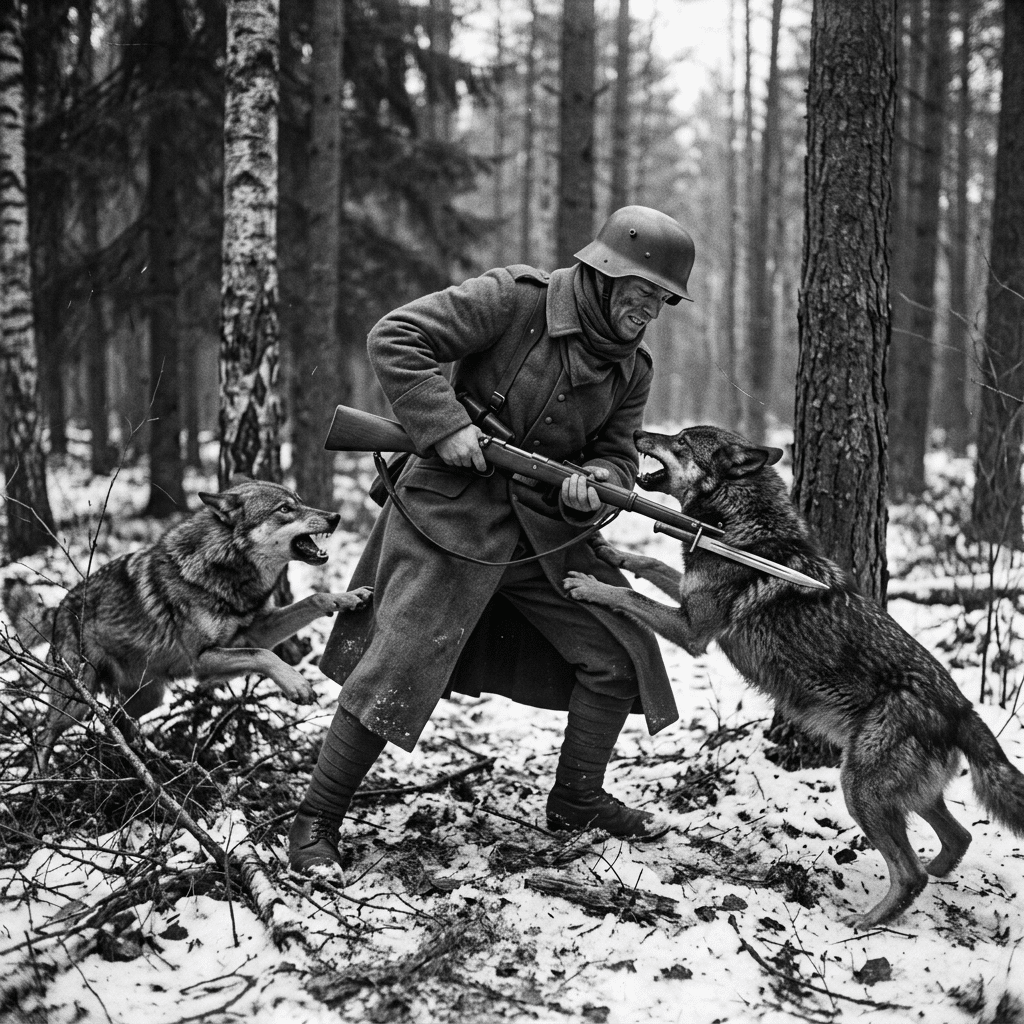
The enigmatic demise of the Knights Templar, as well as the age’s infatuation with the paranormal, most likely contributed to the link between werewolves and the Order. Legends and conspiracies flourished as a result of the Templars’ abrupt and dramatic fall from grace, as well as accusations of heretical behavior. The severe techniques employed against them during the trials and the secrecy surrounding their ceremonies furthered these misconceptions. They faced accusations of werewolfism during their trials, reflecting the prevailing tendency at the time to demonize individuals perceived as heretical or a threat to the status quo (Partner, 1982).
Scholars such as Malcolm Barber and Peter Partner contend that the amalgamation of werewolf mythology with Templar history is indicative of wider ideas within medieval philosophy. The tale of the Templar werewolves reflects the period’s obsession with dualities: sacred and profane, human and beast, order and chaos (Barber, 1994; Partner, 1927). It captures societal concerns about authority, secrecy, and corruption, and emphasizes dread of the other and the unknown.
One possible explanation for the mythology of the werewolf could be the Templars’ wide-ranging explorations and contacts with different societies. When the Templars were in the Holy Land and other places, they encountered a wide variety of beliefs and customs. The myths and legends about shapeshifters and other supernatural beings they encountered in the area may have influenced the stories that later arose in Europe (Ralls, 2007).
Moreover, their esoteric expertise and reputation for secrecy likely enhanced the Templars’ aura. The rigid hierarchical structure and covert nature of the organization kept a large portion of their activities out of the public eye. Their power and influence, along with their secrecy, made them convenient pickings for skepticism and conspiracy theories. It would have been in keeping with modern anxieties and superstitions to believe that they have access to prohibited information or occult powers (Ralls, 2007).
Conclusion
The notion that the Knights Templar were werewolves is a powerful illustration of the blending of myth and history. Legends of this kind flourished because of the Templars’ spectacular ascent and collapse, as well as medieval Europe’s interest in the paranormal. Even if the theory that the Knights Templar were werewolves is unsupported by historical data, the myth nevertheless offers an intriguing window into the anxieties and fantasies of medieval society. The merging of historical context and professional analysis provides a fuller understanding of how such stories might originate and endure across generations.
References
Barber, M. (1994). The new knighthood: A history of the order of the temple. Cambridge University Press.
Burman, E. (1990). The Templars: Knights of God. Inner Traditions/Bear & Co.
Otten, C. F. (Ed.). (1986). The Lycanthropy Reader: Werewolves in Western Culture. Syracuse University Press.
Partner, P. (1982). The murdered magicians: the Templars and their myth (p. 209). Oxford: Oxford University Press.
Ralls, K. (2007). Knights Templar encyclopedia: the essential guide to the people, places, events, and symbols of the Order of the Temple. Red Wheel/Weiser.


Leave a Reply