Six Key Points:
-
Haunted dolls supposedly move, change expressions, or create unease due to tragic histories and spiritual attachments.
-
Famous examples include Robert the Doll and Annabelle, known for supernatural activity across cultures.
-
Signs include movement, expression changes, temperature shifts, sounds, and feelings of dread.
-
Removal involves communicating with spirits, cleansing rituals, or physical disposal methods.
-
Theories range from spiritual attachment to psychological effects like confirmation bias.
-
They impact entertainment, tourism, and cause genuine distress while revealing human anxieties.

Introduction
The world of haunted dolls is a strange mix of childhood innocence and supernatural fear. These dolls go from being loved toys to things that scare and fascinate people. These toys that seem harmless have caught the attention of both paranormal fans and skeptics, leading to many stories of strange events and creepy encounters. Whether seen as a true belief in the supernatural or just a psychological curiosity, haunted dolls are one of the most persistent and creepy parts of paranormal folklore. They make people who think they own one think seriously about their cultural significance and the practical issues they raise.
Overview
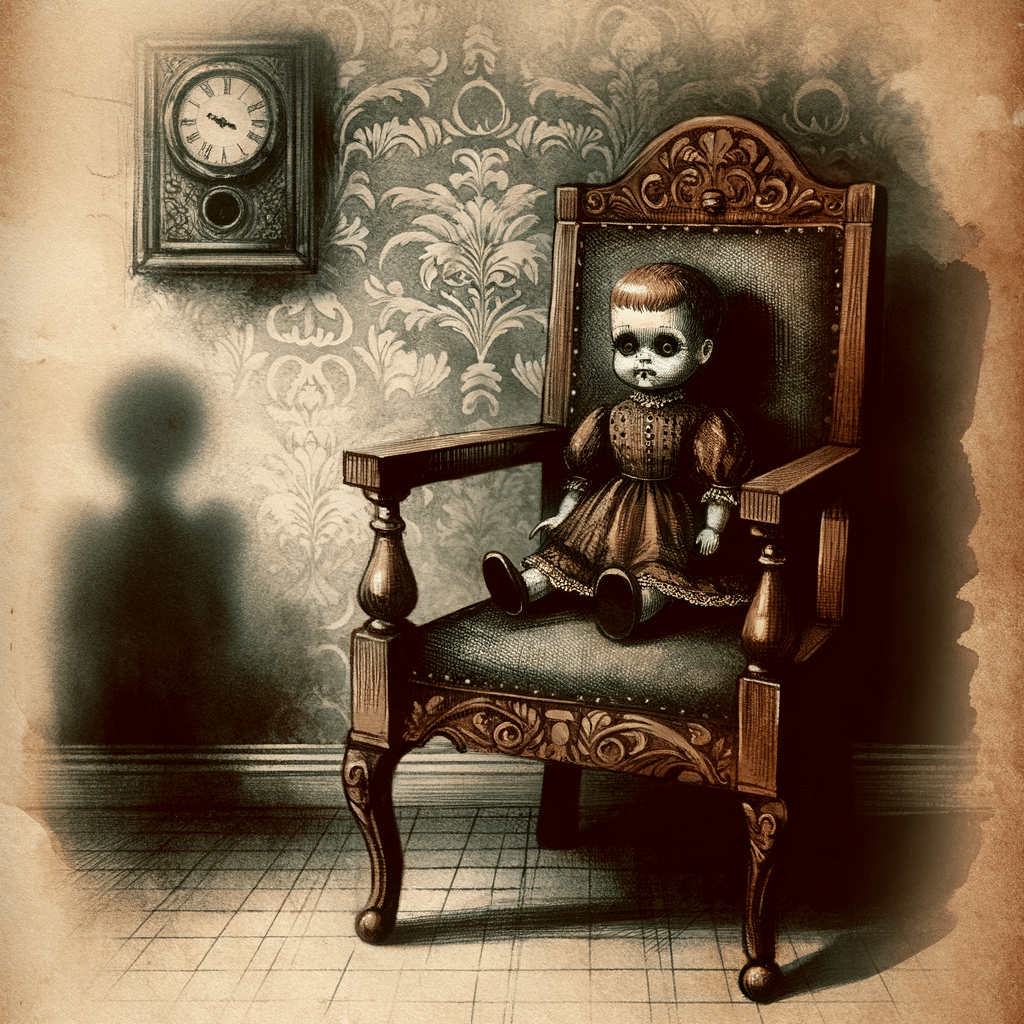
People usually say that haunted dolls are toys or figurines that act strangely, like moving on their own, changing their facial expressions, or making people feel very uneasy when they are around. People who believe in spirits or ghosts say that these objects often have stories of tragedy, abandonment, or emotional attachment that allow spirits to live in or connect with them. The dolls can be anything from old porcelain figures with cracked faces and faded clothes to new toys that are said to have taken in bad energy or spiritual attachments. Numerous individuals report sensations of being observed in proximity to these dolls, experiencing localized temperature decreases, or observing the dolls relocate autonomously (Negri, 2025).
There are stories about haunted dolls from all over the world and throughout history. Some of the most famous ones have become legends in paranormal circles. Robert the Doll, one of the most famous haunted dolls in the US, lived in Key West, Florida. He was said to move on his own, change facial expressions, and even laugh at night, scaring the Otto family, who owned him for decades. Paranormal researchers Ed and Lorraine Warren looked into Annabelle, the Raggedy Ann doll that inspired horror movies. They said that the doll was possessed by an evil spirit that threatened the lives of everyone around it. According to Japanese folklore, ningyo dolls and traditional Japanese dolls can sometimes hold the souls of children or become possessed by spirits. This leads to complicated rituals for getting rid of them the right way. Many of these stories have things in common, like dolls that belonged to kids who died in horrible ways, dolls that were found in abandoned places, or dolls that were passed down through families along with more and more disturbing experiences.
The idea of haunted dolls is a big part of folklore, horror stories, and modern paranormal investigations. The Annabelle doll is the most famous example. People often mention it in popular culture when discussing demon possession and haunting. Laycock and Harrelson record instances involving the Annabelle doll, portraying it as a significant factor in the investigation of paranormal phenomena, such as the haunting of the Perron family, which served as the basis for the film The Conjuring (Laycock & Harrelson, 2023). This story shows how people are afraid of inanimate objects because they might be able to hold evil spirits. It also shows how people are interested in haunted objects as a way to confront the unknown.
Lennard talks about how dolls are used in horror movies, like Chucky from the movie Child’s Play, to show how children’s toys can be scary (Lennard, 2012). This portrayal cements dolls as emblems of innocence that can morph into conduits of malevolence, captivating audiences in a nuanced interplay of childhood nostalgia and horror. These kinds of depictions play on people’s natural fear of the “other,” especially when that “other” is something harmless like a doll.

Identification and Removal
To figure out if a doll might be haunted, you need to look closely at both the doll and the area around it. However, believers and skeptics see these signs in very different ways. Paranormal experts say that dolls that seem to move or change position when no one is looking, facial expressions that seem to change, or an unusual heaviness or coldness to the touch that doesn’t match the materials are signs of the paranormal. Environmental indicators could consist of unaccounted sounds such as footsteps, laughter, or crying in the doll’s presence; electronic devices failing nearby; or pets and children exhibiting atypical fear or fascination with the object. Many people say they feel like they are being watched or have a strong sense of dread when they are in the same room as a doll that is said to be haunted. However, objectively proving these subjective experiences is challenging.
If you think you have a haunted doll and want to get rid of it, paranormal communities often suggest a few different ways to do so. However, whether or not these methods work is up to the individual. The first step is usually to try to talk to any spirit that might be attached to the doll, either in a polite way or through more formal séance-like practices. The goal is to find out what the spirit wants and to help it move on peacefully. Many people say that if communication doesn’t work, you should do cleansing rituals with sage, salt, holy water, or other spiritually important things while talking to any spirits that are there in a firm but polite way. You can get rid of the doll by giving it to paranormal investigators or museums that deal with haunted objects, burning it in a ceremonial fire while saying prayers or blessings, or burying it in holy ground with the right rituals.
Analysis
The paranormal theories about haunted dolls usually have to do with the idea of psychic imprinting or spiritual attachment. These theories say that traumatic events or strong emotions can somehow become attached to objects, especially those that look like people and might be more open to spiritual energy. Some people who believe in this say that dolls, especially those owned by kids, can soak up their owners’ emotional energy and keep showing it even after the owner has died or moved on. Some alternative theories say that some dolls might be vessels or conduits for spirits who are drawn to their human-like appearance and use them to interact with the physical world. However, skeptics provide more ordinary explanations for these phenomena, citing psychological factors such as the uncanny valley effect, which induces instinctive discomfort in response to human-like objects that are not entirely human; pareidolia, which causes individuals to perceive faces and expressions where none exist; and confirmation bias, which prompts individuals to interpret ordinary events as supernatural when they anticipate paranormal activity.
Ethnographic studies have enhanced investigations into haunted objects, such as dolls, by illustrating how paranormal investigators interact with these material cultures to examine uncertainties related to the supernatural (Hanks, 2019). These studies clarify the psychology underlying the belief in haunted dolls and how these beliefs influence interpersonal relationships and community narratives regarding purportedly haunted phenomena.
Anthropological perspectives on rituals involving dolls, exemplified by Mahmudah’s analysis of the Cingcowong ritual in Indonesia, underscore the function of dolls as intermediaries between the material and spiritual realms (Mahmudah, 2022). These rituals demonstrate that dolls can function as components of extensive cultural expressions related to spirit possession, categorizing them as objects of reverence or apprehension, contingent upon community interpretations.
However, the fascination with haunted dolls prompts examination of their psychological ramifications. Hanks posits that interaction with haunted objects frequently mirrors extensive societal apprehensions regarding possession—both literal and metaphorical. The idea of a haunted doll goes against what people think about agency, embodiment, and materiality in cultural stories (Hanks, 2019). This duality—dolls as playful companions versus harbingers of malevolence—highlights the intricate relationship humans maintain with these objects.
Beliefs about haunted dolls have effects that go far beyond individual experiences. They affect popular culture, tourism, and even therapy in ways that are not always clear. There is a billion-dollar horror industry based on haunted dolls that includes movies, TV shows, and books. This industry reflects and amplifies people’s interest in these objects, creating a feedback loop between folklore and entertainment that can make it hard to tell the difference between traditional beliefs and modern fictional elements. Museums and tourist attractions with supposedly haunted dolls draw thousands of visitors each year. This helps the local economy and also gives people a place to store things they don’t want to keep in their homes. People who think they have seen haunted dolls may have experiences that are mildly disturbing or truly traumatic. They may need counseling or support from others who believe the same things. Skeptics, on the other hand, say that dealing with the underlying psychological issues may be more helpful than treating the supernatural aspects as real.
Conclusion
The phenomenon of haunted dolls ultimately elucidates more regarding human psychology, cultural anxieties, and our interaction with objects than any supernatural domain; nevertheless, this does not undermine the significant influence these beliefs exert on individuals’ lives. Whether based on real paranormal activity or a projection of our own fears, the fear and interest in haunted dolls shows how deeply people are afraid of death, childhood, and the line between living and nonliving things. If you have a doll that you think is haunted, the most important thing may not be to prove or disprove the supernatural claims but to discover a way to achieve peace of mind and move on without fear. In the end, haunted dolls are an interesting mix of folklore, psychology, and belief. They remind us that the power of things often comes from the meanings and feelings we give them, not their physical properties.
References
Hanks, M. (2019). Haunted objects. Nova Religio, 22(4), 60-74. https://doi.org/10.1525/nr.2019.22.4.60
Laycock, J. P. and Harrelson, E. (2023). The warren cycle. The Exorcist Effect, 70-104. https://doi.org/10.1093/oso/9780197635391.003.0004
Lennard, D. (2012). All fun and games…: children’s culture in the horror film, from deep red (1975) to child’s play (1988). Continuum, 26(1), 133-142. https://doi.org/10.1080/10304312.2012.630142
Mahmudah, A. A. (2022). Cingcowong, the ritual of summoning rain. Cinematology: Journal Anthology of Film and Television Studies, 2(1). https://doi.org/10.17509/ftv-upi.v2i1.42034
Negri, P. (2025). Dollcraft: A Witch’s Guide to Poppet Magick & Haunted Dolls. Llewellyn Worldwide.
Leave a Reply