Ancient Egypt Necromancy: Key Points
-
Ancient Egyptians viewed death as transformation, not ending, requiring preservation of spiritual components for the afterlife.
-
Egyptian necromancy involved communicating with deceased ancestors through offerings, prayers, and letters requesting guidance.
-
Practices included the Opening of the Mouth ceremony, oracles, dream rituals, spells using remains, and shabti figures.
-
Modern scholars now recognize these practices as normative Egyptian religion rather than forbidden dark magic.
-
Whether Egyptians practiced necromancy depends on whether it’s defined narrowly as illicit or broadly as communicating with the dead.
-
Egyptians saw death as natural transition, with practices expressing duty and cosmic order, not dark obsession.

Introduction
Necromancy, the art of communicating with or reviving the dead, has fascinated people throughout history and in many cultures. However, its presence in ancient Egypt is a particularly difficult case that makes it challenging to understand both magic and death in modern times. The ancient Egyptians had one of the most complex belief systems about death and the afterlife in history. Their rituals often mixed religious practices, magical practices, and what might be called necromancy in other cultures. To comprehend necromancy in ancient Egypt, it is essential to meticulously analyze the Egyptians’ perceptions of death, the practices deemed necromantic, and the theoretical frameworks proposed by contemporary scholars regarding these ancient beliefs and rituals.
Overview
In ancient Egyptian culture, death was not seen as the end of life but as a change into a different way of living that needed careful planning and ongoing care. The Egyptians thought that each person had three spiritual parts: the ka (life force), the ba (personality or soul), and the akh (transfigured spirit). They believed that these parts needed to be kept together and preserved to live well in the afterlife. This complicated view of death meant that the line between the living and the dead was not clear. This thought process had a big effect on Egyptian religion, architecture, and social customs. The complex mummification processes, tomb building, and funerary texts like the Book of the Dead all helped people navigate safely through the dangers of the underworld and come back to life in the Field of Reeds, a perfect version of Egypt where the righteous dead would live forever.
The practice of what could be called necromancy in ancient Egypt was very different from the common idea of calling on spirits for dark or forbidden knowledge. Egyptians regularly kept in touch with their dead ancestors by making offerings, praying, and writing letters to the dead asking for help with everyday problems or advice on important issues. These letters to the dead, written on pottery bowls or papyrus and put in tombs, show that the living thought they could talk to their dead relatives and that the dead still had consciousness and could affect events in the living world. Additionally, some priests and magicians said they could call on or channel the power of dead people or gods for divination, healing, or cursing their enemies (Ritner, 2002).
Necromantic Practices
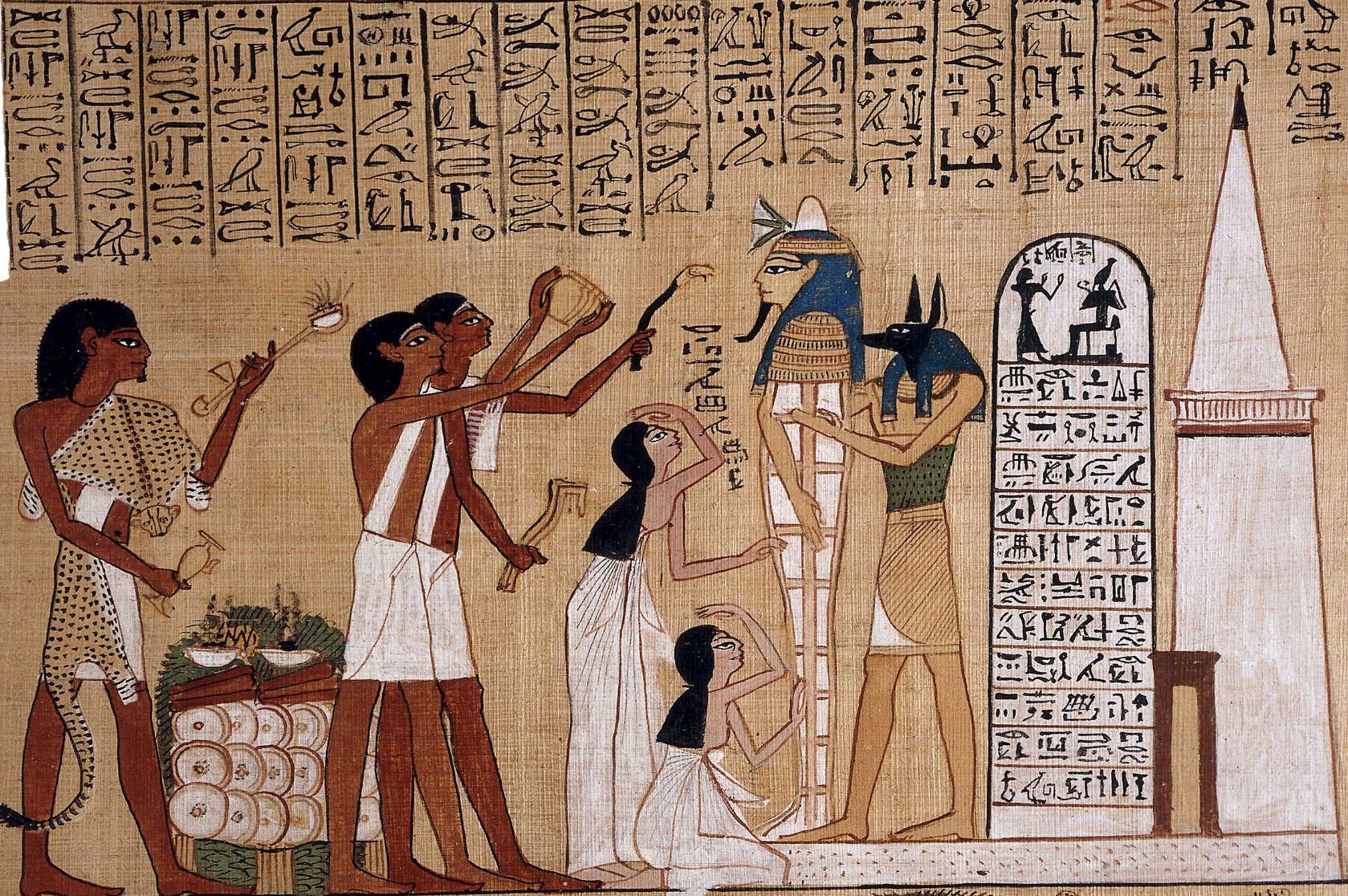
The Egyptians used several necromantic practices that had both religious and practical purposes in their culture. People thought that the Opening of the Mouth ceremony, which was done on mummies and statues, would bring the dead back to life so they could eat, talk, and use their senses in the afterlife. Sometimes, oracular practices meant asking the dead or their spirits for help. Priests acted as middlemen who could read signs or messages from the dead. Some magical texts talk about how to make the dead appear in dreams or visions, while others talk about how to use the dead person’s body or things in spells, especially to curse or bind enemies. Shabti figures, which are small statues of servants that are put in tombs to work alongside the dead in the afterlife, are another example of how death magic and caring for the dead’s well-being can come together.
Mummification was an important part of these necromantic beliefs because it indicated that people knew a lot about how to keep bodies from decaying. Research indicates that embalming served both physical and spiritual purposes, as the application of resins and other preservatives exhibited antibacterial properties acknowledged since antiquity and consistent throughout Egypt’s Pharaonic era (Jones et al., 2014). These embalming methods kept the body from rotting, which kept the link between the living and the spiritual (Badr, 2023).
The embalming process was often accompanied by grand rituals meant to make these methods more effective and ensure a smooth transition to the afterlife. It was common to put protective amulets inside mummies to protect the dead person’s spiritual well-being and help them come back to life. For example, the “Golden Boy” mummy had amulets like the Udjat and Scarab, which were thought to have magical powers that could help the body come back to life in the afterlife (Saleem et al., 2023).
Ancient Egyptian culture connected necromancy and afterlife ideas through funeral texts and images. The Weighing of the Heart ceremony, illustrated in funerary texts, represents the judgment process that the deceased must endure, correlating the outcomes of these trials to their eternal destiny (El-Kareem & Henin, 2023). Furthermore, burial rituals and gifts left at graves were ways to honor the dead and keep in touch with them, which was an important part of necromantic practices (Baines & Lacovara, 2002). This effort was not only about guiding the dead but also about keeping their influence over the living and strengthening family ties and community ties in Egyptian society.

Analysis
Theories regarding Egyptian necromancy have significantly evolved as our comprehension of ancient Egyptian religion has advanced and become more intricate. Early Egyptologists, influenced by biblical and classical sources that condemned necromancy, sometimes interpreted Egyptian practices through a framework that distinguished between acceptable religious ritual and forbidden dark magic. However, this dichotomy inadequately reflects the Egyptian worldview, where magic and religion were profoundly interconnected. Recent scholarship has highlighted that practices perceived as necromancy by contemporary observers were often regarded as normative religious rituals in ancient Egypt, essential for upholding cosmic order (ma’at) and ensuring the ongoing welfare of both the living and the deceased. Some theorists propose that Egyptian practices ought to be interpreted not merely as necromancy in the traditional sense, but rather as an intricate system of ancestor veneration intertwined with an elaborate funerary religion (Domin, 2012).
The inquiry regarding the authenticity of necromancy among ancient Egyptians is significantly influenced by the definitions employed and the cultural context applied to these historical practices. If necromancy is strictly defined as the unlawful summoning of the dead for prohibited objectives, then a significant portion of Egyptian practices does not conform to this definition, as they represent normative religious observances deeply integrated into their worldview and social framework. If necromancy is defined as practices intended to communicate with, influence, or exploit the power of the deceased, then ancient Egypt undoubtedly participated in such practices on a grand scale, with an entire civilization structured around sustaining appropriate relationships between the living and the dead. The ambiguity itself shows that there are big problems with using modern or Western categories to understand ancient cultures that had completely unique ideas about death, personhood, and the lines between worlds.
Conclusion
To fully comprehend ancient Egyptian necromancy, we must relinquish preconceived notions derived from subsequent Western traditions that frequently denounced such practices as malevolent or prohibited. The Egyptians did not see death as an enemy to be defeated; instead, they saw it as a natural transition that needed to be handled with care. Their so-called necromantic practices were ways of showing love, duty, and practical concern for keeping the universe in order. Egyptians had complex relationships with death that fit perfectly with their religious beliefs. They would ask their ancestors for advice, do rituals to ensure that the dead had a beneficial afterlife, and sometimes even force spirits to do magic. The examination of these practices indicates a culture not fixated on dark magic but rather one that earnestly fulfilled its responsibilities to both the living and the deceased, establishing one of history’s most intricate and lasting frameworks for addressing the profound human enigma.
References
Badr, I. (2023). An analytical study of magical wax figurines found in the mummy of tjanefer from the third intermediate era using ct scanning as a non-destructive tool. Egyptian Journal of Archaeological and Restoration Studies, 13(1), 1-12. https://doi.org/10.21608/ejars.2023.305183
Baines, J. and Lacovara, P. (2002). Burial and the dead in ancient egyptian society. Journal of Social Archaeology, 2(1), 5-36. https://doi.org/10.1177/1469605302002001595
Domin, V. I. C. T. O. R. (2012). Dead or Alive? Necromancy, Ancestor Worship, and the Cult of the Dead during the Ancient Israelite Monarchy. Academia. edu.
El-Kareem, J. G. and Henin, E. (2023). The influence of the ancient egyptian art on the icons. International Journal of Eco-Cultural Tourism, Hospitality Planning and Development, 6(1), 1-14. https://doi.org/10.21608/ijecth.2023.324903
Jones, J., Higham, T., Oldfield, R. A., O’Connor, T. P., & Buckley, S. (2014). Evidence for prehistoric origins of egyptian mummification in late neolithic burials. PLoS ONE, 9(8), e103608. https://doi.org/10.1371/journal.pone.0103608
Ritner, R. K. (2002). Necromancy in ancient Egypt. Magic and Divination in the Ancient World, 2, 89-96.
Saleem, S. N., Seddik, S. A. e., & el-Halwagy, M. (2023). Scanning and three-dimensional-printing using computed tomography of the “golden boy” mummy. Frontiers in Medicine, 9. https://doi.org/10.3389/fmed.2022.1028377


Leave a Reply