Haunted Heidelberg Castle: Key Points
-
Heidelberg Castle is a partially ruined Renaissance fortress in Germany that was twice destroyed by French forces in the late seventeenth century and struck by lightning in 1764.
-
Commonly reported paranormal activity includes apparitions of a woman in white and a knight in armor, phantom sounds of music, cold spots, equipment malfunctions, and mysterious footsteps.
-
Skeptics attribute reports to psychological factors like expectation and suggestion, plus environmental causes such as acoustic properties, temperature variations, and pattern recognition in dim lighting.
-
Historical research shows most ghost stories are recent inventions from the twentieth century, with little documentation of supernatural activity in earlier centuries.
-
Ghost legends serve cultural functions by emotionally connecting visitors to historical tragedies and contributing to regional identity and the castle’s mystique.
-
Regardless of their truth, the paranormal narratives ensure Heidelberg Castle remains culturally relevant and emotionally powerful for millions of visitors.

Introduction
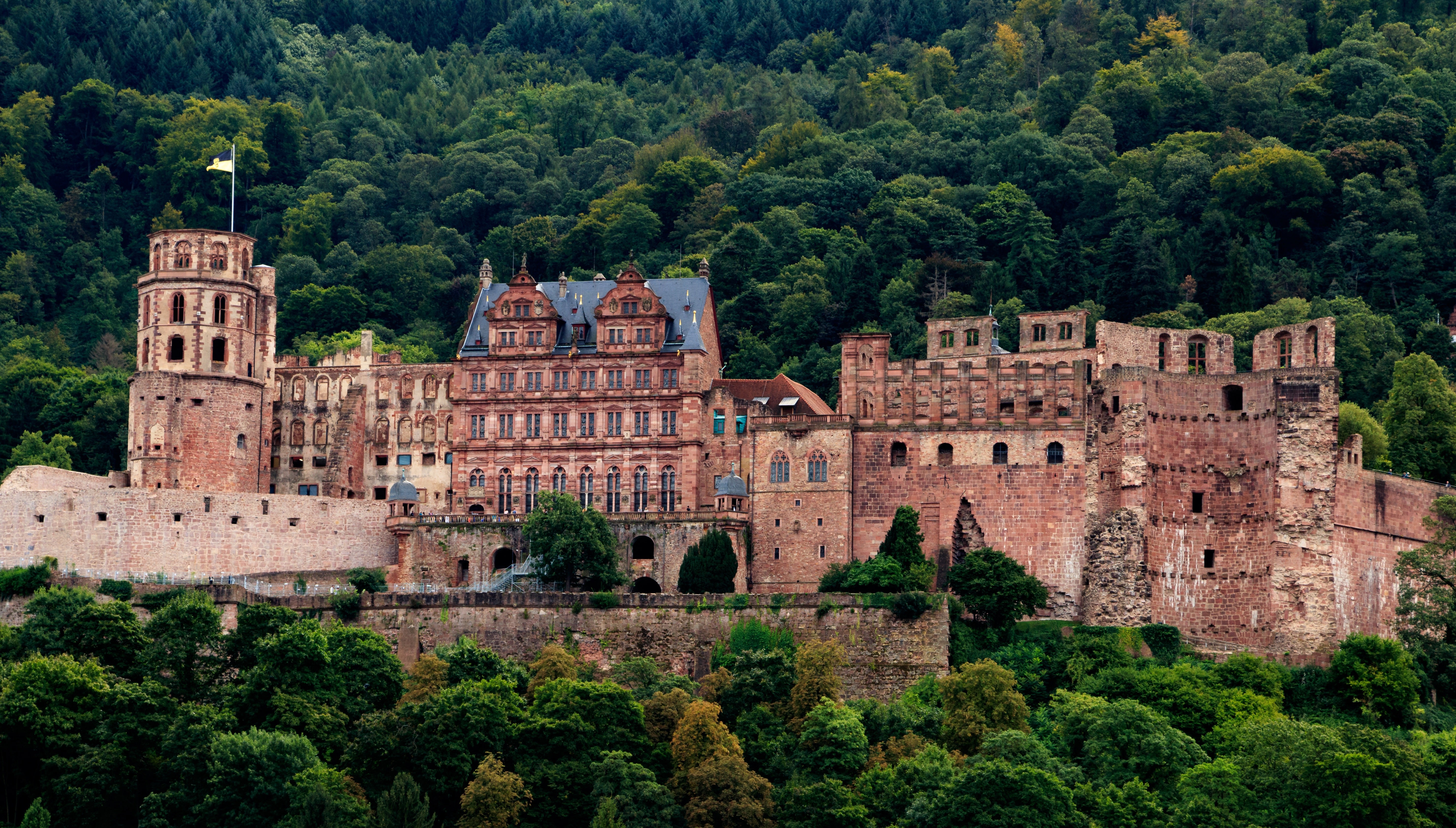
Heidelberg Castle is one of Germany’s most famous landmarks and supposedly haunted places. It has beautiful Renaissance architecture and a long history of violence and strange events. The castle ruins sit majestically on the northern slope of Königstuhl hill, looking out over the Neckar River and the city of Heidelberg. Millions of people visit each year to admire the building’s beauty and learn about its storied past. Heidelberg Castle is famous for more than just its history and beauty; it is also known for being a place where strange things happen, with many reports of ghostly encounters and other unexplained events over the years. This essay looks at the castle’s physical features, its long and often violent history, the strange things that have happened there, and the different skeptical points of view that try to explain these strange events in a logical way.
Heidelberg Castle History
Heidelberg Castle’s impressive architecture is the result of many years of building, destroying, and partially rebuilding. The result is a group of buildings that mix Gothic and Renaissance styles. There are several separate buildings in the castle complex. The most famous is the Ottheinrich Building, which has a beautiful Renaissance facade. There is also the Friedrich Building and the ruins of the once-great Great Hall. The famous Heidelberg Tun, a huge wine barrel built in 1751 that could hold about 220,000 liters, is still one of the castle’s most popular attractions. It is kept in its own cellar. There are also beautiful terraced gardens, deep stone cellars, narrow passageways, and the remains of defensive fortifications on the castle grounds. These fortifications used to make the castle one of the strongest in the area. Most of the castle is still in ruins, especially the parts destroyed in the 1600s and 1700s. The crumbling walls and empty rooms add to the eerie atmosphere of the site (Ringle, Vögtle & Peschel, 2006).
The first written record of Heidelberg Castle dates back to the early 1200s, specifically in 1225. However, there might have been fortifications on the site prior to that period. The castle was home to the Electors Palatine for hundreds of years and became one of the most important political and cultural centers in the Holy Roman Empire. During the 14th, 15th, and 16th centuries, different rulers added to and improved the castle, turning it from a military fortress into a beautiful Renaissance palace that drew scholars, artists, and important people from all over Europe. The Thirty Years’ War in the 1600s marked the end of the castle’s golden era. Military campaigns and occupations by different armies fighting for control of the Palatinate region severely damaged it.
During the War of the Palatine Succession in the late 1600s, French troops led by King Louis XIV destroyed large parts of Heidelberg Castle twice. This was the worst time in the castle’s history. French troops deliberately destroyed much of the castle in 1689 to prevent it from serving as a stronghold against them. In 1693, they returned to complete the destruction by setting fire to the remnants. Lightning hit the castle in 1764, causing more damage and putting an end to serious efforts to fully restore it. These violent acts of destruction and the pain they caused the people who lived in the castle and the people who lived nearby have become a big part of the paranormal stories about the site. Many people think that the traumatic events left a permanent psychic mark on the place.

Haunted Heidelberg Castle
There have been reports of paranormal activity at Heidelberg Castle since at least the 1700s. Visitors, guards, and staff have all said they have seen strange things happen there. People often see a woman in white, who is often thought to be the ghost of a noblewoman who died tragically during one of the castle’s many sieges or fires. Witnesses say they saw this ghostly figure gliding through the hallways and appearing on the terraces, especially at night, when it looked like it was looking sadly over the city below. Another spirit frequently observed by people is a knight in armor, who appears in the castle’s lower chambers and passageways. He sometimes walks through walls where doorways used to be, which makes it seem like he follows the layout of the castle as it was in his time. Some people who have been to the Great Hall when it was empty say they heard music and partying sounds coming from it, as if the echoes of the lavish banquets and parties that used to take place there are still playing (Everett & Scott-Waters, 2012).
There have been many strange things happening in the castle’s cellars and underground passages. Many people who have been there say they felt petrified and sad when they entered these areas. Over the years, many tour guides have said that they have felt sudden cold spots in certain places that can’t be explained by drafts or building features. Some have also said that they have felt invisible things brush past them in narrow hallways. In some parts of the castle, electronic devices seem to break down more often than they should. For example, cameras stop working, batteries drain for no reason, and recording devices pick up strange sounds or voices that weren’t there when the recording was made. During the twentieth century, night watchmen at the castle said they heard footsteps echoing through empty halls, doors opening and closing on their own, and shadows moving across moonlit courtyards when there was no one or nothing there to explain the movement (Belanger, 2009).
Certain areas of the castle complex are known for certain types of paranormal activity and seem to be places where supernatural events happen. Many people have said that they have heard ghostly voices speaking in old-fashioned German dialects in the Friedrich Building, which has fancy rooms that used to be the Elector’s private apartments. People say that the Gun Garden, where cannons used to be, is haunted by the ghosts of soldiers who died defending the castle during its many sieges. Witnesses have reported seeing uniformed figures standing at attention or patrolling the ramparts. Some people say that the statues in the Stückgarten, or sculpture garden, seem to move or change position when they aren’t being watched, but their authenticity has never been proven. The Great Tun is in a wine cellar that has its own spirit. This spirit is sometimes called the Perkeo ghost, after the famous court jester and wine barrel guardian. However, stories about this ghost differ a lot in the details.
People who say they’ve had paranormal experiences at Heidelberg Castle report very different psychological and emotional effects. Some say they felt only a little uneasy, while others say they had very disturbing experiences. Several visitors have said that when they enter certain rooms, they suddenly feel very strong emotions like grief, fear, or anger that don’t seem to have anything to do with their own mental state and go away as soon as they leave the room. Some people who were there say they saw vivid mental images or visions while they were in the castle. They saw scenes from the past, like violent, joyful, or everyday life events, as if they were really there. A small number of people say they have talked directly to spirits at the castle and gotten messages through thoughts or impressions that come to them. However, the content of these messages is usually vague and open to interpretation.
Analysis
A close look at the paranormal claims about Heidelberg Castle shows that there are several things that could lead to false or exaggerated reports without needing to use supernatural explanations. People have high expectations when they visit the castle because it is famous as a tourist spot and is an important part of German culture. Many of them come hoping to see or experience something strange or supernatural. The power of suggestion is enormous in a place with dramatic architecture, historical tragedy, and existing legends. Such an environment makes it more likely that visitors will think that normal sensory experiences are paranormal. Because the castle is only partially ruined, there are many chances to mistake natural events for something else, like shadows cast by walls that aren’t straight, sounds made by wind blowing through broken buildings, or the movements of birds and small animals in the many cracks and chambers. Since the castle is so popular, tens of thousands of people visit it every year. Statistically, some of them will have strange coincidences or personal experiences that they can’t explain right away.
There are many reported events at Heidelberg Castle that don’t need supernatural causes. Environmental and psychological factors could explain them just as well. The castle’s building materials, layout, and state of partial ruin give it acoustic properties that can cause strange echoes, amplifications, and distortions of sound that could be mistaken for ghostly voices or music. Old stone buildings with different amounts of sun exposure, air circulation, and thermal mass often have temperature changes. The sudden cold spots in the cellars are probably caused by natural convection patterns and the insulating properties of the earth around underground chambers. The electromagnetic fields produced by contemporary electrical systems utilized for illumination and security may impact sensitive individuals or disrupt electronic devices in ways that appear enigmatic but are attributable to physical phenomena. Low light, strange surroundings, and unusual architectural features can trigger the brain’s pattern recognition systems, leading people to perceive faces or figures in shadows and textures that are not present.
Historical analysis shows that many of the specific ghost stories about Heidelberg Castle are new stories or embellishments that can’t be traced back to reliable historical sources. For instance, the identity of the woman in white varies depending on the version of the legend you read. Various storytellers attribute the ghost to either real people or fictional characters created to heighten the castle’s mystery. Records from the 1700s and 1800s don’t say much about supernatural activity at the castle. This implies that the popularity of ghost tourism in the 1900s may have largely contributed to the castle’s growing reputation for hauntings. Some researchers have observed that the timing of numerous paranormal reports aligns with heightened commercial interest in promoting the castle as a haunted destination, prompting inquiries into whether economic incentives may affect the propagation and embellishment of such narratives. Because there haven’t been any controlled scientific studies at the site, most of the evidence for paranormal activity is based on stories that can’t be checked or tested using strict scientific methods.
“Ghost tourism” is a popular activity that is based on the appeal of the supernatural and is supported by the cultural significance of stories like those about Heidelberg Castle. This aspect of tourism demonstrates the connection between historical memory and the emerging field of paranormal tourism. Paranormal tourism has grown considerably because people want to experience a mix of history and mystery (Houran et al., 2020). Ghosts act as conduits for stories about past conflicts and human experiences, helping modern visitors connect with the building in a more profound way than just its physical structure (Singh et al., 2023).
Additionally, the psychological foundations of belief in ghosts are analyzed in relation to human cognition and cultural attitudes towards the paranormal. Research indicates that experiences and beliefs can maintain an interactive relationship, wherein supernatural claims affect belief systems and vice versa. People who are interested in paranormal events are often more likely to see strange events through a lens of belief, which may make them more open to the supernatural stories told about places like Heidelberg Castle (Drinkwater et al., 2021). This dynamic indicates that aspects of personal experiences and cultural contexts significantly influence the creation of ghost stories.
Moreover, the widespread existence of ghostly legends in diverse cultures and regions highlights the universal human fascination with the paranormal. The view of ghosts as culturally constructed beings sheds light on societal fears and values, thereby elucidating the historical context of locations like Heidelberg Castle. A person’s spiritual and cultural beliefs can affect how they understand paranormal activity (Baker & Bader, 2014). The ghosts of Heidelberg Castle are not just fun stories for tourists; they also make deep comments on the histories and cultures they come from.
Cultural and sociological viewpoints regarding the Heidelberg Castle haunting phenomenon indicate that these narratives fulfill significant roles beyond their factual assertions. The ghost stories link modern visitors to the castle’s dramatic past. They use the idea of spirits stuck between worlds to make abstract historical events feel more real and emotionally powerful. These stories also help people in the area feel proud of where they live and provide Heidelberg a unique quality that sets it apart from other tourist spots. The castle’s paranormal tales help people cope with the real tragedies that occurred there, especially the violence of its destruction and the pain of those who died there, by suggesting that something of the victims lives on and that their stories still need to be heard. From this point of view, believing in the ghosts of the castle indicates cultural connection with history, place, and death, rather than a lack of critical thinking.
Conclusion
Heidelberg Castle combines real history, beautiful architecture, and enduring stories. It still draws people from all over the world. The castle’s ability to evoke strong emotions and ignite imaginations is evident, regardless of one’s stance on paranormal claims. Ghost stories linked to the site, regardless of their factual accuracy, illustrate our human inclination to imbue historically significant locations with narratives that extend beyond mere dates and architectural details. Heidelberg Castle is both a physical reminder of Germany’s complicated past and a supposed gateway to otherworldly realms. It continues to invite exploration, interpretation, and wonder, making sure that its ruins will stay alive and important for many years to come.
References
Baker, J. O. and Bader, C. D. (2014). A social anthropology of ghosts in twenty-first-century america. Social Compass, 61(4), 569-593. https://doi.org/10.1177/0037768614547337
Belanger, J. (Ed.). (2009). Encyclopedia of haunted places: Ghostly locales from around the world. Red Wheel/Weiser.
Drinkwater, K., Dagnall, N., Denovan, A., & Williams, C. A. (2021). Paranormal belief, thinking style and delusion formation: a latent profile analysis of within-individual variations in experience-based paranormal facets. Frontiers in Psychology, 12. https://doi.org/10.3389/fpsyg.2021.670959
Everett, J. H., & Scott-Waters, M. (2012). Haunted histories: Creepy castles, dark dungeons, and powerful palaces. Henry Holt and Company (BYR).
Houran, J., Hill, S. A., Haynes, E. D., & Bielski, U. A. (2020). Paranormal tourism: market study of a novel and interactive approach to space activation and monetization. Cornell Hospitality Quarterly, 61(3), 287-311. https://doi.org/10.1177/1938965520909094
Singh, K., Sharma, R., & Bagri, S. C. (2023). Unleash the potential of mystery, ghost & paranormal tourism through the lens of locals in kuldhara, rajasthan, india: a qualitative study. Enlightening Tourism. A Pathmaking Journal, 13(2), 138-164. https://doi.org/10.33776/et.v13i2.7636
Ringle, K., Vögtle, T., & Peschel, T. (2006). Utilisation of historical plans of the castle of heidelberg for change detection and new construction activities. The International Archives of the Photogrammetry, Remote Sensing and Spatial Information Sciences, 34(Part XXX).



Leave a Reply