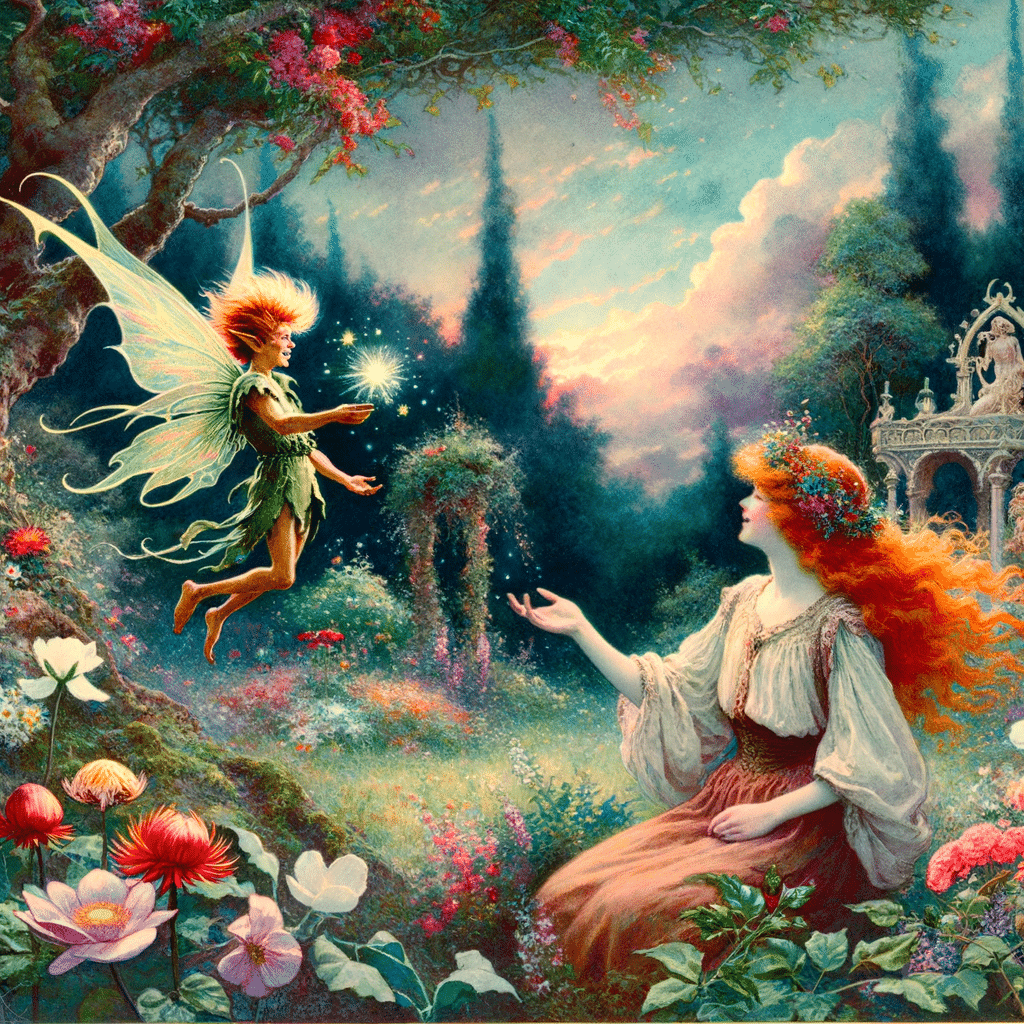
Faeries Abductions: Key Points
-
Faeries are ancient beings from folklore, neither wholly good nor evil, who inhabit a hidden realm alongside the human world.
-
Historical accounts describe faerie abductions where people were taken to Fairyland, often returning altered or finding decades had passed.
-
Faerie encounters often involve enchantment through music, beauty, or mysterious lights that lure individuals away from ordinary reality.
-
Modern reports of missing time, strange beings, or time slips mirror traditional faerie abduction patterns, despite new interpretations, like aliens.
-
Protective measures include carrying iron or salt, avoiding faerie food, and resisting invitations from unknown entities at liminal times or places.
-
Those seeking to escape faerie captivity must refuse faerie gifts, hold onto earthly memories, and never look back if a chance to return appears.

Introduction
Modern faerie abductions come from a long history of folklore about hidden worlds, strange disappearances, and encounters with beings from other worlds. Many people today think of fairies as gentle, winged creatures from children’s stories. However, older traditions say that they are powerful, unpredictable beings that live alongside humans. People often think of them as living in a world that isn’t visible to us, sometimes called the Otherworld, Fairyland, or Tir na nÓg. They can cross over into our world to interact with or mess with people’s lives. Reports of strange disappearances, time slips, and unexplainable encounters continue to echo these old stories in modern times. This implies that the boundaries between our world and theirs could still be fragile in certain areas.
Fairy Abductions
In traditional stories, fairies are not kind or delicate; they are powerful forces of nature. They come mostly from Celtic traditions and can be anything from beautiful, haunting beings to scary, shadowy figures that walk around without being seen. They don’t belong completely to good or evil, and they have their own rules. They often punish people who are rude or become involved in other people’s business without warning. They live in mounds, forests, ruins, or other places that are on the edge of two worlds, like crossroads and misty hillsides. They come out at twilight when the fabric between worlds loosens. If you met a faerie, you could be enchanted, glamorized, or lured away by music, beauty, or promises of wonder.
People who were taken into Fairyland often disappeared for days, months, or even centuries, according to historical accounts of faerie abductions. Occasionally these abducted people returned, confused, older, or unaffected by time, but they remained unique. The Queen of Elfland took Thomas the Rhymer from Scottish folklore and gave him the gift—or curse—of prophecy. Irish stories tell of mortals who danced at a faerie feast and thought only hours had passed, but in the mortal world, decades had passed. Changelings also often took the place of children, which left families confused by strange, inhuman behavior. These stories were once ways to explain things like disappearing, going crazy, or fate that didn’t make sense to most people (Harte, 2022).
In Celtic folklore, fairy abductions frequently function as punishment or retribution for individuals or families that have offended the fairies, especially by desecrating sacred sites. For example, Gagnon says that when a fairy kidnaps someone, they are rarely seen again, which is a tremendous loss for both the person who was kidnapped and their community. The protective nature of fairies over their sacred spaces is a theme in abduction stories that shows how important it is to respect these spaces to avoid undesirable things happening (Gagnon, 2017).
Wehlau elaborates on this notion by examining how abduction themes in medieval literature, such as Sir Orfeo, illustrate the dichotomy between physical force and the nuances of patience and negotiation in the restoration of dignity and autonomy from captors. This highlights a fundamental philosophical inquiry into power dynamics, wherein self-discipline and verbal persuasion prevail over physical force (Wehlau, 2025). The story of Heurodis in Sir Orfeo is another example of this dynamic. Her kidnapping and subsequent rescue illustrate the concepts of loss and recovery of selfhood (Findon, 2006).
In Irish folklore, stories about abductions often include themes of loss and the abductor’s being from another world. For example, Ojrzyńska looks at how playwrights from the Irish Revival used these ideas in their work, focusing on changelings and the difference between individual identity and supernatural agency (Ojrzyńska, 2017). Dowd also talks about how folk beliefs link physical places, like ringforts, to fairies. This phenomenon illustrates the blending of reality and myth in these abduction stories, highlighting the community’s fear of loss and absence (Dowd, 2018).

Analysis
These stories also have a lot of emotional weight when it comes to abductions. Research indicates that, in specific cases, the motivations of the abductor correspond with the psychological conditions of the individuals involved, implying a more profound symbolic significance underlying these kidnappings. In certain interpretations of The Faerie Queene, fairy abductions are depicted as a metaphysical experience rather than conventional death, suggesting the possibility of the individual’s return, thus altering the understanding of fate and agency (Pugh, 2018). This dynamic of emergence and disappearance resonates within the framework of cultural conflicts, notably in the instance of Bridget Cleary, whose murder was predicated on the notion that she had been substituted by a changeling due to her unaccounted-for ailments (Williamson, 2023).
Today, people don’t discuss fairies as much, but there are still similarities in modern events. People who say they have lost time, met glowing beings, or woke up in strange places talk in ways that are similar to old fairy stories. Strange things still happen in remote forests, foggy valleys, and old sites. Some people say they heard otherworldly music or followed flickering lights, only to lose their way for hours. Many people think of these events as psychological episodes or alien encounters, but people who know about folklore see the old patterns: lures through sound, enchantment through beauty, and the sudden feeling of having stepped outside of normal reality (Bullard, 1989).
Folklore often talks about getting ready and protecting yourself from faerie abduction, and these stories are still important to people who believe in them. Common warnings include not wandering alone at twilight, respecting sacred natural sites, and never taking food or gifts from unknown people. People thought that carrying cold iron, salt, and bread would keep fairies away. Being polite and careful is critical, because being rude or making fun of fairies can make them angry. No matter how inviting they seem, one should be careful about following music, lights, or seductive voices coming from the dark.
If you think faeries have taken you or lured you away, tradition has advice on how to gain back. You will be tied to Fairyland if you accept food or drink from someone. Don’t tell anyone your real name, because doing so gives them power. To ground your spirit, contemplate something earthly, like a memory, a loved one, or an object from home. If you can get away, don’t look back, because even a last look can pull you back in. People say that grounding oneself with firelight, iron, or the company of others when they return can help break the spell that has been on them for a long time.
Conclusion
Faerie abductions, whether interpreted as metaphor, psychological experience, or literal occurrence, persist in embodying a perennial human fear and intrigue: the potential to transcend the known. The stories remind us that beauty can hide danger and that wonder can cost something. In the modern world, the Otherworld may seem less obvious, but it still exists in strange meetings, lost moments, and whispers in the twilight. The lore lives on as both a warning and a mystery, telling us to respect the unseen forces that may still be just out of sight.
References
Bullard, T. E. (1989). UFO abduction reports: the supernatural kidnap narrative returns in technological guise. Journal of American Folklore, 147-170.
Dowd, M. (2018). Bewitched by an elf dart: fairy archaeology, folk magic and traditional medicine in ireland. Cambridge Archaeological Journal, 28(3), 451-473. https://doi.org/10.1017/s0959774318000124
Findon, J. (2006). Napping in the arbour in the dig-mary magdalene-play. Early Theatre, 9(2). https://doi.org/10.12745/et.9.2.728
Gagnon, J. P. (2017). Celtic nightshade.. https://doi.org/10.31274/itaa_proceedings-180814-261
Harte, J. (2022). Prisoners of the gods: The captivity narrative in fairy lore. Gramarye, (22).
Ojrzyńska, K. (2017). Supernatural substitution and abduction in the drama of the irish revival. Brno Studies in English, (2), [151]-164. https://doi.org/10.5817/bse2017-2-8
Pugh, S. (2018). Orpheus and eurydice in the middle books ofthe faerie queene. Spenser Studies, 31-32, 1-41. https://doi.org/10.1086/695570
Wehlau, R. (2025). The power of patient kingship: supernatural abduction in sir orfeo and the third branch of the mabinogi. Florilegium, 38, 4-15. https://doi.org/10.3138/flor-2023-0009
Williamson, M. (2023). Poems from into the night that flies so fast. Estudios Irlandeses, (18.2), 119-127. https://doi.org/10.24162/ei2023-12242





Leave a Reply