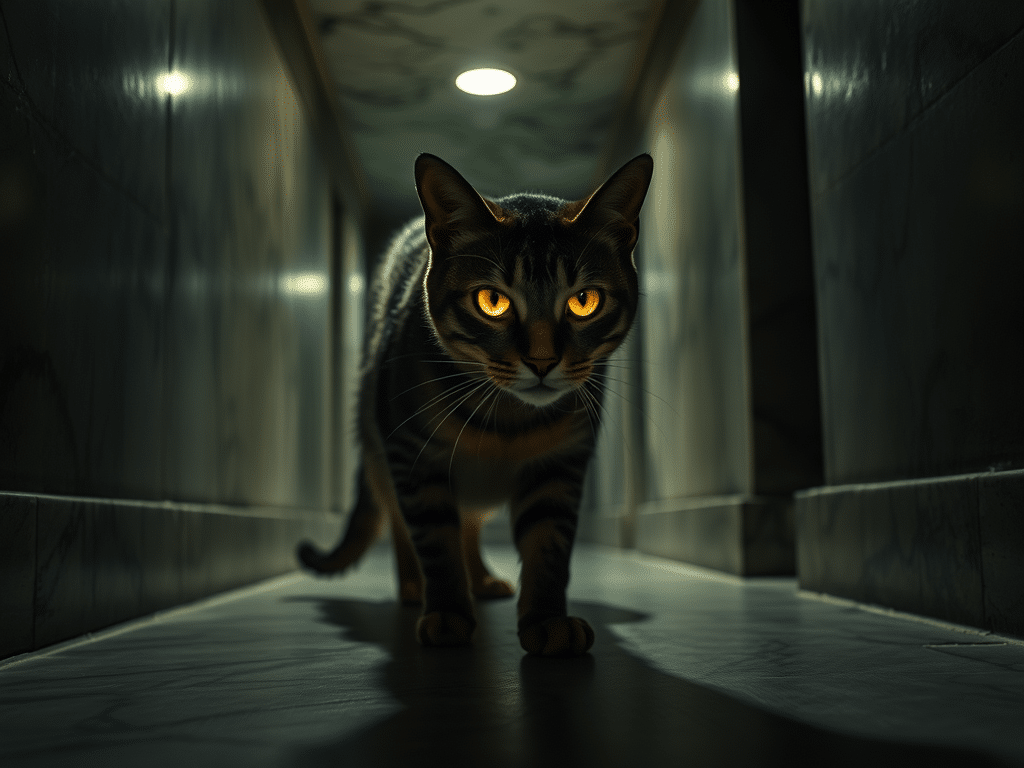
Demon Cat of DC: Key Points
-
The Demon Cat legend began in 1862 at the U.S. Capitol, appearing as a normal cat before growing to elephant size with glowing eyes.
-
Witnesses report overwhelming terror, with guards firing at the apparition, though skeptics suggest misperception of ordinary basement cats.
-
The legend connects to D.C.’s broader hauntings and allegedly appears before national tragedies like the 1929 crash and JFK’s assassination.
-
The story persists through oral tradition among night-shift workers, helping build community and process anxiety in historic spaces.
-
President Coolidge’s real wandering cat, Tige, may have inspired the belief that the Demon Cat travels between buildings.
-
The legend endures by representing national anxieties, democratizing institutional history, and adapting to each generation while maintaining its prophetic elements.

Introduction
Washington, D.C., the center of American political power, has secrets hidden under its marble floors and grand hallways that go beyond just debates and decisions made by lawmakers and presidents. The Demon Cat is a supernatural cat that has haunted the basements and hallways of federal buildings for more than a century and a half. It is one of the capital’s most persistent and intriguing ghost stories. This strange figure, which is often just called “D.C.,” is more than just a ghost story. The Demon Cat is a symbol of the intersection of historical trauma, cultural superstition, and the unique oral traditions that have grown up in the country’s most powerful institutions. The Demon Cat is one of America’s most intriguing urban legends because it is both a sign of national tragedy and a symbol of Washington’s hidden supernatural landscape.
Overview
The Demon Cat story first came out during one of the darkest times in American history. The Demon Cat first appeared in the US Capitol in 1862, during the height of the Civil War. The White House Historical Association says that “the first recorded appearance of the Demon Cat was in the United States Capitol in 1862” when the basement of the building was used as a bakery to feed Union soldiers (Shogan, 2021). At first, the creature looks like a normal housecat, but this seemingly harmless look quickly turns into something much scarier. The Demon Cat looks like a normal-sized housecat at first, but then it quickly grows to the “size of an elephant before the eyes of a terrified observer” (Shogan, 2021), according to a Washington Post article from 1898. This dramatic change in size is what makes the Demon Cat different from other cat ghosts and is a big part of why it has such a lasting effect on people who say they saw it. Witnesses disagree on what the cat looks like; some say it looks like a tabby and others say it looks like a black cat. However, everyone agrees that it can grow in a supernatural way and has a scary presence (Shogan, 2021).
People who have seen the Demon Cat have had a wide range of reactions, from fear to disbelief. Each story adds to the legend’s complexity and credibility. A 1935 Washington Post article provides a clear picture of how scary the Demon Cat looked. One person said its eyes “glow with all the hue and ferocity of the headlights of a fire engine” (Shogan, 2021). Guards and nightwatchmen who work the graveyard shifts in the basement of the Capitol have reported the most sightings. At least one guard says he shot at the ghost, only to see it disappear into thin air (Shogan, 2021). Witnesses say that when the cat shows up, they feel overwhelming dread and paralyzing fear. This illustration shows how much these encounters can affect people mentally. Krepp (2012) says that the story of the Demon Cat has become so ingrained in Capitol culture that guards and maintenance workers still tell it to each other during night shifts. This practice maintains the oral tradition that has preserved the story for generations. Some skeptics have come up with logical reasons for the sightings. They claim that the Capitol’s basement once housed many real cats that were used to catch mice, and that guards lying down might perceive a normal cat approaching them as being larger than it actually is due to their position (Shogan, 2021). But these practical explanations haven’t done much to lessen the legend’s hold on the minds of people who work in and visit the Capitol.
The Demon Cat is part of a long history of hauntings in Washington, D.C.’s most famous buildings. It is one of many supernatural events that happen in the city. The White House itself says that it has many ghosts, the most famous of which is Abraham Lincoln. Over the years, First Ladies, visiting dignitaries, and White House staff have all claimed to have seen Lincoln’s ghost (Shogan, 2021). The Demon Cat story goes beyond the Capitol to the White House, where it is said to show up on the ground floor as a sign of national tragedy. A White House guard saw the Demon Cat just before the stock market crash in 1929, and another nightwatchman saw it just before John F. Kennedy was killed in 1963 (Shogan, 2021). This prophetic aspect links the Demon Cat to other hauntings in Washington that appear to bear the weight of history and national trauma. Avery (1993) says that “there’s a supernatural tale at most every corner in town.” This phenomenon shows how the ghost stories of the capital show how important it is in history and how hard it is for people who work in its halls of power. There is more than just the Demon Cat living in the Capitol building. There are also the ghosts of a Union soldier and strange footsteps heard in empty hallways (Jordan, 2009). These interrelated legends create a supernatural landscape that is unique to Washington. This landscape blurs the lines between historical memory and paranormal activity, making the city stand out in American memory.

Impact
The enduring influence of the Demon Cat legend elucidates significant aspects of American folklore, institutional culture, and the human necessity for narrative within realms of authority. In 2018, Grundhauser looked into the question of “why the U.S. Capitol’s ‘Demon Cat’ legend is so persistent.” He said that the story is helped by the oral tradition of ghost stories that goes back to Renaissance England and is still popular in places where people work alone at night. Capitol culture employs the legend in numerous ways. It entertains people, brings workers together who share the stories, and maybe most importantly, it helps them cope with the stress and anxiety that come with working at the center of American government. Rosenwald (2018) wrote that the demon cat is a great example of how history, cultural beliefs about cats as magical creatures, and the Capitol’s own unique setting all came together to make a great story. The legend’s growth to include visits to the White House shows how folklore changes and grows over time to stay relevant and believable. According to Steve Livengood, a public historian for the United States Capitol Historical Society, the Demon Cat likely originated from a drunken guard who awoke to discover a colossal mouser cat in the basement. However, this practical explanation has never taken away from the story’s cultural power (Shogan, 2021). The story’s connection to predicting national disasters provides it a prophetic meaning that goes beyond just being a ghost story. It becomes an omen and a warning, linking supernatural belief with people’s worries about the country’s future.
The Demon Cat is more than just a fun story; it also touches on deeper themes about how institutions keep memories alive and how folklore grows in places of great power. Kelly (1989) remarked, “We live in a ghost town!” in reference to Washington’s supernatural landscape, implying that the abundance of ghost stories in the capital signifies a fundamental aspect of the American relationship with government and history. The Demon Cat story is especially powerful because it combines several strong symbols: the cat, which is a symbol of witchcraft and mystery in many cultures; the basement, which is a space between the public grandeur above and the hidden infrastructure below; and the night shift, which is a time when the normal rules of perception and reality seem to be broken. Davidson (1999) says that there are “plenty of spooks on Capitol Hill for Halloween,” but the Demon Cat is different from other Washington hauntings because it can move between buildings and is linked to national crises. This prophetic aspect makes the Demon Cat more than just a ghost; it becomes a supernatural way to tell how well the country is doing, showing up when things are at their worst. Edmundson (1999) wrote about how “many things go bump in the still of night in D.C.,” but the Demon Cat is one of the few things that has become famous. It has been in academic studies, tourist guides, and popular culture representations of Washington. For more than 150 years, the legend has been able to change with new sightings and interpretations while keeping its main story elements.
The Demon Cat’s link to President Calvin Coolidge’s wandering cat, Tige, is a fascinating example of how historical fact and supernatural legend can come together to make more intriguing folklore. During the Coolidge administration, Tige, also known as Tiger, lived at the White House. He became famous for disappearing for days at a time and showing up at other federal buildings in Washington (Shogan, 2021). The cat’s desire to travel got a lot of media attention, with newspapers covering his trips and his eventual return to the White House. This real cat’s fondness for moving between government buildings may have led people to believe that the supernatural Demon Cat could do the same between the Capitol and the White House, which helped the legend grow beyond just one place. Shank (1992) examined how a nation’s capital can be a haunting place, recording the ways that historical events and people leave behind traces that show up as ghost stories and supernatural legends. The possible effect of Tige on the story of the Demon Cat shows how folklore changes over time by adding new people and events to stay relevant. This combination of real history (a cat that really did wander between buildings) with supernatural stories (a ghost cat that shows up as an omen) is a beneficial example of how legends become more believable and last longer in people’s minds.
Analysis
The psychological and sociological aspects of the Demon Cat legend elucidate the operation of folklore in institutional contexts and high-stress environments. People who work in the Capitol and the White House have their set of stresses. They work in buildings that are full of history, and they often do it alone at night when the grand halls are empty and the shadows appear to grow longer. Yager (2009) looked into the “haunted house” and “Senate” phenomenon. He said that the many ghost stories about government buildings show how important history is and how stressful it is to work in these places. The Demon Cat story provides these workers a common story that brings them together, helps them cope with stress, and makes them feel like they are part of a special group of people who know the building’s secrets. Guards, maintenance workers, and long-time employees pass the story down orally, which keeps it alive and allows it to change over time as each generation adds their experiences and interpretations. Abrams (2003) said that the “Demon cat” shows up during times of national crisis and then disappears without warning. This phenomenon shows that the creature is more than just a fun story; it is a real belief system for some people who work in these areas. The legend also serves a practical purpose: it keeps workers awake during long night shifts, provides them something to talk about that brings them together, and helps them make sense of the creepy feelings that come up when you’re alone in a big, old building after dark.
The continued existence of the Demon Cat legend in the twenty-first century shows the strength of oral tradition and reflects how Americans feel about their government buildings and national history. The Demon Cat has changed to fit in with modern times while keeping its basic traits. This tale is different from many ghost stories that fade as cities grow and technology changes the places where oral tradition thrives. Modern stories are still being told, and they are now shared online through social media and forums, as well as in person by workers at the Capitol and the White House. The legend has received an unusual amount of official recognition for a piece of folklore. It has been mentioned in materials from the Capitol Historical Society, publications from the White House Historical Association, and tours that acknowledge the building’s supernatural reputation. Even if done jokingly, this institutional acceptance of the legend demonstrates how folklore can become an integral part of an institution’s identity and culture. In a way, the Demon Cat makes history more accessible to everyone. Tourists and the public can see the grand ceremonial spaces of the Capitol and White House, but the workers who clean and protect these buildings at night have access to a different, more mysterious side of these spaces, where history and the supernatural meet in ways that official stories can’t fully explain.
The Demon Cat legend raises larger questions about national identity, collective memory, and how stories help people confront trauma. The creature’s supposed appearances before major disasters, like the stock market crash in 1929 and the assassination of President Kennedy, show that people want to identify patterns and warnings in historical tragedies. They want to believe that disasters come from supernatural signs instead of just random or ordinary causes. This prophetic aspect of the legend reveals a profound apprehension regarding national fragility and the constraints of human agency over historical occurrences. The fact that the Demon Cat only shows up in buildings where the country’s leaders work gives the story even more meaning. It could be a way for people to express their fears about how fragile democratic institutions are or how hidden forces might affect the country’s future. The legend has lasted from the Civil War to the World Wars, the Cold War, and even into the present day. The evidence indicates that it can change with the times and take on new meanings while still telling the same story. Every generation of Americans who works in or visits the Capitol has found something meaningful in the story of a strange cat that grows to enormous sizes and shows up when the country is at its worst.
Conclusion
The Demon Cat of Washington, D.C., is one of the most famous and long-lasting urban legends in the United States. It has been around for more than 150 years thanks to a mix of intriguing story elements, institutional oral tradition, and cultural significance. The legend has changed over time, from its first recorded sighting during the Civil War to modern sightings and retellings. It still has the power to scare, fascinate, and make people question the nature of history and memory in places of national importance. The story changes from a single sighting in a basement of the Capitol to a moving harbinger of national tragedy that appears at many government buildings, illustrating how folklore can evolve and incorporate new elements while maintaining its core ideas. The Demon Cat is a unique part of American supernatural lore. It is connected to Washington’s larger landscape of hauntings, but it is different because of its prophetic connections and dramatic changes. The legend’s influence goes beyond just being entertaining; it also raises important questions about how institutions keep memories alive, how workers deal with the mental stress of working in places with a lot of historical significance, and how communities make shared stories that connect them across generations.
Whether considered a real supernatural event, a group delusion, mistaken basement mice, or just a story, the Demon Cat lives on because it speaks to something important about being American: the idea that our most important buildings hold secrets, that history leaves clues that only those who know where to look can see, and that the strange can show up in the most normal ways before revealing its true, scary nature. The legend of the Demon Cat will probably live on as long as guards patrol the Capitol and White House at night, workers tell stories during lonely shifts in historic buildings, and the country goes through times of crisis and uncertainty. The story will change to fit new situations, but it will always be able to disturb, interest, and remind us that even in the heart of rational political power, mystery and the inexplicable still hold sway over our imaginations.
References
Abrams, J. (2003, October 31). U.S. Capitol is not without its own ghostly tales; ‘Demon cat’ is said to appear at times of national crisis, vanish suddenly. The Herald-Sun.
Avery, C. (1993, May 28). Ghost story; There’s a supernatural tale at most every corner in town. The Washington Times.
Davidson, L. (1999, October 27). Plenty of spooks on Capitol Hill for Halloween. Deseret News.
Edmundson, S. (1999, October 30). Halloween: Many things go bump in the still of night in D.C. The Patriot Ledger.
Grundhauser, E. (2018, March 13). Why the U.S. Capitol’s “Demon Cat” legend is so persistent. Atlas Obscura. https://www.atlasobscura.com/articles/demon-cat-us-capitol
Jordan, E. (2009, July 13). Ghosts wander the hill. Roll Call. https://web.archive.org/web/20090720084124/https://www.rollcall.com/2009/07/13/ghosts-wander-the-hill/
Kelly, T. (1989, October 26). We live in a ghost town! The Washington Times.
Krepp, T. (2012). The haunted Capitol building: The Demon Cat. Arcadia Publishing.
Rosenwald, M. S. (2018, October 31). The “feline spook of the Capitol”: How a Demon Cat became Washington’s best ghost story. The Washington Post. https://www.washingtonpost.com/history/2018/10/31/feline-spook-capitol-how-demon-cat-became-washingtons-best-ghost-story/
Shank, T. S. (1992, November 1). Nation’s capital can be a haunting place. The San Diego Union-Tribune.
Shogan, C. (2021, September 29). Demon Cat – The tale of a wanderlust feline ghost. White House Historical Association. https://www.whitehousehistory.org/demon-cat
Yager, J. (2009, March 4). Haunted house – and Senate. The Hill. https://thehill.com/homenews/house/19892-haunted-house-and-senate/
Leave a Reply