Haunted Bars: Key Points
-
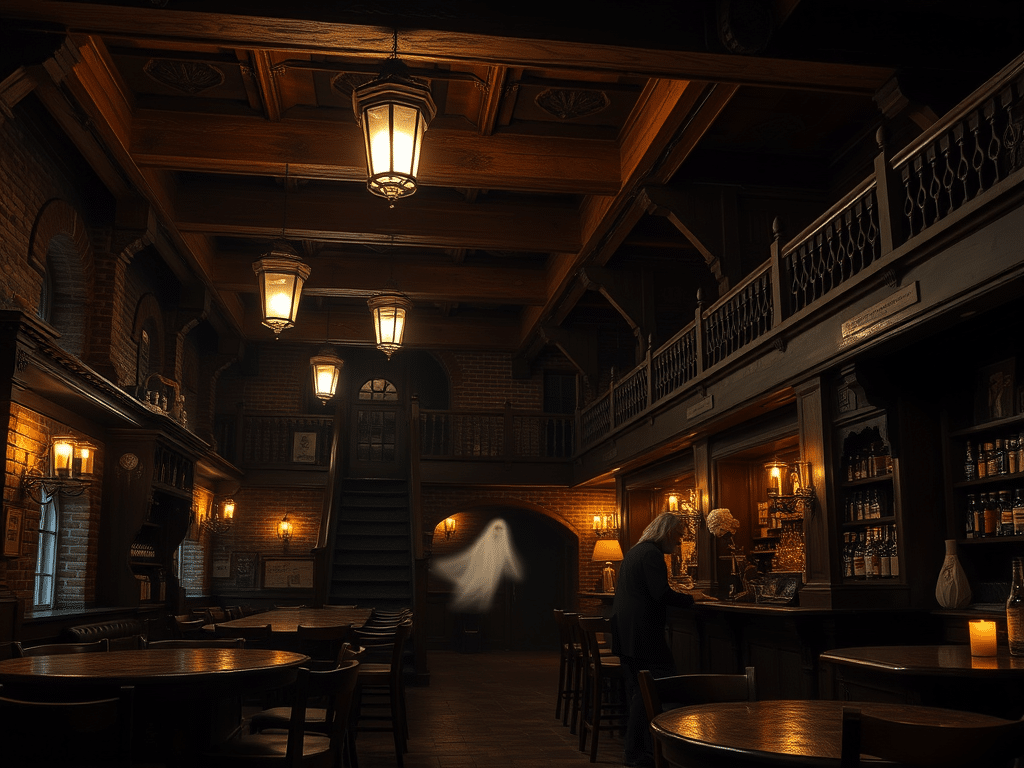
Haunted bars blend hospitality with supernatural folklore, housed in historic buildings with atmospheric features like dim lighting and creaking floors that enhance their eerie reputations.
-
Common paranormal reports include objects moving on their own, shadowy figures, disembodied voices, cold spots, and feelings of being watched or touched by invisible presences.
-
Famous haunted bars feature folklore tied to tragic deaths, such as the White Horse Tavern’s owner spirit, London’s Ten Bells linked to Ripper victims, and California’s Blue Lady.
-
Believers attribute hauntings to psychic energy or spirits attached to locations, while scientific explanations point to electromagnetic fields, infrasound, or environmental factors creating mistaken sensations.
-
Skeptics cite alcohol impairment, pareidolia, suggestion, and natural building sounds as explanations, questioning authenticity given financial incentives to promote ghost stories.
-
Haunted reputations boost tourism and revenue through ghost tours and events, while motivating historic preservation and fulfilling human needs for mystery and connection to the past.

Introduction
Haunted bars offer a compelling blend of hospitality, history, and the paranormal. These establishments, where people gather to drink and socialize, also serve as the backdrop for stories of spectral visitors who seem to have taken up permanent residence. These locations, found in every corner of the globe, function as meeting spots. They’re not just for the living; they’re also said to attract spirits. These apparitions, it seems, are drawn to the places where they once experienced solace, joy, or sorrow. Haunted bars, with their blend of history and the unexplained, spark curiosity. They prompt us to consider memory, the significance of a location, and our innate desire to discover explanations for the inexplicable. This combination makes them appealing to a wide range of people, from those simply looking for a drink to those actively seeking the paranormal.
Haunted Bars
Bars are social places where people mainly go to drink alcohol. They also offer a space for people to meet, talk, and relax, providing a break from their daily lives. Historic bars often occupy structures that have stood for hundreds of years. These places feature heavy wooden beams, original brickwork, and cellars that plunge into shadow, all of which contribute to an ambiance perfect for tales of the supernatural. Long, polished wooden bars, worn smooth by time and the many people who have used them, often grace these places. The lighting is usually subdued, creating a play of shadows in the corners. Back rooms or upper floors, too, might have held different functions over the years. The physical structure of older bars, with their creaky floors, hidden passages, and signs of age, creates an atmosphere that can feel eerie, even without any supernatural elements (Grafe & Bollerey, 2007).
Paranormal happenings in bars often share familiar traits, regardless of where you are or the local customs. Bartenders and other staff often recount tales of bottles inexplicably shifting, glasses gliding across tables with no apparent cause, or the unsettling feeling of being observed when the bar is empty and the lights are low. Patrons have described glimpsing shadowy forms just out of sight, feeling inexplicable chills in certain corners of the bar, and even sensing unseen hands resting on their shoulders. Several people have reported hearing disembodied voices, the sound of footsteps on staircases, or the unmistakable noise of furniture being shifted in the vacant rooms above the main bar. People have reported doors that open and close by themselves, lights that flicker without a clear cause, and drinks that seem to move or spill on their own when someone isn’t looking (Belanger, 2020).
Stories about haunted bars often focus on tragic or dramatic deaths that happened there, or they feature fascinating people who spent their last days in those places (Zwicker, 2022). There are reports of hauntings at the White Horse Tavern in Newport, Rhode Island. Patrons have reported encounters with the ghost of a former owner, who passed away within its walls. People often spot this spectral figure near the fireplace or at the far end of the bar. People say that The Ten Bells in London, a pub linked to the women murdered by Jack the Ripper, is haunted. Patrons have reported seeing a ghostly figure, a woman in Victorian clothing, drifting through the establishment. Grim tales of torment lace the LaLaurie Mansion’s bar in New Orleans. Patrons have claimed to hear screams and see apparitions within the bar’s confines. The Moss Beach Distillery, a California establishment, has its own spectral resident: the Blue Lady. This ghost, believed to be the spirit of a woman who met her end in the vicinity during the 1930s, is said to be a mischievous presence. Patrons report objects being moved and sightings of the ghostly figure. These tales, handed down and then, inevitably, stretched a bit, become woven into the very fabric of the bar, attracting those who hope to encounter something otherworldly.

Theories
Different viewpoints, from psychological to supernatural, try to explain these phenomena, leading to very different interpretations of the same events by both skeptics and those who believe. Those who subscribe to paranormal theories propose that bars, given their history of concentrated human emotion and extended social engagement, could potentially gather psychic energy. This energy, they believe, might then surface as ghostly phenomena. Some theorists propose that spirits are often linked to places where they experienced important life events, found community, or died, which makes bars likely locations for hauntings. The “stone tape theory” suggests that the physical environment can record traumatic or emotionally charged events, which could explain why some apparitions repeat. Environmental factors, including electromagnetic fields, infrasound, and carbon monoxide, can create sensations that people interpret as paranormal. These sensations include feelings of unease, hallucinations, and the perception of a presence.
Stories about haunted bars often arise from a society’s history and cultural background. Good’s research on hauntology emphasizes the psychological and social aspects of ghost stories and how they help shape shared memories. Good (2019) suggests that ghost stories serve as a way for societies to address and remember traumatic events, which then influences current behaviors. Eaton also discusses how communities create their own ghost stories, combining traditional tales with new ones that come from shared experiences (Eaton, 2018). The stories about shared experiences bring visitors and locals closer together, which makes the bar’s role in the community stronger.
Moreover, the cultural beliefs people hold about ghosts significantly influence what happens in these bars. Baker and Bader’s research highlights the prevalence of ghost beliefs among younger people, suggesting a connection between these beliefs and modern social interactions and identity (Baker & Bader, 2014). In the dim light of haunted bars, the act of storytelling becomes a ritual. Customers share tales, reinforcing established narratives. This practice cultivates a space alive with cultural exchange and interaction.
Haunted bars offer a kind of performance art, a show that speaks to the people who visit them. The appeal of these places is heightened by their historical backgrounds; some bars are linked to important events or famous people. Miller’s analysis of Pfaff’s saloon demonstrates how locations that functioned as social centers for notable figures, including Walt Whitman, evolve beyond their historical context, transforming into dynamic narratives that persistently influence contemporary visitors (Miller, 2015).
Moreover, the blending of urban legends and real historical figures creates a theatrical experience. This experience acknowledges the past while also dramatizing it through various methods, such as themed events and paranormal investigations. Lang’s work examines how these folkloric elements persist in modern stories, demonstrating the lasting impact of ghostly traditions on our current understanding (Lang, 2011). This theatricality, coupled with the deep history these bars hold, enriches the experiences of patrons looking for something beyond a simple drink.
Skeptics provide alternative explanations for the majority of reported paranormal occurrences in bars, emphasizing psychological influences, environmental factors, and the efficacy of suggestion. Alcohol consumption naturally impairs perception and judgment. As a result, people in bars are particularly susceptible to misinterpreting ordinary events as supernatural occurrences. Pareidolia, the tendency to see patterns in random things, explains why people often see faces or figures in shadows, wood grain, or the dim lighting often found in bars. The phenomenon of suggestion is at play here: when a bar develops a ghostly reputation, people show up already primed to see the supernatural in anything even slightly unusual. As they settle, old buildings naturally produce sounds. They also have drafts that create cold spots, and their aging plumbing and electrical systems can cause strange noises and flickering lights. Moreover, the financial benefit of using ghost stories in marketing raises questions about the truth of some claims, because a reputation for being haunted can significantly boost business.
Impact
Haunted bars, with their roots in local legends and spectral stories, have emerged as major draws for those interested in the paranormal. These places provide more than just a drink; they encapsulate the stories we tell about ghosts, the past, and how we come together. The growing popularity of these establishments reflects broader changes in how consumers behave, where interest in the supernatural combines with traditional leisure activities like social drinking.
The influence of haunted bar legends goes beyond simple ghost stories, affecting tourism, local identity, and the preservation of historic buildings. Establishments that lean into their ghostly tales frequently attract more visitors. Ghost hunters, paranormal enthusiasts, and inquisitive travelers, all drawn by the allure of history intertwined with the potential for the unexplained, are often the ones filling the seats. These places often host ghost tours, Halloween-themed events, and paranormal investigation nights, all of which bring in considerable money and media buzz. A bar with a ghost story can become a sought-after spot, drawing in visitors and boosting the local economy. These situations can lead to new jobs for tour guides and those who provide paranormal entertainment. Ghost stories can help protect old buildings and places. Buildings can gain cultural importance because of their connections to the paranormal, which then leads to restoration efforts and the granting of landmark status. The tales of haunted bars, too, help shape a place’s character, weaving themselves into the fabric of local lore. They keep alive the stories of those who came before, of heart-wrenching moments, and of the social tapestry of the area, all presented in a way that’s both captivating and easy to remember.
The growing interest in paranormal tourism closely correlates with the rise of haunted bars. In places like the UK, where history and hauntings often intertwine, pubs with ghostly reputations draw in those seeking something different—a drink and a possible encounter with the otherworldly. Pedreño-Peñalver and his team emphasize that these places, which can include haunted hotels and traditional pubs known for their ghost stories, encourage a culture of exploration and leisure for tourists (Pedreño-Peñalver et al., 2023). This exploration often takes advantage of the basic human interest in the unknown, connecting with cultural stories about death and what happens after.
Furthermore, Houran and his team argue that combining interactive paranormal experiences can help make these locations profitable. This is because people participate in ghost tours and ghost-hunting activities, which then improves the overall experience (Houran et al., 2020). This commercial aspect showcases the packaging of the supernatural for consumer enjoyment, exemplifying a contemporary interpretation of historical narratives that pique public interest.
Conclusion
Haunted bars occupy a unique position in both paranormal culture and the hospitality industry, acting as places where history, psychology, and the possibility of the supernatural come together. The question of whether the ghostly experiences reported in these places are caused by real paranormal activity, environmental factors, psychological issues, or deliberate deception remains a matter of personal belief and ongoing debate. These stories, without a doubt, fulfill basic human needs for mystery, a connection to the past, and experiences that go beyond the ordinary aspects of everyday life. As long as people gather in bars to drink, socialize, and share stories, the legends of ghostly patrons who refuse to leave will continue to be told, investigated, and debated. This ensures that haunted bars will remain a lasting part of our culture.
References
Baker, J. O. and Bader, C. D. (2014). A social anthropology of ghosts in twenty-first-century america. Social Compass, 61(4), 569-593. https://doi.org/10.1177/0037768614547337
Belanger, J. (2020). The World’s most haunted places: from the secret files of ghostvillage. com. Red Wheel/Weiser.
Eaton, M. A. (2018). Manifesting spirits: paranormal investigation and the narrative development of a haunting. Journal of Contemporary Ethnography, 48(2), 155-182. https://doi.org/10.1177/0891241618756162
Good, B. J. (2019). Hauntology: theorizing the spectral in psychological anthropology. Ethos, 47(4), 411-426. https://doi.org/10.1111/etho.12260
Grafe, C., & Bollerey, F. (2007). Cafés and bars: the architecture of public display. Routledge.
Houran, J., Hill, S. A., Haynes, E. D., & Bielski, U. A. (2020). Paranormal tourism: market study of a novel and interactive approach to space activation and monetization. Cornell Hospitality Quarterly, 61(3), 287-311. https://doi.org/10.1177/1938965520909094
Lang, A. (2011). Cock Lane and common-sense. Cambridge University Press. https://doi.org/10.1017/CBO9780511974663 (Original work published 1894)
Miller, M. (2015). Levin, joanna and edward whitley, eds., whitman among the bohemians. Walt Whitman Quarterly Review, 32(3), 158-162. https://doi.org/10.13008/0737-0679.2156
Pedreño-Peñalver, C., Huertas-Valdivia, I., & Orea-Giner, A. (2023). An exploratory study of the future paranormal tourist experience on ghost tours. Journal of Tourism Futures, 10(3), 524-538. https://doi.org/10.1108/jtf-04-2023-0097
Zwicker, R. (2022). Haunted Pubs of New England: Raising Spirits of the Past. Arcadia Publishing.

Leave a Reply