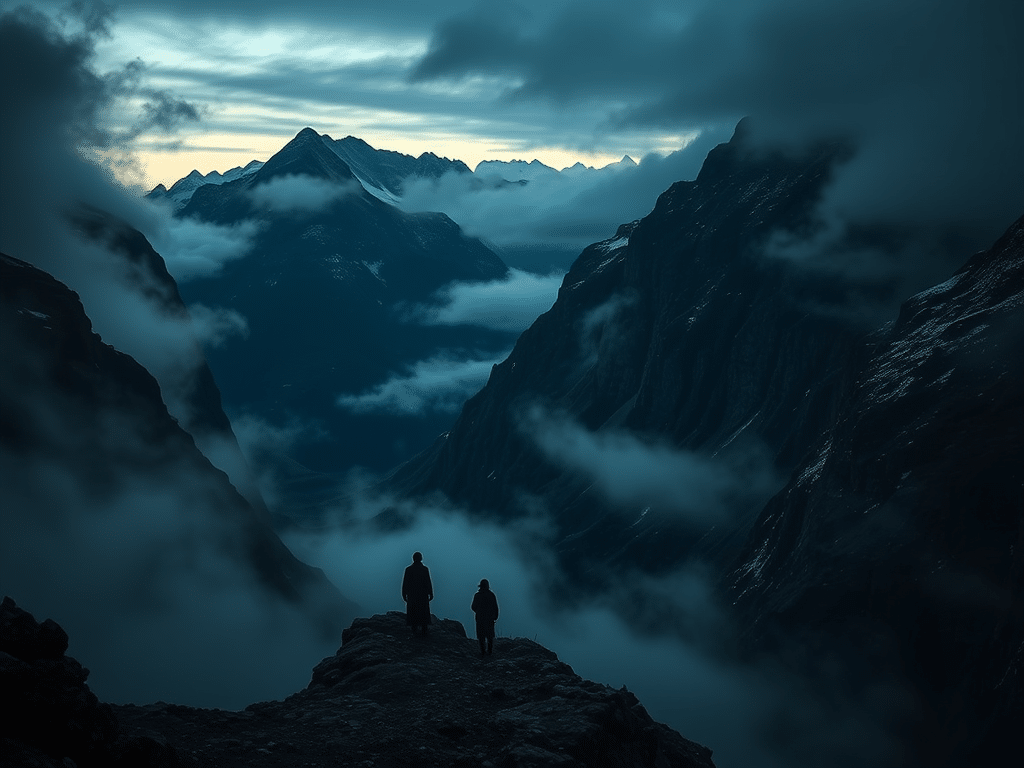
Ghosts and Fjords: Key Points
-
Ghost narratives in northern climates serve as cultural expressions of trauma and resilience, particularly among the Sámi, where hauntings reflect unresolved colonial traumas and cultural erasure (Dankertsen, 2022).
-
Fjords are dramatic geological formations made by glaciers. They have deep valleys and steep cliffs that make them look like they are between land and sea (Brown, 1883; Brown, 1884).
-
Ghosts and fjords intersect where natural beauty meets historical trauma, with Indigenous narratives depicting fjords as spiritually inhabited spaces and gateways between worlds (Mulk & Bayliss-Smith, 2007).
-
Theories range from environmental and psychological explanations to viewing hauntings as cultural resistance, though skeptical approaches often miss their important social functions (Dankertsen, 2022).
-
Ghost narratives impact mental health, social cohesion, and cultural survival in fjord communities, providing frameworks for processing collective challenges (Norström & Ramstedt, 2005; Moan et al., 2015).
-
These persistent narratives assert Indigenous presence, resist colonial erasure, and address fundamental concerns about memory, belonging, and relationships with landscape (Dankertsen, 2022).

Introduction
Ghost stories and other supernatural narratives have been a longstanding tradition in the harsh northern environments. These tales serve as reflections of the challenging surroundings and the intricate histories of the inhabitants. In locales characterized by deep fjords and prolonged, dark winters, ghost stories transcend mere entertainment; they function as a means for individuals to articulate their recollections, traumas, and coping mechanisms. Contemporary scholarship indicates that these ghost stories, particularly within Indigenous communities such as the Sámi of Norway, are potent instruments for cultural preservation and for critiquing the erasure of their histories through colonialism. The intersection of these chilling narratives with the geography of fjords creates a distinctive cultural environment. This landscape is characterized by the coexistence of natural beauty and historical suffering, the blending of spiritual and material realms, and the utilization of storytelling as a means of interpreting the past, present, and future.
Overview
Ghostly entities inhabiting northern climates exhibit particular characteristics shaped by their cultural and environmental contexts. The prolonged, dark winters of the Arctic and sub-Arctic, coupled with isolated communities and challenging living conditions, foster a belief in the supernatural and the continued circulation of narratives centered on themes of loss, absence, and the persistence of the past. In Sámi communities and other Indigenous groups in the North, ghost stories serve purposes beyond just entertainment. They are important for remembering the past and resisting colonial narratives that tried to erase Indigenous peoples’ connection to their land. Dankertsen’s research suggests that Sámi ghost stories serve as reminders of unresolved trauma related to colonialism and the erasure of Indigenous peoples. These ghostly figures, as Dankertsen (2022) shows, represent those whose voices were silenced in official histories. They remind people of their ancestors, their connection to the land, and the lasting effects of past marginalization. The Ahtna Kwáashk’i Kwáan clan’s narratives, which depict glacier spirits guiding their community, serve as a pertinent illustration of how northern ghost stories frequently incorporate elements of the natural world, including spirits associated with glaciers, water, and mountainous terrain. This integration of supernatural occurrences with natural phenomena mirrors perspectives that attribute spiritual significance to the landscape, wherein bodies of water and geological formations function as conduits between realms, and the boundary separating the living from the deceased is rendered porous.
Fjords, among the most striking and aesthetically pleasing natural formations globally, owe their existence to millennia of glacial activity and subsequent sea level fluctuations. These profound, slender inlets, characterized by their steep cliffs, towering mountains, and dark waters, constitute the coastal geography of Norway, Iceland, Greenland, Alaska, and various other northern regions. Consequently, they contribute to the creation of exceptionally picturesque landscapes. Brown’s earlier writings on Norwegian fjords specifically addressed their inherent beauty. Brown (1883; 1884) described the deep valleys formed by ancient glaciers, the steep mountains that rise from the water, and the calm yet powerful nature of these waterways. From a geological perspective, fjords are the result of massive glaciers moving through existing river valleys during ice ages, which deepened and widened them. The sea level rose and flooded the valleys when the glaciers melted. The constructed landscapes evoke a sense of liminality, situated at the interface of terrestrial and marine environments, the human and the natural, and the known and the unknown. Fjord depths frequently surpass the adjacent oceanic floors, while the constricted passages can create an impression of entrapment for both sound and light. Furthermore, the pervasive mist and shadow that often envelop these fjords contribute to the perception of supernatural occurrences within these spaces. These striking characteristics not only attract tourism and stimulate artistic expression but also enrich cultural narratives with elements of the supernatural, peril, and spirituality. Consequently, fjords serve as ideal settings for ghost stories and spiritual beliefs.
In northern cultures, a connection is often drawn between ghosts and fjords, stemming from the distinctive attributes of these locales and the narratives of their inhabitants. For instance, in Tysfjord, Norway, the fjords’ natural splendor sharply contrasts with the more somber histories of the local population, including the Sámi people’s experiences of colonial subjugation, forced assimilation, and cultural erasure (Dankertsen, 2022). The interplay of geography and cultural memory has fostered complex self-perceptions among the residents of these regions. The environment, encompassing both aesthetic appeal and instances of suffering, elicits a spectrum of human emotions, including happiness and sorrow. Indigenous narratives frequently intertwine spiritual beliefs with natural formations, such as fjords. This perspective aligns with wider ecological understandings, which emphasize the interconnectedness of ecosystems and the incorporation of spiritual significance within physical landscapes (Mulk & Bayliss-Smith, 2007). Additionally, religious traditions in northern Europe often see bodies of water, like fjords, as homes for spirits. Consequently, these associations contribute to the authenticity of ghost stories associated with these locales. The stark dichotomy of existence and nonexistence, of presence and absence, reverberates through the chilling narratives set against the unforgiving backdrop of fjords. These tales suggest that the profound depths of the waters might conceal the deceased, that farms precariously situated on the slender margins between mountains and the sea could harbor the unsettled spirits, and that the echoes of voices emanating from the cliff faces might be perceived as originating from an alternate realm. Consequently, the fjords function as both tangible and ethereal domains. They represent the convergence of the physical and the spiritual dimensions of existence, and ghost stories illuminate the multifaceted ways in which individuals engage with their environments, encompassing practical knowledge, the act of historical recollection, and spiritual comprehension.

Theories
Several theories attempt to explain the continuing belief in ghosts in coastal areas and northern climates. These theories include psychological and sociological perspectives, as well as those that focus on cultural functions and meanings. Certain scholars emphasize the influence of environmental conditions, positing that the extreme climate, prolonged darkness, and limited social engagement characteristic of northern regions could predispose individuals to supernatural experiences and beliefs. Conversely, others investigate the social functions of ghost narratives, contending that they serve to reinforce cultural boundaries, uphold societal norms, transmit historical knowledge, and provide mechanisms for interpreting anomalous occurrences or coping with collective trauma. Dankertsen’s research utilizes hauntings as a medium for societal and cultural critique, demonstrating the lasting effects of historical exclusion and contesting colonial viewpoints (Dankertsen, 2022). From this perspective, the act of recounting ghost stories serves as a mechanism for safeguarding and articulating Indigenous cultural heritage, thereby preserving their visibility in locales where official narratives have sought to marginalize them. Conversely, individuals skeptical about the existence of ghosts within fjord regions may prioritize naturalistic interpretations of phenomena that seem supernatural. The acoustic characteristics of fjords, for instance, can generate unusual auditory experiences, while the optical effects associated with auroras and meteorological conditions, or the psychological impacts of solitude and stress within a demanding environment, also warrant consideration. Conversely, such critical examinations frequently overlook the cultural significance inherent in ghost narratives. These tales are recounted not necessarily due to a belief in the literal existence of specters, but rather because they fulfill crucial psychological and social functions. The central inquiry transcends the mere existence of ghosts; it encompasses the roles these narratives play within the communities that propagate them, their function in preserving cultural knowledge and values, and their capacity to illustrate the interconnectedness of individuals, historical contexts, and the natural world.
Ghost stories in fjord towns have effects that go beyond folklore, influencing mental health, social bonds, and cultural survival. Studies on alcohol use in Norway and Sweden show a strong link between alcohol consumption and suicide rates across different groups. This suggests a complex relationship between social norms, individual struggles, and cultural stories of hardship and loss (Norström & Ramstedt, 2005; Norström & Rossow, 1999). These findings highlight the psychological and social aspects of life in fjord communities, where drinking is often connected to larger cultural narratives, similar to those found in ghost stories. Studies examining alcohol-related harm in Northern European countries often indicate a relationship between social behavior and its detrimental effects. As an illustration, elevated instances of alcohol-related harm often prompt perceptions of societal disintegration and community fragmentation (Moan et al., 2015). Within these contexts, the narration of ghost stories can serve to elucidate social challenges and preserve cultural memory. These narratives offer communities a mechanism for addressing contemporary issues while simultaneously maintaining a connection to their historical roots. Specifically, for Indigenous populations, ghost stories associated with fjord landscapes are of paramount importance in sustaining their cultural identity amidst pressures of assimilation and erasure. In areas with fjords, the link between identity and hauntings is strong because the haunting landscapes themselves strengthen Indigenous peoples’ stories of loss and strength (Dankertsen, 2022). By saying that ancestral spirits live in the land, these stories claim the land as Indigenous space, fight against colonial attempts to change history and territory, and connect younger generations to traditions and worldviews that are often not taught in schools. Therefore, these ghost stories have effects on many levels at once, including how people feel about themselves, how communities work together, how cultures fight back, and how people feel spiritually connected to the place.
Conclusion
In northern climates, the connection between ghosts and fjords is a complicated cultural event that can’t be boiled down to simple superstition or written off as simple belief. These stories arise from a combination of dramatic landscapes, harsh environmental conditions, complex histories of colonization and cultural suppression, and Indigenous perspectives that view the landscape as spiritually alive and morally significant. Fjords, situated at the intersection of terrestrial and marine environments, light and shadow, and aesthetic appeal and peril, provide an ideal setting for narratives that investigate the boundaries separating history and contemporaneity, the living and the deceased, and the known and the unknown. Within these contexts, ghost stories serve multiple functions, including assisting individuals in processing past traumas and contemporary societal issues, affirming Indigenous presence, and resisting colonial erasure. These spectral entities within fjords offer significant insights into northern perspectives on place, history, and identity, irrespective of whether they are interpreted as genuine supernatural occurrences, psychological manifestations, cultural symbols, or a combination thereof. These narratives have persisted through the ages, notwithstanding the secularization of contemporary society. Their enduring significance underscores their capacity to address fundamental human concerns, encompassing memory, bereavement, communal identity, and the ethical relationship between individuals and their environment.
References
Brown, J. C. (1883). Works on forestry. Oliver and Boyd. https://doi.org/10.5962/bhl.title.23265
Brown, J. C. (1884). Forestry in Norway: With notices of the physical geography of the country. Oliver and Boyd. https://doi.org/10.5962/bhl.title.32041
Crowell, A. (2024). Laaxaayík, near the glacier: Indigenous history and ecology at Yakutat Fiord, Alaska. Smithsonian Contributions to Anthropology. https://doi.org/10.5479/si.25420687
Dankertsen, A. (2022). “It’s more like it doesn’t even exist”: Stories of hauntings as a way of resisting colonial elimination of Sámi presence. AlterNative: An International Journal of Indigenous Peoples, 18(3), 335–343. https://doi.org/10.1177/11771801221117549
Moan, I., Storvoll, E., Sundin, E., Lund, I., Bloomfield, K., Hope, A., Kesänen, M., Kuussaari, K., Nordfjaern, T., Vallo, J., & Kristjánsson, S. (2015). Experienced harm from other people’s drinking: A comparison of Northern European countries. Substance Abuse: Research and Treatment, 9(Suppl. 2), 45–52. https://doi.org/10.4137/sart.s23504
Mulk, I.-M., & Bayliss-Smith, T. (2007). Liminality, rock art and the Sami sacred landscape. Journal of Northern Studies, 1(1–2), 95–122. https://doi.org/10.36368/jns.v1i1-2.513
Norström, T., & Ramstedt, M. (2005). Mortality and population drinking: A review of the literature. Drug and Alcohol Review, 24(6), 537–547. https://doi.org/10.1080/09595230500293845
Norström, T., & Rossow, I. (1999). Beverage specific effects on suicide. Nordic Studies on Alcohol and Drugs, 16(1_suppl), 109–118. https://doi.org/10.1177/145507259901601s03

Leave a Reply