Ghosts of Mamertine Prison: Key Points
-
The Mamertine Prison is an ancient underground dungeon beneath Rome dating back to the 7th century BC with a reputation as one of the city’s most haunted locations.
-
The prison held famous prisoners, including Jugurtha, Vercingetorix, and according to Christian tradition, Saints Peter and Paul before their martyrdom.
-
Paranormal reports include overwhelming dread, sounds of chains and moaning, shadowy figures, and sensations of being touched by unseen forces.
-
Skeptics attribute experiences to poor ventilation, psychological suggestion, acoustic properties, electromagnetic fields, and environmental factors like infrasound or radon gas.
-
The paranormal reputation has increased tourism, attracted international media attention, and ensured the site’s preservation and cultural relevance.
-
Whether genuine or psychological, the phenomena keep alive the memory of those who suffered in the prison and continue to fascinate visitors.

Introduction
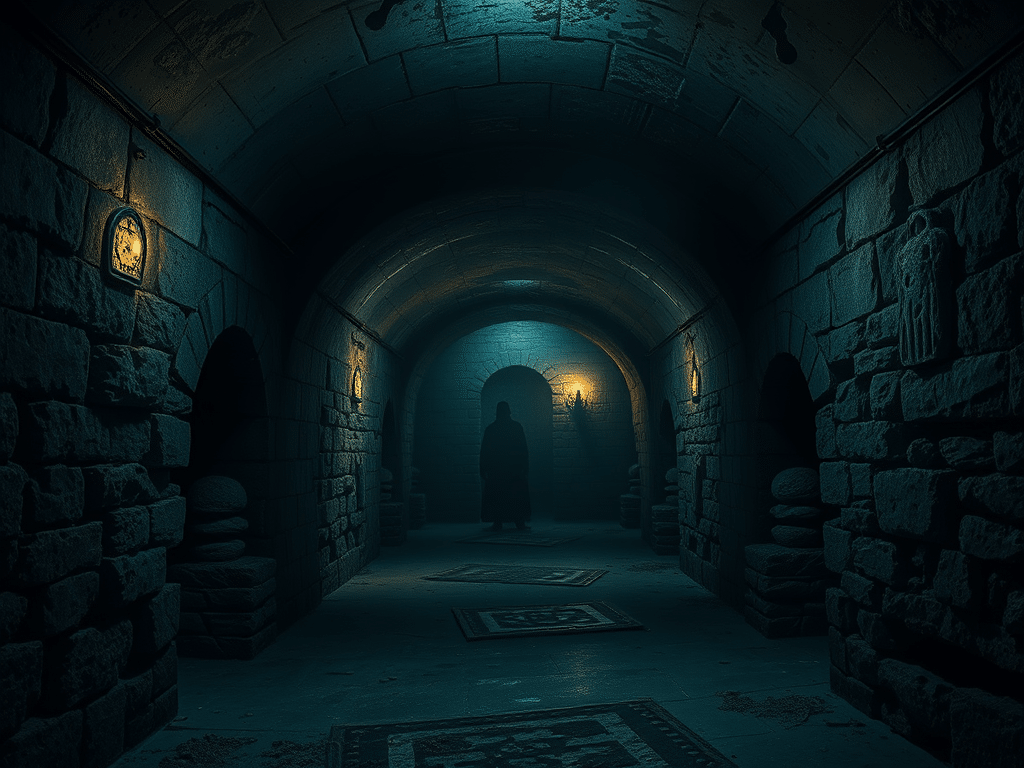
The Mamertine Prison, or Tullianum, is a remarkably old and historically important building in Rome, its origins reaching back to the 7th century BC. Beneath the Church of San Giuseppe dei Falegnami, close to the Roman Forum, lies an underground dungeon. For more than two thousand years, this grim space has been a site of confinement and death for those deemed adversaries of Rome. Beyond its significant historical weight, the Mamertine Prison has become known as one of Rome’s most haunted spots. Over the years, countless accounts of strange occurrences have surfaced, intriguing both those who believe and those who don’t. The prison’s grim past, a tapestry woven with pain and loss, coupled with its ties to the early Christian martyrs, has drawn the curious and the seekers of the unexplained. It’s a place where the shadows of history seem to whisper.
Prison Layout
The prison was hewn into the Capitoline Hill, spanning two levels. The upper level, the Carcer, housed the main cells, while the lower level, the Tullianum, served as a dank dungeon. The stone walls, worn by ages, still show the scars of their long history. Moisture seeps through the old rock, and the resulting dampness contributes to an atmosphere of heaviness that many visitors still perceive quite intense. Mamertine Prison’s defining features are its two distinct levels. The upper level housed the bulk of the inmates, while the lower level, frequently characterized as a more oppressive space, served a different purpose. Research suggests that the structure was built using “peperino,” a type of stone. This supports the architectural style seen in Roman prisons (Farr et al., 2015). These studies show that prisons served as places for both confinement and punishment.
The prison’s unique circular shape, along with its well-preserved interior, shows a variety of stonework that reflects Roman building methods (Farr et al., 2015). The prison’s design is similar to late antique prisons, a feature seen in other parts of the Roman Empire (Hillner, 2013). The Tullianum, a small, circular cell, could only be entered via a hole in the ceiling. This design rendered escape nearly impossible, and the chamber’s confined space was a source of intense claustrophobia for anyone trapped inside. The lower chamber’s sole water supply originates from a holy spring. Christian tradition holds that this spring manifested miraculously when Saint Peter tapped the ground with his staff.
Moreover, a detailed examination of the geochemical makeup of the stones used in the Mamertine Prison has provided information about its age and the materials used, showing that various stone sources were used in the construction of that time (Farr et al., 2015). Geologically examining the prison deepens our understanding of Roman architectural practices and resource utilization. The design of this structure was intentionally created to crush the will of those confined within. Prisoners were to be lowered into the depths, a place where the sun’s light would never reach them again.
Prison History and the Paranormal
The history of the Mamertine Prison provides a record of the most significant conflicts and power struggles in ancient Rome. Jugurtha, the Numidian king, and Vercingetorix, the Gallic leader who fought Caesar, both met their ends within its walls. Jugurtha perished in 104 BC, a victim of starvation, while Vercingetorix was strangled in 46 BC. The prison also housed figures from the Catiline conspiracy. Lentulus and Cethegus, among others, met their end there in 63 BC. Their execution followed the unraveling of their scheme to topple the Roman Republic.
The prison’s connection to early Christian history increases its significance. Tradition asserts that this very location held Saint Peter captive before his death. The connection is explored in the existing research, which discusses Saint Peter’s imprisonment in relation to early Christian pilgrimage sites (المنعم & صبری, 2021). The site eventually became a center of Christian worship, culminating in the construction of the Basilica di San Pietro in Carcere on the ruins, ordered by Emperor Constantine (المنعم & صبری, 2021). Regardless of whether the saints were actually imprisoned, the prison’s connection to early Christianity has greatly influenced its reputation and the nature of the paranormal reports associated with it.
For centuries, people have recorded reports of paranormal activity at the Mamertine Prison. Some of the earliest accounts come from medieval pilgrims who visited the site, which they considered a holy place (Steuart, 1921). Those who have ventured into the lower chamber consistently describe a powerful feeling of dread and despair. They report sensations of being observed, touched, or even shoved by invisible entities. Numerous individuals report experiencing the unsettling sounds of chains clinking, anguished moans, and hushed prayers reverberating within the walls, despite being entirely alone. Witnesses have described seeing shadowy forms skimming along the walls or catching fleeting glimpses of spectral prisoners, their clothes in tatters and their bodies gaunt. Visitors often discover the experiences so intense that they leave the prison quickly, unable to handle the oppressive atmosphere for more than a few minutes (Mazzoni, 2017).
Over the years, stories of strange happenings at the prison have grown and multiplied, weaving a complex narrative of the supernatural. During the 1800s and into the early 1900s, a wave of fascination with spiritualism swept across Europe. Various mediums and psychic investigators claimed they could talk to the spirits of former inmates at Mamertine Prison. The researchers claimed to have received communications from the deceased, detailing their anguish and begging for prayers or acknowledgment of their mistreatment. Recent ghost investigations, using modern tools like electromagnetic field detectors and thermal cameras, have found strange drops in temperature, unexplained voices, and odd readings in places connected to the most violent deaths. Photography lovers and travelers alike have documented countless photographs featuring peculiar spheres of light, wisps of fog, and what seem to be human figures in locations devoid of any visible people.
The lower chamber has become a focal point for sudden emotional upheaval, a phenomenon that’s been thoroughly recorded. Some who’ve visited the prison describe panic attacks, bouts of weeping they couldn’t control, or a deep, inexplicable sadness that vanished the moment they stepped outside. Tour guides and caretakers at the site frequently share their own unsettling encounters. They’ve described the eerie sensation of cold hands resting on their shoulders, the disembodied voices that seem to call their names, and the unsettling feeling of being trailed through the chambers. Several staff members have reported seeing objects shift without any apparent reason. This category includes religious artifacts and informational displays, which have been found out of place or even toppled when no one was around. The consistency of these accounts has led many, who have reported them over time and from different cultures, to believe that something paranormal is happening in the ancient structures.

Theories
Skeptics offer several plausible explanations for the reported paranormal events at the Mamertine Prison, which do not require supernatural causes. Being underground, along with poor ventilation and high humidity, can create conditions that affect how people think and perceive things. These elements can lead to feelings of claustrophobia, anxiety, and disorientation. Expectation bias, a psychological phenomenon, can cause visitors to misinterpret normal sensations as paranormal events. Such interpretation is because the power of suggestion, combined with knowledge of the prison’s dark history, creates a predisposition to such interpretations. The stone chambers’ acoustics are known to produce peculiar echoes, magnifying the sounds of the city above. Such phenomena can result in people perceiving voices or noises, all of which have perfectly ordinary explanations. Moreover, the electromagnetic fields produced by electrical systems within or near contemporary churches might, in some individuals, influence neurological processes, thereby inducing feelings of surveillance or the perception of an unseen presence.
Moreover, the idea of haunting goes beyond just ghostly appearances; it represents a social memory that is rebuilt through storytelling. Hill suggests that haunting often arises from shared memories of trauma and suffering, which are then reflected in the physical spaces people inhabit. This idea aligns with the view of Mamertine Prison, which is considered more than just a physical structure. It’s also a place that holds historical emotions and experiences that still affect people today (Hill, 2013).
From a philosophical perspective, the study of hauntology, which explores the relationship between the living and the spectral, offers a framework for understanding the haunting experiences related to Mamertine Prison. Prison systems can be understood through the lens of ghost criminology, a field that examines how stories of haunting connect with societal and historical injustices (Fiddler et al., 2022). Haunting reports frequently arise in locations linked to profound emotional suffering or historical injustices, thereby underscoring the prison’s significance in the construction of identity and collective memory, as demonstrated by Wiseman et al. (2003).
Moreover, the spectral nature of the Mamertine Prison can be compared to the psychological effects of ghosts in literature and memory, where the past intrudes on the present in different ways. Hill and Fiddler’s investigations into the relationship between memory and absence underscore the capacity of constructed environments, such as prisons, to serve as repositories of historical traumas, thereby becoming “haunted” within the collective memory (Hill, 2013; Fiddler, 2022). The prison’s very structure prompts questions about justice and the pain it inflicts, a feeling that visitors often experience deeply, sometimes resulting in reports of ghostly experiences.
Several scientific theories have been proposed to explain some of the unusual events reported at the prison. Infrasound consists of sound waves below the range of human hearing and can result from natural geological processes or the vibrations of large structures. Research has shown that infrasound can cause feelings of unease, fear, and even visual hallucinations in controlled experiments. The presence of naturally occurring radon gas, or other environmental factors, in underground areas could potentially affect the mental state of visitors, possibly leading to unusual experiences. Some researchers propose that the intense emotions individuals report may constitute a manifestation of collective memory or cultural trauma. They propose that the suffering experienced by many prisoners has somehow affected the location, but through psychological processes, not supernatural ones. Pareidolia, the human brain’s tendency to see familiar shapes or faces in random patterns, might explain many of the reported ghostly appearances and shadowy figures seen in the dimly lit areas.
Impact
The Mamertine Prison, with its ghostly associations, has undeniably shaped perceptions of the site and, by extension, how we view Rome’s past. The site’s economic viability and ongoing preservation have been bolstered by the influx of thousands of visitors drawn in by the paranormal narratives, in addition to those with a primary interest in Roman history. Television shows dedicated to exploring the paranormal have repeatedly showcased the prison, thrusting this old building into the global spotlight. This exposure has reignited interest in its history and the ghostly tales that surround it. The blending of historical fact and paranormal legend creates a unique story. This story makes the suffering of ancient prisoners feel more immediate and real to modern visitors, even if the supernatural elements are never proven to be true.
The prison’s association with the paranormal has also influenced how people understand and interact with historical sites in general. This shows how important ghost stories and supernatural tales are in keeping the past alive in popular culture. Educational programs at the site frequently blend historical facts with tales of the supernatural. This approach acknowledges that, for numerous visitors, the ghost stories provide a gateway to a more profound exploration of ancient Roman history. The ongoing debate about the Mamertine Prison has led to important discussions about the nature of evidence, the reliability of personal experiences, and how places can hold emotional significance that goes beyond just historical facts. The reported paranormal occurrences at the prison, regardless of their status as authentic supernatural events or psychological, environmental, and suggestive phenomena, have, without question, fueled the site’s lasting allure and cultural significance.
The Mamertine Prison is a significant cultural and religious symbol in Christianity. The site, believed to be where Peter and Paul were held, quickly became a pilgrimage destination, which only served to elevate its significance within the Christian tradition. This study explores the prison’s role within the broader context of pilgrimage churches, highlighting its importance in Christian tradition (المنعم & صبری, 2021). Pilgrimages to honor the apostles show a consistent religious tradition that has been a major part of Roman history.
Over time, the story of the Mamertine Prison has changed, especially in discussions about its role in the social and political climate of late antiquity. Examples from other regional prisons show a trend of changing places of punishment into areas for community involvement, respect, and remembrance (Larsen, 2024; Letteney & Larsen, 2021). The development of these cultural memories about imprisonment connects to larger themes of identity and memory, both within the Roman Empire and beyond. The frequent reports of ghostly encounters by visitors align with the broader idea of hauntings as a way to teach, helping people confront and understand past injustices. The narratives associated with Mamertine Prison, imbued with complex layers of memory, trauma, and shared identity, necessitate a persistent reconsideration of its significance across both historical and modern perspectives (Davis, 2025).
Conclusion
The Mamertine Prison is a clear example of the cruelty of ancient Roman justice, and it also highlights the suffering of those imprisoned there. The strange happenings people claim to experience here, regardless of their truth, bring to mind the genuine human suffering that unfolded in this spot over millennia. Although skeptics offer persuasive alternative interpretations of the alleged supernatural occurrences, the enduring nature and frequency of these accounts throughout history imply that the environment itself exerts a significant influence on those who visit, regardless of whether this influence is psychological in origin or genuinely supernatural. The Mamertine Prison’s notoriety as a notoriously haunted site guarantees that the tales of its unfortunate inmates endure, captivating each new generation. These stories serve as a grim reminder of past wrongs and the many lives extinguished in the shadows below the Capitoline Hill.
References
المنعم, ر. ع. and صبری, ه. م. (2021). کاتدرائیة القدیس بطرس للحج فی العالم الکاثولیکی ملتقى الفن والفنانین. مجلة العمارة والفنون والعلوم الإنسانیة, 0(0), 0-0. https://doi.org/10.21608/mjaf.2020.48994.2050
Davis, N. K. (2025). Haunting as public pedagogy: creating theatre with ghostly witches as roe fell. Journal of Cultural Research in Art Education, 42(1). https://doi.org/10.2458/jcrae.7627
Farr, J., Marra, F., & Terrenato, N. (2015). Geochemical identification criteria for “peperino” stones employed in ancient roman buildings: a lapis gabinus case study. Journal of Archaeological Science: Reports, 3, 41-51. https://doi.org/10.1016/j.jasrep.2015.05.014
Fiddler, M. (2022). Phantom architecture: jeremy bentham’s haunted and haunting panopticon. Incarceration, 3(2). https://doi.org/10.1177/26326663221101571
Fiddler, M., Kindynis, T., & Linnemann, T. (Eds.). (2022). Ghost criminology. New York University Press. https://doi.org/10.18574/nyu/9781479885725.001.0001
Hill, L. (2013). Archaeologies and geographies of the post-industrial past: landscape, memory and the spectral. Cultural Geographies, 20(3), 379-396. https://doi.org/10.1177/1474474013480121
Hillner, J. (2013). Confined exiles: an aspect of the late antique prison system. Millennium, 10(1), 385-434. https://doi.org/10.1515/mjb.2013.10.1.385
Larsen, M. D. C. (2024). A prison in late antique corinth. Hesperia: The Journal of the American School of Classical Studies at Athens, 93(2), 337-379. https://doi.org/10.2972/hes.2024.a929939
Letteney, M. and Larsen, M. D. C. (2021). A roman military prison at lambaesis. Studies in Late Antiquity, 5(1), 65-102. https://doi.org/10.1525/sla.2021.5.1.65
Mazzoni, C. (2017). Locked Up and Locked In: Of Roman Imprisonments and Liberations. Spiritus: A Journal of Christian Spirituality, 17(2), 246-251.
Steuart, F. A. (1921). Roman Tourists. Blackfriars, 2(21), 565-567.
Wiseman, R., Watt, C., Stevens, P., Greening, E., & O’Keeffe, C. (2003). An investigation into alleged ‘hauntings’. British Journal of Psychology, 94(2), 195-211. https://doi.org/10.1348/000712603321661886



Leave a Reply