Wendigo and the Frozen Heart: Key Points
-
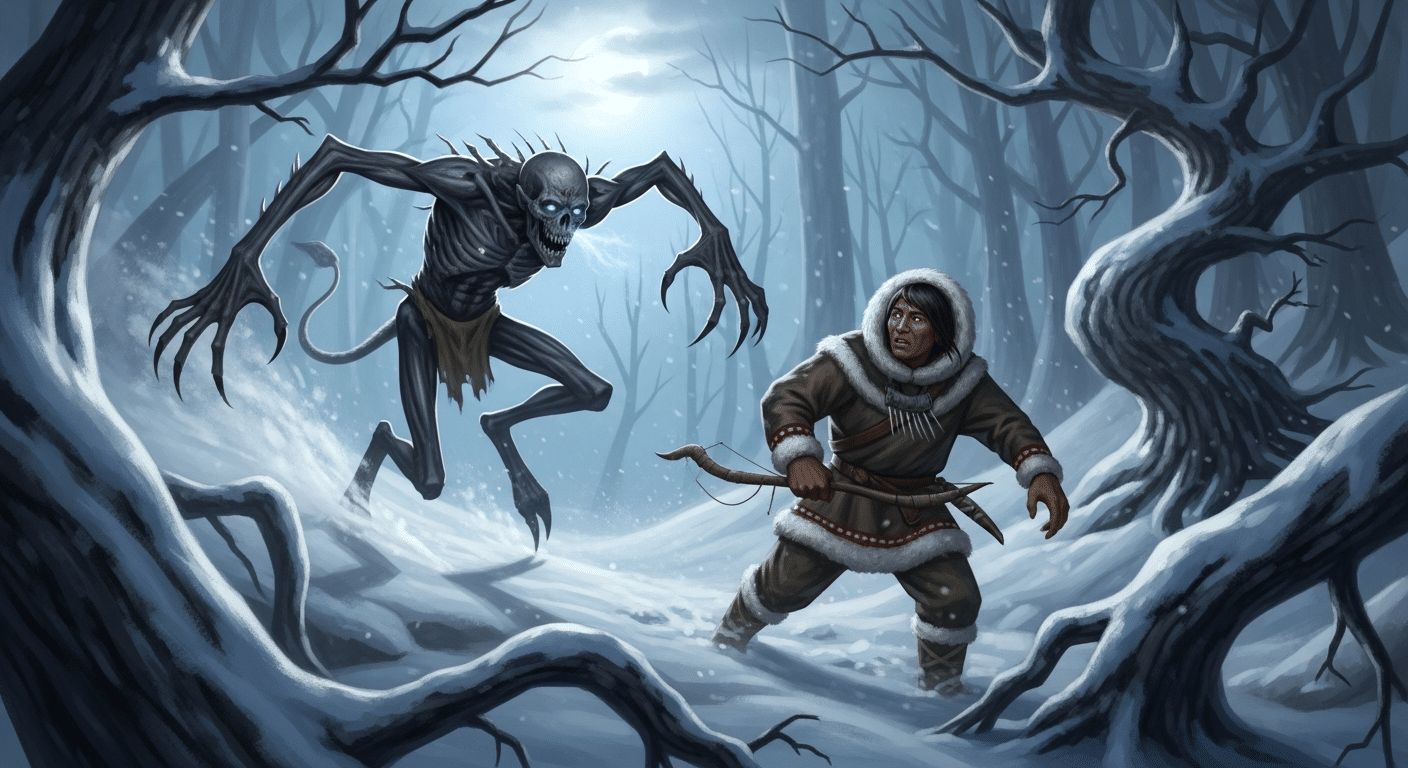
The wendigo is a gaunt, skeletal creature with stretched skin, glowing eyes, and sharp claws that grows larger with each victim consumed.
-
The wendigo hunts humans with insatiable hunger, mimicking voices to lure victims while bringing cold and storms wherever it travels.
-
A wendigo is created through cannibalism during starvation or extreme greed, gradually stripping away the person’s humanity.
-
The frozen heart represents complete loss of empathy and warmth, physically manifesting as ice that makes return to humanity impossible.
-
Defeat requires burning the body or shattering the frozen heart, though prevention through community support is considered more important.
-
The wendigo teaches the importance of maintaining humanity through compassion and warns against greed, isolation, and prioritizing self over community.

Introduction
The wendigo is one of the scariest creatures in Native American mythology, especially among the people who speak Algonquian and live in the northern woods. This creature isn’t just a monster in a story; it’s part of a deeper cultural lesson about the risks of greed, being alone, and losing your humanity when things get tough. The idea of the “frozen heart” is at the heart of the wendigo legend. This type of transformation is a spiritual and physical change that takes away sympathy and leaves only insatiable hunger. To understand this story, one must consider both the wendigo creature and the cultural wisdom that warns about how individuals can lose their true nature and what actions can be taken to prevent or reverse such a dire outcome.
Physical Description and Origins
According to the mythology of the subarctic and Great Lakes Algonquian people, the Wendigo is a monster or spirit that looks like a humanoid and eats people. It has an insatiable hunger for human meat (Carlson, 2009). This creature’s unique heart of ice shapes both its makeup and behavior (Podruchny, 2004). Oldak et al. (2023) say that the Wendigo’s icy heart and skinny body are a reflection of the famines and hardships the Algonquian people went through during harsh winters. This reference connects the story to the harsh environments these northern people lived in. While tribe stories vary in their depiction of the wendigo’s appearance, they consistently portray it as a terrifying creature. Most accounts of the wendigo describe it as an emaciated, impossibly tall animal whose skin is stretched tight over its skeletal frame and can look gray or ash-colored or covered in matted fur or ice. People often say that its eyes have a menacing gleam and are sunk deep into their holes. Its lips are also often torn or missing, showing yellowed, broken teeth and bloody gums. Long, sharp claws end each limb of this creature, and many stories say it smells like decay and corruption, even though it is linked with ice and cold. Some beliefs say that the wendigo gets bigger every time it eats a person, so it can never really be full, no matter how many people it kills. What you get a sense of is something that used to be human but has been twisted into a mockery of humanity, like a living corpse driven by supernatural hunger.
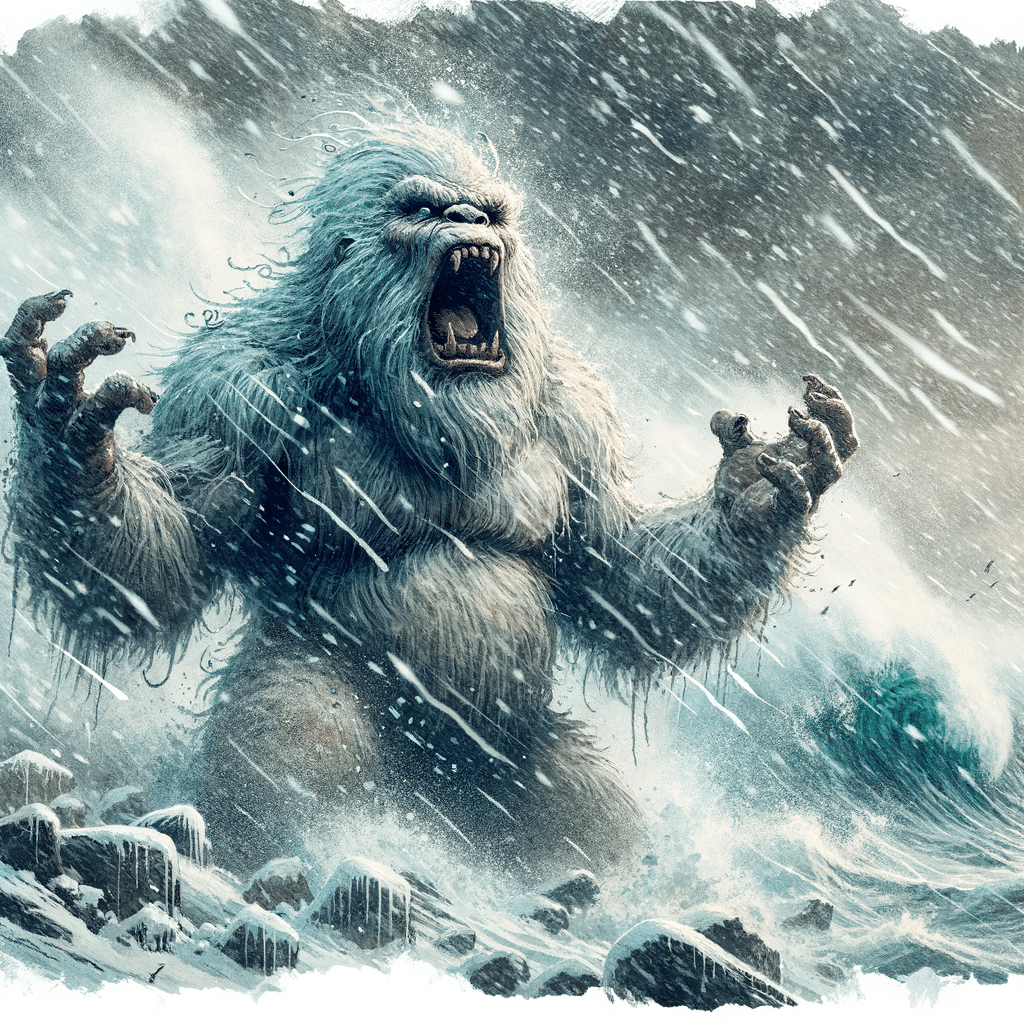
The wendigo’s behavior shows that it is a hungry monster that is adept at sneaking food. It stalks the winter woods, hunting people with a single-minded purpose. Its hunger only gets worse with each meal. People often say that the wendigo can imitate human voices to scare individuals away from safety by calling out in the voices of lost loved ones or tourists who are in trouble. The creature looks very thin, but it is very strong and fast. It can move through thick snow and harsh conditions that would normally kill a normal person. The fact that the wendigo hunts by itself shows how alone it is, both in its life and in the situations that often make it happen. People say that when it’s around, it brings severe cold and storms. Some stories say that the creature’s heart has frozen solid, rendering it immune to normal weapons and unable to be moved by human sympathy or reason.
Creation and Transformation
Cannibalism done during times of extreme hunger is the most common way for a wendigo to turn into a human, but some stories say that just thinking about doing such things or being too greedy can cause the change. People who eat human flesh are said to have an unquenchable desire for more human meat, even when other foods become available. This behavior is especially true in the hard northern winters when food is scarce. This desire turns into an addiction that slowly takes away the person’s humanity, changing their body as their spirit becomes corrupted. Some accounts suggest that the transformation begins with a disturbing dream or vision, where a malevolent spirit seizes control of the individual. Others say it happens slowly over time, with the person becoming more distant, frustrated, and concerned with food. In some cultures, a selfish, greedy person who doesn’t care about others’ well-being can become a wendigo, even if they don’t eat people. This is because these behaviors are considered spiritually eating other people. The change is both a real result and a warning about losing touch with humanity and community.
Different groups and scientific works have used different spellings to describe the creature. Based on Podruchny (2004), the word has been translated as “wendigo” and “witiko,” among other names. This diversity shows how different the language customs are of people who speak Algonquian in northern North America. This range of languages shows how the idea of the Wendigo is spread across many indigenous groups, with each adding their interpretations and story traditions to the greater mythological framework. People could turn into Wendigos or Witikos in several ways, such as through witchcraft or by eating each other during times of extreme famine (Podruchny, 2004). Cree and Métis people in northern Alberta have a long history of telling stories about the Witiko. Some of these stories describe the Witiko as a monster whose heart is made of solid ice (Carlson, 2009). It was thought that this ice heart was a real representation of the creature’s evil nature, not just a sign.

The Symbolism of the Frozen Heart
The frozen heart is more than just a physical thing. It has a deeper meaning. Remy-Kovach (2024) says that the Windigo’s refusal to acknowledge the pain it causes others comes from its icy heart, which stands for a basic disconnect from human empathy and community bonds. DeSanti (2015) goes into more detail about this image, saying that the icy heart might stand for being self-centered and cut off from other people, especially when it comes to an imbalanced ego soul. Lietz (2016) says that the Wendigo is a representation of the worst things about people. He calls it a “cold and bitter spirit of winter,” and in traditional stories, screaming winds and fierce cold often warn people that a Wendigo is coming. The idea of a “frozen heart” is at the spiritual heart of how wendigos change, and it’s not just a physical state. The frozen heart is a metaphor for a world without any warmth, empathy, or social connections. There is only cold, selfish hunger that can never be satisfied. In the harsh northern places where wendigo tales come from, people needed to be kind and generous and help each other stay alive. The wendigo’s frozen heart is a symbol of how these survival values were betrayed at their worst. The freezing of the heart happens when someone puts their needs or wants ahead of the community’s well-being, choosing to consume others rather than share in the fight and sacrifice of the group. This spiritual coldness shows up in the person’s body as their heart freezes in their chest, stopping them from feeling human emotions or responding to pleas for help. The wendigo will never be able to return to humanity because its heart is frozen. The place where compassion and social feeling reside is now forever destroyed, leaving only the burning cold of unending, impossible hunger.
Methods for Defeating the Wendigo
There are different Indigenous traditions that teach different ways to fight wendigos and the frozen heart, but many of them stress the need for extreme means to stop such a supernatural threat. People often suggest melting or killing the creature’s frozen heart, which is typically achieved by setting its entire body on fire until nothing remains. This procedure is because normal weapons don’t work against the creature’s ice-hardened core. Some legends say that the heart should be taken out of the body and broken with a stone or metal object. The pieces should then be scattered or melted so that they can’t grow back. Some stories say that metal weapons or other items blessed by spiritual leaders might work when regular weapons don’t. But prevention is stressed even more than cure. For example, communities have strict rules against cannibalism and encourage sharing resources during difficult times so that no one gets so desperate or alone that they can change. Spiritual leaders and medicine people were crucial in finding people who might be changing and stopping the change before it was permanent. They did their part through rituals, counseling, and community support.
People in traditional Algonquian cultures came up with special treatments for people they thought had the Witiko condition. Carlson (2009) says that these cures involved giving the person hot liquid animal fat to make them cough or spit out ice, which meant that the ice core was melting. This practice illustrates the literal interpretation of the “ice heart” concept in indigenous healing traditions, as well as the belief that the condition could be remedied by addressing its physical manifestation. The fates of those transformed into Witikos varied, yet their ultimate state always revolved around the ice heart. Oldak et al. (2023) report that their groups occasionally devoured individuals who transformed into Witikos. The only thing left was their hearts, which were thought to be made of hard ice and had to be destroyed in some other way. Remy-Kovach (2024) says that fire is the only usual way to kill the Windigo and stop it from infecting other people. His theory suggests that the creature’s naturally cold nature needed to be balanced by extreme heat.
Indigenous scholars and researchers from other cultures have done a lot of work to study and explain the wendigo legend. But it’s vital to respect the cultural roots of these teachings. Many people who know about Indigenous knowledge say that the wendigo story is a lesson about how important it is to care about others, be kind, and keep your humanity even when things are very hard. Anthropologists and psychologists have said that wendigo stories grew up in places where surviving was dangerous and where people might have been tempted to break off social bonds to stay alive on their own during times of hunger. Some researchers think that “wendigo psychosis” is a culture-bound syndrome in which people believe they are changing into wendigos. However, this idea has been attacked for making Indigenous beliefs and experiences seem like they are pathological. A deeper look at the wendigo shows that it is a complex moral and spiritual lesson that talks about real social and psychological issues that can come up when people are under a lot of stress. The story is a warning against greed, too much selfishness, and the dehumanization that can happen when people put their needs ahead of those of the community. These are universal themes that apply to all cultures and times.
In common culture, the idea of melting the Wendigo’s heart has also spread. DeSanti (2015) discusses the Ojibwe belief that defeating the wendigo involves melting its frozen heart. He also says that this idea has been explored in popular culture, such as in the TV show Charmed, though the Wendigo is often mixed with other supernatural creatures, like werewolves. Lietz (2016) takes the metaphor even further by linking the “icy cold heart” of the Wendigo spirit to larger cultural ideas about colonization. He asserts that the figure came to symbolize the perceived spiritual perversion and cultural coldness of European colonizers.
Conclusion
In the end, the wendigo and its frozen heart serve as a profound reflection on the essence of humanity and the delicate boundary that all individuals traverse between civilization and wildness. The story shows that being human isn’t just having a body; it’s also having compassion, being willing to share and sacrifice for others, and keeping social ties strong even when it would be better for our survival to break them. Whatever a person looks like on the outside, losing empathy and community spirit turns them into something horrible, and the frozen heart is a strong symbol of what is lost when these traits are given up. It is hard to beat a wendigo once it has been made, which shows how important it is to keep strong community values and help each other through hard times. People today still hear the wendigo story as a warning about the spiritual emptiness that can come from extreme greed, loneliness, and putting personal gain ahead of the well-being of others. The story tells us that we have to choose and interact with others to keep our humanity. If we don’t, we’ll live a cold, hungry life where nothing can fill the void where warmth and connection used to be.
References
Carlson, N. D. (2009). Reviving Witiko (Windigo): An ethnohistory of “cannibal monsters” in the Athabasca district of northern Alberta, 1878–1910. Ethnohistory, 56(3), 355-394.
DeSanti, B. (2015). The cannibal talking head: The portrayal of the windigo “Monster” in popular culture and Ojibwe traditions. The Journal of Religion and Popular Culture, 27(3), 186-201.
Lietz, M. (2016). Cannibalism in contact narratives and the evolution of the Wendigo [Doctoral dissertation, ProQuest Dissertations Publishing].
Oldak, S. E., Maristany, A. J., & Sa, B. C. (2023). Wendigo psychosis and psychiatric perspectives of cannibalism: A complex interplay of culture, psychology, and history. Cureus, 15(10).
Podruchny, C. (2004). Werewolves and windigos: narratives of cannibal monsters in French-Canadian voyageur oral tradition. Ethnohistory, 51(4), 677-700.
Remy-Kovach, L. (2024). The commodification of the Windigo, a traditional Algonquian monster. In Monstrosity and global crisis in transnational film, media and literature (pp. 119-138).
Leave a Reply