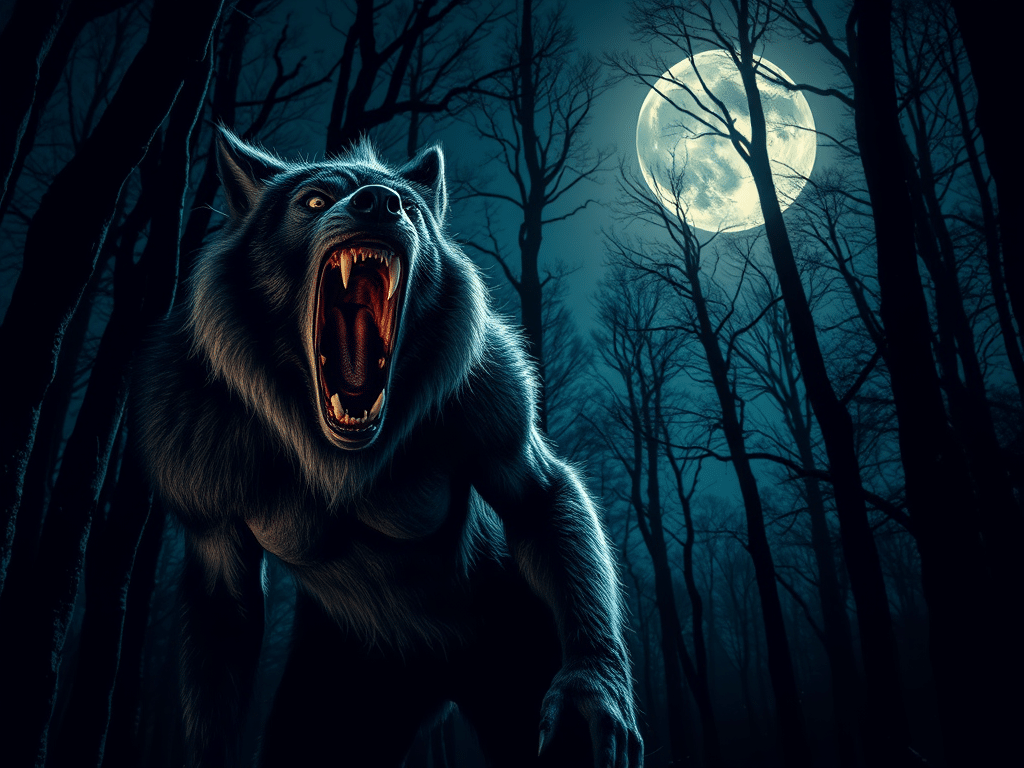
Werewolves and Rabies: Key Points
-
Werewolf legends may have originated from observations of rabies victims whose terrifying symptoms appeared supernatural to pre-scientific societies.
-
Rabies is a fatal viral disease that causes aggression, hallucinations, foaming at the mouth, and hydrophobia, giving victims the appearance of being cursed or possessed.
-
Before modern medicine, rabies symptoms transforming rational people into violent, animalistic creatures seemed like demonic possession rather than biological infection.
-
Werewolf folklore describes cursed humans transforming into wolves, while clinical lycanthropy is a psychiatric condition involving delusions of animal transformation.
-
Rabies and werewolf legends share striking parallels: aggression, foaming mouths, water aversion, nocturnal behavior, and transmission through bites.
-
Rabies outbreaks likely generated werewolf myths as communities attributed spreading violent behavior to supernatural curses rather than disease.
-
Understanding this connection reveals how diseases shaped mythology and how folklore often contains observable truth wrapped in supernatural interpretation.

Introduction
The story of the werewolf has scared people for thousands of years. People have told legends about it since ancient Greece and throughout the Middle Ages and beyond. These terrible creatures turn into vicious wolves when the moon is full and have been the subject of many stories, movies, and nightmares. But this weird story might be based on a genuine disease that is just as scary: rabies. It’s fascinating to see how people in the past tried to make sense of the horrific medical conditions they faced by connecting rabies to werewolf mythology. They twisted a viral illness into tales of cursed shapeshifters who roamed the night.
Understanding Rabies as a Medical Condition
Rabies is a viral illness that kills the central nervous systems of mammals. Animals that are unwell and have saliva on them are the main way that it spreads. Once symptoms show up, the disease is almost invariably deadly. Because of this, it is one of the most feared diseases in history. The virus moves along nerve routes to the brain, where it causes a lot of swelling that makes a lot of scary and severe symptoms. People who have been hurt have a fever, bewilderment, hostility, hallucinations, hypersalivation (too much saliva), and hydrophobia, which is a strong fear of water that makes it difficult to swallow. The sickness goes through several stages, starting with flu-like symptoms and worry, then moving on to hyperactivity and strange behavior, and finally ending in paralysis and death (Hemachudha et al., 2013). Before modern medicine realized that rabies was a virus, it looked like a strange curse that turned normal people and animals into furious, foam-mouthed beasts that attacked for no reason.
The Historical Connection Between Rabies and Werewolf Folklore
The link between rabies and strange events is based on the disease’s strange and dramatic signs. Before the germ theory and microscopes, it looked like the change from a normal person to a violent, animal-like person was proof of a curse or being possessed by a demon. People in communities felt that rabies might travel from person to person through bites, just like the curse of the werewolf was said to do. This assumption made people more likely to believe in evil that spreads. People who contract the disease may not show symptoms until long after they have been bitten, as its incubation period can last for months and is difficult to predict. This phenomenon made the link between cause and effect seem strange and magical. Rabies also spread to wolves, dogs, and other predatory animals that would later attack people. This event created a clear link between animal cruelty and human pain (Holmala & Kauhala, 2006). People in the Middle Ages and earlier did not understand why these terrible things happened, so they relied on their faith to make sense of them. People believed in many things, such as curses, devils, and creatures that could change shape.
For a long time, people have told stories about werewolves and the sickness lycanthropy. Zeus turned King Lycaon into a wolf as punishment for his transgressions in Greek mythology. This is where the name for the event comes from. There are many stories in European folklore, especially from the Middle Ages, involving people who change into wolves. Some people do it deliberately with dark magic, while others do it by accident with curses. People thought these animals hunted at night and attacked people and other animals with incredible strength and an unending hunger. Clinical lycanthropy is a recognized psychiatric disorder characterized by the hallucination of having metamorphosed into an animal, typically a wolf; although, the term is now more broadly applied to any similar transformation illusion. People who have this disease really believe they are becoming or have become an animal. They might even act like animals by growling, getting on all fours, or saying they want to hunt and eat raw meat. Contemporary psychiatry recognizes this condition as an uncommon delusional disease occasionally linked to schizophrenia, bipolar disorder, or major depression; however, historical instances were probably seen as authentic werewolf transformations.
Medical historians and enthusiasts have frequently posited that rabies may elucidate narratives of werewolves and lycanthropy, particularly during the late 19th and early 20th centuries when medical historiography sought natural explanations for supernatural phenomena (Guessoum et al., 2021; Stanković & Mitić, 2022). Metzger asserts that “rabies” was one of several biological disorders (such as porphyria, neurological dysfunction, and epilepsy) historically associated with werewolf mythology in medical literature, and the history of lycanthropy is frequently examined via a medical perspective (Metzger, 2013). In a similar vein, Guessoum et al. assert that rabies and other infectious diseases have served as cultural reference points that influence modern perceptions of werewolves and lycanthropy in popular culture (Guessoum et al., 2021). This viewpoint, derived from historical literature, posits rabies as a potential physiological basis for increased aggression, hydrophobia, hypersensitivity, and other alleged characteristics linked to lycanthropy narratives (Guessoum et al., 2021).

Symptom Parallels: Rabies Manifestations and Werewolf Characteristics
There are many strong similarities between the signs of rabies and the traits of werewolves. Both diseases have a significant effect on how people act, making them more aggressive and violent against other people. People with rabies have too much saliva, which is why their mouths foam up like in stories about werewolves and rabies. People with rabies are afraid of mirrors and water since staring at them could make them have terrible spasms. People say that werewolves can’t cross running water and don’t like to see their reflection. People with rabies act like werewolves at night because they are more sensitive to light, sound, and other things, as the stories tell. People with this disease cannot sleep and are always roaming around, as they believe werewolves do. Rabies can make the muscles in the face spasm, pulling the lips back into a scowl that makes the teeth look like an animalistic grimace. People can think that the person is becoming a beast in some way.
Many case studies employ werewolf imagery to link rabies to its typical symptoms, including fear of water and mouth foaming. This demonstrates how the bite-transmission paradigm may cultivate substantial connections between rabies and monstrous metamorphosis in cultural tales (Boury, 2013). Throughout studies of rabies-related subjects concerning lycanthropy and vampirism, rabies is often portrayed as an archetype that influenced anxieties and narratives around contagious monstrosity throughout several civilizations (Guessoum et al., 2021).
Forensic and epidemiological viewpoints highlight the tangible consequences of rabies transmission, bite injuries, and post-exposure interventions, which may resonate with popular perceptions of werewolf mythology. In 2012, Türkmen et al. examined real instances of rabies and the public health reaction to assaults by wolves and other wildlife. The result shows how rabies and animal assaults have changed the way doctors work and the laws that govern them. Wang et al. conduct a comprehensive analysis of wildlife rabies in China, evaluating wolves as potential reservoirs and their associated public health ramifications, thus emphasizing the necessity of differentiating between myth and genuine zoonotic risks in modern contexts (Wang et al., 2014).
Impact
Some people suggest that rabies outbreaks could have started or made werewolf stories more popular all over Europe. The most straightforward explanation is that individuals who observed a lot of rabies cases, especially in wolves or dogs, would see the pattern of aggressive, violent behavior and think it was caused by a supernatural curse rather than a sickness. Some people who felt they were werewolves may have actually had rabies and were delusional and delirious, which made them think they were changing. Some scientists think that the werewolf trials in Europe during the Middle Ages, which killed hundreds of people, may have actually been trials of people with rabies whose symptoms were wrongly thought to be signs of demonic change. People who didn’t know much about science might have thought that the way rabies spreads through bites is very similar to the way the werewolf curse spreads. Furthermore, the fact that rabies can stay dormant for weeks or months before symptoms show up could explain why some stories say that werewolf transformations might not happen right away after being cursed but could happen later, especially during full moons when people are more alert and more likely to notice strange behavior.
It is important to understand the link between rabies and werewolves for more than just historical reasons. This acknowledgment aids contemporary scholars in comprehending the influence of diseases on cultural mythology and the formulation of explanatory frameworks by civilizations for phenomena that exceed their scientific understanding. Folklore frequently incorporates real-life experiences, even when presented in an unconventional manner. People used werewolf stories to help them understand and cope with the terrifying fact of rabies outbreaks. These superstitions also justified killing and quarantining the sick. These actions were harsh, but they may have helped stop the sickness from spreading. From a medical history standpoint, elucidating the connection demonstrates the comprehension of psychiatric and neurological disorders prior to the advent of modern medicine, implying that many alleged instances of demonic possession or supernatural transformation were likely of medical origin. This comprehension has also influenced our perceptions of other folktales and creatures. Researchers are currently looking into possible medical or environmental causes of stories of the unearthly.
Rabies is a common topic in horror, vampire, and werewolf stories that goes beyond just medical talk. Sartin underscores the dominant themes in horror literature and film, illustrating how rabies-related imagery—such as biting, panic, and contagion—pervades vampire and werewolf storylines and shapes genre standards (Sartin, 2019). This observation backs up the argument that rabies is a strong cultural emblem that impacts how people think about werewolf figures and the transformations that come with them.
Conclusion
The relationship between rabies and werewolf stories demonstrates the historical connection between illness and myths. People in the past probably thought that curses from other worlds turned people into vicious beings. In truth, rabies was probably only hurting the nervous system. Some signs of rabies are being aggressive, having a foaming mouth, being afraid of water, traveling at night, and spreading the disease through bites. This feature suggests that rabies is probably what made people think of werewolves. Werewolves are still very much a part of fiction, but their mythical traits show how difficult it was for people before science to explain the scary things in nature. This link not only makes us enjoy folklore better, but it also shows how far modern science has come in figuring out that rabies is a sickness that can be stopped and treated instead of a punishment from the gods.
References
Boury, N. (2013). Review of Rabid: A Cultural History of the World’s Most Diabolical Virus. Journal of Microbiology and Biology Education, 14(1), 139-140. https://doi.org/10.1128/jmbe.v14i1.584
Guessoum, S., Benoit, L., Minassian, S., Mallet, J., & Moro, M. (2021). Clinical lycanthropy, neurobiology, culture: A systematic review. Frontiers in Psychiatry, 12, Article 718101. https://doi.org/10.3389/fpsyt.2021.718101
Hemachudha, T., Ugolini, G., Wacharapluesadee, S., Sungkarat, W., Shuangshoti, S., & Laothamatas, J. (2013). Human rabies: Neuropathogenesis, diagnosis, and management. The Lancet Neurology, 12(5), 498-513. https://doi.org/10.1016/S1474-4422(13)70038-3
Holmala, K., & Kauhala, K. (2006). Ecology of wildlife rabies in Europe. Mammal Review, 36(1), 17-36. https://doi.org/10.1111/j.1365-2907.2006.00078.x
Metzger, N. (2013). Battling demons with medical authority: Werewolves, physicians and rationalization. History of Psychiatry, 24(3), 341-355. https://doi.org/10.1177/0957154×13482835
Rowling, J. K. (1999). Harry Potter and the prisoner of Azkaban. Scholastic.
Sartin, J. (2019). Contagious horror: Infectious themes in fiction and film. Clinical Medicine & Research, 17(1-2), 41-46. https://doi.org/10.3121/cmr.2019.1432
Stanković, A. K., & Mitić, M. (2022). Gothic elements in representations of a pandemic: Borislav Pekic’s Rabies. Interlitteraria, 27(1), 18-29. https://doi.org/10.12697/il.2022.27.1.3
Teen Wolf [Television series]. (2011-2017). MTV.
Türkmen, S., Şahin, A., Günaydın, M., Tatlı, Ö., Karaca, Y., Türedi, S., Eryiğit, U., & Gündüz, A. (2012). A wild wolf attack and its unfortunate outcome: Rabies and death. Wilderness and Environmental Medicine, 23(3), 248-250. https://doi.org/10.1016/j.wem.2012.03.009
Wang, L., Tang, Q., & Liang, G. (2014). Rabies and rabies virus in wildlife in mainland China, 1990–2013. International Journal of Infectious Diseases, 25, 122-129. https://doi.org/10.1016/j.ijid.2014.04.016


Leave a Reply