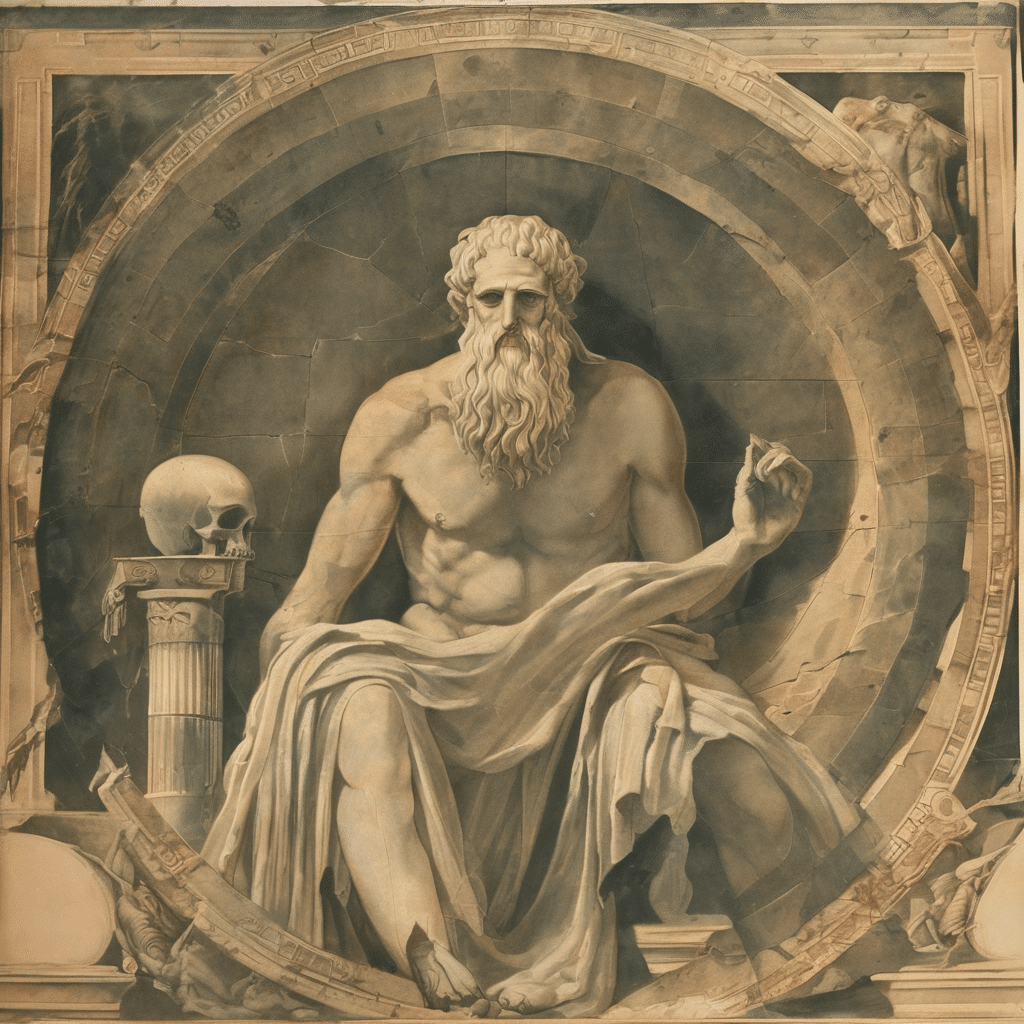
Many individuals think that Plato’s writings demonstrate the truth of Atlantis.
But Plato also taught and talked about ghosts and werewolves as genuine. Did Plato intend for all three to be taken as true?
Plato and Atlantis
The famed Greek philosopher Plato is well known for having had a significant impact on Western philosophy. His writings covered a broad range of topics, such as metaphysics, politics, ethics, and epistemology. His allusions to ghosts and werewolves, as well as the mythical city of Atlantis, are among his most fascinating subjects. This video will look closely at these three subjects to determine whether Plato actually believed them or if they were just rhetorical methods for communicating his philosophical ideas.
One of the well-known people who thrived in antiquity was the Greek philosopher Plato. Born in Athens in 427 BCE, Plato is considered one of the most influential philosophers in Western thought. Plato’s philosophical discoveries and intellectual contributions have profoundly influenced political theory, epistemology, and the fields of ethics and metaphysics.
During his life, Plato had many in-depth conversations that explored important issues related to existence, knowledge, morality, and society. His teachings stemmed from his conviction that there is a realm of timeless truths greater than our senses, which he called the Forms. In Plato’s philosophy, these immaterial beings possessed ultimate actuality and served as the perfect model for comprehending the material world.
Plato’s dialogues Timaeus and Critias explore the fascinating story of Atlantis, a sophisticated society that flourished in a world beyond what was known as the pillars of Hercules. In his vivid depiction, Plato describes Atlantis as a powerful nation with great power and sophistication. However, the gods’ disdain for them led to a significant shift in their fortunes, and the vast waters of the sea ultimately swallowed them up. This catastrophic incident punished their too-arrogant behavior.
Throughout history, the story of Atlantis has sparked passionate academic debate. While some scholars argue that Plato’s depiction of Atlantis is a symbolic creation that embodies his profound philosophical insights about society’s ideals and the dire consequences awaiting those who deviate from moral rectitude, others contend that it represents an actual geographical location that remains undiscovered.

Plato on Werewolves
Plato mentions the concept of werewolves in Book VIII of The Republic when discussing the transformation of rulers into tyrants. Plato draws a comparison between the transformation of a man into a dictator and the transformation of a man into a wolf by donning the hide of the beast.
In The Republic, his famous work, Plato describes the process of turning into a werewolf. He stated, “The story goes that he who tastes of the one bit of human entrails minced up with those of other victims is inevitably transformed into a wolf.”
This alludes to the classical Greek myth of Lycaon. It also alludes to the Lykaia festival’s religious customs.
When Plato mentions the old Greek legend of Lycaon, one becomes curious about the connection between his concepts and the legend. Greek mythology describes Lycaon as a legendary king who governed Arcadia. According to legend, he put Zeus’s omniscience to the test by feeding him human meat at a feast. Zeus transformed Lycaon into a wolf as payback for his act of disobedience.
By bringing up this legendary story, Plato may be alluding to connections between some of his philosophical ideas and the dire repercussions that confront those who defy divine power, such as Lycaon. This allusion encourages readers to investigate other relationships that Plato’s works have with morality, hubris, and divine intervention.
Furthermore, the language makes it clear that it also refers to the religious customs associated with the Lykaia festival. Arcadia once held an annual festival known as the Lykaia, where attendees participated in rites dedicated to Zeus and other gods associated with wolves or werewolves.
It is unclear whether Plato thought werewolves were real, living things.

Plato on Ghosts
In his teachings, the ancient Greek philosopher Plato explored the fascinating topics of ghosts and the afterlife. Plato, one of the most important intellectuals in history, used a special synthesis of reason and fantasy to examine these ethereal ideas.
In his philosophical dialogues, Plato frequently discussed the presence and characteristics of souls that persisted after death. He thought that after leaving their physical bodies, spirits would live on in an ethereal world. Plato believed that spirits existed in this spiritual realm and could be either benign or wicked.
His writings offered a sophisticated interpretation of the afterlife as a place where souls went through a purification and judging process. Plato posits that the afterlife judges people based on their earthly deeds and assigns them to various regions based on their moral character.
In addition, he considered the idea of metempsychosis, or reincarnation—the notion that each soul has a series of rebirths. This theory holds that after serving its full term in a particular life form, a soul transfers into a different body or entity to continue its journey towards enlightenment.
The extent to which Plato believed in ghosts as actual entities and how much he used metaphor is a matter of debate.
The well-known Greek philosopher Plato made numerous allusions to Atlantis, werewolves, and ghosts in his writings. A more thorough examination nonetheless indicates that these allusions might have been more figurative than literal. In fact, it seems that Plato made use of these allegoric devices as an effective means of expressing his philosophical views and delving into complex subjects.
Conclusion
In conclusion, it is unlikely that the references to Atlantis, werewolves, and ghosts made by Plato are true, despite the opinion of some.
It would also be necessary to accept the reality of ghosts and werewolves if one were to interpret the mention of Atlantis as proof that the city existed. It is difficult to distinguish the three from one another in Plato’s teachings, even though it is possible that they are all real.
References
Diakoulakis, C. (2016). William James: Belief in Ghosts. In The Ashgate Research Companion to Nineteenth-Century Spiritualism and the Occult (pp. 181-196). Routledge.
Felton, D. (2010). Haunted Greece and Rome: Ghost stories from classical antiquity. University of Texas Press.
Huby, P. M. (1979). The Paranormal in the Works of Aristotle and his Circle. Apeiron, 13(1), 53.
Noyes, R. (1999). The Other Side of Plato’s Wall. In Ghosts: Deconstruction, Psychoanalysis, History (pp. 244-262). London: Palgrave Macmillan UK.
Shankman, S. (2009). Ghosts And Responsibility: The Hebrew Bible, Confucius, Plato. In Rethinking Ghosts in World Religions (pp. 77-94). Brill.



Leave a Reply