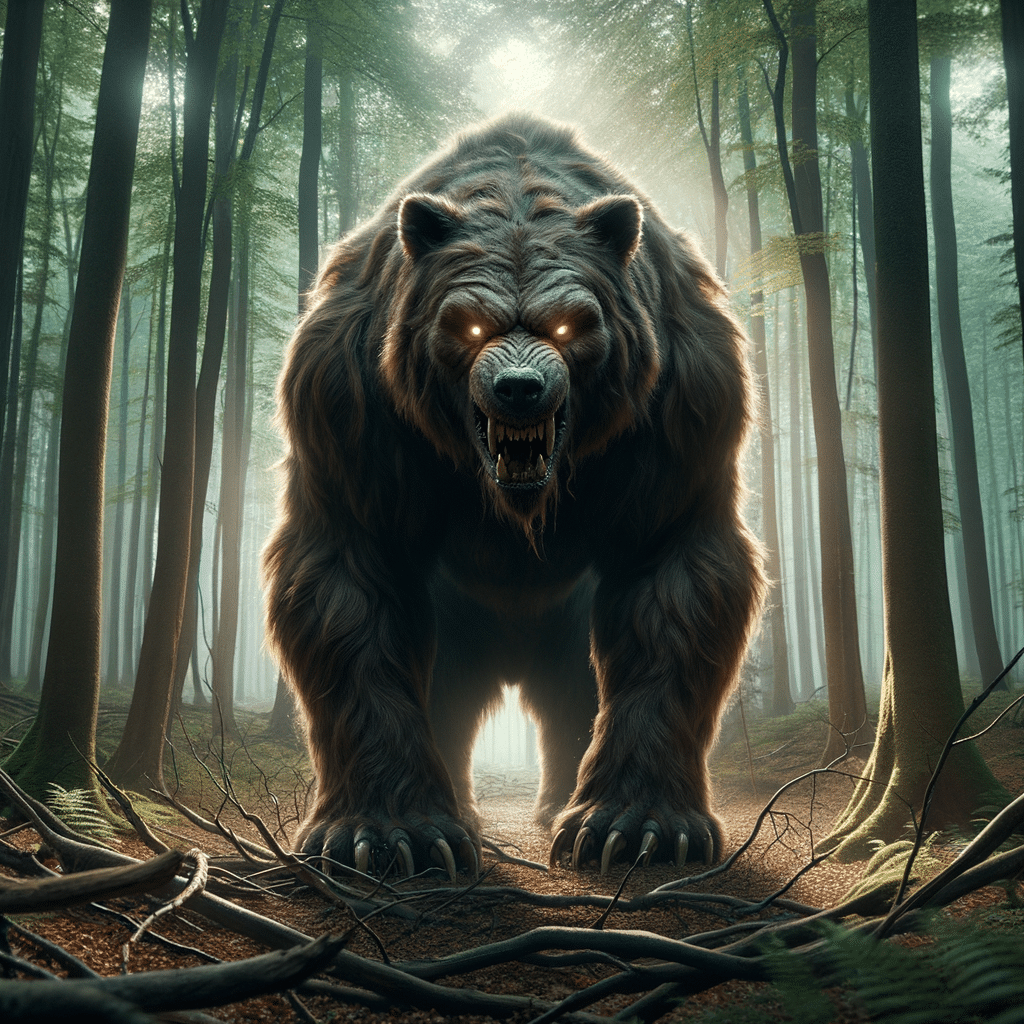
Lycanthropy is a condition in which an individual believes they can transform into an animal, typically a wolf. While the most common type is werewolfism, there are several forms of lycanthropy, each with its own distinct characteristics. In this video, we will explore the history of lycanthropy, the various forms it can take, and the psychological explanations for it.

Origins
People called lycanthropes have the capacity to transform into various animal and animal-humanoid hybrid forms. Natural lycanthropes have complete control over their shape-changing and are born with this talent. If the capacity to change form is contracted by lycanthropes from other lycanthropes; the transformation occurs unintentionally.
Those born with lycanthropy usually do not show signs of their animal abilities until they are in adolescence. As they are innate, they usually have an easy time adjusting to their abilities. It is helpful if adult lycanthropes are present to mentor and guide them.
When a person contracts lycanthropy after being attacked and surviving, they do not have such an easy time. However, they do not exhibit any symptoms until the night of the following full moon, when the victim unintentionally assumes an animal shape and loses memory of who they are. The person forgets the entire episode and remains in animal shape till the following daybreak. Over time, they will begin to remember their actions and gain a partial measure of control if they survive long enough.
History
Though the exact origin of lycanthropy is unknown, evidence suggests that it has been around since ancient times. It was believed to be a supernatural power bestowed upon individuals by the gods and was often associated with shamanistic practices. This belief was especially prevalent in Ancient Greece and Rome, where it was thought that certain individuals had the ability to turn into wolves or other animals for short periods of time.
Historically, becoming a werecreature might happen in a number of different ways. Folklorist Carol Rose writes in her book Giants, Monsters, and Dragons that in ancient Greece, “it was thought that a person might be converted by eating the meat of a wolf that had been combined with that of a human and that the condition was irreversible.”
Centuries later, it was claimed that other factors, such as “being cursed, or by being conceived under a new moon, or by having eaten certain herbs, or by sleeping under the full moon on Friday, or by drinking water that has been touched by a wolf,” could also result in the development of werewolves. The general consensus was that werewolves could wear a unique, protective wolf skin, but that they had to take it off and hide it before dawn. They may be slain if their magical pelt was discovered and taken from the werewolf-in-human form.
Lycanthropy became more popular during the Middle Ages, when stories of werewolves and other shape-shifters spread throughout Europe. These tales often served to explain the existence of evil in the world and often depicted lycanthropy as a curse that could be passed down through generations. This belief was especially prevalent in medieval Europe, where it was thought that certain individuals had the ability to turn into wolves or other animals for short periods of time.
Types of Lycanthropy
There are several distinct forms of lycanthropy, each with its own unique characteristics. The most common forms include therianthropy which is a type of lycanthropy in which an individual believes they can transform into a variety of animals, not just one. This form of lycanthropy is commonly found in certain cultural traditions, such as Native American beliefs.
Werewolfism is the most widely recognized and accepted form of lycanthropy. It involves an individual that can turn into a wolf at will or involuntarily and is often associated with stories of witches and curses.
Although some werewolves tend to seem a little savage and have wild hair, in their humanoid form, werewolves resemble regular people. Indications that a person is a werewolf include growing together of the eyebrows, having index fingers longer than middle fingers, and having unusual birthmarks on the hand’s palm. These physical characteristics can occur in normal humans, therefore they are not usually reliable telling signals, but in locations where werewolves are a frequent problem, the characteristics can still be telling.
Werewolves are the most common and most feared of all the other lycanthrope species. There are also numerous tales about werewolves wandering gloomy moors on the edges of rural communities, haunting deserted woodland paths, or living in the shadows of the biggest towns. Werewolves are feared and reviled in most communities, and for good reason: the typical werewolf personifies all that is brutish and animalistic about lycanthropes. This isn’t to suggest that there aren’t any good werewolves, but they’re definitely in the minority among their species, and the majority of werewolves are evil killers who like the thrill of the chase and the flavor of raw meat.
Werewolves have been known to form colonies and live among their own kind, appearing humanoid during the day and like other wolves at night. Unless, of course, the pack thinks that the unfortunate guest won’t be missed by friends back home, visitors to werewolf populations are typically hurried out of town before dusk to avoid learning the citizenry’s terrible secret.
Werebearism is another form of lycanthropy in which an individual can turn into a bear. This form is less common than werewolfism, but still widely accepted in certain cultures. Werebears are strong lycanthropes with the capacity to restrain their grotesque instincts and suppress aggressive ones. Providing they can grow hair, they are huge, muscular, and covered in hair that is the same color as the fur on their ursine form. A werebear expands enormously as it transforms, attacking with claws or weapons and fighting with the ferocity of a bear.
Werefoxism is a supernatural phenomenon found in Eastern cultures, involving an individual’s ability to transform into a fox. It is considered one of the many forms of lycanthropy and has been mentioned in various mythologies throughout history. In some stories, werefoxes are said to possess magical powers such as shapeshifting or healing abilities. Other tales tell of their capacity for cunning and trickery due to their heightened senses compared to humans. Although not commonly discussed in Western culture, werefoxism continues to be a part of folklore and mythology in East Asia and other parts of the world.
Werejaguarism is a relatively rare form of lycanthropy, in which an individual can transform into a jaguar. This type of transformation occurs spontaneously and involuntarily; however, the individual may learn to control their transformation over time with practice and dedication. This particular form is primarily associated with Central American cultures. It is believed that individuals who possess this ability have been gifted by the gods or spiritual entities for some great purpose. Those gifted with this power often use it to protect their family or community from harm while they take on the form of a powerful animal spirit protector.

Werehyenaism is a type of lycanthropy in which an individual can transform into a hyena. The belief in this specific type of lycanthropy has its roots mainly in African cultures, where it is part of the folklore and mythology.
According to popular belief, people who suffer from this condition are much stronger physically and have sharper senses than average people. They are also said to be able to communicate with wild animals more effectively due to their ability to take on animal forms. In some African myths, it was believed that these individuals had magical abilities or could even use dark magic for evil purposes.
The transformation process typically involved ingesting certain herbs and then entering into a trance-like state before fully morphing into their animal form – usually at nightfall or when the moon was full during particular months such as June and December according to some tribes’ beliefs.
Wereratism is a form of lycanthropy in which the the individual can turn into a rat. People who believe they are able to shapeshift into rats often cite having vivid dreams or nightmares about being a rat as evidence of their transformation capabilities. Others may report feeling physical changes when experiencing these dreams such as fur growing on their skin or even hearing squeaks coming from their mouth.
Wererats favor urban areas because they can mix in with the rat and human populations there. They are particularly skilled at theft and espionage thanks to their skills.
Wereravens are highly circumspect and secretive lycanthropes that trust one another but are suspicious of just about everyone else. Despite being adept at fitting in, they tend to keep to themselves, observe local rules, and try to be helpful wherever feasible.
Weretigers are fierce fighters and hunters with a proud and exacting disposition. They are taller than average, lean, and sleekly muscled when they assume humanoid shape. Weretigers can reach tremendous sizes in their animal and hybrid forms, but they prefer to battle in their more skilled humanoid form.
Other Factors
While some people might think that lycanthropy is the result of supernatural forces, there are also many psychological explanations for it. Some experts believe that lycanthropy may be caused by underlying mental illness, such as schizophrenia or dissociative identity disorder (DID). Individuals with these disorders may have delusions or hallucinations that lead them to believe they can transform into animals.
Sigmund Freud proposed that repressed childhood trauma or fantasies were the root cause of lycanthropy. He argued that individuals who experienced traumatic events may have used the idea of transforming into animals as a way to cope with their feelings of fear and helplessness. Carl Jung proposed that unconscious desires or fantasies were the root cause of lycanthropy. He argued that individuals who experienced feelings of guilt or shame may have used the idea of transforming into animals as a way to free themselves from those feelings.
Werecreatures are frequently represented in fiction as being poor or at the very least working-class, unlike vampires who are typically portrayed as wealthy, especially if they coexist with vampires. They often have small wardrobes and unkempt homes (sometimes showing indications of damage caused by their residents when they unleash their bestial forms) (which is sometimes used as an excuse for them go round shirtless, particularly in modern media).
This is sometimes rationalized by the fact that werecreatures struggle to advance economically due to discrimination or have a hard time maintaining a job because of the nature of their condition. Werecreatures are occasionally pitted against vampires in a fanciful case of Slobs vs. Snobs since vampires are typically linked with riches and elegance while werecreatures are thought to be more animal-like and uncivilized.
Not all lycanthropes are ruthless monsters who live by their dark nature. The bestial power can be unlocked and channeled for personal gain by those who take the time to train themselves and focus their minds. These lycanthropes become the ultimate predators since they have the ability to transform into animalistic hybrids and withstand injuries that would kill mortal men. If they lose focus, those around them will be in great danger.
Conclusion
In conclusion, lycanthropy is a condition in which an individual can transform into an animal, typically a wolf. While the most common type is werewolfism, there are several forms of lycanthropy, including werebearism, werefoxism, werejaguarism, and werehyenaism. Additionally, some experts believe that lycanthropy may be caused by underlying mental illness, such as schizophrenia or dissociative identity disorder (DID). Theories put forth by Sigmund Freud and Carl Jung contend that unresolved childhood trauma or fantasies, as well as unconscious desires or fantasies, may be to blame for the condition. Despite its long history, the popularity of lycanthropy has waxed and waned over time.
Today, it continues to capture the imaginations of people around the world and remains an important part of many cultures’ belief systems.
Leave a Reply