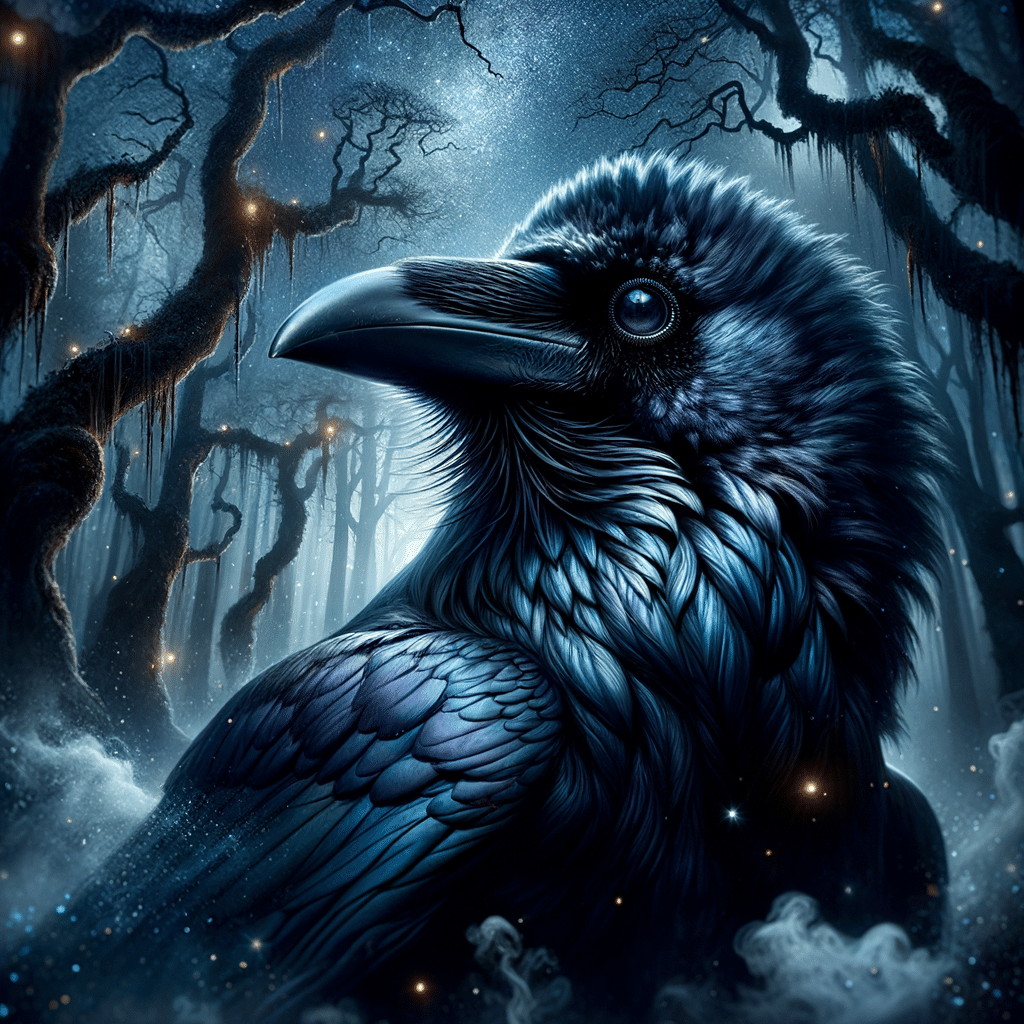
Are ravens supernatural creatures? Many believe so.
Supernatural beliefs are beliefs in things that cannot be explained by science or reason. They are often based on traditions, myths, and legends.
Ravens have been important symbols in many cultures throughout history. They have been associated with death, wisdom, magic, and prophecy. In this video, we will explore the various supernatural beliefs about ravens and their significance in human culture.
Norse Mythology
According to Norse mythology, Odin – the god of war, wisdom and death – had two ravens named Huginn and Muninn. These two birds were known for flying around the world every day, gathering information about various happenings in different regions. They would then return to Odin and whisper what they had observed into his ears.
The ravens’ names carried significant meanings as well. Huginn means “thought” while Muninn translates to “memory”. Thus, these birds represented not just mere messengers but also embodied important qualities such as intelligence and knowledge retention.
For the Norse people, Huginn and Muninn were more than just animals; they held a sacred place in their beliefs. The sight of a raven was considered an auspicious sign; it was believed that these black-feathered creatures possessed magical powers that allowed them to connect with both the living world and the spirit realm.
Other Mythologies
One of the most prominent roles that ravens have played in mythology and folklore is that of tricksters. In many Native American cultures, ravens were seen as mischievous but also incredibly wise creatures who had a knack for playing tricks on humans and other animals alike. This reputation was due in part to their intelligence and adaptability, which allowed them to thrive even in harsh environments.
In Celtic mythology, ravens played a significant role as they were considered sacred birds that symbolized death and transformation. The goddess Morrigan was often depicted accompanied by these black-feathered birds, which added to their mystical and supernatural aura. It is believed that the presence of ravens during battles or wars would signal an impending victory or defeat, depending on the direction in which they flew. Furthermore, their association with death was not limited to physical demise but also included symbolic transformations such as rebirth and renewal of the soul. In this way, ravens represented both endings and new beginnings in Celtic folklore. Overall, it is clear that these majestic birds held great spiritual significance for ancient Celts and continue to be revered in modern times as symbols of wisdom, magic, and mystery.

Christianity
In Christianity, ravens hold a special place as they were mentioned in the Bible as being fed by God during times of famine. This story is known to be an example of God’s provision for his people and has become a significant part of the Christian faith.
According to the Bible, during a time when Elijah was hiding from King Ahab, he was miraculously sustained by ravens who brought him bread and meat every morning and evening. The story goes that God used these birds as an instrument to provide for Elijah’s needs while he was hiding in fear.
This event has since been interpreted as a symbol of divine providence, reminding Christians that even in times of great hardship or distress, God can provide for their needs through unexpected means. It also highlights the importance of trust and faith in one’s higher power.
The biblical account has given rise to several interpretations over time with many people viewing ravens as messengers or symbols of hope. Ravens continue to be revered today and are often seen as mystical creatures embodying wisdom, knowledge, insightfulness, intelligence, power or protection.
Hindu
In Hindu mythology, the god Shani was often depicted riding a raven. This image was meant to convey the idea that Shani had control over fate and destiny.
Shani is one of the most important deities in Hinduism, associated with both good and bad luck. He is believed to be responsible for regulating karma – the concept of cause and effect – which determines one’s present circumstances based on past actions. The raven, as his mount or vahana, represents his ability to see into the future and predict what lies ahead.
Buddhism
In Buddhism, the raven held great importance as it was believed to represent the mind’s ability to think and reason. As per Buddhist beliefs, just like how ravens can soar high above from their vantage point, our minds too have the capacity to rise above challenges and see things from a different perspective.
Moreover, ravens are known for their intelligence and problem-solving skills. This further cemented its significance in representing wisdom and knowledge. The bird also finds mention in several Buddhist texts that refer to its symbolism of mindfulness – an essential aspect of spiritual growth.
In essence, the supernatural belief about ravens in Buddhism highlights its role as an important messenger that provides valuable insights into one’s thoughts and actions. Hence, it is not surprising that this magnificent bird continues to be revered across many cultures for its mystical powers even today.
Powers
Another important aspect of the raven’s role in mythology was its ability to shape-shift. Many stories depict these birds transforming into humans or other animals, often as a way of testing people’s character or teaching them valuable lessons about life.
In addition to their magical abilities, ravens have also been associated with death and rebirth throughout history. In some cultures, they are believed to be messengers between the living world and the afterlife, while others see them as symbols of renewal and transformation.
Overall, it’s clear that ravens have played an important role in human beliefs and culture for thousands of years. Whether viewed as tricksters or wise guides, these birds continue to captivate our imaginations today with their mysterious ways and powerful symbolism.
Today
Ravens have been featured in many works of literature and media, often as symbols of death, magic, or prophecy.
Edgar Allan Poe’s famous poem “The Raven” features a raven as a symbol of death and grief. The raven’s repeated refrain of “nevermore” adds to the haunting quality of the poem.
In the TV show Game of Thrones, ravens were used as messengers to deliver important information.
Ravens have also been featured in other works of literature and media, such as the Harry Potter series and Stephen King’s The Dark Tower series.
Conclusion
Despite their supernatural associations, ravens are fascinating creatures in their own right. They are known for their intelligence and problem-solving abilities, which have been studied by scientists. Ravens have been observed using tools to obtain food and cooperating with each other to solve problems. They also exhibit complex social behavior and communication, which has been observed by researchers.
In conclusion, ravens have been seen as symbols of death, magic, and prophecy in many cultures throughout history. Despite scientific explanations for their behavior, the fascination with ravens in human culture continues to endure. It is clear that these birds have had a significant impact on human culture and will continue to be the subject of fascination and study for years to come.



Leave a Reply