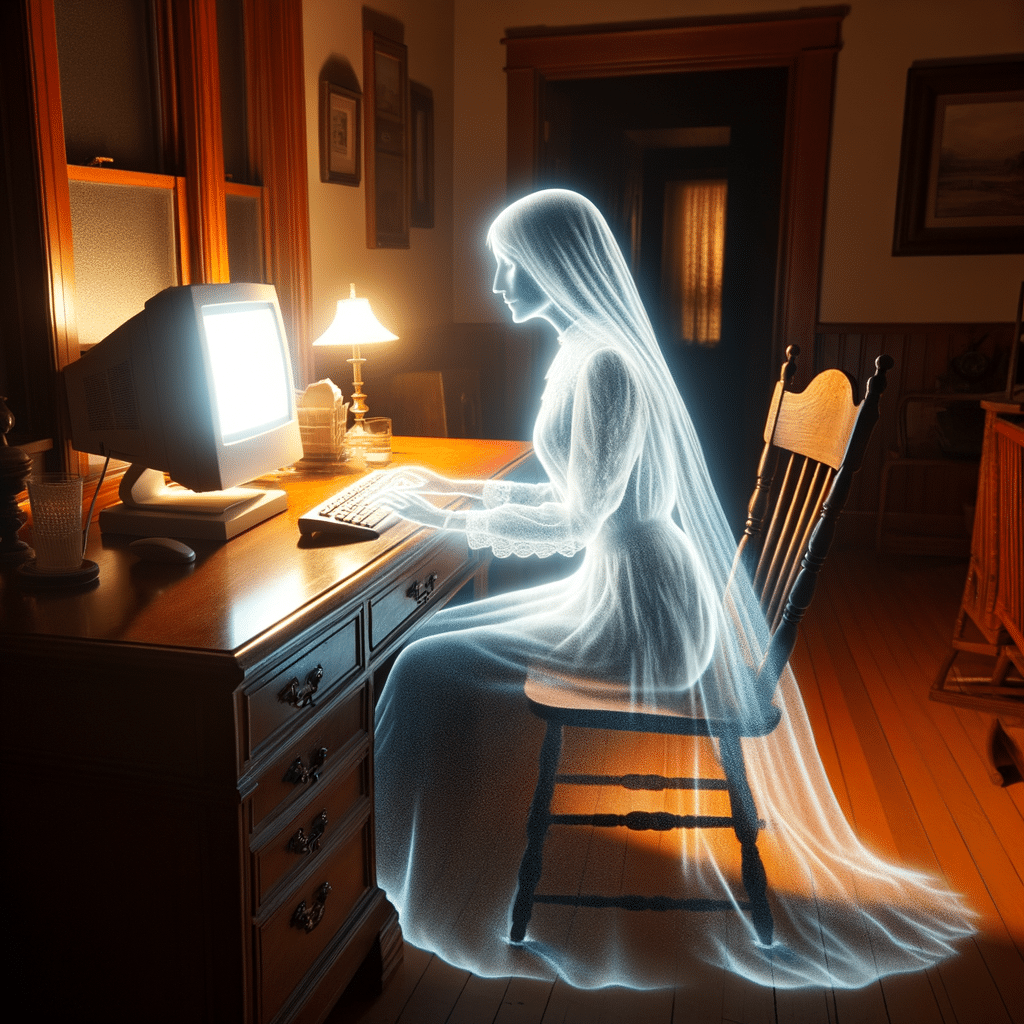
Did you ever notice how when people talk about A.I., it often sounds like they are talking about ghosts? It is amazing how many similarities the two concepts have. For example, is an artificial intelligence powered avatar of a dead person actually a ghost? This video will look at some of these connections.
At first glance, the topics of artificial intelligence and ghosts may appear to have absolutely no connection. One is a relatively new piece of technology, while the other has been a part of human mythology and tradition for a very long time. But when you look more closely, there are some similarities between A.I. and ghosts that should be looked into. We will explore the parallels between A.I. and ghosts.

A.I. and Ghosts
A.I. is an unseen force that has become a major part of our lives without us even noticing. It is embedded in our devices, our homes, and our work. It can be used for a variety of tasks from helping us with mundane tasks to providing us with entertainment. Similarly, ghosts are also an unseen force that can have a huge impact on people’s lives. They can haunt a location or person, causing fear or confusion. They may also provide comfort or guidance to those who believe in them.
A.I. is often unpredictable and can be used for both good and bad purposes. It can be used to help solve problems or create new ones. It is up to humans to decide how they want to use it and how it will affect their lives. Like A.I., ghosts are also unpredictable and can cause both good and bad effects on people’s lives. They can provide comfort and guidance, or they can haunt a location and cause fear.
Ghosts and A.I. are both intangible beings who exist outside of the physical world. While ghosts are thought to be the spirits of the deceased who dwell outside of the physical world, artificial intelligence is a collection of algorithms and code that is kept in computers and servers. Although A.I. and ghosts cannot be seen or touched, their presence can nonetheless be felt because of the things they do.
Both artificial intelligence and ghosts are the results of human ingenuity. Artificial intelligence is a human invention that was made to mimic human intelligence and carry out jobs that were previously done by humans. On the other hand, ghosts are a creation of human mythology and folklore, designed to bring solace to those who have lost loved ones and to explain unexplained phenomena. A.I. and ghosts both show how people want to make things and understand the world around them.

Motivations
It’s frequently shown that A.I. and ghosts have their own agency and motivation. A.I. is able to learn from and adapt to its environment by using its own calculations and algorithms to make decisions. On the other hand, ghosts are often shown to haunt the living because they have unfinished business or feelings they haven’t dealt with. It appears that ghosts and artificial intelligence have different plans that humans can’t alter.
A.I. and ghosts both have the capacity to be both beneficial and dangerous. A.I. has the potential to change businesses and make people’s lives better by automating tasks and using smart ways to make decisions. But if not planned and managed properly, it also has the potential to be harmful. Still, ghosts can comfort people who have lost a loved one and give them a sense that life goes on after death. They can, however, also be dreadful and hurt the living.
A.I .has had a huge impact on people’s lives in both positive and negative ways. It has made mundane tasks easier, but it has also caused people to lose their jobs or become isolated from one another due to its use. Similarly, ghosts have had a major impact on people’s lives both positively and negatively. They have been known to provide comfort, guidance, and protection to those who believe in them, but they have also caused fear and confusion in those who do not.
Fear
Because they think certain ghosts can be nefarious or deadly, many people develop a dread of ghosts. Phasmophobia, as this phobia is frequently known, is characterized by anxiety, panic episodes, trouble falling asleep, and a fear of being alone oneself. On the other side, certain people in the human race are equally fascinated by the paranormal and delight in watching scary movies and ghost stories. They might do this out of curiosity about the unknown, a desire for thrills, or an attempt to escape from reality.
Similar to this, a lot of people are afraid about A.I. because they think that some A.I. systems might be bad or hurtful to people. Technophobia and robophobia are two other names for this fear, which can lead to tension, mistrust, avoidance, and resistance to new technologies. On the other hand, some members of the human race are also interested in A.I. and like to learn about its applications. They might act in this way because they are impressed with its creativity or intelligence or because they want to take advantage of its goods or services.
On the surface, the ideas of a ghost and an A.I. avatar of a departed person may appear to be totally unrelated. But there are certain parallels between the two that merit investigation. For instance, some academics and businesspeople are investigating how artificial intelligence might be used to construct digital representations of people’s personalities that would live on long after they themselves pass away. These digital personas could interact with real people through smart speakers or virtual reality. They would be based on social media data, voice recordings, pictures, and videos.
A.I. and the Dead
First of all, a ghost and an A.I. avatar of a deceased person are both depictions of a departed individual. An A.I. avatar is a digital representation of a person that uses artificial intelligence and digital data. It acts and looks like the person on whom it is based by using data and algorithms to do so. Similar to this, a ghost is said to be the spirit or essence of a deceased person, symbolizing their identity outside of their physical body.
Second, a ghost has a connection to the real world, as does an A.I. avatar of a departed person. Using digital interfaces, an A.I. avatar may interact with the real environment and let users engage with it much like they would a real person. In a similar way, ghosts are said to communicate with the living through mysterious happenings or strange phenomena.
Lastly, people who talk to a ghost or an A.I. version of a dead person may have different feelings. Because it can act and look like the person who has died, an A.I. avatar might help people who have lost someone feel better or give them a sense of closure. Similar to this, depending on a person’s beliefs and experiences, a ghost may inspire sentiments of comfort or fear.
Last but not least, a ghost and an A.I. avatar of a deceased person both have a sense of continuity and persistence after death. An A.I. avatar can live on after the body dies and still interact with the living world. This is how continuity and persistence are kept after the death of the physical body. Similar to this, ghosts are thought to live on after death, representing the spirit of the deceased.
Conclusion
In conclusion, although A.I. and ghosts may appear to be quite different things, they actually share some startling parallels. Both are created by human imagination and creativity, live outside of the physical world, have their own agency and motivations, and have the capacity to do good and damage. We can learn more about A.I. and ghosts and their roles in human society and imagination by analyzing these parallels.

Leave a Reply