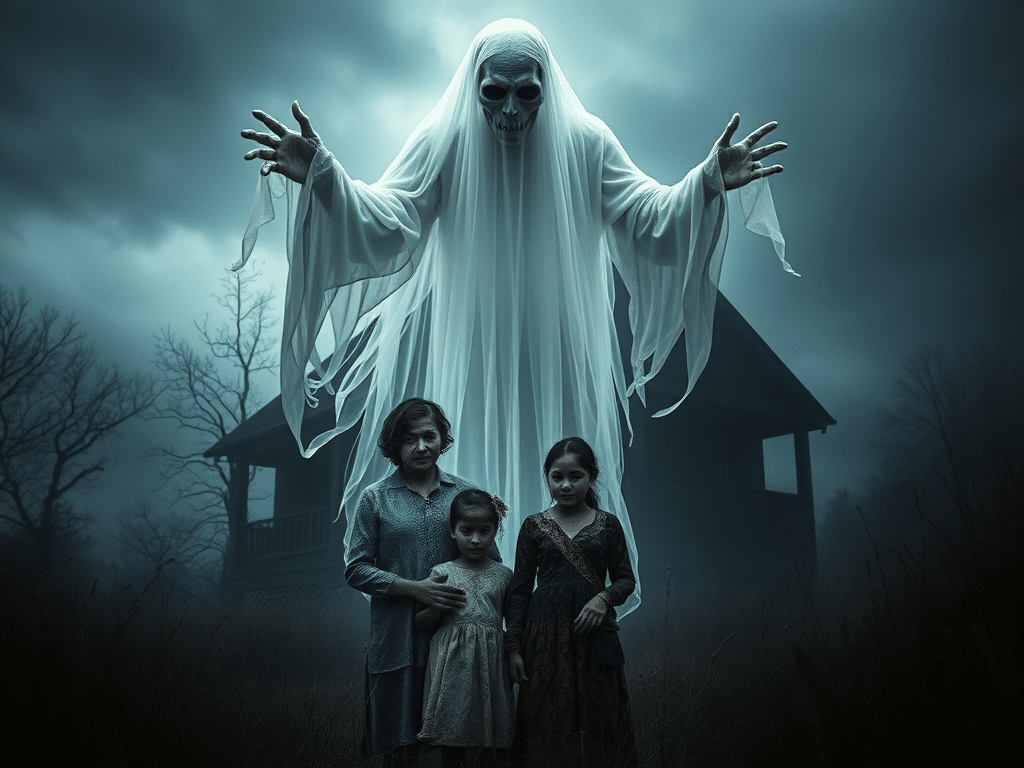
Ghosts and Generational Curses: Key Points
-
Generational curses are beliefs that misfortune passes down through families due to unresolved ancestral wrongs, broken oaths, ritual curses, haunted land, or bloodline spirits.
-
Ancestral spirits remain connected to families as protectors or disturbers, appearing across generations as guardian entities or restless dead seeking resolution.
-
Signs include shared recurring dreams, repeating tragedy patterns, children knowing deceased relatives they never met, and spiritually active heirlooms.
-
Beliefs stem from ancient Greek blood guilt, biblical traditions, African ancestor veneration, Celtic clan curses, and East Asian worship systems.
-
Breaking curses requires ancestral offerings, apologies for past wrongs, cleansing rituals, revealing family secrets, and changing harmful behavioral cycles.
-
These beliefs address human concerns about legacy and inherited trauma, emphasizing the importance of healing generational wounds for healthier futures.

Introduction
Throughout history, many cultures around the world have believed that the actions of their ancestors can affect later generations, causing spiritual disturbances and ongoing problems. Generational curses represent a powerful intersection of spirituality, family trauma, and historical memory. This suggests that unresolved conflicts and wrongdoings don’t simply disappear with death but instead continue to affect future generations. This essay explores the idea of generational curses, examining how they are thought to start, how they appear in families, the signs that suggest they exist, their historical and cultural roots, and the methods used to break these supernatural cycles. Understanding these beliefs offers insight into how communities deal with trauma, guilt, and the lasting effects of their ancestors’ actions.
What is a Generational Curse?
What exactly is a generational curse? A generational curse is fundamentally a belief that misfortune or spiritual disturbance is passed down through a family, creating patterns of suffering that go beyond individual lives. This idea suggests that families can inherit more than just genes and possessions. It also includes spiritual debts, karmic responsibilities, and supernatural problems that come from their ancestors. These curses are understood to operate beyond simple coincidence or bad luck. They represent a real spiritual process through which the past continues to influence the present and future.
Generational curses often arise from unresolved ancestral wrongs. These occur when ancestors committed acts of violence, betrayal, theft, or other serious misdeeds that were never addressed, atoned for, or forgiven. As a result, these unresolved issues create spiritual imbalances that persist across generations, with those who have been wronged continuing to seek justice or acknowledgment. The unresolved energy from these past wrongs is thought to create a spiritual debt that descendants inherit, even if they weren’t directly involved in the original wrongdoing.
Another important cause of generational curses comes from broken oaths or family wrongs. This is especially true when ancestors broke sacred vows, went against solemn promises, or violated fundamental family or community values. In many traditional societies, oaths were more than just spoken promises. They were considered spiritual contracts, requiring divine or supernatural witnesses, and breaking them had serious consequences. If an ancestor broke such a vow, the resulting curse could affect all their descendants, lasting until the oath was fulfilled or the wrongdoing was corrected.
Deliberate ritual curses, aimed at a family, are perhaps the most direct form of a generational curse. These curses happen when someone with spiritual power uses supernatural means to bring harm to a family. These curses could be cast by people seeking revenge or by practitioners of different magical traditions who are hired to harm their enemies. Ritual curses differ from those born of simple misdeeds. They’re deliberate spiritual assaults, crafted to endure, sometimes with stipulations that make them difficult to undo.
As a result, the idea that land can absorb and keep the spiritual energy of traumatic or important events leads to the idea of generational curses. When families own land where murders, battles, injustices, or other traumatic events happened, that land can become a place of ongoing spiritual disturbance. The curse’s influence might extend beyond mere ownership, encompassing the act of residing on the land itself; its effects would impact all who dwell upon or inherit it, thereby establishing a condition in which the family’s tangible inheritance is inextricably linked to its intangible spiritual affliction.
How Ghosts Connect to Family Lines
Bloodline spirits represent a deeply personal type of generational curse. In this case, specific supernatural entities are tied to a family, following it through generations. These spirits could be lingering ancestors, unable or unwilling to depart, or perhaps entities conjured by relatives long ago. They might also be supernatural beings that have formed a parasitic bond with the family. Unlike the spectral presences that linger in particular places, these spirits, tethered to bloodlines, trail their kin. Such behavior makes the curse especially hard to shake off by just moving away.
Ancestral spirits represent a fundamental connection between the dead and family, based on the common belief that deceased family members continue to care for and influence their living relatives. In many cultures, ancestors are seen not just as people from the past but as active participants in family life. They are believed to offer guidance and protection or, on the other hand, to show their disapproval through problems and hardship. Ancestral spirits might appear in dreams, create signs and omens, or directly appear to family members, especially during difficult times or when family honor is threatened.
When the same ghost or ghostly scene appears to many family members across generations, often in similar ways, it strongly suggests a family-related haunting. A grandmother could recount a vision of a specific figure from her youth, and then, years later, her granddaughter might share a strikingly similar experience. The repeated nature of these experiences across generations suggests a real supernatural connection. This connection goes beyond individual experiences and points to unresolved spiritual issues specifically related to the family line.
Oppressive “guardians” represent a darker form of ancestral connection. In this case, spirits linked to a family seem to control, watch, or restrict the living members of that family, rather than providing protection. These entities might be ancestors who were controlling or abusive during their lives, and they could continue to have a similar influence after they die. Family members often describe feeling watched, judged, or restricted by an unseen force. They also report facing unexplained difficulties when trying to change family patterns or experiencing misfortune when making choices that go against family traditions.
The restless dead are those souls who, for one reason or another, remain tethered to the earthly realm. They might be stuck because of a violent end, a burial gone awry, something they never got to finish, or simply a strong bond with the living. Whatever the cause, they can’t or won’t cross over. When these troubled spirits are part of a family, their inability to attain peace creates ongoing problems for their living relatives. These individuals might actively seek attention from their families, trying to express their needs or demands. Their restlessness can then appear as hauntings, undesirable luck, or psychological issues, which affect the family until the spirit’s concerns are resolved.
Signs of a Generational Haunting
Family members often share recurring dreams, a common and significant sign of a generational haunting. These shared dreams are not just similar; they often include the same or very similar images, settings, people, or stories, even when the relatives involved have had little contact. A grandfather, his son, and his grandson might all have dreams about drowning in the same place, or several women in a family might dream of meeting a specific ancestor. The similarities seen in different people suggest a shared source that goes beyond psychological explanations, pointing to a spiritual communication passed down through family lines.
Family tragedies that follow recognizable patterns are perhaps the most troubling sign of a generational curse. This occurs when certain types of misfortune repeat across generations, appearing statistically unlikely. These patterns might include family members dying at similar ages, marriages often ending in divorce or infidelity, addiction affecting every generation, or specific types of accidents happening with unusual regularity. While some patterns can be explained by genetics or the environment, others seem to go beyond logical reasoning, appearing to follow a supernatural plan that isn’t limited by usual cause-and-effect relationships.
Strong evidence for the idea of generational haunting comes from children’s reports of seeing spirits or demonstrating knowledge of deceased family members they never met. Young family members sometimes describe relatives who died before they were born, sharing specific details about their appearance or life events that they couldn’t have learned in any other way. People may interact with invisible beings, believing them to be deceased relatives. Alternatively, they might show knowledge of family secrets or traumatic events that they couldn’t have known about in a normal way.
Haunted heirlooms, those tangible links to the past, often become the epicenters of family hauntings. Certain objects, handed down through the years, appear to harbor or draw in supernatural forces. These might include furniture that family members consistently report strange experiences with, jewelry that seems to bring ill luck to its wearers, or entire family homes that each generation experiences as spiritually active. The idea that spiritual energy can attach to objects comes from the belief that traumatic events or strong emotions can be imprinted on physical things, especially those with important family connections.

Historical Roots of the Belief
The historical origins of this belief are complex. Ancient Greece developed complex ideas about blood guilt, which greatly influenced Western thought about generational curses and the idea of families being responsible for their ancestors’ wrongdoings. Greek tragedies often explored the idea of inherited guilt, showing how crimes, especially murder and breaking oaths, could harm entire family lines. Ritual purification was necessary to remove this pollution, which could lead to madness, bad luck, or even being attacked by supernatural forces. The ancient Greeks understood these curses as working through both divine justice and natural spiritual rules. This idea highlighted the belief that families were important spiritual and social groups.
Biblical traditions provided theological foundations for beliefs about generational curses, which later influenced Judaism, Christianity, and Islam. These traditions included verses that stated the consequences of sin could affect descendants for three or four generations. The Book of Exodus describes God as holding children responsible for their fathers’ sins, establishing a divine principle of generational accountability. Biblical stories frequently depict family curses, such as the mark of Cain and the suffering of David’s family due to his transgressions, thereby underscoring the concept of families as moral entities bearing collective accountability.
African traditions about ancestral curses encompass a wide range of beliefs. However, they generally agree that ancestors play an active spiritual role in family life. These ancestors are believed to cause misfortune if they are disrespected or ignored. When families don’t properly honor their ancestors or break traditional rules, the ancestors might withdraw their protection or actively cause problems in order to get attention. The usual approach involves using divination to determine the source of ancestral discontent. This method is followed by specific rituals and changes in behavior, all aimed at restoring balance.
In tribal societies, Celtic beliefs about cursed clans developed, where family honor and adherence to sacred laws were the foundation of social order. Celtic societies had formal cursing practices, where druids could pronounce judgments that would affect families for generations. Clans could be cursed for betraying alliances, breaking sacred agreements, or violating important taboos. These curses often showed up as military defeats, loss of land, or ongoing family problems.
East Asian societies developed complex systems of ancestor veneration, which helped them understand the relationship between the living and the dead. These systems had significant consequences for families who failed to fulfill their ancestral duties. These cultural traditions view ancestors as ongoing family members. They require regular offerings and remembrance, and in return, they offer protection and blessings. When ancestors are not properly honored, they can become hungry ghosts or vengeful spirits, bringing misfortune. To resolve this, people must make the right offerings, offer apologies, and sometimes perform complex rituals.
Breaking a Generational Curse
For those who believe they are affected by a generational curse, breaking the cycle requires addressing both the spiritual and practical aspects of the problem. Different cultural traditions have developed methods for breaking curses. These methods combine supernatural help with practical actions meant to heal family problems and change harmful behaviors.
In many curse-breaking traditions, ancestral offerings are a central practice. This is based on the idea that honoring and appeasing spirits can change hostile ancestors into beneficial protectors. These offerings could encompass a range of practices. They might involve food and drink, the burning of incense, or the placement of flowers at graves or home altars. More complex ceremonies, perhaps led by ritual specialists, are also possible. This practice assumes that many ancestral spirits cause problems not out of malice, but because they feel neglected, as if they have been forgotten or disrespected. These regular offerings help reestablish the reciprocal relationship between the living and the dead. They acknowledge the ongoing importance of ancestors while also asking for their blessings and protection.
When a curse stems from specific wrongs done by or against ancestors, offering apologies to the deceased provides a more direct way to break it. Apologies can be delivered at graves, via mediums, or through ritual specialists who perform ceremonies for the family. An effective apology usually requires acknowledging the specific wrong done, expressing genuine regret, and, if possible, offering some form of compensation. This practice recognizes that past failures to apologize, possibly caused by pride, shame, or even death, can lead to spiritual wounds that last for generations.
Cleansing rituals use various spiritual practices to purify people, objects, places, or even entire families, removing negative spiritual influences. Rituals of this nature could involve smudging with blessed herbs, the application of holy water, immersion in cleansing waters, exorcisms, or the construction of protective barriers using salt or specific symbols. Certain customs dictate that fasting or prayer precede cleansing rituals for them to work properly. Furthermore, these rituals might necessitate the involvement of specialists, individuals possessing specific spiritual authority.
Revealing family secrets addresses the harmful effects of hidden shame and unacknowledged wrongs, which often lead to repeating patterns across generations. Families grappling with curses often find themselves unearthing long-buried secrets. These revelations can include hidden crimes, the existence of children born out of wedlock, stolen legacies, or deeply traumatic experiences that were simply never spoken of. These hidden truths have a psychic and spiritual effect on family members, even if they don’t know the details. To break the curse, these hidden truths must be revealed, and their consequences must be faced honestly.
Breaking harmful cycles requires a deliberate effort to identify and change behaviors that repeat across generations, causing ongoing damage. These cycles might include addiction, patterns of domestic violence or emotional abuse, issues related to abandonment, or self-sabotaging financial behaviors. Breaking these cycles requires family members to recognize the patterns, understand where they come from, and consciously choose different behaviors, even when they feel like acting in the opposite way. This step often involves therapy or professional help, along with spiritual practices.
Restoring family honor requires actions that redeem the family name, correct past wrongs, or create new positive legacies that counterbalance previous disgrace. This could involve publicly admitting wrongdoings and making amends, achieving accomplishments that reflect well on the family, engaging in acts of service or charitable work, or properly recognizing the contributions of ancestors who have been overlooked. This approach recognizes that families have shared reputations and spiritual standings that affect all their members. Therefore, actively working to improve this standing can lessen the negative effects of the curse.
Conclusion
The belief in ghosts and generational curses reveals fundamental human concerns about legacy, fairness, and the lasting impact of the past on the present. The central idea, “Ghosts don’t just haunt places—they haunt bloodlines and unresolved history,” highlights the connection between supernatural events, family identity, and historical trauma. Generational curses, whether seen as supernatural phenomena or as psychological and social patterns, attempt to explain why suffering sometimes seems to pass down through families. They also explore how the actions of past generations continue to affect future generations.
Acknowledging these beliefs and the practices that arise from them helps us understand how different cultures confront shared trauma, maintain connections with their ancestors, and seek to heal wounds that go beyond a single person’s life. The therapeutic benefits of methods designed to break generational curses are often real, regardless of any supernatural claims. These methods encourage families to confront painful histories, acknowledge past wrongs, and change harmful behaviors. Essentially, this concept highlights that families are more than just groups of people. They are ongoing stories shaped by the successes and failures of those who came before. Therefore, taking steps to address inherited difficulties is crucial for creating better futures for the next generations.
References
Adeoye, B., Adebayo, O., & Adeyemi, O. (2025). Perception of women’s infertility among the Yorubas in Ibadan, Oyo State, Nigeria. GUJOS, 4(3), 173-191. https://doi.org/10.57233/gujos.v4i3.10
Al-Jamaei, A., Cann, E., Ruslin, M., Helder, M., Deshpande, P., & Forouzanfar, T. (2023). Cultural beliefs on cleft lip and/or cleft palate and their implications on management: A systematic review. The Cleft Palate-Craniofacial Journal, 62(3), 466-476. https://doi.org/10.1177/10556656231209823
Harrington, K., & Harrington, J. (2011). From curses to blessings: Removing generational curses. Destiny Image Publishers.
Hickey, M. (2001). Breaking generational curses: Overcoming the legacy of sin in your family. Destiny Image Publishers.
Hussain, F. (2019). Gender discrimination in media as workplace: A study of media environment in Sindh. Pakistan Journal of Gender Studies, 18(1), 23-42. https://doi.org/10.46568/pjgs.v18i1.23
Lawal, S., Adedeji, I., Ogunniyi, A., & Henderson, D. (2024). Social domains of poor mental health: A qualitative pilot study of community stakeholders’ understanding and demarcation of mental illness and its interpretations in rural Nigeria. Health Science Reports, 7(2). https://doi.org/10.1002/hsr2.1922
Moore, S. (2024). Religious, genetic, and psychosocial understandings of ‘the sins of the fathers’ and their implications for family historians. Genealogy, 8(3), 109. https://doi.org/10.3390/genealogy8030109
Nori, D. (2010). Breaking generational curses: Releasing God’s power in us, our children, and our destiny. ReadHowYouWant.com.
Simiyu, T. B. (2025). A biblical-theological understanding of curse. ShahidiHub International Journal of Theology & Religious Studies, 5(2), 111-126.
Sultana, R., & Manzoor, H. (2024). “You are filthy, cursed, and impious”: A story of stigmatization by the loved ones during the coronavirus pandemic. Gender Work and Organization, 32(2), 731-742. https://doi.org/10.1111/gwao.13181

Leave a Reply