
Blue Lady Ghosts: Key Points
-
Blue lady ghosts are distinctive female apparitions characterized by ethereal blue luminescence and semi-transparent forms dressed in historical clothing, typically representing women who died under tragic circumstances.
-
These spectral figures exhibit repetitive behavioral patterns, appearing in the same locations while gliding silently along particular routes, with some interacting with witnesses and others seeming oblivious to the living.
-
Folklore traditions worldwide feature blue lady ghosts, from British castle hauntings to Asian water spirits, with the blue coloration often symbolically connected to specific causes of death like drowning or poisoning.
-
Theories range from paranormal explanations involving emotional energy frequencies to scientific proposals of optical illusions, electrical phenomena, or psychological factors influencing witness perceptions.
-
Blue lady ghost legends impact culture and economy as tourist attractions and heritage preservation tools while permeating popular culture through literature, film, and art.
-
The enduring fascination with blue lady ghosts reflects human concerns about death and justice, ensuring these spectral figures continue captivating imaginations across generations.

Introduction
The blue lady ghost is a compelling and long-lasting image in supernatural stories worldwide. These ghostly women, often described as glowing blue, have fascinated people for centuries, appearing in places like castles, old battlefields, and lonely roads. Unlike the more common white-clad ghosts, blue lady ghosts have a unique look that has made them both frightening and intriguing, leading to many stories, investigations, and cultural traditions that continue today.
Description
Ghosts, or apparitions, are usually considered temporary figures thought to be spirits of the dead. Their meaning varies, from hallucinations to signs of a divine presence, as discussed by Bartlett (2012). Lady ghosts, or female apparitions, represent a substantial proportion of documented supernatural experiences across historical periods. These entities are frequently characterized as the unsettled spirits of women whose deaths were marked by tragedy, violence, or emotional distress, thereby preventing them from achieving rest. The lady ghost archetype often encapsulates themes of betrayal, unrequited love, inequity, or maternal sorrow, mirroring profound societal concerns regarding the treatment and ultimate destinies of women. Whether manifesting as vengeful spirits seeking vengeance or sorrowful phantoms perpetually searching for lost children or partners, lady ghosts function as potent symbols within the collective unconscious, embodying unresolved emotional injuries that surpass the limits of existence. Blue Lady ghosts typically exhibit particular attributes that integrate aesthetic components with emotional impact, eliciting both intrigue and apprehension in those who encounter them.
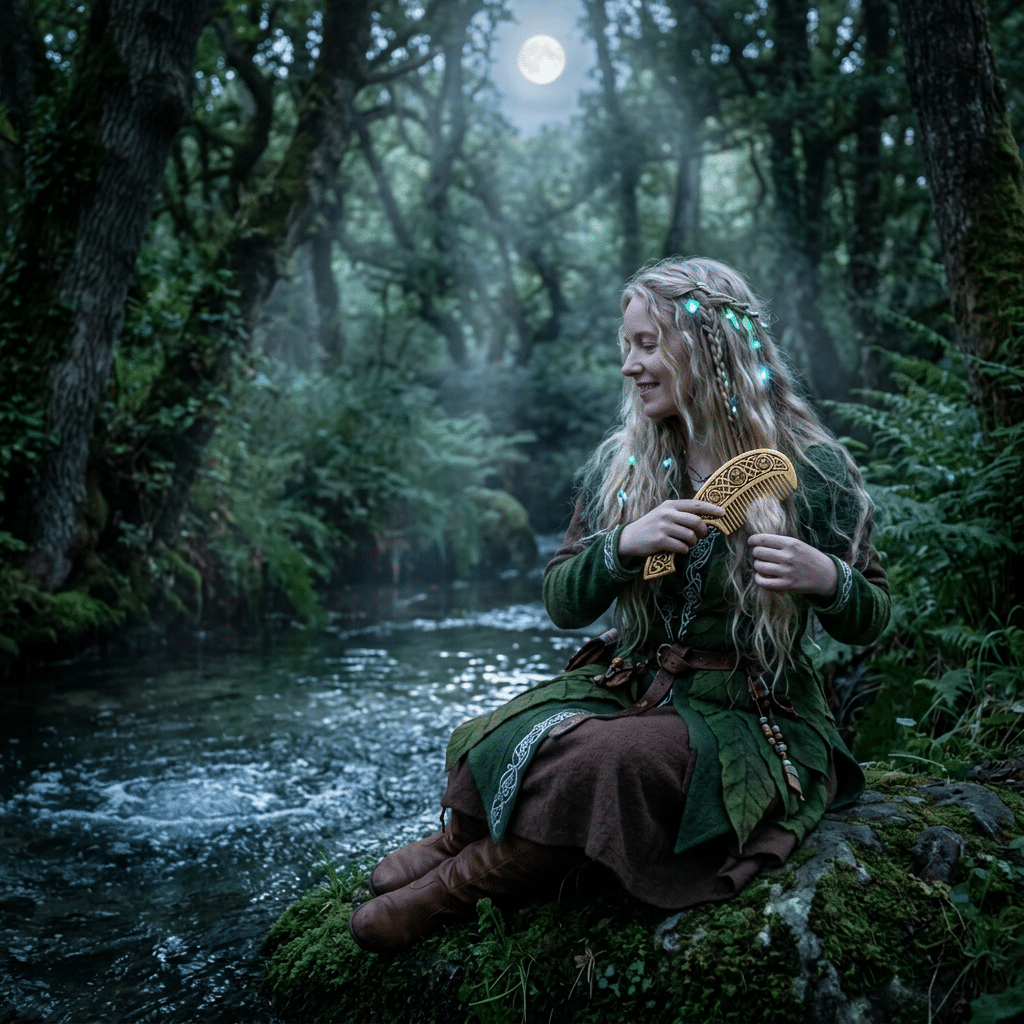
Blue lady ghosts possess distinctive physical characteristics that set them apart from other spectral manifestations. Witnesses consistently describe these apparitions as luminous figures bathed in shades of blue light, ranging from pale azure to deep cobalt, with the color sometimes appearing to pulse or shimmer like underwater reflections. The blue hue often seems to emanate from within the figure itself rather than being reflected light, creating an otherworldly glow that illuminates the surrounding area with an eerie, cold radiance. Many accounts describe these spirits as semi-transparent or translucent, with their features sometimes clearly visible and other times obscured by the very light that defines them, while their clothing typically appears to be from a historical period, often flowing gowns or dresses that move as if stirred by an invisible wind.
The behavioral patterns of blue lady ghosts follow certain recurring themes that distinguish them from other supernatural entities. These apparitions are frequently reported to follow specific routes or paths, appearing in the same locations at particular times, as if endlessly repeating actions from their mortal lives or the moments surrounding their deaths. Many blue ladies are described as silent, gliding rather than walking, and seeming unaware of or indifferent to living observers, lost in their own ethereal reality. However, some accounts describe more interactive encounters where the blue lady appears to acknowledge witnesses through gestures, mournful expressions, or attempts at communication, sometimes pointing toward hidden locations or objects of significance, while others are said to vanish abruptly when approached or when certain conditions change, such as the breaking of dawn or the utterance of prayers.
Blue Lady Folklore
Folklore traditions from around the world feature blue lady ghosts in various cultural contexts and narratives. In British and Irish folklore, blue ladies often haunt ancient castles and manor houses, frequently identified as noblewomen who died from grief, murder, or suicide, with specific historical identities sometimes attributed to these spirits based on local legends and historical records. Asian traditions, particularly in Japan and China, include blue-hued female spirits associated with water, betrayal, and vengeance, where the color blue symbolizes coldness, death, and the supernatural realm. Aoi Manto, a spirit in modern Japanese folklore and urban legend, is also known as “Aoi Kami” or “Aoi Hanten” (blue cape) and haunts women’s restrooms (Bane, 2016). Native American folklore in certain regions describes blue-glowing feminine spirits connected to sacred sites or tragic historical events, while European traditions sometimes link the blue coloration to specific causes of death, such as poisoning, drowning, or death from cold, creating a symbolic connection between the manner of demise and the spirit’s appearance.
One example is the legend of “The Blue Lady,” a mischievous spirit who haunts the Moss Beach Distillery in Northern California, including her penchant for pranks and the rarity of actual apparitions. Michaels (1996) explains the belief that the Blue Lady is the ghost of an unidentified young woman who was stabbed to death on Moss Beach. Michaels also recounts encounters with a different, enigmatic woman at Berry-Pomeroy Castle, separate from Lady Margaret; this figure was illuminated by a blue radiance, her gaze filled with animosity.
Roberts (2018) investigates the cultural importance of the female ghost across diverse media, encompassing literature, film, and television, within the United States and the United Kingdom from 1926 to 2014. The author posits that the female ghost serves as a crucial element for comprehending feminine subjectivity and for subverting and interrogating gendered assumptions within cultural frameworks. This analysis encompasses the evolution of the female ghost figure, frequently characterized by liminality and sometimes invisibility, in relation to changing gender roles, spanning genres from comedy to horror.

Theories
Several theories, encompassing both paranormal and scientific viewpoints, endeavor to elucidate the occurrence of blue lady ghosts. Paranormal investigators propose that the blue hue could signify a particular energy frequency or wavelength linked to specific emotional states or modes of demise. They suggest that spirits appearing in blue may be ensnared within especially potent emotional patterns, such as sadness, betrayal, or grief. Whittington-Egan posits that the ethereal characteristics commonly ascribed to ghosts frequently involve manifestations in particular colors and attire, thereby contributing to their haunting presence (Whittington-Egan, 2019). The Blue Lady’s appearance is especially evocative; her blue clothing often symbolizes a fusion of serenity and sorrow, historically associated with individuals embodying tragic narratives or unresolved histories.
In the examination of ghostly encounters, numerous anecdotal reports offer perspectives on the appeal of the Blue Lady. A particularly significant account recounts the experiences of individuals who describe tranquil interactions with the ethereal figure, implying a disposition of kindness, which stands in stark contrast to the fear frequently linked to spectral manifestations (Whittington-Egan, 2019). This duality mirrors the intricate cultural narrative inherent in ghost stories, which serve as conduits for articulating communal memory and collective history. Literary works also reflect this motif, using the emotional complexity and historical backgrounds of these figures to craft compelling narratives. In cultural terms, Blue Ladies often symbolize unresolved emotions, embodying the mournful spirit of individuals who have significant impacts on their surroundings (Whittington-Egan, 2019).
Skeptics and scientific investigators offer alternative explanations, including optical illusions created by moonlight filtered through old glass, bioluminescent organisms in certain environments, electrical phenomena such as ball lightning or St. Elmo’s fire, or psychological factors like suggestion and cultural expectation influencing witness perceptions. Some theories propose that the blue coloration might result from the interaction between electromagnetic fields and human perception, or that witnesses might be experiencing a form of lucid dreaming or hypnagogic hallucination that incorporates culturally familiar imagery, while others suggest that genuine paranormal phenomena might involve unknown properties of consciousness or energy that our current scientific framework cannot yet measure or understand.
The cultural impact of blue lady ghost legends extends far beyond simple ghost stories, influencing literature, art, tourism, and local identity. These spectral entities have become essential components of regional folklore and cultural heritage; particular blue lady ghosts function as tourist attractions, thereby attracting visitors to historical locations, which in turn generates economic advantages for local populations while simultaneously safeguarding historical accounts and architectural features. The iconography of the blue lady has infiltrated popular culture, manifesting in cinematic productions, literary works, television programs, and visual art, where the characteristic blue hue facilitates immediate visual identification and atmospheric impact. Furthermore, these legends fulfill significant social roles, constructing shared cultural narratives that foster community cohesion, offering cautionary tales that reinforce moral and social principles, and providing structures for navigating grief, injustice, and historical trauma through symbolic supernatural narratives.
The history of blue-cloaked apparitions has been recorded across diverse cultures. The “Blue Lady” is a common character in ghost stories, and she is often connected to themes of lost love or early death (Whittington-Egan, 2019). These stories often take place in old settings like abandoned houses, rural areas, or old battlefields, where people report seeing ghosts in ways that are both frightening and intriguing. In addition, the psychological effects of ghost sightings are explored from different viewpoints, suggesting that these apparitions reflect the mind of the person seeing them (Bartlett, 2012). In literature, ghost stories often reflect how society views grief and memory, strengthening emotional connections to places with supernatural stories.
Conclusion
Blue lady ghosts persist as potent figures within the human psyche, effectively connecting historical fact with the realm of the supernatural. Regardless of whether they are perceived as authentic paranormal occurrences, cultural artifacts, psychological manifestations, or a blend of these factors, these spectral, blue-hued entities continue to evoke a sense of awe, trepidation, and intrigue among those who encounter their narratives or assert direct encounters. The persistent allure of blue lady ghosts reflects core human anxieties concerning mortality, justice, remembrance, and the potential for intense emotions and unresolved disputes to endure beyond physical death, thereby ensuring that these blue-clad specters will likely continue to inhabit both our tangible environments and our shared consciousness for the foreseeable future.
References
Bane, T. (2016). Encyclopedia of spirits and ghosts in world mythology. McFarland.
Bartlett, M. (2012). Apparition. In W. Hughes, D. Punter, & A. Smith (Eds.), The encyclopedia of the Gothic. Wiley-Blackwell. https://doi.org/10.1002/9781118398500.wbeotga012
Michaels, S. H. (1996). Sightings. Simon and Schuster.
Roberts, R. (2018). Subversive spirits: The female ghost in British and American popular culture. Univ. Press of Mississippi.
Whittington-Egan, R. (2019). The master ghost hunter: A life of Elliott O’Donnell. Mango Books. https://doi.org/10.2979/18115.0

Leave a Reply