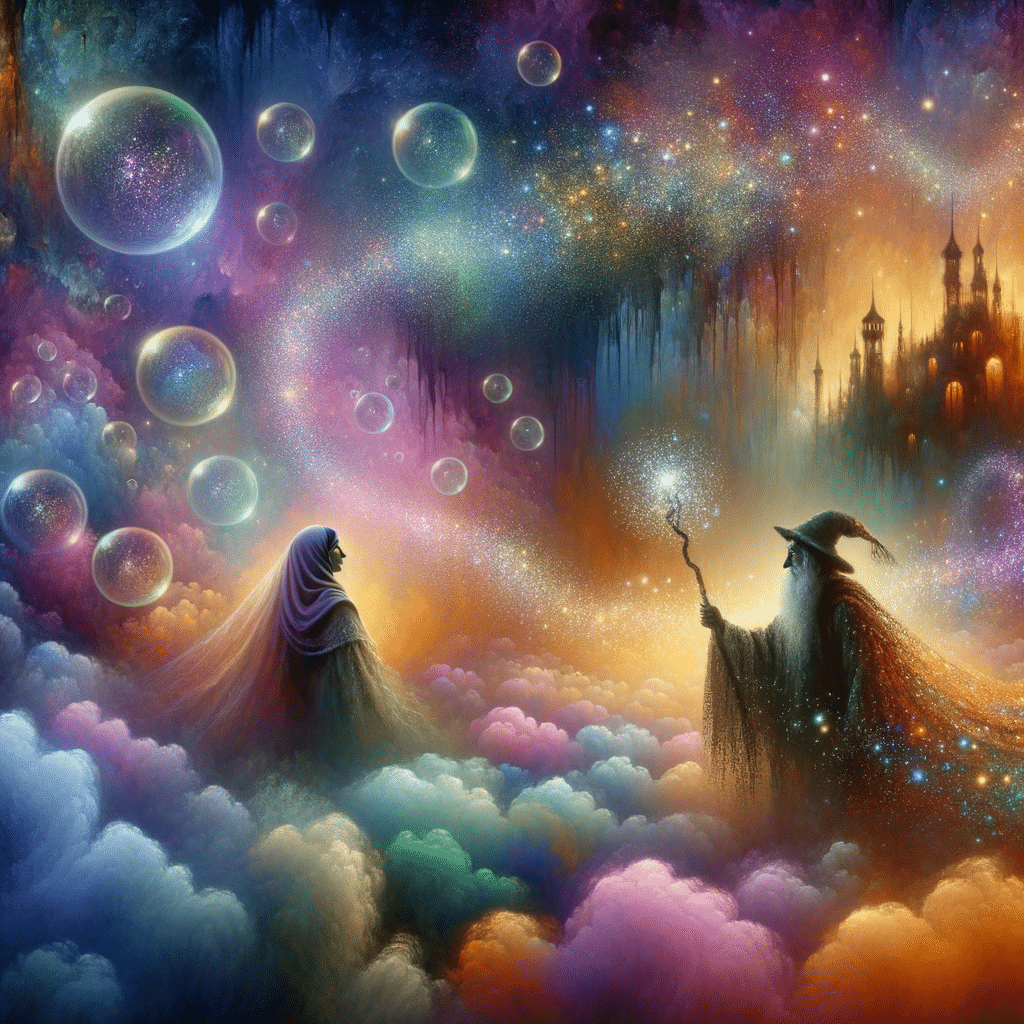
People have been interested in dreams for a very long time. They connect the aware and unconscious minds. Dreams have been important in many religious, spiritual, and magical practices throughout history. People often perceive them as portals to the soul or the divine. Dream magic is one of the most interesting and powerful things that has been around for hundreds of years. This essay examines the historical and contemporary applications of dream magic. It uses examples and expert evidence to show how fascinating and important dream magic is.

Dreams in History
In the past, people believed that dreams were signs from the gods or the spirit world. For example, the Egyptians thought that dreams were messages from God that could give them advice, warnings, or predictions. People slept in temples to worship gods like Imhotep and Serapis, a process known as “dream incubation,” with the hope of receiving messages from the gods in their dreams. Moss states in his 2010 book The Secret History of Dreaming that priests used interpretations of various dream symbols in Egyptian dream books to provide advice to individuals seeking answers.
The Greeks and Romans also put a lot of value on dreams. People in Greece believed that Morpheus, the god of dreams, had the ability to shape dreams and send messages through them. Asclepius was the god of health, and temples to him were also places where dreams were born. Pilgrims slept in these temples in hopes of having healing or omen-filled dreams. In ancient Greece and Rome, many people used Artemidorus’s Oneirocritica, which is a complete book on how to analyze dreams. People believed that dreams were signs that could tell them what would happen in the future, help them decide what to do, or even give them warnings, according to Marie-Louise von Franz in her 1998 book Dreams.
In many native cultures around the world, dream magic has a long history. Native American groups, like the Ojibwe, made dreamcatchers to prevent negative dreams from coming true and let beneficial ones through. Shamans from many countries used dreams to talk to the spirit world and often asked for help, healing, and knowledge. According to Tedlock (2005), for many indigenous peoples, dreams were not just private experiences but also events that happened in the tribe as a whole that could have an effect on everyone. People who believe that dreams are windows to a deeper world where the spiritual and the everyday meet strengthen this belief.
During the Middle Ages and the Renaissance in Europe, dreams still had mysterious meanings. People started to use books like Artemidorus’ Oneirocritica to help them figure out what their dreams meant. Alchemists and magicians looked into dreams as a way to discover secret things and change spiritually. Paracelsus, a famous Swiss doctor and scientist, wrote a lot about how dreams can help us understand the mind and the universe. People thought that dreams were a way to talk to higher powers and figure out the mysteries of the universe, according to Carl Sagan in The Demon-Haunted World (1995).

Modern Dream Magic
Dream magic has changed over the years, incorporating ideas from psychology and new-age philosophy. Sigmund Freud and Carl Jung’s work in the early 1900s changed the way people thought about dreams. Freud thought that dreams showed repressed desires and unconscious conflicts. Jung, on the other hand, saw them as messages from an unconscious group full of archetypal symbols. Freud famously wrote in his important work, The Interpretation of Dreams (1900), “Dreams are the royal road to a knowledge of the unconscious activities of the mind.”
These psychological views, which emphasize the healing and introspective power of dreams, influence modern dream magic. To learn more about and use the power of dreams for personal growth and healing, modern practitioners often mix old practices with psychological methods. In Man and His Symbols (1964), Jung wrote that dreams can be a powerful tool for self-discovery and personal change.
Lucid dreaming, or the act of recognizing that you are dreaming and taking charge of your dream, has become a well-known part of modern dream magic. This allows individuals to consciously navigate and alter their dreamscapes, often to overcome fears, enhance creativity, or pursue spiritual experiences. Reality testing, keeping dream logs, and using mnemonic induction methods are all ways to get into lucid dreams. In 2009’s Lucid Dreaming: A Concise Guide to Awakening in Your Dreams and in Your Life, author Stephen LaBerge stated that lucid dreaming is a unique way to study the depths of the unconscious mind.
New Age spirituality sees dreams as strong ways to learn about yourself and awaken your spiritual side. There are now dream workshops, retreats, and online groups where people share their skills and experiences. Dream magic often gains strength through the addition of guided thought, meditation, and the use of crystals or herbs. Rosemary Ellen Guiley wrote in Dreamwork for the Soul (1988) that dreams can help you find inner knowledge and spiritual insight.
Dream magicians of today also use ancient practices and symbols, but they adapt them to modern situations. For example, the practice of “dream incubation” has come back to life, with people making sacred spaces in their homes to encourage important dreams. With the help of technology like dream recording and analysis apps for phones, the practice has become even more advanced and open to more people. Kelly Bulkeley writes in Dreaming in the World’s Religions (2008) that technology has made new ways to explore and understand our dreams possible.
Conclusion
People still use dream magic, an ancient practice. It combines the supernatural with the psychological. Dreams have always been captivating and moving, from the temples of ancient Egypt and Greece to the digital worlds of modern faith. Dreams provide us with insights into the mysteries of the unconscious, enabling us to transform, heal, and deepen our understanding of spirituality. Dream magic will always be a beloved and powerful practice that helps us find our way through the mysterious worlds of the night, as long as people are looking for meaning and connection.
References
Bulkeley, K. (2008). Dreaming in the World’s Religions: A Comparative History. New York University Press.
Freud, S. (1900). The Interpretation of Dreams. Macmillan.
Guiley, R. E. (1988). Dreamwork for the Soul. Berkley Books.
Jung, C. G. (1964). Man and His Symbols. Doubleday.
LaBerge, S. (2009). Lucid Dreaming: A Concise Guide to Awakening in Your Dreams and in Your Life. Sounds True.
Moss, R. (2010). The Secret History of Dreaming. New World Library.
Sagan, C. (1995). The Demon-Haunted World: Science as a Candle in the Dark. Random House.
Tedlock, B. (2005). The Woman in the Shaman’s Body: Reclaiming the Feminine in Religion and Medicine. Bantam Books.
von Franz, M.-L. (1998). Dreams: A Study of the Dreams of Jung, Descartes, Socrates, and Other Historical Figures. Shambhala.



Leave a Reply