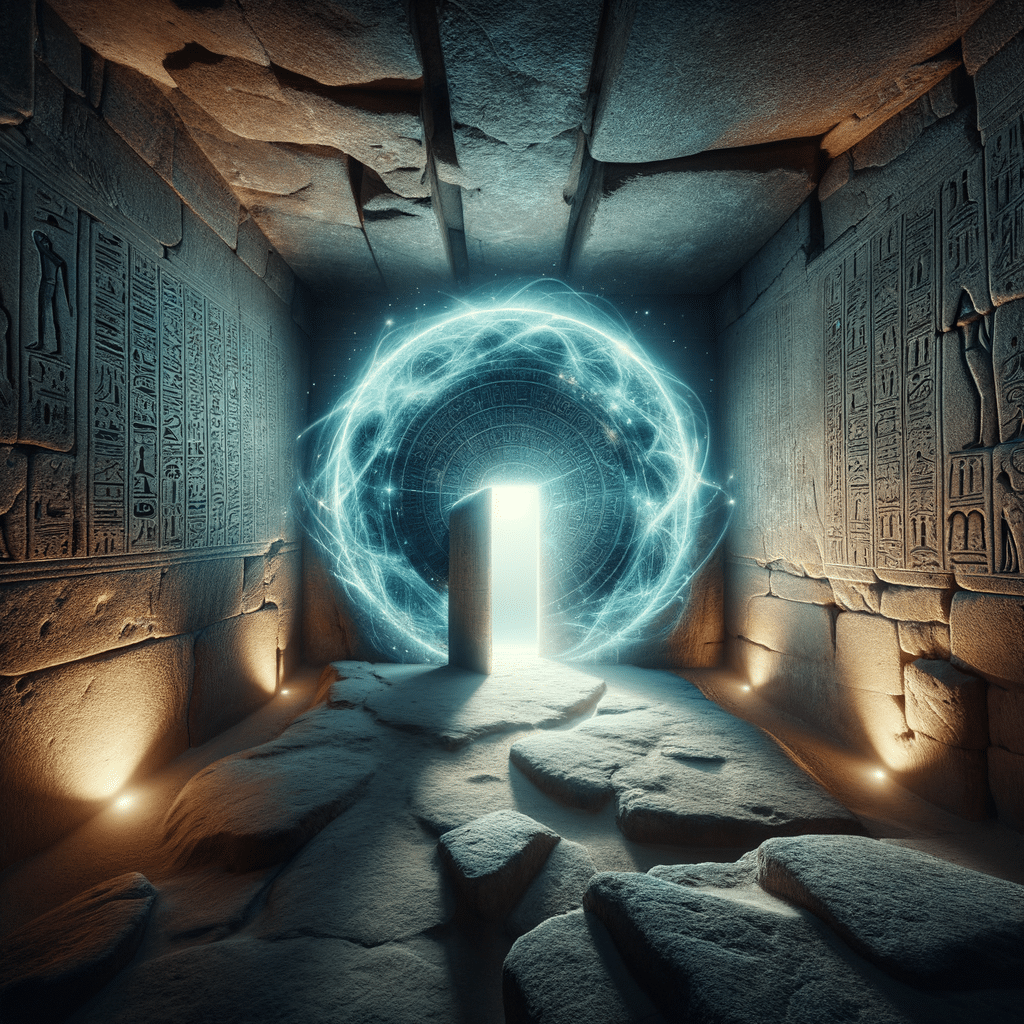
Are there hidden secrets, such as portals or treasures, buried in the basements of Egyptian pyramids? Archeologists continue to make new discoveries.
When you think about Egyptian tombs and basement ideas, you can learn a lot about how creative the builders were and what they believed spiritually. Modern homes often use basements for storage or additional living space. However, the pyramids meticulously planned and utilized the underground rooms for significant ceremonies.

Pyramid Basements
Pharaohs and other important people primarily built pyramids as massive tombs in ancient Egypt. The underground rooms in these mounds were crucial to their purpose. These rooms housed the burial of deceased individuals along with their sarcophagi and other items intended to accompany them into the afterlife. Ancient Egyptian religion placed a lot of emphasis on the future and the soul’s journey, which led to this practice. The meticulous design and construction of these chambers aimed to deter tomb robbers from targeting the deceased and their possessions, while also facilitating their journey to heaven.
Pyramids and empires built these underground rooms in very different ways. Some, like the ones in the Great Pyramid of Giza, had complicated layouts with many rooms, hallways, and false passageways. The Egyptians were excellent at building, and these complicated designs were both a way to keep thieves away and make them think twice about stealing. The Egyptians were excellent at working with stone and could accurately work with big pieces of material. Often, the Egyptians carved the chambers directly into the rock beneath the pyramid or constructed them from massive blocks of limestone.
There are many underground rooms in the Great Pyramid of Giza, which is one of the most famous examples. Pharaoh Khufu built this pyramid, which contains a number of interesting rooms, including the King’s Chamber, the Queen’s Chamber, and the empty chamber deep below the pyramid. The pyramid logically placed each of these chambers, each serving a distinct purpose. For instance, the King’s Chamber, meticulously designed with features such as relieving tunnels to distribute the weight of the stone overhead, housed Khufu’s sarcophagus.
Recently, researchers have used high-tech tools like ground-penetrating radar and muon tomography to examine the Great Pyramid. This has led to the discovery of voids that were not known before. In 2017, news of one of these discoveries revealed a large empty space above the Grand Gallery. These results demonstrate that the pyramid still holds mysteries, despite not being a magically hidden portal.
Djoser’s Step Pyramid is another early example. It is one of the oldest large stone buildings in Egypt. Imhotep built a large network of underground rooms and galleries that run through this pyramid. The complex included these underground rooms, intended to serve as both a tomb and a demonstration of the pharaoh’s power and connection to God.
Contrary to what many people think, not all pyramids have large underground networks. The size and level of detail of these underground rooms were very different. There were differences in the available materials, the pharaoh’s tastes, and the architectural styles of different times, which is why some pyramids were simpler and had fewer rooms.
Modern historical methods, such as ground-penetrating radar, continue to provide us with new information about the underground parts of pyramids. These technologies have revealed chambers and passages that were not known before. This shows that archaeological study in Egypt is an ongoing process. Each new find helps us learn more about how complicated and advanced the Egyptians’ burial practices were.

The Afterlife and Portals
The Egyptians’ religious views and emphasis on the afterlife have a lot to do with the history and culture of these underground chambers. The planning and construction of these rooms wasn’t just about making them useful; they also had symbolic meanings. The Egyptians thought that the right way to build and position the tomb was important for the dead person’s safe passage to the afterlife and their endless life.
People have long been interested in and speculating about the idea that Egyptian pyramids may have secret entrances or chambers below ground. This idea, which comes from a mix of old myths, modern conspiracy theories, and made-up stories, says that these old buildings might have hidden passages, rooms that haven’t been found yet, or even magical portals to other worlds.
The idea of hidden portals often goes beyond real places and into more fantastical ones. Some theories suggest that individuals with extensive knowledge of energy fields built the pyramids, particularly the Great Pyramid, and that these structures could serve as portals to other worlds or even as communication tools for aliens. Many people are still interested in these ideas, even though there isn’t much solid evidence to support them.
Old books and stories also enhance the allure of secret portals. With its detailed stories about the trip to the afterlife, the Egyptian Book of the Dead points to a very complicated spiritual worldview. Some people interpret these texts as suggesting that the pyramids were built to assist souls in traveling to other places. Ancient people thought of the pyramids as more than just tombs; they saw them as enormous spiritual machines.
It’s not just the Great Pyramid that has secret passageways that draw people in. People have also made guesses about other important pyramids, like the ones at Dahshur and Saqqara. People have speculated that the Bent Pyramid and the Red Pyramid of Sneferu, due to their construction methods, may contain hidden chambers and passageways that conceal wealth or secret knowledge.
Most archaeology is based on real data and scientific methods. Theories about hidden portals, on the other hand, show a different side of people’s curiosity. Those who believe there is more to these monuments than meets the eye seek to uncover deeper meanings and connections within these ancient buildings. A lot of the time, this way of looking at things mixes historical facts with creative interpretations, creating a huge range of options that interest both scholars and regular people.
Conclusion
People have long thought that the Egyptian pyramids may have secret passageways in their basements, which shows how mysterious and fascinating these old buildings are. Whether it comes from cutting-edge scanning technology that finds new gaps or from the more mysterious worlds of ancient myths and modern theories, the idea of unknown passages and mysterious gateways makes the pyramids more intriguing to learn about. Even though there may not be scientific proof of real hidden portals, people are still exploring and finding new things in these landmarks, which keeps individuals guessing and wondering.
Even though the word “basement” is sometimes used to describe the underground rooms of the Egyptian pyramids, they were not just “basements.” They were an important part of the Egyptians’ religious beliefs and ways of burying their dead, showing that they had a deep knowledge of architecture and engineering. The pyramids’ underground rooms are a testament to how smart and culturally diverse ancient Egypt was. They continue to amaze and inspire both experts and tourists.
References
Verner, M. (2002). The pyramids: The mystery, culture, and science of Egypt’s great monuments. Grove Press.
Lehner, M. (1997). The complete pyramids: Solving the ancient mysteries. Thames & Hudson.
Wilkinson, R. H. (2003). The complete gods and goddesses of ancient Egypt. Thames & Hudson.

Leave a Reply