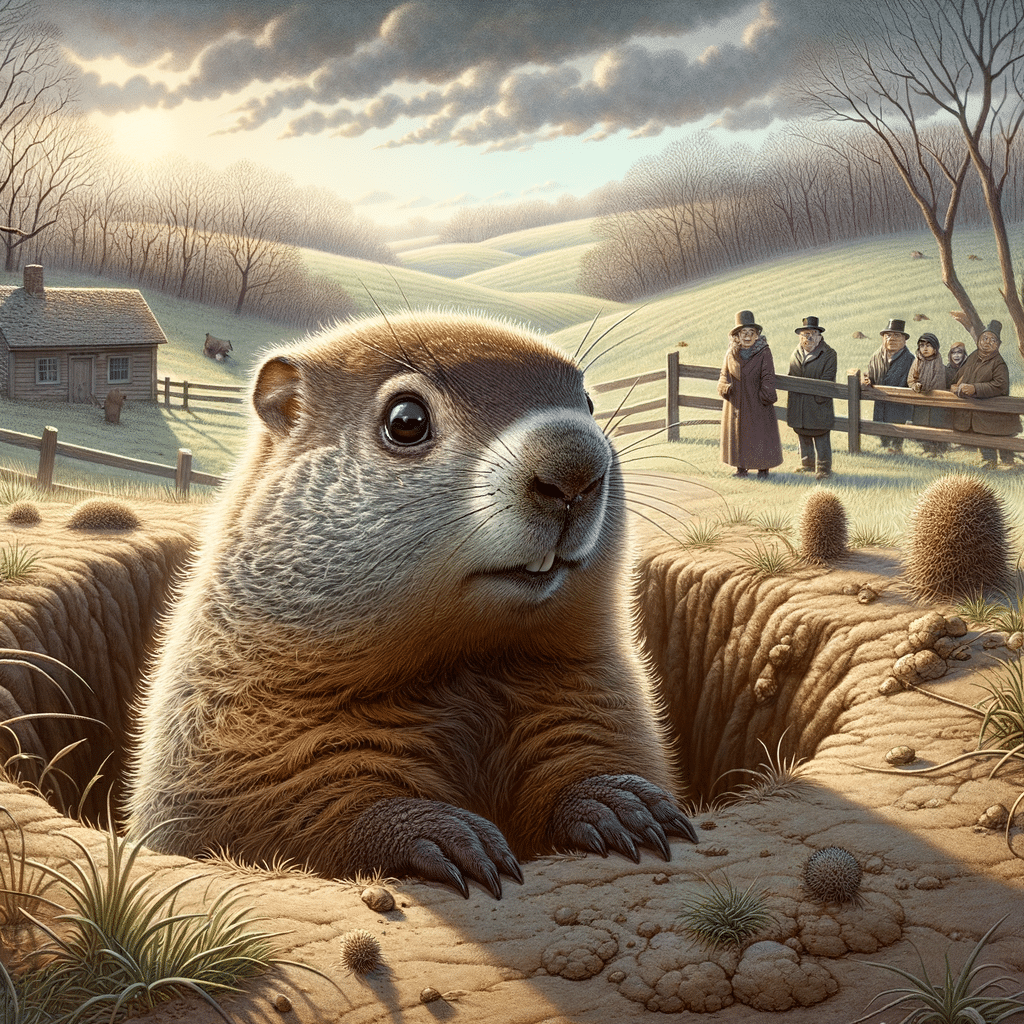
Groundhog Day is a holiday that is celebrated on February 2nd in the United States and Canada. It’s all about whether or not Punxsutawney Phil, a groundhog, sees his shadow. If he does, we’ll have six more weeks of winter. If he doesn’t, spring will be here early. But did you know that this holiday has some serious pagan roots?

Groundhog Day History
The earliest known references to Groundhog Day are associated with paganism, specifically with the ancient Celts. On February 1st, they had a festival called Imbolc to mark the beginning of the agricultural year and the arrival of spring. On this day, they believed that the earth’s warming and the lengthening of the days signaled the start of spring. They also held that the ground would start to become fertile again and that Brigid, a goddess of growth and fertility, would start to stir. Imbolc was a season of renewal and purification, and it was thought that the dead would return to the ground to bless the harvests of the next year.
Imbolc was believed to be the time when ewes started lactating again and when the Earth Goddess Brigid made her annual appearance to bring life back to the land. The ancient Celts celebrated Imbolc with rituals and feasts, such as lighting bonfires, offering up prayers and sacrifices to their gods, making offerings to Brigid, and dancing around a Maypole.
Additionally, the Celts thought that animals, like the groundhog, would come out of hibernation on Imbolc and that the weather could be predicted by studying their behavior. And with that, the myth that predicted six more weeks of winter if a groundhog saw its shadow was born.
As Christianity began to spread throughout Europe, many pagan holidays were incorporated into Christian traditions. Imbolc became Candlemas, which was celebrated on February 2nd with candlelight processions.
Dr. Michael Lorenzen, a professor at Western Illinois University, noted, “Groundhog Day is a minor holiday. However, it follows the same pattern as major holidays like Christmas and Easter in that the Christian Church took many of its symbols and practices from existing pagan traditions and repackaged them.”
German immigrants to Pennsylvania who celebrated Candlemas, a similar event, later adopted this idea. The contemporary celebration of Groundhog Day was created when they blended their own customs with the groundhog-related Celtic beliefs.

Modern Holiday
It wasn’t until 1887 when a newspaper editor in Pennsylvania declared February 2nd as “Groundhog Day” and proclaimed that if a groundhog emerged from its burrow on that day and saw its shadow, there would be six more weeks of winter. This has become a popular tradition in the United States and Canada today.
The most well-known groundhog now utilized in Punxsutawney, Pennsylvania, for Groundhog Day celebrations is Punxsutawney Phil.
According to Stephani Gibson, a librarian at the Fremont District Library in Michigan, Punxsutawney Phil is not actually a wild animal. He lives in a library and is taken to the hill called “Gobbler’s Knob” on Groundhog Day.
Gibson notes that Punxsutawney Phil is not the only animals who is known for predicting the weather on Groundhog Day. Alabama has a groundhog named Birmingham Bill, Ohio has a groundhog named Buckeye Chuck, and Malverne Mel and Dunkirk Dave live in New York. Wisconsin calls itself the Groundhog Capital of the World, and they are home to Jimmy the groundhog. A crawfish by the name of Claude predicts the weather in Louisiana.
Over time, Groundhog Day has evolved into a lighthearted holiday filled with parades, festivals, and various activities centered around watching a groundhog “predict” the weather. Groundhog Day is an important tradition that has been passed down through generations and continues to bring joy and laughter to people around the world. It is a reminder that even in the coldest winter months there can be moments of joy and happiness.
Conclusion
So keep in mind that Punxsutawney Phil’s celebration has deep pagan roots the next time you’re waiting for him to emerge from his burrow. It’s a celebration of the arrival of spring and a reminder of the cycles of nature, not just a question of whether or not there will be six more weeks of winter.
In conclusion, this essay explored the history of Groundhog Day from its ancient pagan roots to its current celebration today. It discussed how Imbolc was incorporated into Christian traditions to create Groundhog Day as well as the significance of Groundhog Day in modern society. Whether you believe in the power of a groundhog’s shadow or not, Groundhog Day is an important tradition that has been celebrated for centuries and continues to bring joy and laughter to people around the world each year.



Leave a Reply