
For ages, the mysterious Almas or Almasti has been a part of the legend of the isolated and untamed mountains of western Mongolia and Central Asia. This cryptid, the origins of whose name are as mysterious as the creature itself, is reminiscent of the notorious Yeti of the Himalayas as well as the North American Bigfoot and has been a major character in the native people’s warning stories.
The Almas in Superstition and Folklore
Almas is ingrained in the local legend despite having no apparent etymology. It was a boogeyman used to discourage kids and even adults from going too far into the forest, and it was commonly mentioned in whispers. The beast continues to cast a shadow over the mountains, and its tale has endured over time. In some areas of Mongolia, people avoid saying the name of the district, Bayankhongor, for fear of drawing bad luck. This taboo in the culture underscores the deep influence the Almas have had on the collective consciousness of the alpine people.

Historical Testimonials and Investigations
Thanks to the writings of the renowned Russian explorer and geographer Nikolay Mikhaylovich Przhevalsky, the Almas became more than just a myth. Przhevalsky gathered evidence from tribal people who described the Almas as a live being rather than a work of fiction throughout his lengthy journeys throughout central and eastern Asia. They referred to it as a “man-beast” or “kung-guressu,” a creature that was half animal and half human.
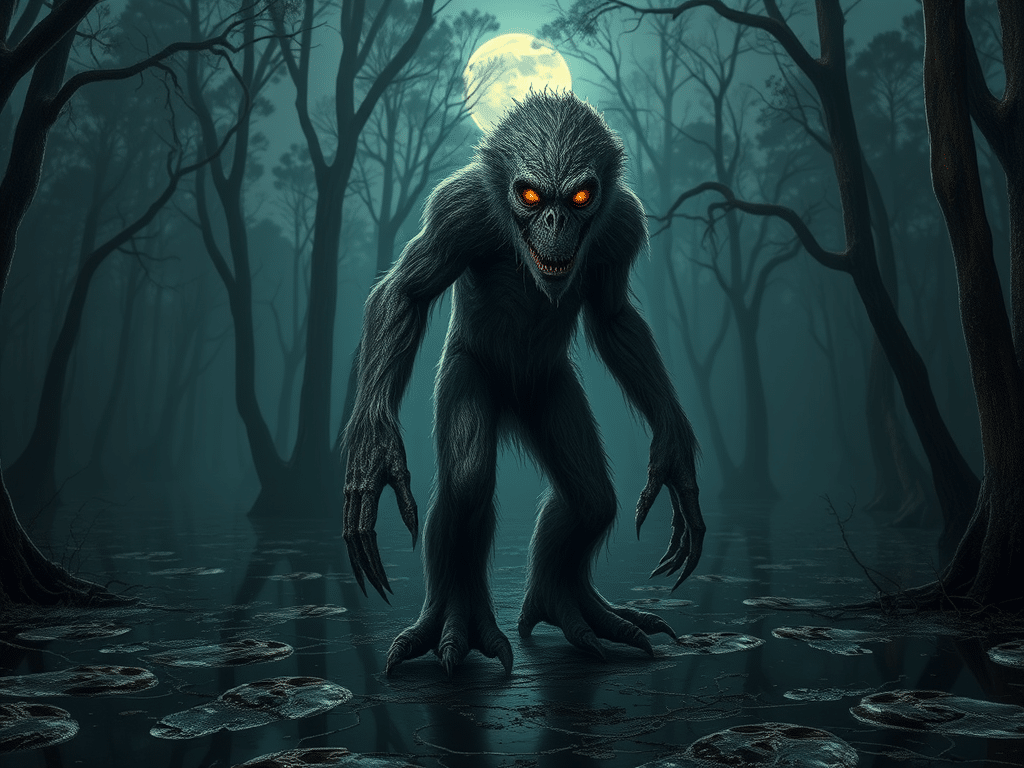
In his seminal work Mongolia, the Tangut Country and the Solitudes of Northern Tibet, Przhevalsky described the peculiar features of the Almas as reported by the locals: a flat, humanoid face, bipedal locomotion ability, thick black fur, strong claws, and strength that would have scared away even the most experienced hunters. These explanations gave the legend more credibility and piqued the interest of both scientists and explorers.
Soviet Research Interests and Observations
The scientific community, especially in the Soviet Union, became interested in the Almas in the second half of the 20th century. The likelihood of the Almas’ existence was investigated by the Soviets with such thoroughness in the 1960s that the Soviet Academy of Science conjectured the creature might be a remnant population of Neanderthals, surviving in the remote and hostile regions of Siberia. This audacious theory sparked a number of investigations meant to find the truth.
Many expeditions were sent out between 1992 and 2014 in the hopes of finding the elusive Almas in the Caucasus Mountains, a discovery that would upend our understanding of human evolution and the survival of extinct species.
The mystery surrounding the Almas finally came under the examination of contemporary scientific techniques, despite decades of intrigue and the attraction of an undiscovered hominid. A groundbreaking investigation that examined hair samples thought to have come from the mysterious creature came to the conclusion that the hairs did not belong to a lost species of human progenitor or to a cryptid, but rather to recognized mountain animals like the brown bear.

Conclusion
The tale of the Almas is proof of the creative potential of people and the power of folklore. This is a tale that has persisted through the ages, driven by anecdotal evidence, the respect that explorers had, and scientific curiosity. The Almas, which represents the mysteries that the world’s wild places still possess, is a fascinating part of Central Asian cultural legacy, even though empirical evidence has not yet been able to confirm its reality. Even if the Almas is no longer a physical entity roaming the mountains, it lives on as a reminder of the wild and mysterious spirit of nature and as a symbol of the unknown.
Further Reading
Porshnev, B. F. (1974). The Yeti and the Neanderthal Man: The Relationship Between Myth and Science. Moscow: Progress Publishers.
This book by Boris Porshnev, a Soviet historian and anthropologist, delves into the relationship between legendary creatures like the Yeti and potential scientific explanations involving extinct hominids. Porshnev’s pioneering work is selected for its in-depth analysis and hypothesis that relates to the Almas and similar cryptids, suggesting a connection to Neanderthals. It provides a historical perspective on how myths can intersect with scientific theories, making it an essential read for those interested in the Almas’ legend from a historical and scientific viewpoint.
Sanderson, I. T. (1961). Abominable Snowmen: Legend Come to Life. Philadelphia: Chilton Company.
Ivan T. Sanderson’s comprehensive treatise on the Abominable Snowman—or Yeti—offers a global perspective on cryptid hominids, which is relevant to understanding the Almas. Sanderson’s meticulous compilation of accounts and sightings of mysterious creatures across the world makes this book a valuable resource for anyone pursuing comparative studies of cryptids. It was chosen for its encyclopedic approach and its potential to offer insights into the broader context within which the Almas is situated.
Shuker, K. P. (1997). From Flying Toads To Snakes With Wings: From the Pages of FATE Magazine. St. Paul, MN: Llewellyn Publications.
Karl P. N. Shuker, a zoologist and cryptozoologist, gathers a collection of articles from FATE Magazine, exploring various unexplained phenomena and creatures, including cryptids like the Almas. The book was selected for its accessible approach to cryptozoology, providing readers with a spectrum of mysterious entities reported globally. Shuker’s expertise in the field and the anthology’s engaging style offer a compelling read that complements the more focused studies of the Almas and other similar entities.


Leave a Reply