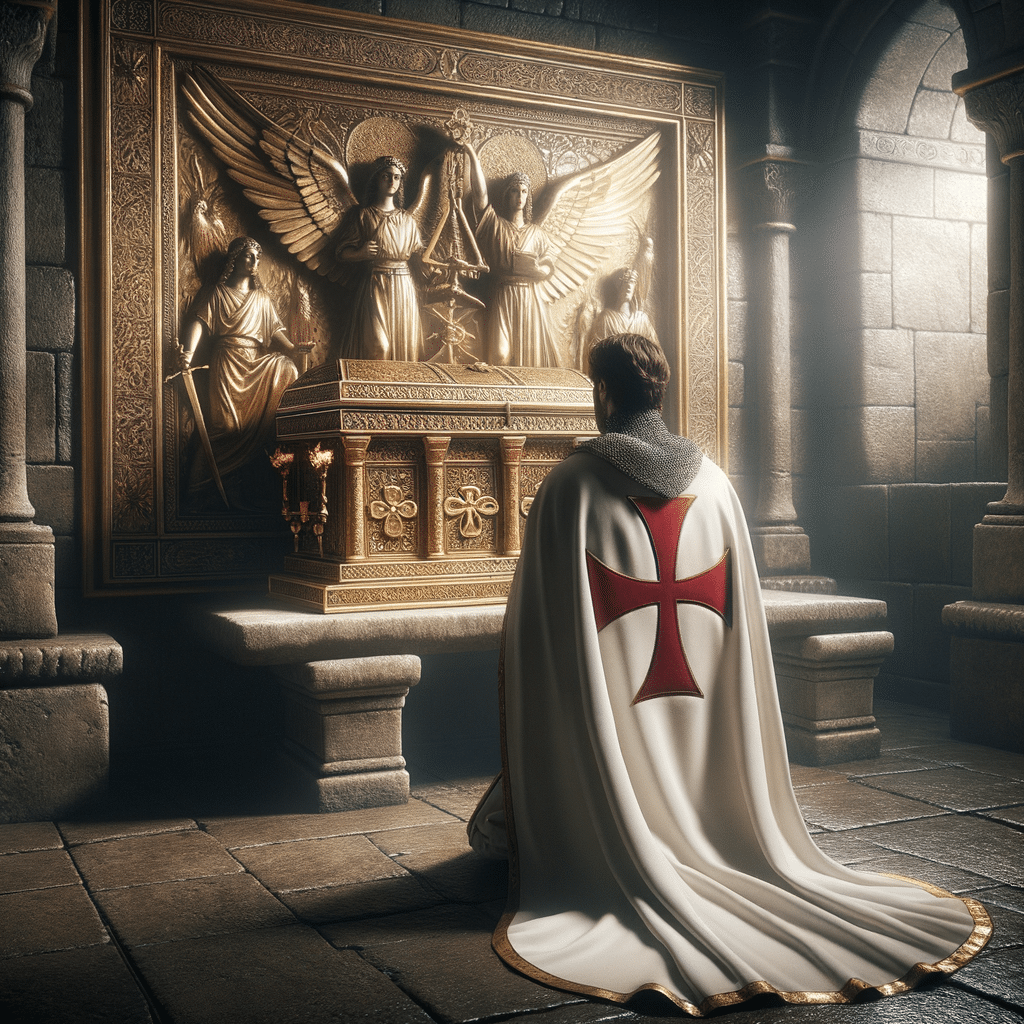
There is a theory that the Knights Templar gained possession of the Ark of the Covenant in medieval times.
The Ark of the Covenant, a sacred artifact described in the Hebrew Bible, has captured the imagination of historians, archaeologists, and treasure hunters for centuries. Its last known location, according to the biblical narrative, was the First Temple in Jerusalem. However, the fate of the Ark following the Babylonian conquest has led to numerous theories and legends, one of which involves the enigmatic order of the Knights Templar. This video explores the possibility that the Knights Templar were responsible for recovering the Ark by looking at the origins and histories of both the Ark and the Templar knights, the validity of the theory, and the ultimate outcome of both the order and the fabled artifact.
The Ark
The Ark of the Covenant is described in the Bible as a wooden chest, gilded with gold, that contained the stone tablets of the Ten Commandments given to Moses on Mount Sinai. The Ark held great spiritual significance and was said to contain the presence of God. Only the high priest was permitted to approach the Ark on Yom Kippur, the Day of Atonement.
The Ark reportedly resided in the Holy of Holies, the Tabernacle’s innermost chamber, and later in King Solomon’s First Temple in Jerusalem. This information comes from the Book of Exodus. It served not only as a physical manifestation of God’s presence but also as a symbol of the Israelites’ covenant with God.
The Ark is said to have been carried into battles, led religious processions, and was central to the religious life of ancient Israel. Its history is shrouded in mystery after the destruction of Solomon’s Temple in 587 BC by the Babylonians, where the biblical trail goes cold, leaving its ultimate fate unknown.
The possibility that the Romans looted the Ark of the Covenant during their extensive conquests has been a subject of speculation among historians, biblical scholars, and enthusiasts of ancient history. This theory proposes that the Ark, if it had survived until the Roman conquest of Judea, might have been seized as a war trophy and taken to Rome.
The Romans, known for their military might and empire-building, often looted and claimed treasures from the lands they conquered. Trophies of war were significant to Roman culture, symbolizing the empire’s dominance and glory. When General Titus sacked Jerusalem and destroyed the Second Temple in 70 CE, the Romans likely would have seized any valuable religious or cultural artifacts.
Historical records, such as the Arch of Titus in Rome, depict Roman soldiers carrying away spoils from the Second Temple, including the menorah, trumpets, and the Table of the Shewbread. However, there is no mention or depiction of the Ark among these items.

Knights Templar
The Knights Templar, officially known as the Poor Fellow-Soldiers of Christ and of the Temple of Solomon, were a Catholic military order founded in 1119. They were initially chartered to protect Christian pilgrims traveling to the Holy Land during the Crusades. The Templars quickly grew in power and wealth, becoming one of the most formidable and influential institutions of the medieval period. Their headquarters were located on the Temple Mount, which is said to have given them access to numerous relics and treasures.
One intriguing theory holds that the Knights Templar discovered the Ark of the Covenant during excavations under the Temple Mount in Jerusalem. They are said to have unearthed it in a chamber deep beneath the ruins of the Temple. This remarkable find – the most sacred relic of the ancient Israelites – may have been brought back to Europe by the Templars. The theory proposes they kept it secretly for years, perhaps using the Ark’s reputed divine powers to amass their wealth and influence. The Templars’ possession of the Ark could potentially explain why Philip IV moved against them. As a religious artifact of immense value, the Ark also made a tempting target for the king’s avarice.
However, the evidence for this theory is highly speculative and circumstantial. No historical records from the Templars or contemporary sources confirm that the Templars found the Ark or had it in their possession. Connecting historical dots and relying on myths or legends rather than verifiable facts are common methods of supporting the theory.
One argument against the theory is that by the time of the Roman conquest or the Templar presence, the Ark had been lost for centuries. Many scholars believe it was either destroyed, hidden, or taken to another location well before the Romans or Templars arrived in Jerusalem. The absence of the Ark in historical and religious texts post-Babylonian exile suggests that it was no longer physically present in the Temple or in Judea by the first century AD or in medieval times.
The Knights Templar met a dramatic end in the early 14th century when King Philip IV of France, covetous of their wealth and wary of their power, orchestrated their downfall. In 1307, many Templars were arrested, tried under false charges, and eventually burned at the stake. Pope Clement V officially dissolved the order. The Pope disbanded the Knights Templar in 1312, despite the claims of some historians that they were unfounded and politically motivated. The sudden dissolution of the order has led to many legends about the fate of their supposed treasures, including the Ark.
As for the Ark of the Covenant, its whereabouts remain one of the greatest historical mysteries. Various theories place it everywhere, from a hidden chamber beneath the Temple Mount to Ethiopia, but conclusive archaeological or historical evidence is lacking.
Another theory is that the Templars took the Ark to Ethiopia, where it is still on display in the Chapel of the Tablet at the Church of Our Lady Mary of Zion. Still others have suggested surviving Templars moved the Ark to a location in Scotland or even the New World.
Conclusion
The hypothesis that the Knights Templar recovered the Ark of the Covenant is a compelling narrative that plays to our fascination with hidden treasures and secret societies. However, there is no solid historical evidence to back up the theory, so it remains speculative. The true fate of both the Ark and the Templar treasures, if indeed there were any, remains a topic for conjecture and storytelling rather than established history. While the enigma of the Ark’s disappearance continues to intrigue, the reality may be that its final chapter was written long ago, lost to the passage of time.



Leave a Reply