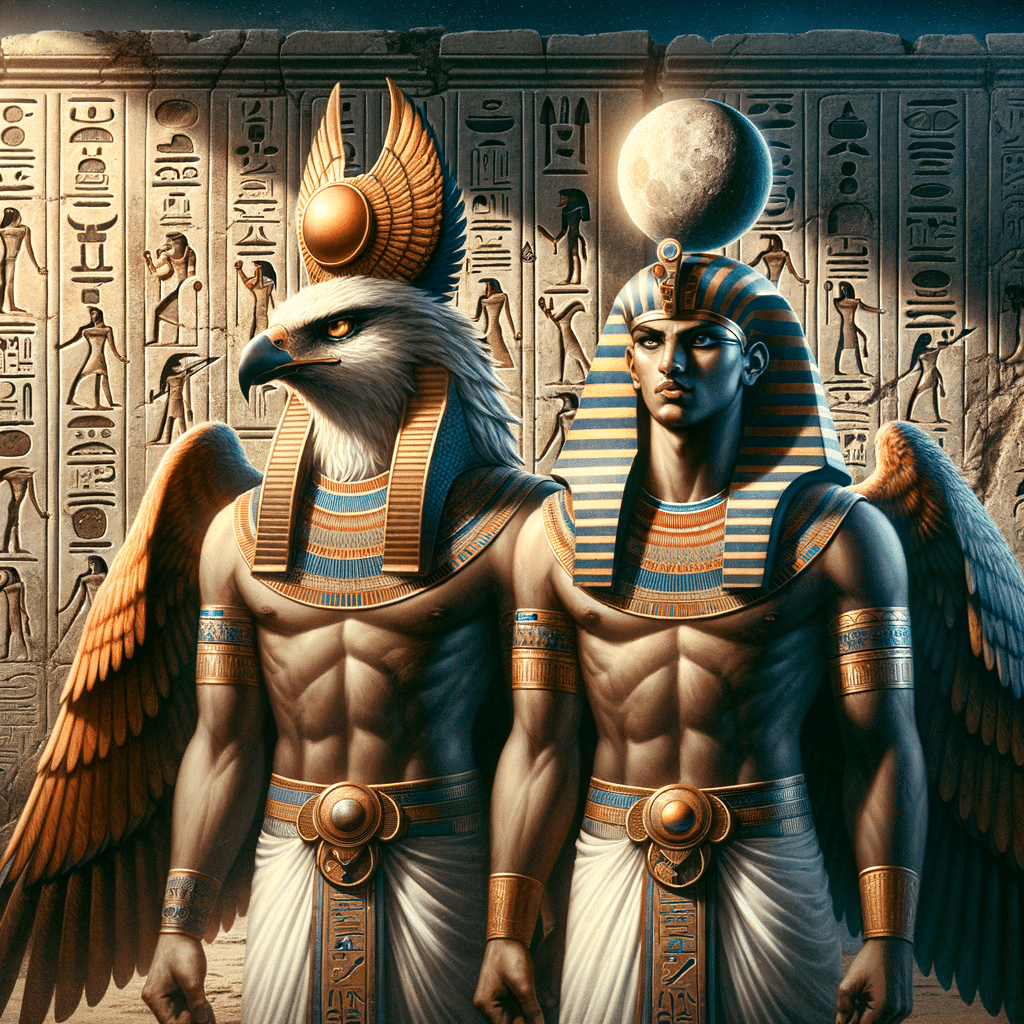
A podcast about the book Ancient Egyptian Legends can be accessed above. This episode was part of several podcasts generated with Google NotebookLM and is the product of AI.
This podcast talks about the book Ancient Egyptian Legends, written by Margaret Alice Murray and published in 1920 as part of the Wisdom of the East series. The book is structured to explore various themes through a sequence of myths, beginning with legends of different gods, then delving into the story of Osiris and his associated deities, culminating in the legends of Ra. Each myth includes detailed information about its publication, translation, and historical context. Murray’s work aimed to foster understanding between East and West by presenting the ancient world’s wisdom and philosophy, showcasing the richness of Egyptian thought and culture.

[Joe]
Welcome back to Connect Paranormal. Tonight, we’re going on a deep dive into ancient Egyptian legends, those captivating tales that kind of blur the lines between history and myth.
[Tammy]
Yeah.
[Joe]
Maybe even a touch of the paranormal. It’s fascinating to me how these stories offer a window into a world where gods and goddesses walked among humans, wielding unimaginable power.
[Tammy]
Yeah.
[Joe]
Our guide for this deep dive is Ancient Egyptian Legends by M.A. Murray.
[Tammy]
Great book. This book is just a treasure trove of ancient wisdom, you know, and beliefs. We’re going to explore how these legends weren’t just entertaining stories, but really reflections of the Egyptians worldview, their understanding of the cosmos and their relationship with the divine.
[Joe]
Yeah. OK, let’s unpack this. The first legend we’ll explore is the princess and the demon.
The title alone, like, sends chills down my spine. What can you tell us about the setting and the key players in this story?
[Tammy]
All right. So picture this. We’re in the reign of the legendary pharaoh Ramses, known for his military prowess and his vast empire.
Tribute played a vital role in maintaining Egypt’s power and influence.
[Joe]
So Ramses is in Nahorina collecting tribute from various princes. And I read that the prince of Becton offered his own daughter as tribute. Wow.
She was said to be stunningly beautiful. And Ramses was smitten with her, made her his great royal wife and gave her the name Nifru Ra. That’s right.
Beauty of Ra.
[Tammy]
It really demonstrates the kind of complexities of power dynamics and cultural exchange during those times. You know, to be plucked from your homeland and thrust into such a powerful role. It makes you wonder what Nifru Ra must have felt.
[Joe]
Absolutely. But the story takes a dramatic turn. When her sister back in Becton, Bent Reshi, falls desperately ill, her father, Frantic, sends messengers to Ramses begging for help.
And here’s where things get really interesting.
[Tammy]
OK.
[Joe]
The second messenger arrives when Ramses is in Thebes on a very specific date. The first of the month, Paeans.
[Tammy]
First of Paeans, that’s right. This date is sacred to Khonsu.
[Joe]
OK.
[Tammy]
The god of the moon, the son of Amun-Ra and Mut. He was often depicted as a youthful god, a symbol of renewal and protection.
[Joe]
So is Khonsu the key to healing Bent Reshi? I’m like on the edge of my seat here.
[Tammy]
He certainly plays a pivotal role. So you see, there were two statues of Khonsu in the temple. Khonsu in Thebes, Neferhotep.
[Joe]
OK.
[Tammy]
And Khonsu, the expeller of demons.
[Joe]
OK.
[Tammy]
Ramesses performs a ritual asking the first statue to turn its face towards the second. Right. Essentially seeking permission to send Khonsu, the expeller of demons, to Becton to help heal his wife’s sister.
[Joe]
Wow. It’s fascinating how they sought, you know, guidance and approval from their deities. Even in matters of healing.
[Tammy]
Exactly. They believed their gods were intimately involved in their lives. So now picture this.
The statue of Khonsu, the expeller of demons, is placed in a grand boat surrounded by five smaller boats filled with chariots and horses as if a king were embarking on a royal procession.
[Joe]
It sounds like a scene straight out of a movie.
[Tammy]
Yes, it does.
[Joe]
But this journey, it wasn’t a quick trip, was it?
[Tammy]
No, no, no. It took a year and a half for the statue and its entourage to reach Becton. Imagine the anticipation and the weight of hope they carried with them.
[Joe]
I can only imagine. So when they finally arrive, what happens?
[Tammy]
The prince of Becton, overwhelmed with reverence, falls to his knees before the statue, echoing Remus’s plea for Khonsu’s mercy.
[Joe]
And the question on everyone’s mind is, did it work? Did Khonsu heal Bent Reshi?
[Tammy]
Well, the legend states that as soon as Khonsu, the expeller of demons, was brought to her and a magical protection was performed, Bent Reshi was miraculously healed.
[Joe]
Instantly.
[Tammy]
Yeah.
[Joe]
That’s incredible. It makes you wonder, was it truly the statue’s power? Some form of ancient energy healing we don’t understand?
Or simply the power of belief?
[Tammy]
It’s the beauty of these ancient tales. They really invite us to consider the different possibilities. Some might interpret it as divine intervention.
Others might see it as a testament to the power of the human spirit. But the legend doesn’t explicitly tell us how.
[Joe]
Right.
[Tammy]
It just tells us that she was healed.
[Joe]
Leaving us with this lingering sense of mystery and wonder, which let’s be honest, that’s what we love about exploring the paranormal.
[Tammy]
Absolutely. And the story doesn’t end there. The Prince of Becton has this vivid dream where he sees Khonsu transform into a golden hawk and fly back towards Egypt.
[Joe]
Hold on. A hawk. What is the significance of that in ancient Egyptian beliefs?
[Tammy]
Hawks were often associated with Horus, the god of kingship in the sky.
[Joe]
Right.
[Tammy]
In this context, it could symbolize a divine messenger, a conduit between the earthly and the divine realms.
[Joe]
So the prince sees this hawk flying away. What’s his reaction?
[Tammy]
Well, he wakes up terrified, convinced that Khonsu is abandoning them. He immediately orders the statue to be returned to Thebes, laden with lavish gifts as a way to appease the god.
[Joe]
I can understand his fear. After witnessing such a miraculous healing, I wouldn’t want to risk angering a god. Right.
Especially one with a reputation for expelling demons.
[Tammy]
Exactly. The story concludes with the safe return of Khonsu to Thebes, leaving us with a glimpse into the profound respect and even fear that the ancient Egyptians had for their gods.
[Joe]
This legend is so captivating. It’s amazing how a story from so long ago can still spark our imagination and make us think about the nature of belief, the power of the unknown and those enduring mysteries that connect us to the past.
[Tammy]
And that connection is what we’re all about here on Connect Paranormal. But there’s more to uncover. We’ll delve into another fascinating legend after this.
[Joe]
We’re back on Connect Paranormal, and I’m still thinking about that journey of the Khonsu statue and the healing of Bent Reshi. It really highlights just how important the divine was in their lives. But you know what else was powerful to the ancient Egyptians?
[Tammy]
Let me guess. Names.
[Joe]
You got it. They believed names held an almost magical power.
[Tammy]
Yes.
[Joe]
Connected to a person’s very essence.
[Tammy]
Right.
[Joe]
This next legend, the name of Ra, dives headfirst into that concept.
[Tammy]
It really does. This story features Ra, the sun god, the supreme deity in the Egyptian pantheon.
[Joe]
Wow.
[Tammy]
They believed he was the creator of everything, and his power was directly tied to his secret name, almost like a source code to the universe.
[Joe]
That’s amazing.
[Tammy]
Yeah.
[Joe]
So whoever knew Ra’s secret name could control everything. Pretty much. Wow.
[Tammy]
The legend introduces another powerful deity, Isis.
[Joe]
OK.
[Tammy]
A goddess associated with magic, healing and even resurrection.
[Joe]
Wow.
[Tammy]
She sets her sights on learning Ra’s secret name, knowing it would grant her unimaginable power.
[Joe]
Isis sounds like she could give those paranormal investigators a run for their money.
[Tammy]
Yeah, she’s a pretty impressive character in Egyptian mythology.
[Joe]
But how could she possibly get this name from Ra? I doubt he’d just share it over tea and biscuits.
[Tammy]
Yeah, well, the story takes kind of a fascinating turn. As Ra ages, he becomes vulnerable, even drooling a bit. It might seem like a strange detail.
[Joe]
OK.
[Tammy]
But it’s crucial.
[Joe]
OK, why? What’s the big deal with a little drool?
[Tammy]
Well, in Egyptian mythology, saliva was believed to hold magical power. Isis sees an opportunity, collects some of Ra’s saliva, mixes it with earth. And crafts a venomous snake.
[Joe]
A snake? That took a dark turn. What did she do with it?
[Tammy]
Well, knowing Ra’s daily journey across the sky, he places the snake right in his path. And as planned, it bites him, injecting him with deadly poison.
[Joe]
Wow. The mighty Ra struck down by a tiny snake. That’s that’s a bit ironic, isn’t it?
[Tammy]
It is. And the poison courses through him, causing immense pain. Ra summons the best healers in the land, but they’re powerless to help him.
[Joe]
Why couldn’t they help him? Didn’t they have, you know, powerful magic and things?
[Tammy]
They lacked the key ingredient, Ra’s secret name. The legend emphasizes that only by uttering his true name could they counteract the venom and heal him.
[Joe]
So his name was like the ultimate cure.
[Tammy]
Yes, exactly.
[Joe]
That’s mind blowing. What does Isis do?
[Tammy]
This is where her cunning comes in. She appears before Ra, offering to heal him, but only if he reveals his secret name. Imagine the tension.
The most powerful being in existence forced to bargain for his life.
[Joe]
I bet Ra wasn’t too happy about that. Did he give in?
[Tammy]
Desperate for relief, he’s reluctant at first. They engage in this, this intense back and forth with Isis reminding him that his life hangs in the balance. She even demands his eyes, symbolic of the sun and moon, in exchange for the cure.
[Joe]
Hold on. His eyes. That’s a huge ask.
What’s the connection there?
[Tammy]
Well, it’s fascinating. This part of the legend ties into later Egyptian beliefs where the sun and moon became known as the Eyes of Horus. Symbolism is woven throughout their mythology, connecting everything.
[Joe]
Like a cosmic puzzle.
[Tammy]
Yes, exactly.
[Joe]
So what happens next? Does Ra finally crack?
[Tammy]
He does. Facing his mortality, Ra reveals his secret name. Isis, with her magical prowess, speaks the word of power, driving out the poison and healing him.
[Joe]
She saved his life, but I bet Ra regretted that deal. What happened to him afterwards?
[Tammy]
Well, the legend doesn’t really delve into the aftermath, but it highlights the cost of power. Isis, by acquiring Ra’s secret name, elevates herself to a position of immense power, even rivaling Ra himself.
[Joe]
It’s a reminder that knowledge can be both a blessing and a curse, especially when dealing with forces beyond our comprehension.
[Tammy]
Exactly. And it raises questions we grapple with even today. What are the limits of ambition?
What is the true cost of power? These are themes that resonate throughout human history, and it’s fascinating to see them explored in these ancient tales.
[Joe]
These legends are more than just stories. They’re a glimpse into a different way of seeing the world. A world where the power of names, magic and the divine were interwoven into the fabric of everyday life.
[Tammy]
It really makes you wonder, are those forces still at play today, just hidden beneath the surface of our modern world?
[Joe]
That’s a question we’ll continue to explore as we dive deeper into ancient Egyptian legends after this. We’re back on Connect Paranormal, and wow, what a deep dive this has been. From a statue’s epic journey to heal a princess, to a goddess’s cunning quest for a god’s secret name.
[Tammy]
It’s amazing how these stories passed down through centuries can still resonate with us today.
[Joe]
Right. These ancient Egyptian legends have taken us on a wild ride.
[Tammy]
They tap into something primal, a fascination with the unknown. The power of belief and those forces that seem to shape our destinies.
[Joe]
We’ve seen how the ancient Egyptians viewed the world as this interconnected web of divine power, magic and ritual. But one of the most striking themes that keeps coming up is the significance they placed on names.
[Tammy]
Absolutely. The idea that a name wasn’t just a label, but a vessel of power intrinsically linked to a person’s very essence. Knowing someone’s true name was like holding a key to their soul.
[Joe]
It’s like in the legend of the name of Ra, where possessing Ra’s secret name was the key to unlocking the forces of creation itself. It makes you think about the power of language and how words can shape our reality.
[Tammy]
Exactly. And this belief wasn’t limited to the gods. The Egyptians were meticulous about recording names and their hieroglyphs, ensuring their preservation for eternity.
It’s as if they believed that forgetting someone’s name could erase them from existence altogether.
[Joe]
That’s a chilling thought. But it highlights the profound respect they had for the written word, for the enduring power of stories and the legacies we leave behind.
[Tammy]
And that brings us back to what we do here on Connect Paranormal. We’re driven by that same thirst for understanding that desire to unravel the mysteries that have captivated humanity for centuries.
[Joe]
Whether it’s a tale of a ghostly apparition, a strange creature lurking in the shadows, or an ancient legend that hints at some hidden truth. We’re drawn to these stories because they challenge our perceptions and push the boundaries of what we think we know.
[Tammy]
Right. Just like the ancient Egyptians who sought guidance from their gods and goddesses were on a quest to make sense of the seemingly impossible.
[Joe]
Yes.
[Tammy]
To connect with the whispers of the past and maybe, just maybe, catch a glimpse of what lies beyond the veil.
[Joe]
So as we wrap up this incredible deep dive into ancient Egyptian legends, I want to leave you with a question. What if our names, the very words that define us, hold more power than we realize?
[Tammy]
Perhaps there’s a hidden magic within our own names waiting to be discovered. Maybe by tracing the origins of our names, exploring their history and meaning, we can unlock a deeper understanding of ourselves and our place in the grand tapestry of existence.
[Joe]
That’s an incredible thought. I know we’ll be spending some time researching the meaning behind my own name.
[Tammy]
I encourage everyone listening to do the same. You never know what hidden connections or surprising revelations you might find.
[Joe]
Thank you for joining us on this fascinating journey into the world of ancient Egyptian legends. We hope you’ve enjoyed exploring these captivating tales and discovering the power of names, the allure of magic and the enduring mysteries of the past.
[Tammy]
And as always, stay curious, keep exploring and remember, the truth is out there waiting to be uncovered.
[Joe]
Until next time on Connect Paranormal.



Leave a Reply