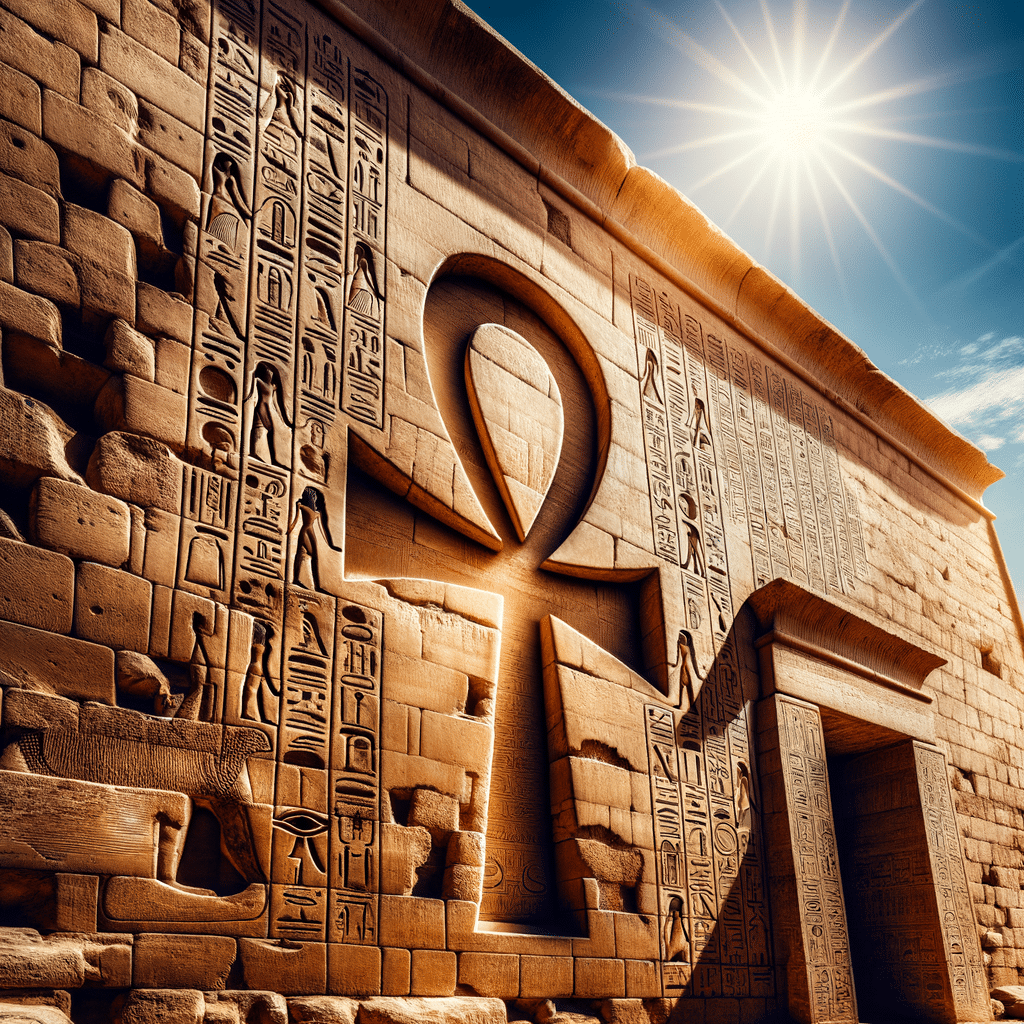
One of the most famous symbols of ancient Egypt is the ankh, a cross with a loop at the top. The ankh, known as the key of life or cross of life, symbolizes immortality, life, and the divine. Its design represents both physical life and the soul’s eternal essence. It has attracted scholars, artists, and spiritual seekers, demonstrating its significance.

Description
Ancient Egyptians believed the ankh had special powers. It represented immortality through its connection to life, fertility, and the afterlife. Gods and goddesses like Isis and Osiris held the ankh to symbolize their power over life and death. The ankh was also believed to protect and bless its wearers, making it a popular amulet. For those desiring immortality, the symbol’s connotation with regeneration and rebirth was potent (Michael, 2018).
Since 3000 BC, Egyptian hieroglyphics and art have featured the ankh. It once symbolized the might of divine pharaohs. Funerary art and tomb inscriptions commonly used the ankh in prayers and rituals to ensure the safety of the afterlife. It’s appearance in temples and monuments strengthened its hallowed significance, reflecting Egyptians’ belief in an endless afterlife (Segy, 1963).
The role of the ankh evolved with Egyptian society. In the New Kingdom, the ankh had moved from being a royal symbol to one for all classes. It moved from representing the divine to representing life and protection. It became part of Egyptian art, jewelry, and religion after its democratization.
The ankh influenced early Christianity beyond Egypt. As Christianity spread, Christian imagery adopted it and other Egyptian symbols. The ankh’s endless life symbolized Christian resurrection and salvation. It symbolized Christ’s victory over death in early Christian art, strengthening its relationship with life and immortality. This symbol mix represents the complex relationship between cultures and religions during a time of enormous change in the Mediterranean (Gadalla, 2007).

Contrasts
The ankh, an ancient Egyptian emblem of immortality, resembles and differs from other immortality symbols. Each symbol represents a different culture’s view on life, death, and the afterlife. Phoenixes, symbols of immortality in Greek and Egyptian mythology, are famous. A resurrection symbol, the phoenix rises from its ashes like the ankh. Both symbols represent life after death, but the phoenix emphasizes transformation and cyclical existence, while the ankh emphasizes continuity and the soul’s endless journey.
The cross symbolizes eternal life in Christianity because Christ rose. This sign denotes sacrifice and redemption, not life itself, unlike the ankh. The cross is central to the story of salvation and the promise of an afterlife for believers, while the ankh symbolizes life and fertility.
Lotuses are important in Hinduism and Buddhism. Lotuses blossom magnificently above dirty rivers, symbolizing purity, enlightenment, and rebirth. As with the ankh, the lotus symbolizes the ability to overcome sorrow and rise above it. The lotus represents spiritual progress and enlightenment, while the ankh symbolizes heavenly power and the afterlife.
White cranes represent immortality in Chinese culture. People typically picture cranes as messengers between the earthly and divine realms, symbolizing a long and successful life. Similar to the ankh, the crane is associated with life and the afterlife, emphasizing longevity over life itself.
These symbols stress immortality and rebirth, but their cultural settings and life and death themes vary. The ankh symbolizes a direct connection to the divine and life, while the phoenix, lotus, and crane indicate diverse paths to immortality, such as transformation, enlightenment, or longevity. These symbols show the complex fabric of human ideas about life, death, and the hereafter, each presenting a distinct perspective on immortality.
Modern Influence
The ankh influences fashion, art, spirituality, and popular media today. Rich symbolism and universal themes of life, death, and immortality make it appealing. They are prominent in jewelry, tattoos, and clothes today. Many people wear ankhs as amulets or decorations for protection and eternal life. Its stunning design appeals to people seeking individuality, mysticism, or ancient Egyptian culture (Hamden, 2018).
Many artists and designers have used the ankh to symbolize resurrection, togetherness, and vitality. It appears in paintings, sculptures, and graphic design, showing a fascination with ancient Egyptian aesthetics. It also shows a desire to incorporate significant meanings into contemporary art.
The ankh is important in Neopaganism, Afrocentrism, and New Age spirituality. It invokes life, health, and protection in rituals and meditations. Many practitioners associate it with ancestral wisdom and ancient Egyptian spirituality.
The ankh appears in movies, TV shows, and books with mystic and occult themes. In these circumstances, the presence of mystery and ancient knowledge piques listeners’ interest in the past and its existence. It’s wide use as a symbol of life and spirituality shows its modern influence. It’s capacity to transcend time and culture reflects the common search for understanding life, death, and the unknown, keeping it relevant and strong in modern society (Coetzee, 2017).
Conclusion
The ankh is a powerful symbol representing life, death, and the divine. Its transformation from an ancient Egyptian regal insignia to a universal symbol of eternal life shows its versatility and significance. The ankh influenced the spiritual environment of ancient Egypt and later religious traditions, demonstrating the intertwining of human ideas across time and nations. As a sign of hope and continuity, it prompts reflection on existence and the search for immortality across generations.
References
Coetzee, D. (2017). The İmpact Of The Symbolism and Iconography Of The Ankh, Sun-Disk and Wadjet Eye On Modern (“Western”) Society. Ancient Near Eastern Studies at the Universty Of South Afrıca, Pretoria, 1, 141.
Gadalla, M. (2007). The Ancient Egyptian Roots of Christianity. Tehuti Research Foundation.
Hamden, A. (2018). The Role of the Personified ankh in the Offering Scenes of the New Kingdom. Journal of the American Research Center in Egypt, 54, 71-84.
Michael, V. S. (2018). The Pharaonic sign “Ankh” between history and modern fashion. International Design Journal, 8(4), 371-386.
Segy, L. (1963). The Ashanti Akua’ba Statues as Archetype, and the Egyptian Ankh: A Theory of Morphological Assumptions. Anthropos, (H. 5./6), 839-867.
Leave a Reply