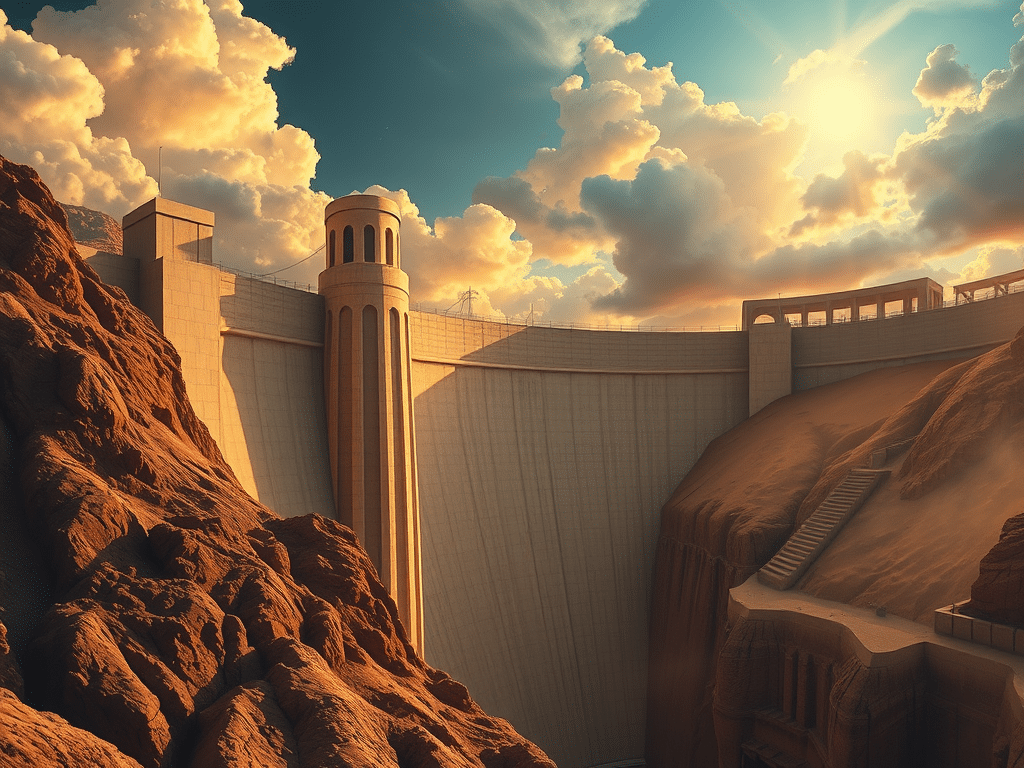
Hoover Dam Haunting: Key Points
-
The Hoover Dam, completed in 1935, is a 726-foot engineering marvel that generates power for millions but is surrounded by persistent legends of bodies entombed in concrete and restless spirits haunting its corridors.
-
At least 96 workers officially died during construction under brutal conditions, though the actual death toll may be higher due to unreported carbon monoxide poisoning and delayed work-related fatalities.
-
During construction, organized crime exerted a significant influence on the region, controlling labor and businesses, leading to speculation about the murder of missing workers instead of their voluntary departure.
-
Witnesses consistently report unexplained phenomena, including disembodied voices, shadowy figures, self-operating elevators, equipment malfunctions, and sudden temperature drops in specific dam locations.
-
Despite popular folklore, engineering evidence and detailed construction records make it virtually impossible that bodies were sealed in concrete, as this would have caused visible structural defects.
-
The ghost stories serve as collective memory, preserving the human cost of construction, reflecting cultural anxieties about industrial progress and worker exploitation during the Great Depression.

Introduction
The Hoover Dam is one of the most impressive engineering feats in the United States. It is a huge concrete arch-gravity dam that rises 726 feet above the Colorado River on the border between Nevada and Arizona. This giant building was finished in 1935, at the height of the Great Depression. It provides hydroelectric power to millions of people in the Southwest and has become the subject of many ghost stories and urban legends. One of the most enduring stories is the one that says that during the dam’s construction, human bodies were buried in the concrete and that the spirits of these poor people still haunt the building today. For decades, these stories have fascinated visitors and people who are interested in the paranormal. They mix historical facts with guesses and folklore to create a story that won’t go away.
Overview of Hoover Dam
The Hoover Dam is a wonderful piece of construction from the Great Depression. It has about 3.25 million cubic yards of concrete, which is enough to pave a two-lane road from San Francisco to New York City. When full, the dam made Lake Mead, which is 112 miles long and the largest reservoir in the United States by volume. It is behind the enormous wall of concrete. The dam has an almost mythical quality because of its Art Deco design features, like the unique intake towers and the visitor center’s terrazzo floor with a celestial map on it. These features seem to invite strange stories. Visitors can feel the rumble of the seventeen generating units that make well over 4 billion kilowatt-hours of hydroelectric power each year when they stand at the dam today. The structure is so big that the tourist observation decks below look small in comparison. Some people say that the dam’s remote location in the harsh desert landscape, along with its imposing presence, makes the area feel strange even in broad daylight (Dunar & McBride, 2016).
The story of the Hoover Dam’s construction heavily relies on organized crime. In the 1930s, the mob had a lot of power in Las Vegas and the area around it. The huge construction project brought thousands of workers to the empty Nevada desert, where there were no laws. Businesses connected to the mob thrived by providing entertainment, gambling, and other services to the workers. Six Companies, Inc. was responsible for the construction. They employed approximately 21,000 individuals, many of whom resided in Boulder City, a rapidly developing nearby community. The work environment was very dangerous. In the summer, temperatures could reach 120 degrees Fahrenheit, rockslides constantly happened, and workers were always at risk of carbon monoxide poisoning in the diversion tunnels. The official death toll from the construction is 96 workers, but some historians think the real number may have been higher because of deaths that happened later from carbon monoxide exposure and other work-related illnesses that weren’t immediately linked to the project (Rogers, 2010).
During this time, the mob was very active in the area. Organized crime figures viewed the dam project as an opportunity to generate revenue through both legal and illegal means. The dam workers went to illegal gambling dens, speakeasies, and brothels. There was a lot of competition between different criminal groups, and it was often violent. The mob controlled supply chains, labor unions, and a number of construction contracts, which gave them unprecedented access to the construction site and its operations. Some workers who had problems with supervisors who were connected to the mob or who saw illegal activity were said to have just disappeared. Their absence was explained as voluntary departures or desertions. People think that some of the missing people may have had a worse fate than what official records say because of the mob’s culture of fear and violence at the time (Mislan, 2024).
Ghostly Hauntings
The ghost stories about the Hoover Dam usually have to do with the spirits of workers who are said to have died while building it and never got a proper burial. According to a well-known story, when a worker fell into wet concrete while it was being poured, there was no way to get the body out without damaging the structure, so construction had to go on with the body still inside. These stories say that foremen quickly figured out whether stopping work to get a body would slow down the project and cost the company money. In the end, they decided that the worker’s sacrifice would just become a permanent part of the building. People who tell these stories say that many bodies are buried in the dam’s walls and that their spirits are stuck in the concrete and can’t move on to the next life. Paranormal enthusiasts have used these tales to explain odd occurrences at the dam over the years.
Over the years, reports of paranormal activity at the Hoover Dam have been surprisingly consistent (Vegas Ghosts, 2024). Security guards, maintenance workers, and even tourists have all said they have seen strange things happen. Many people who have been there say they heard strange noises coming from the dam’s tunnels and chambers, like voices, footsteps, and what sounds like someone tapping on metal pipes or concrete walls. Some security guards who work at night have said they saw shadowy figures moving through parts of the dam that are closed to the public, but when they looked into it, they found that the corridors were empty. Several people have said that the temperature suddenly dropped in certain parts of the dam, even in places where the climate control should keep things the same. Dam tour guides have said they sometimes feel watched or sense an inexplicable heaviness in some areas, especially in the older parts closest to where it was built.
People frequently report seeing the elevators malfunction. Occasionally they seem to work on their own or stop at floors where no one has called them. Maintenance workers say tools and equipment have moved on their own and appeared elsewhere for no reason. Some people who work the night shift say they heard what sounded like old construction equipment from the 1930s while working in the distance, even though all of that equipment was taken away a long time ago. People who go on tours of the dam have said that their cameras or other electronic devices sometimes stop working in certain areas, but they start working again when they move to a different area. These stories have been gathered and shared on paranormal investigation websites and in local folklore, which only adds to the dam’s reputation as a place that might be haunted.
Those who work as security guards or maintenance workers at the dam for long periods of time have the most consistent exposure to its environment, which is why they have some of the most captivating stories about strange things that happen there. Several workers who have been there for a long time say they have developed an instinct for which parts of the dam feel “normal” and which regions feel heavy or tense for no reason. Some workers try to stay away from certain parts of the building during night shifts if they can. Their behavior isn’t because they believe in ghosts; it’s just that these areas make them feel uneasy for reasons they can’t fully explain. Others say they hear their name called when alone in some parts of the facility, but no one is there when they respond. Some people might say that these experiences are just the result of the stress of working alone in a big factory, but the fact that different people have reported them at different times and in different places suggests that something about the dam’s environment causes these feelings, whether they are paranormal or psychological (Khan, 2024).

Theories and Analysis
The Hoover Dam’s architecture and operations create an unsettling atmosphere that many visitors find unsettling, even if they don’t believe in ghosts. The building is so big that it makes people feel small. Giant turbines and tall concrete walls dwarf tourists, seemingly absorbing sound and light. The dam’s narrow hallways and tunnels can make people feel trapped, and the constant hum of machinery can cover up or make other sounds. Many of the inside areas are dimly lit, which makes dramatic shadows that can trick the eyes. The echoing acoustics make it difficult to tell where sounds are coming from. Psychologists call this kind of space a “liminal space.” It’s an in-between area that people instinctively find a little scary or strange. This makes the dam a wonderful place for ghost stories, even if there isn’t any actual paranormal activity.
Researchers have put together lists of reports of paranormal activity at the Hoover Dam, but the scientific validity of these reports is still up for debate. Some researchers say they have seen temperature changes of up to 15 degrees in certain parts of the dam, but skeptics say that these changes could easily be explained by the dam’s ventilation systems or its closeness to water. Some people think that electronic voice phenomena recorded at the site show workers calling for help or warning of danger, but audio analysis often shows that these sounds are not clear at all. People who love photography have posted pictures of what they think are “orbs” or strange light spots in their damn photos. However, experts in photography usually say that these are just dust particles, lens flares, or other normal things. Even though there isn’t enough proof, the number of reports from otherwise trustworthy witnesses keeps people interested in the dam as a possible paranormal place.
Researchers have investigated the idea of sealing bodies inside the dam’s concrete, but the evidence strongly suggests otherwise. From an engineering perspective, the concrete was poured in carefully planned sections with a lot of supervision (Bartojay & Joy, 2010). Any irregularity, including a human body, would have caused visible flaws and structural weaknesses. The Bureau of Reclamation kept detailed records of every worker and death. The Bureau of Reclamation recorded specific causes for each of the 96 official deaths, and none of them involved workers left in concrete. Pictures of the construction process are almost always present, so it is very unlikely bodies could be buried without anyone knowing.
Even though there is engineering and historical evidence against the entombment theory, the legends live on and have even gotten more detailed over time. Some versions of the story now say that the ghosts are not just random workers but people who were killed by the mob and are now haunting the dam to get justice or to show where their bodies are hidden. Some other variations say that paranormal activity gets stronger on the anniversaries of certain deaths or at certain times of the year, but paranormal investigators have not found a consistent pattern. Ghost hunting TV shows and paranormal tourism have brought these stories back into the spotlight. Several investigation teams have gone to the dam and said they found electronic voice phenomena or other proof of supernatural activity. The Bureau of Reclamation, which runs the dam, has always denied these claims and says there are no bodies in the structure. However, this official denial has only strengthened the conviction of those who believe there is something to hide.
The psychological allure of these ghost stories elucidates the ways in which individuals navigate industrial calamity and derive significance from challenging historical narratives. The Hoover Dam was a wonderful example of how human engineering can work, but it also showed how desperate workers were taken advantage of during one of America’s worst economic times. These features made it a great place to tell stories about injustice and unrest. The conditions for workers were truly terrible. Many of them died from heat stroke, dehydration, and carbon monoxide poisoning while working in the tunnels. The official death toll may not include everyone who died because of their work on the project. The documented mistreatment of workers, such as providing inadequate safety measures and preventing them from forming unions, makes the rumors of even worse abuses seem believable to many people. Ghost stories often come up in places where awful things happened and people think justice wasn’t fully served. People use these stories to honor the deceased and preserve their legacy.
Modern paranormal investigators who have studied the Hoover Dam suggest that the building’s unusual features may account for some of the strange occurrences reported there, which are unrelated to ghosts or buried bodies. The dam’s enormous concrete structure makes sounds behave in strange ways, making them echo and reverberate in ways that could easily be mistaken for voices or footsteps. The generators’ constant vibration and the water flowing through the turbines create infrasound, which people can’t consciously hear but which can make them feel uneasy, anxious, and like they’re being watched. The temperature changes in different parts of the building can be explained by the dam’s complicated ventilation systems and the difference between the hot desert outside and the cool tunnels inside. The dam’s enormous electrical equipment could create electromagnetic fields that could mess with electronic devices and make some people feel things that they might think are paranormal. These logical explanations are enough to convince skeptics, but they don’t do much to make ghost stories less appealing to people who think that scientific reasoning isn’t enough to illustrate their own experiences.
Impact
The ghost stories about the Hoover Dam are more than just urban legends; they show deeper fears about progress, work, and how working-class Americans are treated. The idea that workers literally became part of the monument they built fits in with ongoing talks about the costs of industrial development and whose sacrifices are remembered and whose are not. The dam is a symbol of what American workers could do during the Great Depression, but the ghost stories remind us that this success came at a substantial cost to people. There may not be any real bodies in the concrete, but the documented deaths, injuries, and terrible working conditions make the Hoover Dam a kind of tomb. The Hoover Dam serves as the final resting place for workers who lost their lives while working on this massive project. Even though the details of the legends are not always true, the stories of haunting can be considered a way to make sure that these workers are not forgotten.
When looking at ghost story reports, it’s important to remember how suggestion and expectation play a role in paranormal events at the Hoover Dam. People who come to the dam already know about the stories of buried bodies and hauntings and are more likely to think that strange sensory experiences are paranormal. A cold draft is no longer just a sign of air conditioning; it’s proof of a ghost. The sound of water moving through pipes is no longer just plumbing; it’s whispered voices. Psychological research has indicated that people often find patterns and meaning in random noise or coincidence when they expect to find them. This is called confirmation bias. Tour guides who discuss ghost stories, even as a joke or in passing, may be unintentionally setting up visitors to have experiences that confirm the stories. In paranormal studies, control groups often report seeing ghosts in places that have never been known to be haunted, just because they were told that the place might be haunted.
One intriguing new thing is how ghost stories and paranormal tourism have affected the economy of the Hoover Dam and the area around it. The Bureau of Reclamation doesn’t officially promote the dam’s paranormal aspects, but private tour companies and local businesses have used the ghost stories to attract people who are interested in the supernatural to come to the dam. Books, websites, and TV shows about the dam’s alleged hauntings have made it more popular with paranormal enthusiasts, leading to more tourists. Some local tour guides have come up with “haunted Hoover Dam” tours that focus on the creepy stories and legends while still providing people information about the dam’s history. This commercialization of ghost stories represents a form of dark tourism, where individuals visit locations associated with death and tragedy, drawn by the thrill of fear and genuine historical significance (Light, 2017). The dam benefits from this attention because people who are interested in the paranormal are more likely to visit a Depression-era infrastructure project than people who aren’t.
By looking at the Hoover Dam legends and other big construction project stories, we can see how these kinds of stories grow and spread. There are different versions of the “bodies in the concrete” story for the Brooklyn Bridge, the Empire State Building, and other tunnels and dams across the country. This evidence suggests that the story is based on a common urban legend template rather than real historical events. These stories seem to come up naturally around any big construction project that had dangerous conditions and many deaths. The basic story changes to fit the people and situations in the area. These stories, told repeatedly across different projects and times, serve important psychological and cultural purposes, helping communities confront industrial disasters and remember workers who might have been forgotten. The presence of analogous narratives across global cultures, from the Great Wall of China to European cathedrals, suggests that humans have historically generated folklore surrounding monumental construction endeavors that necessitated human sacrifice.
Real historical events and fictional stories about the Hoover Dam demonstrate the evolution of folklore over time. The kernel of truth—that almost 100 workers died during construction and that organized crime had a big impact on the area—has been built upon by later generations with more and more dramatic additions. Initially, it’s likely that ghost stories were primarily about tragic accidents. But over the years, they grew to include things like mob conspiracy, cover-ups, and planned murder. Every time someone tells the story again, they add new details or make the ones that are already there stronger, either on purpose or by accident. The internet has accelerated this process by letting people share and compare their experiences right away. This process has created a kind of crowdsourced mythology that grows stronger through repetition and cross-reference. It is almost impossible to tell the difference between what really happened in the 1930s and what has been added over the years through storytelling without doing a lot of historical research.
Because the Hoover Dam will always be there, stories about it will probably keep being told and changed for generations to come, even after the last person who remembers building it has died. The building itself is a physical link to the past, and each new generation can project its worries and ideas onto the enormous concrete walls. The dam will always be a monument to both the engineering feat and the people who built it, whether their spirits literally haunt the structure or they live on only in the stories people tell. Because the historical record is unclear and people tend to make up stories about tragedy, the question of whether bodies are buried in the dam will never be definitively answered in the public mind, even though engineering analysis indicates that such an event is almost impossible.
The stories about bodies buried in the Hoover Dam and the ghost stories that have grown up around them are an intriguing mix of history, folklore, engineering, and psychology. There is strong evidence that no bodies were purposely or accidentally sealed inside the dam’s concrete. However, the documented risks of construction, the real deaths that happened, and the fact that organized crime was present in the area all give the stories a historical basis that many people regard as believable. The reported paranormal phenomena at the site can likely be explained by a combination of the dam’s unique acoustic and electromagnetic properties, the psychological effects of working or visiting in such an imposing environment, and the power of suggestion and expectation among those who know the legends. Still, the fact that reports from different witnesses and different times are all the same means that believers will keep using the Hoover Dam as proof of the paranormal, and skeptics will keep coming up with logical explanations for every supposedly supernatural event. Overall, whether you consider the Hoover Dam to be a haunted tomb or just a monument to the engineering feats of the Great Depression depends less on the evidence than on your basic beliefs about death, memory, and the possibility of life after death. What is clear is that the Hoover Dam cost real lives, and those lives should be remembered. The ghost stories, no matter how true they are, are a way to remember the people who died because of this project so that people don’t forget about the human cost of this achievement while they admire the engineering marvel itself.
References
Bartojay, K., & Joy, W. (2010). Long-term properties of Hoover Dam mass concrete. In Hoover Dam: 75th Anniversary History Symposium (pp. 74-84).
Duchemin, M. (2009). Water, power, and tourism: Hoover Dam and the making of the new west. California History, 86(4), 60-89.
Dunar, A. J., & McBride, D. (2016). Building Hoover Dam: An Oral History of the Great Depression. University of Nevada Press.
Khan, S. (2024, November 17). Damned waters: Tales from haunted dams. Medium. https://shahjehankhan2009.medium.com/damned-waters-tales-from-haunted-dams-88738f615113
Light, D. (2017). Progress in dark tourism and thanatourism research: An uneasy relationship with heritage tourism. Tourism management, 61, 275-301.
Mislan, S. J. (2024). Diverting the Mob Mentality: The Real Dam History of Las Vegas.
Rogers, J. D. (2010). Hoover Dam: Operational Milestones, Lessons Learned, and Strategic Import. In Hoover Dam: 75th Anniversary History Symposium (pp. 189-215).
Vegas Ghosts. (2024, November 26). The haunted Hoover Dam. https://vegasghosts.com/the-haunted-hoover-dam/



Leave a Reply