
The Hoia Baciu Forest, also referred to as the Bermuda Triangle of Romania, is located deep within the Transylvania region of Romania. This 250-hectare forest near Cluj-Napoca is known as one of the most haunted in the world because of its purported paranormal activity, which has brought it international attention. However, many questions remain.

Description
The forest is situated in a steep region with rocky ground and limestone outcroppings. Because of its position in northwest Romania, it enjoys a temperate continental climate with mild summers and frigid winters. This forest’s stunning appearance is attributed to its oddly shaped trees, many of which grow in twisted, contorted patterns, creating odd spirals and curves that appear to defy natural growth patterns.
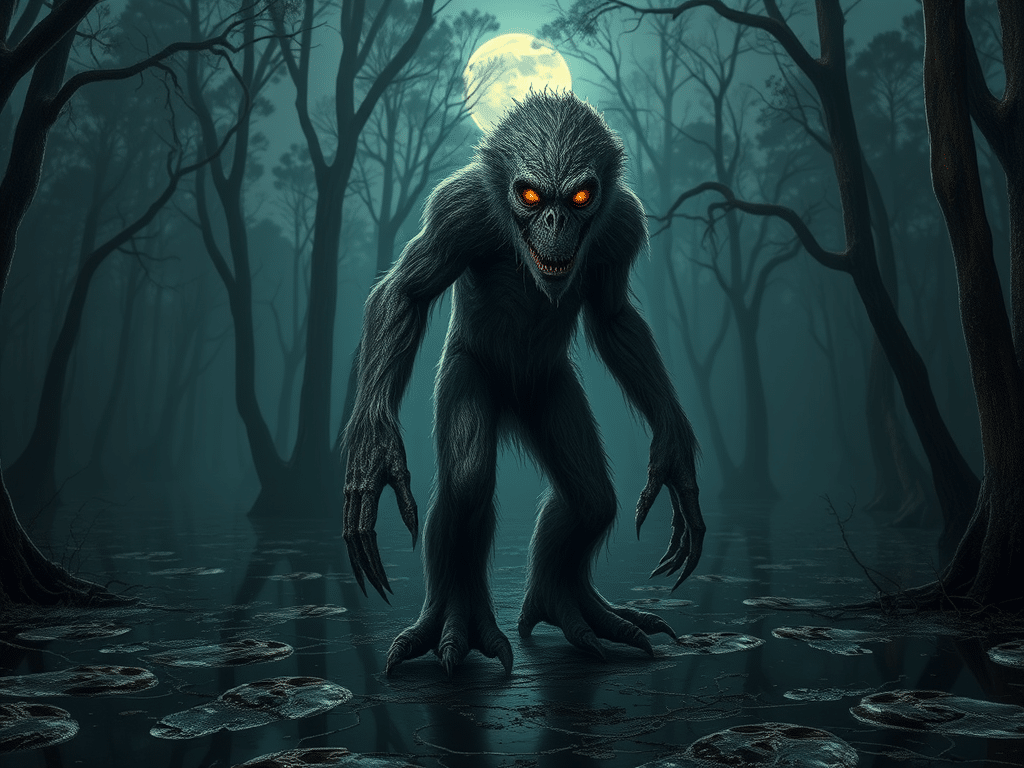
Within the confines of the forest, both locals and tourists have reported a number of strange incidents. These include disembodied voices, enigmatic light orbs, and inexplicable electrical equipment faults. Several visitors have reported experiencing severe anxiety, nausea, and a sense of being under observation. In 1968, a military technician famously captured a picture of what appeared to be a UFO hovering above a spot now known as The Clearing. Many tourists have also complained about lost time, sometimes coming out of the jungle hours later than they had anticipated and with lapses in their recollections (MJM International, 2023).
Numerous hypotheses explain the strange occurrences in the woodland. Some scientists attribute the forest’s significant electromagnetic fields to unknown geological features or subterranean mineral deposits. Others draw attention to the region’s past, pointing to potential ties to medieval folklore or ancient Dacian holy sites. The disappearance of a shepherd and his flock in the forest, which gave rise to theories about time distortion or mystical portals, is one particularly fascinating story.
In fact, there is very little historical and archaeological information regarding particular Dacian religious rituals in the Hoia Baciu Forest. Based on a more comprehensive understanding of Dacian culture in Transylvania, the majority of associations between the Dacians and the forest are purely conjectural. We do know, however, that the Dacians held their religious rituals in natural environments, especially mountains and woods, which they revered. They believed in the immortality of the soul and adored Zalmoxis as their main deity. They frequently used hilltops and wooded clearings as natural temples for their rituals (Treptow, 1987).
There are no verified archaeological discoveries of Dacian religious sites within the Hoia Baciu Forest, despite the fact that it is located within the overall area of Dacian influence. Rather than historical records, the relationship is primarily based on local legend and paranormal aficionados. Mostly, it’s a narrative that attempts to establish a connection with reality.

Disappearing People and Portals
Although many accounts lack verified data, stories of disappearances and purported portals in Hoia Baciu Forest revolve around a number of reported and undocumented incidents. The most well-known disappearance account claims the disappearance of a shepherd and his flock of 200 sheep in the forest. Despite the frequent mention of this episode in paranormal literature, it remains largely unrecorded in history, with varying theories regarding its timing. Some place it in the 1960s, while others place it in earlier decades. The disappearance of the shepherd and the purported simultaneous disappearance of so many sheep are what make this case so remarkable.
A 5-year-old girl who allegedly vanished in the forest and reappeared years later in the same clothes, unaged, and without any recollection of her whereabouts is the subject of another well-known case. However, similar to many Hoia Baciu tales, this one lacks thorough documentation and undergoes significant variations in retelling.
The portal hypotheses are based on several documented occurrences. Tourists report experiencing abrupt disorientation and quickly finding themselves in other areas of the forest. There are reports of time dilation, in which individuals leave the forest hours later than anticipated and are unable to recall the time they lost. Various places have reported the disappearance and return of personal belongings. Witnesses also report enigmatic fog that appears to move against the wind and shimmering air patterns (Dalton, 2015).
The circular place known as The Clearing, where flora inexplicably fails to grow, is the most frequently reported portal zone. Here, visitors have complained of severe bodily discomfort, including burns, mysterious scrapes, nausea, and anxiety. According to reports, electronic equipment in this area routinely malfunctions, with compasses whirling erratically and batteries depleting unexpectedly (Fleischer, 2024).
Adrian Patrut, a Romanian paranormal investigator, has carried out a number of studies in the forest, recording electromagnetic anomalies that some speculate might point to the construction of a natural portal. However, geological characteristics or subterranean mineral deposits could also account for these results. Physical proof of a portal does not exist.
Though their narratives frequently contain missing time and confusion about their whereabouts, most recent disappearance claims typically involve short periods in which hikers become lost and are eventually located. Rather than supernatural explanations, local officials typically blame these instances on the forest’s perplexing topography and dense undergrowth. It’s important to note that, although the forest has a reputation for disappearances, official missing persons statistics for the region don’t indicate that the number is much greater than that of other comparable-sized Romanian forests. Verification is challenging since many of the most dramatic disappearance accounts come from eras when recordkeeping was less trustworthy.
Skeptics provide more commonplace reasons for the forest’s notoriety. They contend that either previous human involvement or natural growth patterns brought on by particular soil and wind patterns are probably to blame for the twisted trees. The power of persuasion and the spooky mood of the woodland may have contributed to the tourists’ expressed uneasiness. Scientists attribute many of the electromagnetic readings and photographic oddities to equipment failure or natural events.
The Hoia Baciu Forest has permanently impacted popular culture. Numerous television programs, including documentaries and paranormal investigation series, have included it. The forest has solidified its position in modern legend by serving as the inspiration for horror movies, books, and video games. Social media has further increased the forest’s mystique and attracted paranormal investigators and visitors from all over the world by posting numerous images and films allegedly depicting paranormal activity (Teodorescu et al, 2022).
Conclusion
The Hoia Baciu Forest continues to be a powerful illustration of how natural settings can captivate people’s imaginations and serve as focal areas for paranormal ideas, regardless of whether one supports the supernatural explanations or disagrees with them. Its enduring capacity to spark conversation, argument, and research guarantees its status as one of the most mysterious places on earth, where the distinction between the natural and the supernatural appears to haze in the shade of its gnarled trees.
References
Dalton, A. (2015). Up close: The winning book of failure. Good Reading, 30-31.
Fleischer, P. (2024). Echoes of the past: Uncovering the truth behind famous haunted houses (Kindle ed.).
MJM International. (2023). The Hoia Baciu Forest: A journey into the heart of mystery (unsolved natural mysteries). Independently published.
Teodorescu, C., Velicu, A. E., Gheorghilas, A., & Bira, N. (2022). THE ATTRACTIVENESS OF BLACK TOURISM IN ROMANIA. Quaestus, (20), 159-170.
Treptow, K. W. (1987). A Study in Geto-Dacian Religion: The Cult of Zamolxis. East European Quarterly, 21(4), 501.

Leave a Reply