Six Key Points About Dragon Ghosts
-
Dragon ghosts are ghostly, see-through beings that keep their dragon-like shapes but have ghostly powers, including being able to pass through things and change how visible they are at will.
-
These ghostly beings usually protect old information or valuables. Depending on how they died, they can be vengeful and haunt people or kind and protect them.
-
There are many different ways that cultures see them. In Eastern traditions, they are commonly considered wise spirits of ancestors, whereas in European folklore, they are often considered evil beings who can’t find peace.
-
In books, dragon ghosts have changed from basic warning stories to complicated characters that stand for historical tragedy, unresolved conflicts, or the survival of old knowledge.
-
Dragon ghosts are prevalent in modern visual media like games and movies. They are used as both amazing enemies and sympathetic people looking for atonement.
-
Dragon ghosts are symbolic figures that show the connection between primeval force and spiritual mystery. They are a good example of how the past lives on in the present and how complicated our relationship with death is.

Introduction
Dragon ghosts are among the most mysterious figures in the enormous tapestry of fabled creatures that have fascinated people throughout history. These spectral manifestations of once-powerful dragons exist on the boundary between the material and metaphysical realms. They embody the raw power of dragons and the enigmatic essence of spirits. Dragon ghosts are a fascinating mix of dragon mythology and ghostly events that have appeared in stories from many cultures over the years. The fact that they are still in our minds shows how much people are interested in both dragons and the afterlife. The afterlife is a topic that deserves more study.
Description
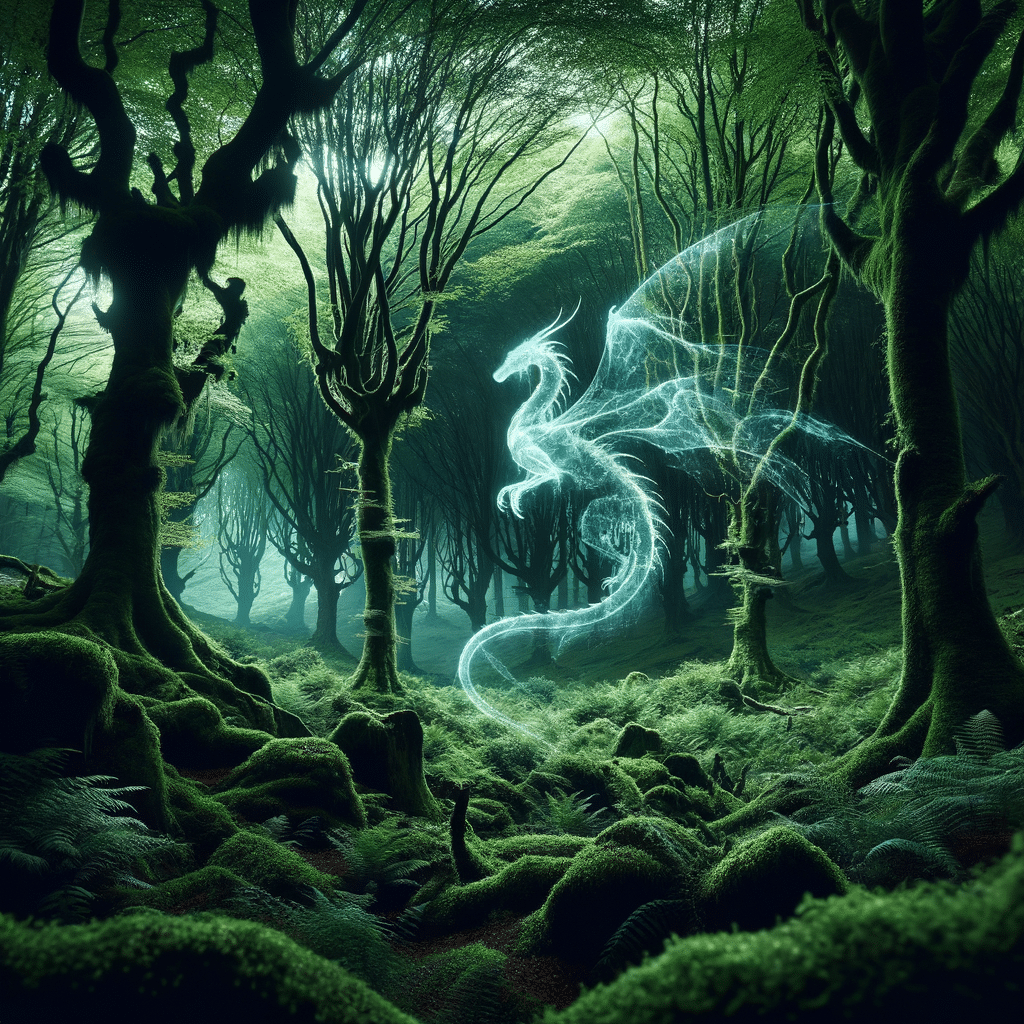
Dragon ghosts usually look like glowing, see-through figures that keep the shape of their life counterparts, whether they are snakes or wings. However, they have an otherworldly quality that makes them stand out. Their bodies frequently look semi-transparent and have a misty, vaporous texture that lets them go through solid things and disappear whenever they want. Many tales say they glow with an inner light that changes color based on their feelings or desires. The colors can be gentle blue or silver or scary reds and purples. Dragon ghosts are frequently shown as weightless beings who aren’t limited by physical laws. They can disappear and reappear instantly, which makes them even more powerful and unpredictable than living dragons (Team, 2021).
Folklore shows that dragon spirits behave in very varied ways in different cultures, yet there are some common themes. People often depict these ghostly entities as guardians of ancient knowledge, treasures, or sacred locations linked to their human existence. This suggests that they still have a role beyond death. Some stories say that they are angry ghosts that haunt the people who killed them or their descendants for years. This is especially true for dragons that were killed unfairly or misled. In more positive interpretations, dragon ghosts act as spiritual advisers or protectors, giving insight to people who deserve it and protecting areas that are important to them. People often say that their moods are unpredictable and challenging to read and that their goals are beyond what others can grasp (Forgotten Realms Wiki, n.d.).
Many cultures have stories about dragon ghosts, but significant differences exist between regions that reflect how people in those areas perceive dragons and the supernatural in general (Niles, 2013). In Eastern religions, especially Chinese mythology, dragon ghosts are typically considered ancestral spirits linked to water, wisdom, and good luck. They sometimes show up to worthy descendants or when the community needs help. In contrast, European legend often shows them as evil beings, the restless spirits of dragons that heroes have killed but can’t attain peace in death. In Northern European cultures, dragon ghosts are sometimes thought of as guardian spirits. They are sometimes linked to burial mounds or hidden treasure hoards. These numerous views show how the mythology of dragon ghosts adapts to fit the values and concerns of different cultures (Sun & Kun, 2023).

Impact
Dragon ghosts have changed a lot in literature throughout the years, going from basic cautionary tales to complicated creatures with their reasons for doing things and moral gray areas. In medieval European literature, they were typically considered signs of evil or divine punishment, spiritual extensions of the dragon’s connection to sin and corruption. On the other hand, East Asian literature often showed them as wise but mysterious spirits whose appearances meant something spiritual or a transformation that was about to happen. Modern fantasy books have taken on the complexity of dragon ghosts, using them as symbols for unresolved conflicts, historical trauma, or the way that ancient wisdom stays relevant in a world that is always changing. Ursula K. Le Guin, Terry Pratchett, and N.K. Jemisin are among the authors who have portrayed dragon ghosts as complex characters that challenge the main characters’ understanding of history and power.
Dragon ghosts have become more relevant in modern pop culture thanks to movies, TV shows, computer games, and other mediums that let people see how cool they are. Game of Thrones and other fantasy properties have hinted at the idea by showing how ancient dragons still have magical powers (Lethbridge, 2018). Dragon ghosts are often tough bosses in video games that combine physical and metaphysical threats. To beat them, players need to know both draconic and spiritual wisdom. Animated movies for kids frequently show dragon ghosts in a more sympathetic light, as misunderstood creatures looking for forgiveness or acknowledgment. Dragon ghosts are powerful symbols that can stand for many things, such as unresolved historical traumas and the lasting effects of old ideas in modern society.
Dragon ghosts are strong symbols of how the past lives on in the present. They represent both the terrifying power of dragons and the haunting essence of history that hasn’t been resolved. They have a special place in otherworldly stories because they combine the physical strength of dragons with the mysterious, changing nature of ghosts. This duality makes them powerful symbols for stories since they can stand for both a physical threat and a mental or spiritual struggle. As our understanding of mythology and psychology has deepened, dragon ghosts have come to represent a wider range of concepts. They can now stand for things like cultural memory, communal trauma, or the way the subconscious mind deals with fear and power. Their persistent popularity shows that people are still interested in dragons as emblems of primal strength and ghosts as links to things we can’t understand (Braudy, 2016).
Conclusion
Ultimately, dragon ghosts represent a potent blend of two legendary concepts that have played significant roles in various cultures and throughout history. These spectral dragons transcend the conventional understanding of dragons and ghosts, creating entities that resonate with fundamental human apprehensions regarding power, mortality, and the past. Dragon spirits have changed over time, just like people have. They show how our relationship with nature, spirituality, and our history has changed. We will keep telling stories about these ghostly dragon beings, and they will change even more as they adapt to new cultures. But they will always be the same: they connect the physical world of dragons and the spiritual world. The fact that people are still interested in dragon ghosts shows how mythological ideas may change and mix while still providing a lot of symbolic material for understanding what it means to be human.
References
Braudy, L. (2016). Haunted: On ghosts, witches, vampires, zombies, and other monsters of the natural and supernatural worlds. Yale University Press.
Forgotten Realms Wiki. (n.d.). Ghost dragon. Retrieved July 14, 2025, from https://forgottenrealms.fandom.com/wiki/Ghost_dragon
Lethbridge, S. (2018). Entangled Agency: Heroic Dragons and Direwolves in Game of Thrones. helden. heroes. héros., 2.
Niles, D. (2013). Dragons: The Myths, Legends, and Lore. Simon and Schuster.
Sun, J., & Kun, Y. (2023). The Origin of Chinese Dragons: The Essence of the Animal Hypothesis. Journal of Sociology and Ethnology, 5(3), 59-66.
Team, W. R. (2021). FIZBAN’S TREASURY OF DRAGONS: Dungeons & Dragons (ddn).
Leave a Reply