
Six Key Points About Saltpeter Cave and Its Hauntings
-
The limestone Saltpeter Cave in Kentucky features unique formations and was historically mined for gunpowder production.
-
Human activity spans from Native American ceremonies to the War of 1812 and Civil War mining operations.
-
Reported hauntings include phantom mining sounds, shadowy figures, cold spots, and unseen touches.
-
Paranormal theories suggest limestone records emotional events or electromagnetic fields alter perception.
-
Skeptics cite unusual acoustics, disorienting lighting, and psychological suggestion as explanations.
-
Ghost stories drive tourism and help visitors connect emotionally with the cave’s human history.

Introduction
The meandering corridors of Saltpeter Cave, which lies in the beautiful Carter Caves State Resort Park in Kentucky, are more than simply geological wonders; they also have stories that are a mix of historical fact and spooky mythology. This limestone cave, which has been sculpted over thousands of years by slow-moving water, has seen Native American ceremonies, given shelter to early settlers, helped with wartime efforts, and now draws people who are interested in both its natural beauty and ghostly reputation. As the sun sets and the shadows grow longer in the cave’s cool recesses, many visitors have experiences that science can’t explain. Such activity makes us wonder: do the spirits of those who once sought refuge or worked in these underground chambers still live among the stalactites and stalagmites?
Description and History
Saltpeter Cave is a wonderful example of natural architecture. Its majestic entrance welcomes travelers into a realm of geological wonder. Visitors must crouch and weave through small tunnels between large rooms with ceilings that seem like cathedrals. Water’s painstaking creativity over thousands of years fashioned these rooms. The steady 54-degree weather is a big change from Kentucky’s seasonal fluctuations, making it feel like time doesn’t exist in this place. The cave’s name comes from the fact that it has a lot of potassium nitrate (saltpeter), which is an important part of making gunpowder. Later, this natural wonder would become associated with significant historical events (Duncan, 1997).
The history of Saltpeter Cave goes back to the first people who lived there. They thought that these underground caves were hallowed doors to the spirit world. Archaeological finds show that Native Americans utilized the cave for rituals and maybe even as a place to stay, leaving behind things that show how much they respected this natural formation. There is a version of the Lover’s Leap folklore story about a local Native American warrior and princess, which is common in many caves in the USA (Spanos, 2022).
Later, European immigrants found the cave’s precious saltpeter deposits. These saltpeter deposits were crucial during the War of 1812, as blockades made it impossible to import gunpowder components. During this time, miners dug up a lot of saltpeter from the cave dirt. They employed intricate leaching vats and processing machinery, remnants of which are still visible today. As both Union and Confederate troops searched for valuable minerals to use in their war efforts, mining experienced another boom during the Civil War (Jillson, 1934).
Haunted Cave
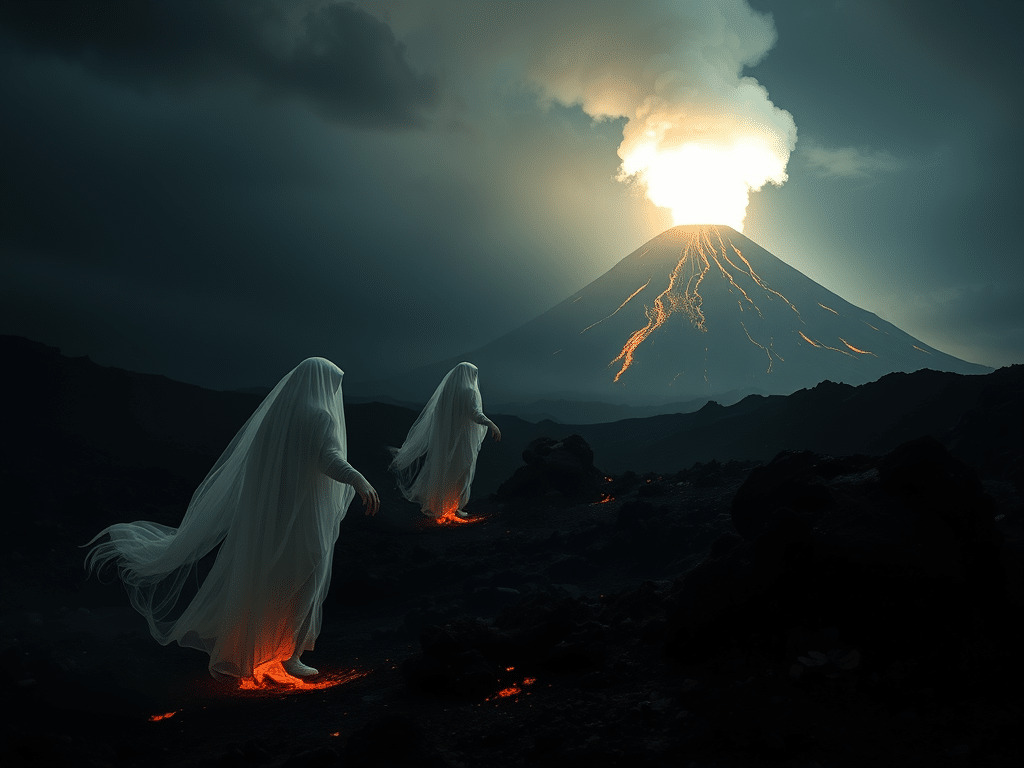
It is against this backdrop of intensive human activity that the ghost stories of Saltpeter Cave emerge, persistent tales that have survived generations. Both visitors and park staff say they hear pickaxes hitting cave walls when there are no miners around, or voices that aren’t there echoing through rooms that should be empty. Some people report experiencing sudden chilly spots that contrast with the cave’s normal temperature, or they observe lights moving through the darkness like lanterns held by invisible hands. Park employees have received reports from dozens of visitors who believed unseen beings were following them through tiny corridors. Sometimes, when no one was around, these ghosts would touch their shoulders or tug on their clothes.
Two ghosts are reportedly haunting the cave. One of the ghosts is an older man who died while mining in the cave. He reportedly watches tours when they are in the cave, and he sometimes leaves a handprint on the backs of visitors. The other ghost is not as charming and is named Ethel. According to a tour guide, a psychic who visited the cave claimed Ethel was a summoned entity and not a traditional human ghost. Ethel is trapped in the cave and she wants to get out.
The cave also contains a large pit that tour guides warn visitors not to step in. It is said whoever enters it will die at night in a car accident in a rainstorm. A tour guide claims this has happened to many people.
Paranormal investigators are especially interested in Saltpeter Cave because the strange things that happen there have been documented for decades. Teams carrying electronic voice phenomenon (EVP) recorders say they have recorded people talking in whispers and names being called out in the dark. Some people who study the paranormal think that the cave’s limestone may operate as a natural recording medium, perhaps keeping emotional energies or horrific events from the past alive. Some people think that the cave’s strange electromagnetic qualities can cause hallucinations or changes in perception that tourists mistake for ghostly encounters. This is because the earth’s magnetic field changes naturally, and this is especially true in caverns with many minerals. The “stone tape theory” says that strong emotional events can leave marks on things around them, like limestone, and then play again when certain conditions are met, like an old recording (Roll, 2003).

Analysis
Skeptics provide more plausible explanations for the unusual occurrences reported at Saltpeter Cave. They say that caves have special acoustic settings where sounds can travel in strange ways. For example, sounds from neighboring chambers or even outside the cave system can sometimes sound like they are coming from nearby empty spaces. The strange illumination, where shadows change with every move of a lantern or flashlight, can easily fool the brain into thinking there is movement when there isn’t. Psychologists talk about the power of suggestion and anticipation. For example, people who come to a cave after hearing ghost stories may instinctively see normal cave things as supernatural. Many people experience disorientation when underground, and the dark history of the cave encourages the mind to fill in the gaps with imagined memories (Cheetham & 2002).
The ghost stories about Saltpeter Cave have gone from being local legends to being a cultural and economic force in the area. Tour guides tell supernatural stories as part of their tours to attract those who might not otherwise be interested in the site’s geological and historical importance. During the Halloween season, the park system and local businesses in this rural part of Kentucky make a lot of money from “ghost tours” that sell out weeks in advance. The story of the supernatural has become so much a part of the cave’s identity that many tourists would be unhappy if they didn’t see something strange while they were there.
These ghost stories do more than just entertain or bring tourists to the cave; they let modern visitors connect emotionally with the cave’s human history. When guides talk about how difficult and hazardous it is for saltpeter miners, the stories about the supernatural make these unknown people from the past seem more real. The spirit of the lost Civil War miner turns many anonymous workers into people with hopes, anxieties, and things left to do. In this way, the paranormal stories preserve portions of history that might otherwise vanish. They also keep an emotional connection to the past that dry historical data alone might not be able to do. The stories remind us that history isn’t just about dates and events; it’s also about the experiences of people that can leave deeper marks than tangible objects.
Whether you believe in ghosts or not, the stories about them at Saltpeter Cave make you contemplate how place, memory, and human experience are all connected. The cave has been the site of human activity for hundreds of years, from religious ceremonies by indigenous people to the desperate extraction of materials during wartime. All of these incidents happened in a place that inherently disorients and questions how people see things. Maybe the real significance of these ghost stories isn’t how realistic they are, but how they make us contemplate the lives of people who lived before us, working in the dark by flickering lamplight, with hopes and concerns that are not so different from our own. The chilly, wet hallways that used to resound with the sounds of pickaxes now echo with stories that keep the past alive in our minds.
Conclusion
When people leave Saltpeter Cave and go back outside, they don’t just remember the wonderful formations and historical details; they also feel like they’ve touched something beyond normal experience. The cave is a line that separates the natural world from the supernatural, the past from the present, and science from mystery. Saltpeter Cave serves as a reminder that some places hold more than simply physical remnants of humans who have been there. In these ancient chambers, where time appears to deviate, the distinction between history and ghost stories becomes indistinct. This experience makes us wonder what other whispers from the past might still be heard in forgotten parts of our world, waiting for someone to listen to their stories.
References
Cheetham, M. A., & Harvey, E. D. (2002). Obscure imaginings: visual culture and the anatomy of caves. journal of visual culture, 1(1), 105-126.
Duncan, M. S. (1997). Examining early nineteenth century saltpeter caves: An archaeological perspective. Journal of Caves and Karst Studies, 59, 91-94.
Engel, A. S., & Engel, S. E. (2009). A field guide for the karst of Carter Caves State Resort Park and the surrounding area, northeastern Kentucky. Select Field Guides to Cave and Karst Lands of the United States, 15, 87-106.
Jillson, W. R. (1934). THE CASCADE CAVES OF CARTER COUNTY, KENTUCKY. Register of Kentucky State Historical Society, 32(98), 33-37.
Roll, W. G. (2003). Investigating The Paranormal. The Journal of Parapsychology, 67(1), 187.
Spanos, J. B. (2022). Lover’s Leap Legends: From Sappho of Lesbos to Wah-Wah-Tee of Waco.


Leave a Reply