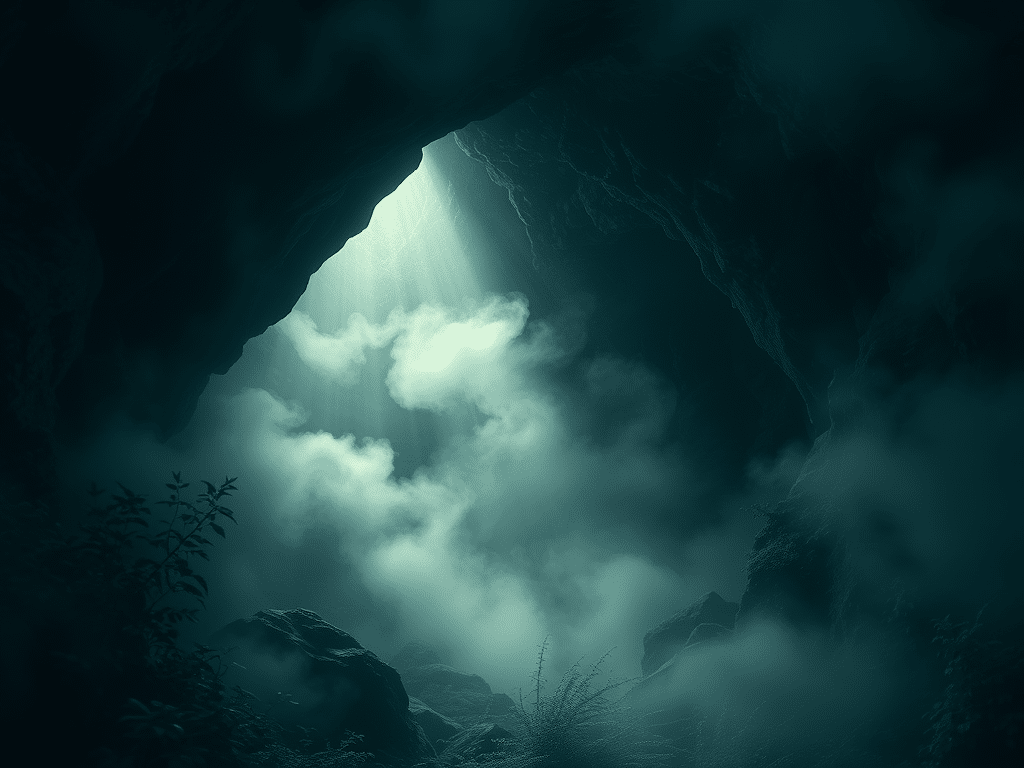
Cave Ghosts: Key Points
-
Caves and ghost stories combine powerfully due to darkness, isolation, and their historical use as burial sites and sacred spaces across cultures.
-
Ghosts are described as spirits of the deceased appearing as translucent figures, shadows, or causing unexplained temperature drops and sounds.
-
Scientific explanations include toxic gases, infrasound, pareidolia, expectation effects, and natural cave acoustics creating illusions of paranormal activity.
-
Famous haunted caves like Mammoth Cave and the Bell Witch Cave drive tourism and help preserve both geological sites and local folklore.
-
Modern technology enables paranormal investigations with specialized equipment, while social media amplifies ghost stories globally.
-
Cave ghost experiences reflect human needs to confront death, connect with history, and explore mysteries beyond rational understanding.

Introduction
For thousands of years, people have been fascinated by the darkness of caves, which have served as both homes and sources of mystery throughout our evolution. Stories and legends abound about these underground spaces, and tales of ghostly encounters persist across various cultures and continents. The combination of caves and paranormal events makes for a powerful setting for supernatural beliefs. The physical features of these underground spaces seem to make our most basic fears and deepest questions about what happens after death even stronger.
Ghosts in Caves
Ghosts are thought to be the spirits of people who have died but are still connected to the physical world instead of moving on to what happens after death. People usually say that these beings look like translucent or shadowy figures. Sometimes they look as if they did when they were alive, and other times they look like shapeless shapes or lights that can’t be explained. People who say they have seen ghosts often say they felt watched, heard strange noises, or even talked to them directly through voices or visions. The idea of ghosts goes beyond cultures and can be found in some form in almost every society throughout history. However, the exact traits and behaviors that people think ghosts have differ greatly from one culture to the next (Guiley & Taylor, 1992).
Caves are geological formations that have formed over millions of years as water and chemical processes slowly dissolve rock, usually limestone. These natural caves can be as small as grottos that are only big enough for one person to fit through or as big as cathedrals that go on for miles below the surface of the earth. Caves are very different from the world above. They have constant temperatures, complete darkness beyond the entrance zones, strange rock formations like stalactites and stalagmites, and an eerie silence that is only broken by the sound of water dripping or bat wings fluttering (Gillieson, 2021). Throughout history, people have used caves as sacred places, burial sites, shelters, and canvases for ancient art. These layers of human history add to the caves’ mysterious atmosphere.
There is a long history of caves being linked to paranormal activity, with many reports of ghostly encounters in underground spaces all over the world. People often think of hauntings when they think of caves because they are dark and isolated, have strange acoustics that can make sounds sound different than they really are, and have limited visibility that can trick the mind. Many caves have archaeological evidence of ancient human activity, such as burial sites. This gives a historical context to supernatural claims and a story framework for ghostly legends. When people explore caves, they often experience sensory deprivation and disorientation, which can lead to psychological responses that some people see as paranormal encounters. This procedure creates a feedback loop between the environment and what people expect.
The relationship between ghosts and caves in cultural stories presents us deep insights into what it means to be human and how we contemplate the unseen forces that shape both natural and social landscapes. Caves, as tangible environments, are frequently depicted as liminal spaces teeming with peril, enigma, and the possibility of supernatural experiences. These locations are linked to both physical hazards and metaphysical dimensions, as demonstrated by the analysis of haunted landscapes and the traditions related to jinn in Palestinian culture. This study shows how places like caves show cultural beliefs and fears about things that can’t be seen or understood (Al-Qobbaj & Marshall, 2024).
Some caves have become known as places where paranormal activity is common, drawing both believers and investigators looking for proof of the supernatural. There are many ghost stories about Mammoth Cave in Kentucky, which is the longest known cave system in the world. For example, there are stories of tuberculosis patients who died in the cave in the 1800s while trying to get better. The Paris Catacombs, which are full of caves and bones of millions of dead people, naturally make people who visit the ossuary tell ghost stories and say they’ve seen supernatural things. Bell Witch Cave in Tennessee is popular with people who are interested in the paranormal because it is linked to one of America’s most famous ghost stories. Many smaller caves around the world also hold their own ghost stories, passed down through the years.

Analysis
There are many different theories about why people have paranormal experiences in caves, from spiritual to scientific. Each one offers us a different way to contemplate these events. People who believe in the supernatural often say that caves are “thin places” where the line between our world and the spirit world becomes less clear. This may be because these spaces have been filled with death and human emotion for hundreds of years. Some paranormal researchers believe that limestone and quartz in cave formations may record or amplify spiritual energy, but there is no scientific evidence to back this up. Environmental factors offer more substantiated explanations, such as the existence of toxic gases like radon or carbon dioxide that can induce hallucinations, disorientation, and other psychological effects potentially misconstrued as spectral encounters.
The connections between ghosts and caves go beyond just stories about death and the ancestral realm in different cultures. The connections made between incense and certain caves show how these places can be holy places to talk to spirits, where the cave becomes a meeting point between the physical and spiritual worlds, full of historical meaning and cultural practices (Sulistyo et al., 2023). Historical accounts portray caves as sanctuaries for individuals afflicted with ailments, evoking a spectral essence associated with the inexorable decline of life, as illustrated by narratives of consumptives seeking solace in these subterranean realms (Flack, 2022).
The psychological reasons why people think caves are beneficial places for paranormal beliefs tell us a lot about human nature and how we confront fear and the unknown. Caves are like going back to the first places where people lived, which brings back strong memories and primal reactions that don’t involve thinking. The lack of familiar sensory cues in caves, particularly light, compels us to depend on alternative senses and our imagination, which may become unrestrained in the darkness and silence (Clottes, 2004). Many people regard the idea of finding something supernatural in a cave to be a safe way to face their fears and death, like horror movies or roller coasters, but with the added excitement of possibly being real.
Skeptics approach cave hauntings with a critical perspective, citing well-established psychological and physiological phenomena as explanations for the majority of reported experiences. Our brains evolved to identify patterns and possible dangers, which is why we tend to see faces and figures in shadows and strange shapes. This is called pareidolia, and it happens a lot in caves where there isn’t much light. Caves can naturally make infrasound, which are sound waves that are too low for humans to hear. These events can happen when wind, water flow, or geological activity happens. Studies have shown that these low-frequency vibrations can make people feel uneasy and scared and even see things that aren’t there. The expectation effect is also very important. People who go to a place expecting to see something paranormal are much more likely to see things that aren’t clear as supernatural, which basically means they make their own ghostly experiences happen through suggestion.
Scientists typically discover natural explanations for the strange events in supposedly haunted caves. However, this doesn’t usually make the stories less powerful. Researchers have shown that cave acoustics can make it sound like there are voices or footsteps by using echoes and reverberations, especially in cave systems that are complicated and have many chambers and passages. People often think that cold spots are caused by ghosts, but they are usually caused by air currents, water seeping in, or differences in the composition of rocks that affect how well they hold heat. Ghost hunters sometimes think that changes in electromagnetic fields are signs of spirits, but these changes usually come from geological sources, underground water flows, or even the equipment itself. Even with these logical explanations, the emotional and psychological effects of caves are still strong enough to keep paranormal beliefs alive for many years.
The physical signs of extinction, as seen in ethnographic studies of caves, show how haunting these spaces can be; they become places where lost life is stored (Boyle, 2025). The bones of extinct species found in caves remind us of what we lost and how the environment has changed. Therefore, the idea of haunting works on many levels: it shows how people are afraid, it shows how people believe in things, and it keeps a record of the past in the natural world.
Impact
The cultural effects of cave ghost stories go beyond just being entertaining; they also affect tourism, local economies, and even conservation efforts. Many caves that are known for having paranormal activity have become popular tourist spots. This brings in money for local communities and encourages people to protect these natural areas. While looking into supernatural claims, ghost tours and paranormal investigations in caves also teach people about cave geology, history, and ecology. These stories also keep local history and folklore alive by keeping memories of people and events that might have been forgotten alive, even if the ghostly details aren’t historically accurate (Puhle & Parker, 2021).
Many literary and artistic traditions depict caves as sites of entrapment or revelation. For example, Plato’s allegory of the cave shows the fight between ignorance and knowledge. It suggests that what we see may only be shadows of reality, which raises philosophical questions (Giannopoulou, 2020). This cave is a metaphorical echo in our minds that shows our fears about life and death and our search for the truth. The haunting qualities associated with caves can reinforce their allure as sites of exploration for millennial travelers, who increasingly gravitate towards unconventional tourist destinations, seeking thrills and the mystery associated with haunted environments, including both caves and old buildings (Entas et al., 2022).
People now use modern technology to look into and explore caves that are said to be haunted, but it hasn’t answered the big questions about paranormal events. Many people who explore caves now bring electromagnetic field detectors, thermal imaging cameras, digital voice recorders, and other tools with them. They hope to find objective proof of ghostly activity. Social media and video sites have made cave ghost stories more popular by letting people share their experiences with people all over the world right away and making certain places famous. But this same technology has also made it easier to prove false claims and explain things that were once mysterious, which has caused an ongoing conflict between belief and skepticism in the digital age.
The enduring fascination with ghosts in caves indicates that individuals possess profound needs and inquiries that transcend mere belief in the supernatural. These stories help us address death and what might happen after it in a way that is more concrete and relatable than abstract religious or philosophical ideas. They link us to history and the people who came before us, giving us a sense of continuity with the past that can be comforting even when the stories themselves are scary. People’s experiences in caves are real to them, regardless of whether or not we believe in ghosts. These experiences are influenced by their surroundings, psychology, culture, and personal point of view and should be treated with respect rather than skepticism.
Conclusion
As we learn more about both psychology and geology, the relationship between caves, ghosts, and human imagination is likely to change over time. People may be able to experience supposedly haunted caves without the dangers of actually exploring them thanks to virtual reality and augmented reality technologies. Such developments could change how these stories are told and felt. Climate change and other environmental problems are putting many cave systems around the world at risk. Such developments could make people more interested in the paranormal aspects of these spaces, which is ironic because people want to connect with these endangered places before they change or disappear. Scientific advancements may ultimately elucidate all documented spectral occurrences in caves, or they may uncover novel enigmas that existing knowledge cannot resolve, thereby preserving the potential for curiosity and conjecture.
The tales of ghosts inhabiting caves remind us that not all aspects of human experience can be effortlessly classified as entirely rational or irrational, real or fictitious. These underground spaces, which were made by water and time and are dark and quiet, make it difficult to tell the difference between different ways of knowing. The ghosts that people see in caves could be real spirits, psychological projections, environmental effects, or some other combination we don’t yet understand. However, the experiences themselves change lives, communities, and our shared understanding of what it means to be human. As long as there are caves and people go into them, stories of ghostly encounters will keep coming out. This is because we are always interested in mystery, death, and the idea that some part of us might live on after we die.
References
Al-Qobbaj, A. and Marshall, D. (2024). Dwelling and healing with saints and jinn in the haunted landscapes of palestine. Cultural Geographies, 31(3), 365-379. https://doi.org/10.1177/14744740241234297
Boyle, C. (2025). Multispecies ethnography and the materiality of landscapes of extinction. Environmental Humanities, 17(2), 465-481. https://doi.org/10.1215/22011919-11713422
Clottes, J. (2004). Hallucinations in caves. Cambridge Archaeological Journal, 14(1), 81-82.
Entas, D., Yenny, M., Putri, N. M. D. R., & Kurniawati, R. (2022). Open trip among jakarta millennial travelers in post pandemic covid-19. Proceedings of the International Academic Conference on Tourism (INTACT) “Post Pandemic Tourism: Trends and Future Directions,” 269-277. https://doi.org/10.2991/978-2-494069-73-2_20
Flack, A. (2022). Dark degenerations: life, light, and transformation beneath the earth, 1840–circa 1900. Isis, 113(2), 331-351. https://doi.org/10.1086/719721
Giannopoulou, Z. (2020). Gilles deleuze and bernardo bertolucci on plato’s cave. Ramus, 49(1-2), 70-88. https://doi.org/10.1017/rmu.2020.5
Gillieson, D. S. (2021). Caves: processes, development, and management. John Wiley & Sons.
Guiley, R., & Taylor, T. (1992). The encyclopedia of ghosts and spirits (pp. 277-279). New York: Facts on File.
Puhle, A., & Parker, A. (2021). Dark or paranormal tourism: A major attraction throughout history. Australian Journal of Parapsychology, 21(1), 7-30.
Sulistyo, W. D., Hafida, M. N., & Maisaroh, A. A. (2023). Revitalizing character values in the folklore of the arjuna mountain slope site. Diakronika, 23(2), 228-239. https://doi.org/10.24036/diakronika/vol23-iss2/304
Leave a Reply