
Cursed Magic 8 Balls: Key Points
- The Magic 8 Ball is a plastic sphere of dyed alcohol holding a twenty sided die, whose twenty answers include five refusals and delays, exactly the vocabulary a haunted object would need.
- It descends from a Cincinnati clairvoyant’s son and his spirit writing cylinder, so the line from séance table to children’s toy never really breaks.
- Folklore treats any divination tool as a two-way channel, and the corrupted version always drifts from predicting events toward causing them.
- The cursed ball is typically secondhand, behaving normally at first, then stalling, running warm, showing blanks, or agreeing with every reckless plan right up to the disaster.
- Deliberate versions are re-lettered so the ball cannot hedge, accidental ones absorb a death or years of obsessive questioning, and explanations range from probability and projection to the idea that repetition alone makes an oracle.
- It supposedly cannot be discarded, since burning splits it, burial requires the die interred separately, and passing it along is not destruction but the next story.

Introduction
Very few objects occupy the toy-and-oracle space as comfortably as the Magic 8 Ball. Cheap, shiny, mass-made, sold alongside water guns and yo-yos, but the thing it says it does is older than any factory. Ask a question, turn the ball, and read the future. The Magic 8 Ball, since it lives on that edge, has given rise to a body of modern legend about corrupted or haunted specimens: balls that answer questions no one asked, balls that won’t say no, and balls that start to predict the future with too much accuracy. In this essay I will examine the object itself; the larger tradition of cursed fortune-telling devices that it belongs to; the particular legend of the cursed 8 ball; the ways that such an object is said to be made or to become what it is; the competing theories people have to explain the whole phenomenon; and the question of how one is supposed to get rid of the thing.
The Magic 8 Ball as a Popular Magic Object
Fortune-telling toys, as relics of popular culture, appeared in an environment defined by the general history of magic as a kind of secular entertainment, distancing itself from esoteric associations toward illusion and the evolution of stage shows and tricks (Tibbs, 2013; Loshin, 2007). This phenomenon places the Magic 8 Ball into the continuum of household magic and illusion objects that accompany popular interest in “magic” in everyday life, not just formal stage magic (Tibbs, 2013; Thomas et al., 2016). The literature points to the conflict between magic as performance and its commodified, domestic manifestations, explaining how a commodity like the Magic 8 Ball may become a cultural icon (Tibbs, 2013; Loshin, 2007).
Turns out, the Magic 8 Ball is almost embarrassingly simple. It is a hollow sphere of plastic, about the size of a large grapefruit, painted like a billiard eight ball, with a small round window put in the bottom. Inside is a clear cylinder reservoir with around a hundred milliliters of alcohol tinted a deep blue. Floating in that liquid is a white plastic icosahedron, a twenty-sided die. Each face bears a short message in raised letters. You roll the window up. And the dice rise; one face presses against the glass. The raised letters push the dye aside. As a result, the words appear white against the blue background. Lucien Cohen, a psychology professor at the University of Cincinnati, wrote the twenty responses, which fall into neat categories: ten affirmative, five negative, and five noncommittal. The last group is the fascinating one. “Reply hazy, try again.” “Better not tell you now.” “Concentrate and ask again.” The ball primarily uses a vocabulary consisting of three-quarters refusals, delays, and cautions, which is precisely the type of language a haunted object would require.
The device also has a kind of mediumistic pedigree for a Mattel product. The idea came from Albert C. Carter, whose mother, Mary, was a working Cincinnati clairvoyant and whose spirit writing instrument provided its functional core. Carter’s cylinder was offered as the Syco-Seer and later the Syco-Slate. He died before the patent was issued in 1948. Abe Bookman polished the thing up, put it into an iridescent crystal ball for a time, and then in 1950, when Brunswick Billiards suggested it, gave it the shape everyone knows today. This design creates a continuous connection from the psychic’s séance table to the novelty paperweight and finally to the child’s toy. Even when history doesn’t, legend takes that lineage seriously.
The Magic 8 Ball, as an example of popular magic objects, overlaps with instructional and demonstration uses of illusion. Works that indicate how magic tricks and illusion-based demonstrations move into public knowledge (e.g., demonstrations used in teaching and demonstrations of perception) highlight how things that embody “magic” serve in both entertainment and science communication contexts (Sokoloff, 2015). These sources do not describe the 8 Ball itself, but they shed light on how a toy fortune-teller may be a popular attraction as a simple, harmless illusion. This enhances the idea of why such a device was widely popular beyond magic phases (Sokoloff, 2015).

Cursed Divination Devices as a Folkloric Category
Cursed divination tools are themselves a well-established category. The Magic 8 Ball inherits a set of laws worked out over generations. It’s the same in all cultures and all ages. A fate-reading tool is known to open a channel, and a channel can carry traffic both ways. Thus, the vast literature of warning stories relates to Ouija boards; mirrors used for scrying; pendulums; tarot decks that should be given, not bought; and dowsing rods that take their owners somewhere they should not go. The cursed version of such a tool usually shows one or more of a small number of symptoms. It degenerates in a certain direction, always either flattering or dooming. It answers before the question is over. It provides new information to the user. It displays love by returning when turned away and by working only for its owner. And at the far end it ceases predicting and starts prescribing, going from explaining the future to arranging it. The moral engine of these stories is usually the same: curiosity about fate is a debt, and the instrument will eventually collect.
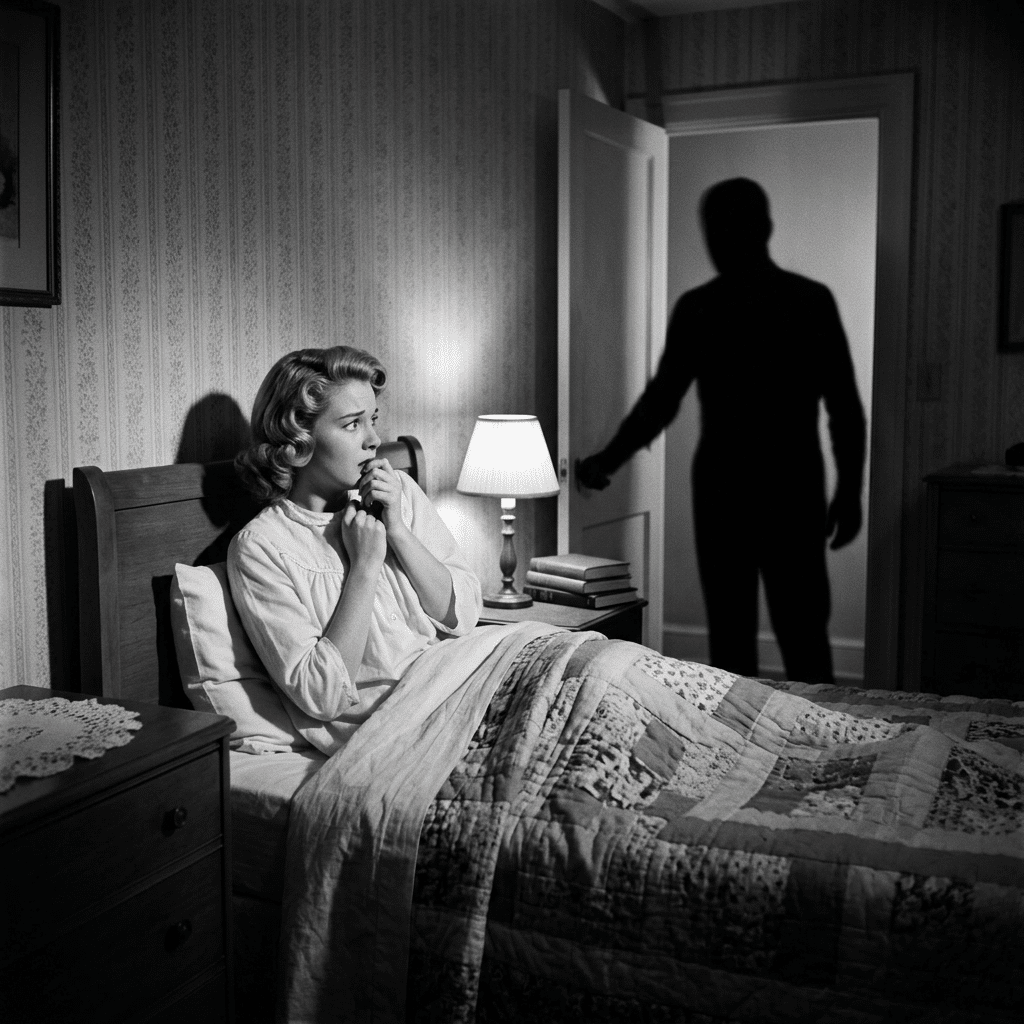
The cursed Magic 8 Ball takes that blueprint and applies it to plastic and dye. The story typically involves the ball being purchased secondhand, whether at an estate sale, a thrift shop, from the closet of a deceased relative, or from a box left behind in a rented apartment. At first it does behave. Then the noncommittal answers begin to show up significantly more often than probability would suggest, as if the ball were stopping. Users report the window going completely black and presenting an unlettered face that shouldn’t exist on a twenty-sided die. Others describe the inverse dilemma: a ball that can only say yes, which encourages every rash scheme proposed to it and remains pleasant until a tragedy occurs. Some reports involve the ball answering unasked questions, or naming dates, or answering a query about one person with an answer that only makes sense for someone else. A repeated detail is temperature; the sphere is warm while it should be cool. Another detail is that the liquid, which is usually a flat dark blue, appears hazy or reddish and seems to move against the tilt of the sphere. The most quoted version ends with the owner asking one last question about his death and getting something specific, with the owner asking one more question regarding his death and getting something particular in the window instead of one of the twenty. It is a neat narrative, for the object provides its own dramatic mechanism—an answer that slowly rises out of darkness, then sinks back and cannot be checked.
Artifacts of ill omen are generally conceived of as physical artifacts with qualities, either amuletic or malevolent, that can attract or contain supernatural agency. In the English Gothic tradition, “cursed objects” are explicitly listed among a wider variety of occult items, including talismans, manuscripts, and inscribed objects, all of which can be vehicles for communication with supernatural agents or powers (Ihina, 2022). This framing presents cursed items as concrete sites of intersection between the metaphysical and the material. In modern religious contexts and research into exorcism, the object might be understood as a repository in which demonic influence is operative or countered. Exorcism studies have documented the materiality of artifacts (e.g., jewelry, amulets) as repositories that may contain demonic attachment or threat, sometimes leading to intervention when demonic attachment seems resistant to destruction or degradation (Chavez, 2021; Jakobsson, 2017).
How a Cursed Ball Is Said to Be Made
Stories about the birth of such a ball fall into two classes, planned fabrication and accidental corruption, and folklore is rich in both. Intentionally, the procedures outlined are variants of ceremonial consecration. The sphere is split at its glued seam, the reservoir drained, and the alcohol replaced with something meaningful: graveyard water, wine from a funeral, or twenty-sided ash. The die is sanded and re-lettered; twenty new replies are carved by hand, including the word sup. Sometimes there is one glass, and other times there is a twenty-first glass. buried behind the label. The ball is then bound to a person or a place, buried for a set number of nights, kept in a coffin, passed through smoke, or asked the same question every day until it answers something new. Practitioners in these stories insist the point is not to add power but to remove the safety features, to strip out Cohen’s careful ten five five balance so that the ball can no longer hedge.
Accidental corruption is another matter and the more usual explanation in casual storytelling. Here nothing is built. Something accumulates. A ball is utilized in a séance and left in the circle. A ball is used to make a real decision, a decision that really counts, and someone dies. For years, over and over again, a ball is asked a question by name about a person. A ball that belongs to a child who has died, or one that sits in a house where something horrific occurred, absorbs the atmosphere of the room in the same way that folklore suggests wood and glass absorb the essence of houses. In these tales the curse is residue and not design, for which reason the piece is almost always secondhand.
Competing Explanations and the Problem of Disposal
The explanations provided for all this fall into various categories and they are not as widely apart as they look. The materialist story is simple and likely correct. The ball is a randomizer with twenty faces and a high leaning toward agreement, so a sequence of unnerving coincidences is statistically ordinary and psychologically huge. It provides short, ambiguous, and linguistically loose answers. Such are great surfaces for projection. Hits are remembered, misses are forgotten. Over decades, the alcohol will leach through the plastic, the dye will break up, the seals will leak, air pockets will form and old letters will wear smooth. So a truly aged ball does act oddly and does sometimes turn up a blank. A psychological reading takes one step further and uses the cursed ball as a mechanism to externalize a decision the user has already made. It only gets frightening if the decision was a bad one, and the user needs somewhere to put the blame. In a folkloric reading, the legend is a stable narrative type, a modern cautionary tale about the dangers of outsourcing one’s judgment, and it is conveyed efficiently because the prop is in half the households in the country. On their own terms, occult readings say any extended ritual of question and answer is divination, no matter the cost of the tool, and repetition is what does the work; hence, a toy asked ten thousand real questions is no longer a toy. Further literary theory states that the five noncommittal answers are the tell, or the evidence the designers created in such a way for the oracle to decline, and that a cursed ball is just one that has lost the power to decline. Skeptics and believers, notably, agree on the practical advice: cease inquiring.
Media-analytic approaches to haunted objects focus on the “trigger object” as a category of possession- or haunting-laden artifacts such as antiques, portraits, toys, or jewelry that serve as central foci for paranormal activity in haunted-house narratives. This trend is examined in studies of Southeast Asian haunted-house films, where goods such as a jukebox, jewelry, antiques, etc. are implicated in narratives of triggering paranormal occurrences and possession (Yusof et al., 2020). Objects provide the basis of belief and a trigger for experiencing involvement with the paranormal within a broader context of paranormal tourism and cultural studies. This includes when travelers seek out haunted sites or artifacts as part of dark or paranormal tourism (Obradović et al., 2021).
The legend is particularly notable and contains conflicting elements. The common belief is that you can’t just throw away a cursed 8-ball. Bin it and it comes back and sits on the counter and rolls under the bed and waits in the passenger seat and many variations insist it comes back with one less answer than before. Burning is the most prescribed and warned-against way. The shell is plastic and the fluid is alcohol, which means the thing does not so much burn as split and flame. The stories depict the curse as escaping rather than coming to an end. Water is softer and slower. Drop the ball in a river or the sea. Moving water only—never a pond. Let the current carry it across the county line. Burial works, if done correctly, should be performed face down so that the window faces the earth, at a crossroads or beneath a threshold stone; the die must be removed first and buried in an entirely different location, as legend clearly states that the icosahedron is the true tenant while the sphere is merely its dwelling. Some stories describe outcomes that are the opposite of disaster. Drain the fluid, dry the dye, and answer it. You can either ask the ball a question it cannot hedge, compose a twenty-first message to slide inside it, or simply keep the ball on a shelf, unshaken and unconsulted, allowing it to go quiet like an unused instrument that drops out of tune. Every version, however, avoids selling it, giving it away, or placing it in a box on a curb with other toys. That’s not annihilation. And this is where the narrative begins.
Conclusion
The cursed Magic 8 Ball is a small legend built on a real object with a genuinely odd history, and it endures because every part of that object cooperates with the story. A séance instrument became a paperweight, then a toy, but never completely lost its origins. Its answers are ambivalent by design, its liquid opaque, its mechanism secret, and its most memorable replies are refusals. It’s hard to even conceive destroying it neatly, which is a type of evidence in itself of how the thing is viewed. Dye chemistry? Human memory? Narrative tradition? Whatever the rationale, the legend keeps making the same point in different clothes. A tool that tells you what to do is harmless only if you do not believe it, and the instant you do, it does not matter much what is floating inside.
References
Chavez, W. S. (2021). Modern practice, archaic ritual: Catholic exorcism in America. Religions, 12(10), 811. https://doi.org/10.3390/rel12100811
Ihina, Z. (2022). The English Gothic tradition in fiction and film: Cultural and philosophical background. In Innovative pathway for the development of modern philological sciences in Ukraine and EU countries (pp. 27–53). Baltija Publishing. https://doi.org/10.30525/978-9934-26-196-1-24
Jakobsson, Á. (2017). The troll inside you: Paranormal activity in the medieval North. Punctum Books. https://doi.org/10.21983/p3.0175.1.00
Loshin, J. (2007). Secrets revealed: How magicians protect intellectual property without law. https://doi.org/10.2139/ssrn.1005564
Obradović, S., Pivac, T., Besermenji, S., & Tešin, A. (2021). Possibilities for paranormal tourism development in Serbia. Eastern European Countryside, 27(1), 203–233. https://doi.org/10.12775/eec.2021.008
Sokoloff, D. R. (2015). Active learning of introductory optics: Interactive lecture demonstrations and optics magic tricks. https://doi.org/10.1117/12.2207518
Thomas, C., Didierjean, A., & Nicolas, S. (2016). Scientific study of magic: Binet’s pioneering approach based on observations and chronophotography. The American Journal of Psychology, 129(3), 313–326. https://doi.org/10.5406/amerjpsyc.129.3.0313
Tibbs, G. (2013). Lennart Green and the modern drama of sleight of hand. Journal of Performance Magic, 1(1), 19–46. https://doi.org/10.5920/jpm.2013.1119
Yusof, A. M., Satkunananthan, A. H., Hashim, R. S., & Rosli, N. M. (2020). The figure of the Nenek Kebayan and the witch in selected haunted house films. 3L: The Southeast Asian Journal of English Language Studies, 26(4), 87–98. https://doi.org/10.17576/3l-2020-2604-07

Leave a Reply