Elemental Magic and Witchcraft: Key Points
-
Elemental magic in witchcraft works with earth, air, fire, water, and spirit as archetypal energies with distinct qualities.
-
Witchcraft is an individualized spiritual practice emphasizing personal power, nature connection, and creating change through focused intention and ritual.
-
Elemental magic provides witches with a foundational framework for invoking energies and selecting appropriate tools for spells.
-
Earth is used for abundance, air is used for clarity, fire is used for change, water is used for healing, and spirit is used for divine guidance.
-
Success requires developing relationships with elements through meditation, maintaining balance, and approaching them respectfully as partners.
-
Elemental magic offers a framework for harmonizing with nature and directing fundamental forces toward meaningful change.

Introduction
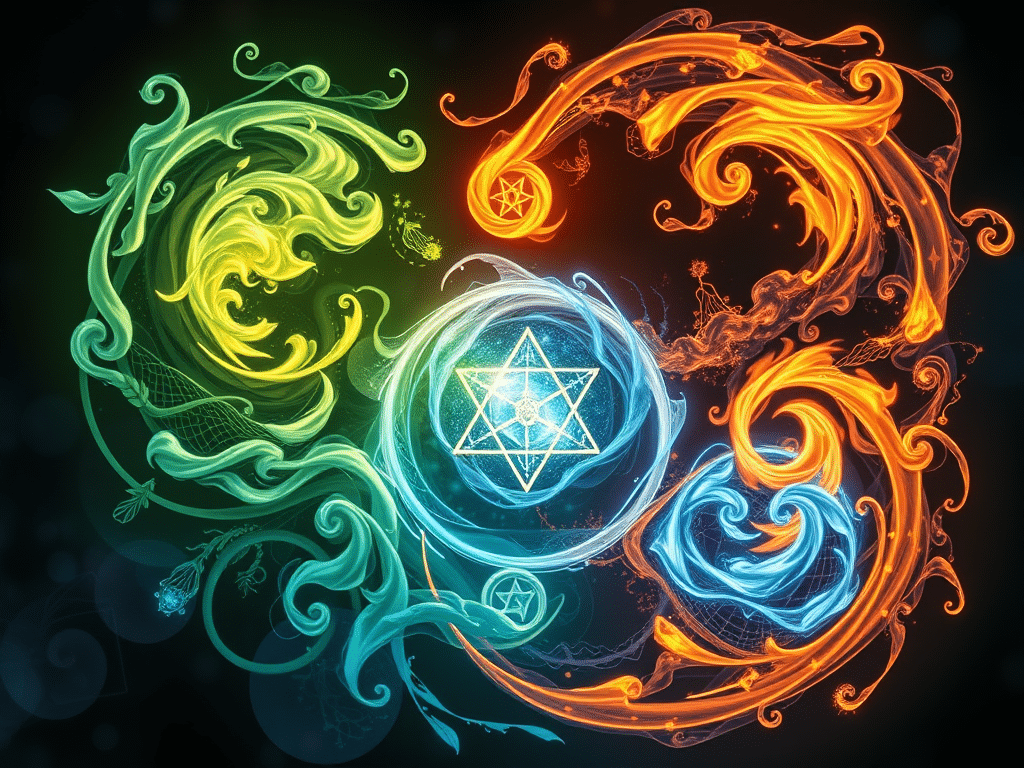
Elemental magic is one of the most basic and common parts of modern witchcraft. It is based on the old idea that all matter and energy in the universe can be grouped into different elemental forces. Traditionally, these forces are earth, air, fire, water, and sometimes spirit or ether. They are not just physical things; they are archetypal energies that exist at all levels of existence. Witchcraft practitioners have historically acknowledged that by comprehending and harnessing these elemental forces, they can effectuate significant transformations in both the physical and spiritual domains. This essay examines the essence of elemental magic, its role in witchcraft, and its practical applications for individuals aiming to utilize these fundamental forces.
Overview
Elemental magic is a spiritual practice that engages with the fundamental components of existence, symbolized by the classical elements. Practitioners learn to recognize and utilize each element’s unique traits, connections, and energy signatures. Earth stands for stability, grounding, wealth, and physical manifestation, while air stands for intelligence, communication, mental clarity, and new beginnings. Fire has the power to change things, ignite passion, strengthen willpower, and purify. Water, on the other hand, flows with feelings, intuition, healing, and the subconscious mind. Many traditions also believe in a fifth element, which is spirit or ether. The ether is the divine force that connects and goes beyond all the other elements. These elemental energies are present not only in the external environment but also within practitioners, facilitating both internal equilibrium and external expression (Sharpe, 2004).
In modern times, witchcraft is a spiritual practice and belief system that focuses on personal power, being connected to nature, and being able to make changes through focused intention and magical workings. Witchcraft is different from many organized religions in that it is very personal. Practitioners cultivate individualized relationships with spiritual forces and develop unique magical practices. Spellwork, divination, herbalism, energy manipulation, and ritual observance are just a few of the many skills that fall under the umbrella of the craft. Often, practitioners align these activities with natural cycles such as the moon’s phases and the seasons. Modern witchcraft incorporates elements from diverse historical traditions such as folk magic, ceremonial magic, and indigenous practices, while also adapting to the requirements and comprehension of contemporary practitioners. Witchcraft fundamentally enables individuals to assume proactive roles in determining their destinies and engaging with the unseen forces that affect daily existence (Kiernan, 2020).
Many African cultures deeply link their beliefs in witchcraft to health-related events. For example, research indicates that in sub-Saharan Africa, conditions like epilepsy and dementia are often ascribed to witchcraft rather than solely biomedical factors. People often go to traditional healers for help, which shows that their beliefs about witchcraft and their health-seeking behaviors are very similar. A systematic literature review revealed that 54% of individuals with dementia sought assistance from modern healthcare providers, whereas others opted for traditional or faith healers, particularly if they perceived the condition as a manifestation of witchcraft or divine retribution (Brooke & Ojo, 2019; Khonje et al., 2015). Traditional healers in Zambia recognize the biological components of conditions such as epilepsy while asserting that numerous cases are thought to originate from witchcraft (Baskind & Birbeck, 2005).
In witchcraft, elemental magic is both a basic framework and a useful set of tools for making things happen and bringing about change. During ritual work, witches often call on the energies of the elements to help them with their magic and make sacred space. One of the most well-known parts of witchcraft is casting a circle. This procedure usually means calling the four directions and their associated elements to make a safe space where magic can be done. To keep things in balance and call on certain energies while they work, practitioners often put things like salt or crystals for earth, incense for air, candles for fire, and chalices of water on their altars. Witches can choose the right tools, timing, and methods for different kinds of spells when they know how the elements work together. For example, they might use fire magic for transformation rituals or water magic for emotional healing. This incorporation of elemental consciousness influences almost every facet of witchcraft practice, encompassing the selection of herbs and stones for spells as well as the lunar phases designated for ritual activities.
In this context of beliefs, the convergence of traditional medicine and witchcraft demonstrates considerable anthropological significance. The reinterpretation of illness from a natural to a supernatural context frequently prompts a transition from conventional medicine to traditional healing practices. This phenomenon illustrates extensive societal transformations and cultural adaptations to modernity, wherein traditional beliefs are neither obsolete nor immutable but are dynamically interconnected with contemporary experiences (Sanders, 2003). To understand the subtleties of cultural identity and social change in different African settings, you need to know about witchcraft (Komáromi et al., 2023).

Application
Elemental magic can be used in witchcraft to change almost any part of a practitioner’s life. Witches might use coins, soil, and green candles to create spells that attract wealth and success at work during the waxing moon. Air magic helps you think clearly and do well in interviews and conversations. Burning certain incenses, speaking incantations into the wind, or using feathers and yellow candles can accomplish these tasks. Fire magic is very useful for work that changes people, like letting go of old patterns, sparking passion in relationships, or giving them the courage they need to make significant changes in their lives. This method is often done through candle magic or bonfire rituals. Water-based practices are great for healing emotional wounds, improving psychic abilities, and promoting self-love. They use tools like moon water, seashells, ritual baths, and scrying with water surfaces. Spirit or ether workings connect practitioners to divine guidance and make it easier to talk to higher consciousness. These practices often include meditation, breathwork, or the consecration of sacred space.
To be proficient at elemental magic, you need to know a lot and practice a lot. There are some basic rules that will help you do your work well. First, practitioners gain a lot from getting to know each element better by meditating, observing, and interacting with elemental forces in nature on a regular basis. You could spend time near bodies of water to learn about water’s nature, sit by fires to feel their power to change things, or walk barefoot on the ground to connect with its stabilizing energy. Second, balance is still essential. Relying too much on one thing can throw off both magical work and personal life. This instance shows how important it is to include all elements in your regular practice, even when you’re focusing on one for a specific purpose. Third, intention and focus are more important than fancy tools or complicated rituals. The practitioner’s will and clarity of purpose are what ultimately guide elemental energies toward the desired outcomes. Fourth, it’s better to work with elemental forces than to try to control them. Instead of trying to control them, you should treat them with respect and work with them. Finally, keeping a grimoire or book of shadows to record how elemental energies work lets practitioners keep track of which techniques work best for their energy and situation (Eason, 2001).
Conclusion
Elemental magic is a key part of witchcraft that presents practitioners a complex but easy-to-understand way to work with and understand the basic forces that shape reality. Witches can work with the natural rhythms of the world and use these energies to make meaningful changes when they realize that earth, air, fire, water, and spirit flow through everything, including us. Witchcraft becomes a whole practice when you add elemental awareness to it. This practice works on all aspects of life, including the physical, mental, emotional, and spiritual. Elemental magic also provides you real ways to make your intentions come true in all areas of life. People who want to be rich and clear-headed, change their lives, heal, or connect with the divine will understand that building relationships with elemental forces and learning how to work with them skillfully provides them powerful allies on their magical journey. Elemental magic teaches us that we are not separate from nature but are instead a part of it, and that we can consciously take part in the dance of creation that constantly happens.
References
Baskind, R. and Birbeck, G. L. (2005). Epilepsy care in zambia: a study of traditional healers. Epilepsia, 46(7), 1121-1126. https://doi.org/10.1111/j.1528-1167.2005.03505.x
Brooke, J. and Ojo, O. (2019). Contemporary views on dementia as witchcraft in sub‐saharan africa: a systematic literature review. Journal of Clinical Nursing, 29(1-2), 20-30. https://doi.org/10.1111/jocn.15066
Eason, C. (2001). A Practical Guide to Witchcraft and Magick Spells. Foulsham.
Khonje, V., Milligan, C., Yako, Y., Mabelane, M., Borochowitz, K., & Jager, C. A. d. (2015). Knowledge, attitudes and beliefs about dementia in an urban xhosa-speaking community in south africa. Advances in Alzheimer’s Disease, 04(02), 21-36. https://doi.org/10.4236/aad.2015.42004
Kiernan, A. (2020). The Ultimate Guide to Witchcraft: A Modern-Day Guide to Making Magick. Fair Winds Press.
Komáromi, T., Benga, I., & Neagotă, B. (2023). Introduction. witchcraft, magic, divination and the twenty-first century. Martor. The Museum of the Romanian Peasant Anthropology Review, 28, 7-12. https://doi.org/10.57225/martor.2023.28.01
Sanders, T. (2003). Reconsidering witchcraft: postcolonial africa and analytic (un)certainties. American Anthropologist, 105(2), 338-352. https://doi.org/10.1525/aa.2003.105.2.338
Sharpe, J. A. (2004). Magic and witchcraft. A companion to the Reformation world, 440-454.

Leave a Reply