Black Queen of Medvedgrad: Key Points
-
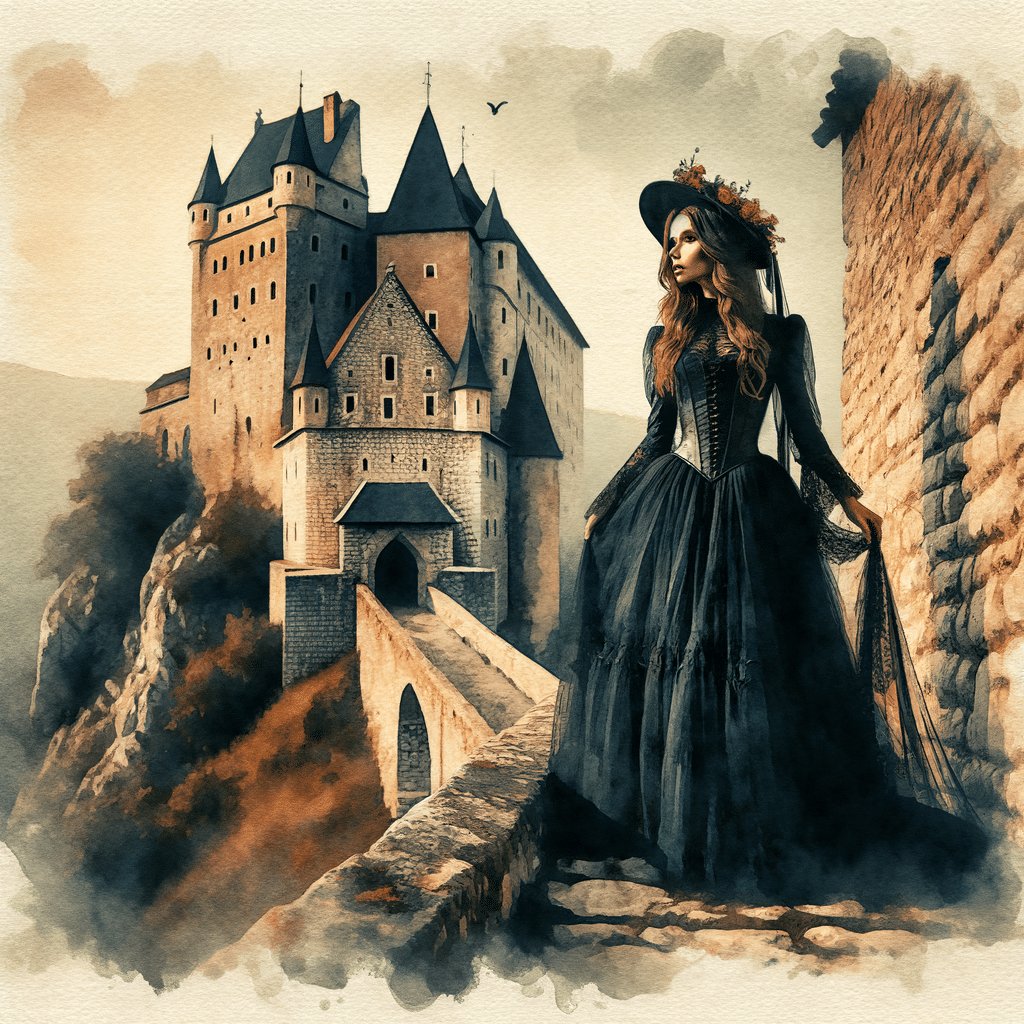
The Black Queen is Zagreb’s most infamous mythical figure, a diabolic lady in black robes who ruled Medvedgrad Castle and could shapeshift into various creatures, most notably a snake.
-
She was the most feared of 107 rulers at Medvedgrad, practicing dark magic and terrorizing villages with a giant malevolent raven that attacked peasants and extreme acts of cruelty.
-
When Turkish forces attacked, she made a pact with the devil saying “Break, hell, I give you Medvedgrad… and myself!” but attempted to trick him with an impossible gold-reward challenge.
-
The devil cursed her to live beneath Medvedgrad as a serpent queen forever guarding treasure, and anyone who has searched for it has never returned.
-
Historians believe the legend is based on Barbara of Cilli, a fifteenth-century countess who practiced alchemy, wore only black, and is considered the first European vampiress.
-
The legend survives today through children’s games, guided tours, and a craft beer named after her, with the last encounter occurring decades ago when a soldier refused to kiss her snake form.

Introduction
The Black Queen is one of Zagreb’s most famous and scary mythical figures. She has been a dark presence in the city’s folklore for hundreds of years. The evil woman in flowing black robes is now inextricably linked to Medvedgrad Castle, the medieval fortress that towers over Zagreb on the slopes of Medvednica Mountain. Her story is a mix of real history and supernatural fantasy, and it continues to interest both residents and visitors. The story of the Black Queen is full of themes like cruelty, dark magic, demonic pacts, and eternal curses. She is the most famous mythical resident of Zagreb and a key figure in the area’s rich folklore.
The Black Queen Legend
Throughout the years, numerous stories have depicted the Black Queen as a combination of beauty and creepiness. People always show her in long black robes that flow around her as she moves, which makes her look ghostly and scary. Historical records say she was gorgeous, but she also had a cold and cruel heart. She liked to wear black clothes, which made the people in the area even more scared of her. Her ability to change shape makes her look even scarier because she could turn into different animals, like a snake, which became her cursed form after she met the devil. People who were scared of her didn’t talk about her very often because they thought that talking about her could attract her evil attention (Katanec & Katanec, 2014).
The Black Queen’s actions show that she was very cruel and power-hungry and had supernatural powers that made her the most feared of the 107 rulers who ruled Medvedgrad. People said she practiced illicit magic, alchemy, and witchcraft. When Turkish troops attacked the fortress and none of her people would help her defend it, she made at least one arrangement with the devil himself. People said that she was very cruel to the people around her. There are stories of many lovers who were thrown from the castle walls and windows after she got bored with them.
She scared the people in the nearby villages in many ways, such as by keeping a giant raven on her shoulder that would attack and kill anyone who bothered her. It would peck and tear at the flesh of poor villagers with its claws and beak until they passed out from the pain. People even said that she kept lions, which is a story that makes sense because there were wild cats living near the castle. Another story says she was cruel and wouldn’t let thirsty villagers drink from a well when all the others dried up (Karzen & Demonja, 2020). This forced them to go to the dangerous forest, where a spring appeared right away and the well dried up.
The Devil’s Deal and Treasure
The most famous story about the Black Queen revolves around her desperate agreement with the devil to rescue Medvedgrad from Turkish forces. The phrase “Hell, I give you Medvedgrad… and myself!” still resonates today. She was alone and had no one to protect her because her evil and dark soul had turned all of her people against her. She called the devil himself and promised to give him the castle and her life in exchange for his protection. After saving the fortress, she tried to trick the devil by promising twelve buckets of gold to anyone who could take her around the Medvedgrad fortress twelve times. However, she had set up hidden traps around the fortress that made such an offer impossible (Grakalić, 2024).
But the master of deception was smarter than this sneaky queen. As punishment for trying to betray him, she was turned into a snake queen and forced to live under Medvedgrad forever, guarding her treasure in the dark below the old fortress with her subjects in the underground corridors. Legend has it that anyone who has gone beneath the old town in search of this treasure has never come back. This warning still keeps treasure hunters from going there today.
People say that the treasure hidden in secret chambers under Medvedgrad has never been found. They think it is hidden in the underground world of Kaptol or Gradec, in hallways that connect Medvedgrad with the Church of St. Mark and St. Mark’s Square. People say that if you are brave enough to go into the unexplored and magical halls, you might discover the wandering queen in her snake form. All that is required is to kiss her in order to break the curse, restore her to her original beauty, and claim all of Medvedgrad’s wealth and treasures. The last time someone saw her was decades ago, when a soldier boy was talking to her as a snake. She might have been another snake princess, and she asked him to kiss her, but he said no. Because he said no, he lost his chance to win the treasure of Medvedgrad. She will now have to wait another hundred years for the spell to be broken.

Impact
The Black Queen has had a giant effect on the folklore surrounding Medvedgrad Castle. Her presence in nearly every supernatural story about the place has made the fortress one of the most interesting medieval monuments in the Zagreb area. The castle itself has become an important part of her story. It used to be a simple medieval fort built in the 1300s after the Tartar invasion, but now it is a place of mystery and dark magic. The Black Queen’s stories about cursed treasures protected by snakes in the Zagreb area have spread her power far beyond the castle’s immediate area.
The story has lasted so long that it has even made its way into children’s games. Kids still play “Crna kraljica jen, dva, tri” (Black Queen, one, two, three), in which one child plays the part of Her Majesty and the others act as peasants trying to sneak up on her from behind without being caught when she turns around. Historians, history buffs, and curious tourists who explore the walls of one of Croatia’s best-preserved fortresses looking for answers and trying to prove the truth behind the intriguing legends are still fascinated by her mysterious traces on Medvedgrad.
Theories
Historians and folklorists have come up with a number of ideas about where the Black Queen legend came from. Most of them point to real people from history who may have inspired the stories. Barbara of Cilli, also known as Barbara Celjska, is the most likely candidate (Dvořáková, 2021). She was a countess and queen who was very unpopular in northwestern Croatia in the 15th century. She is believed to be the most wicked of the interesting fortress’s rulers. Barbara’s life had some things that could have led to the dark stories about her. For example, she was a foreigner who took over many Croatian towns, practiced alchemy, and was known as a brave and dishonest politician who wasn’t afraid to go against her husband at a time when women weren’t allowed to do that.
She wore only black dresses for the rest of her life after her husband died when she was forty-six. This would have helped shape the image of the Black Queen. Barbara of Cilli was also linked to other dark stories in Croatia, like the one about walling up a peasant girl named Veronika in Veliki Tabor castle and the one about appearing as a mysterious vampire who sucked the blood of young people in Kneginec village. Some sources even say that the Black Queen was the first European vampire, not the more famous Elisabeth Bathory, the unscrupulous Hungarian “Bloody Countess.” Both of these historical figures have been the inspiration for many vampire books and movies.
People who study folklore and the rich traditions of the area still disagree about whether or not to connect the Black Queen legend to real people like Barbara of Cilli. Some scholars contend that comprehending the historical origins of the legend enhances our understanding of the evolution of folk tales, mirroring genuine concerns regarding power, foreignness, female autonomy, and the engagement in practices such as alchemy and witchcraft in medieval society. Some people say that trying to connect the legend to real people takes away the romantic and mysterious qualities that make the stories captivating in the first place. It might be more magical to think of the Black Queen as a supernatural being who lives in the Medvednica woods and doesn’t have any historical basis. In this manner, attempting to connect the stories to a real person preserves their magical quality.
The rich history of Gothic literature and art heavily incorporates the idea of the “Black Queen” at Medvedgrad Castle. The depiction of queens in diverse narrative contexts frequently embodies themes of tyranny, power, and the psychological complexities related to authority. Goodall, for example, says that the archetypal queen can be a “vast destructive force,” serving as the main figure in a court full of strict rules that are like an autocratic government. This portrayal resonates within the context of Gothic narratives, where such potent female figures amplify the themes of control and chaos, often invoking a sense of dread in both characters and readers alike (Goodall, 2016).
Furthermore, the Gothic tradition has traditionally employed particular locales, such as Whitechapel, to represent more extensive societal concerns. Irwin’s exploration of Whitechapel as a location shaped by socio-economic strife emphasizes the role of space in constructing Gothic identities. The limited nature of the community’s issues with crime, poverty, and cultural tensions added to its Gothic image, which helped people understand how similar situations could affect the mood around Medvedgrad Castle. The intense intersection of the supernatural and society in Gothic literature suggests that the Black Queen could embody the emotional and metaphysical weight of these dynamics—where her rule is both feared and revered (Irwin, 2014).
The concept of setting as a character is essential for comprehending the Black Queen’s narrative. Piatti-Farnell and Mercer’s research shows how the dramatic settings in Gothic stories often match the characters’ psychological depth, including queens. Sears and Johnston’s discussion of oppressive whiteness doesn’t directly relate to Gothic architecture or Medvedgrad Castle, but it does show how dominant spaces can affect how people feel (Piatti‐Farnell & Mercer, 2014). The depiction of a stifling environment in Medvedgrad Castle corresponds with the Gothic tradition’s examination of the setting’s crucial function in heightening narrative tensions.
The Black Queen legend is a fascinating mix of history, folklore, and cultural memory that still fascinates people in Zagreb and beyond. This is true even though the city has changed into a busy tourist destination with unique museums, a thriving craft beer scene, and traditional fresh food markets. Even though people don’t see Her Majesty as often as they used to, the story lives on in the minds of many people. In modern Zagreb culture, there is even a craft beer called Crna kraljica that shows her with her evil raven on the label. The story serves many purposes in the community’s storytelling tradition. It is both entertaining and a warning, and it keeps alive memories of the region’s complicated medieval history. Today, people who visit Zagreb can learn about this darker side of the city’s history through guided tours that tell the creepy stories of the Black Queen and other parts of Zagreb’s mysterious past.
Conclusion
The Black Queen legend has been around for a long time and is still powerful today. This shows how deeply it is rooted in Croatian culture and how it can change and survive through centuries of social change. The Black Queen is an important part of Zagreb’s mysterious character, regardless of whether she was actually Barbara of Cilli or merely a fictional figure created by the people living near Medvedgrad. The fortress itself, which was badly damaged in an earthquake in 1590 and left alone until restoration began in the late 1970s, still stands on a mountain and watches over Zagreb. Explore its beautiful ramparts, mysterious medieval corridors, and historic chapels. The Black Queen will always be in the minds of locals and visitors as long as Medvedgrad Castle stands and hikers go into the Medvednica woods. She may be waiting for the day when her curse is lifted, and her treasure is found by someone brave or foolish enough to try to discover it. Her story reminds us that folklore is more than just a way to have fun; it also helps keep cultural memory alive, show how society feels and what it values, and connect modern generations to their historical past in ways that only historical facts can’t.
References
Dvořáková, D. (2021). Barbara of Cilli (1392-1451) (Vol. 77). Brill.
Grakalić, D. (2024, August 18). Medvedgrad, simbolično zdanje Franje Tuđmana i Crne kraljice. Index.hr. https://www.index.hr/vijesti/clanak/prica-o-medvedgradu-simbolicnom-zdanju-franje-tudjmana-i-crne-kraljice/2591461.aspx
Goodall, J. (2016). Looking glass worlds: the queen and the mirror. M/C Journal, 19(4). https://doi.org/10.5204/mcj.1141
Irwin, H. (2014). Not of this earth: jack the ripper and the development of gothic whitechapel. M/C Journal, 17(4). https://doi.org/10.5204/mcj.845
Karzen, M., & Demonja, D. (2020). Importance of storytelling: how to create more resilient Cultural Heritage. Nova prisutnost: časopis za intelektualna i duhovna pitanja, 18(3), 653-667.
Katanec, S., & Katanec, S. (2014). The Perquisite of a Medieval Wedding: Barbara of Cilli’s Acquisition of Wealth, Power, and Lands. Magistrsko delo–tipkopis, Central Europeian University Budapest.
Piatti‐Farnell, L. and Mercer, E. (2014). Gothic: new directions in media and popular culture. M/C Journal, 17(4). https://doi.org/10.5204/mcj.880


Leave a Reply