Melinoë Greek Goddess: Key Points
-
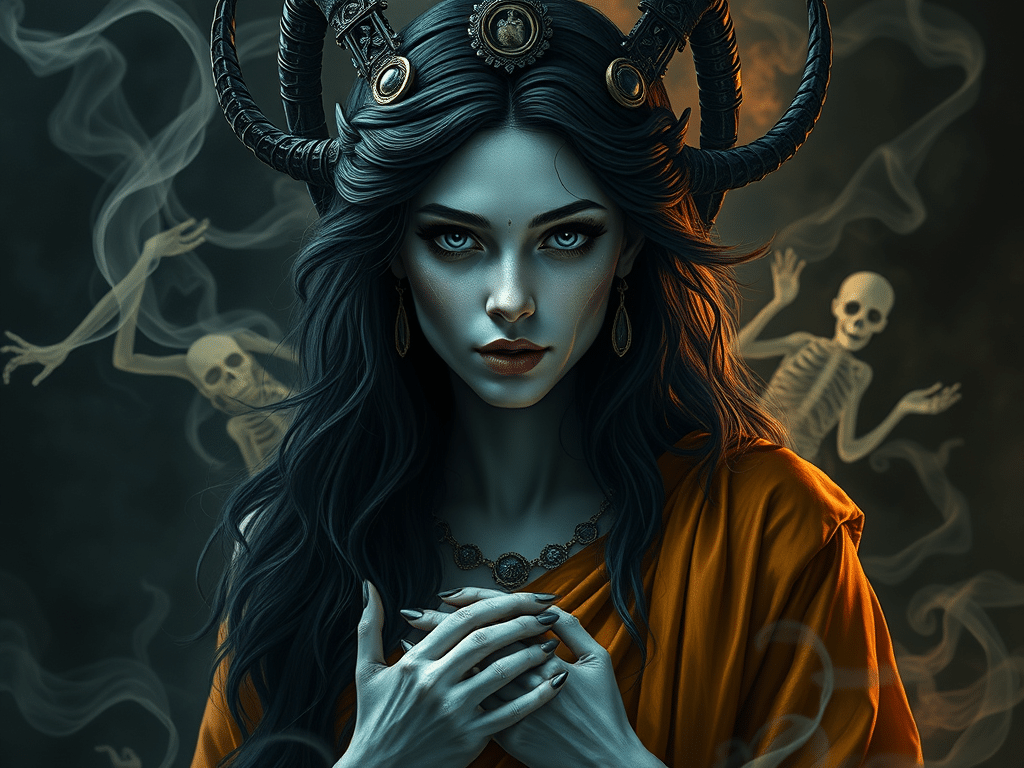
Melinoë was a Greek goddess of ghosts, nightmares, and madness, described as having a body split between black and deathly white.
-
She led processions of ghosts from the underworld to the living world and was called upon in rituals to calm or protect against restless spirits.
-
Melinoë sent terrifying nightmares to sleepers that were understood as purposeful supernatural visitations rather than random dreams.
-
She could drive people insane through prolonged ghostly visions and nightmares that shattered their grip on reality.
-
Most sources identify her as the daughter of Persephone and Zeus, though some scholars theorize she may be an aspect of Hecate.
-
She played an important role in Orphic mystery religions and influenced Greek beliefs about death, burial practices, and mental illness.

Introduction
Melinoë is one of the most mysterious and creepy characters in Greek mythology. Her name alone brings to mind the dark place between life and death. She lives in the margins of ancient texts, unlike her more famous Olympian relatives. She comes out of the darkness as a goddess of ghosts, nightmares, and madness. Her presence in Greek religious thought illustrates the ancient world’s profound intrigue with the unseen forces that disturb the human mind and spirit. Melinoë is not as well-known as gods like Zeus or Athena, but her impact on how we view Greek ideas about the afterlife and mental pain makes her a person worth studying closely.
Overview
Melinoë’s physical appearance is as disturbing as her realm, which ancient texts say is a being of stark duality and otherworldly presence. The Orphic Hymns say that she had a body that was split in half, with one half looking black as night and the other half looking white as bone or pale as death itself (Athanassakis & Wolkow, 2013). This chromatic division wasn’t just for looks; it indicated that she was a being who moved between worlds, embodying both the darkness of the underworld and the pale light of ghosts that haunt the living. People who saw her said that her shape made them feel immediate fear, which is a primal fear of death and the unknown. Old stories say she looked like she was wrapped in saffron-colored robes, which made her look almost royal, even though she was scary.
Melinoë was shown to be a restless and relentless force in terms of behavior and temperament, not a passive god who was content to stay in one place. People were aware of her ability to transition between the living and the dead, never fully belonging to either realm, yet possessing power in both. She felt a compulsive need to show fear, not because she was cruel, but because it was part of her. The Greeks considered her to be someone who walked through the night with a purpose, searching for people whose minds were open to supernatural influence. Her actions showed how unpredictable and often difficult to understand the fears that people have in the dark can be, making her a personification of anxiety itself (Edmonds, 2014).
The Orphic hymn makes a strong reference to Melinoë by using language that shows how powerful she is over the souls of the dead. The hymn asks her to show the initiates her “sacred face full of benevolence,” which suggests that she has two sides: one that scares people and one that protects them when they talk to the dead (Graf, 2009). This invocation shows that she has a more profound understanding of her relationship with ghosts. She is said to cause madness through “airy ghosts,” which is similar to how the ancient Greeks thought of the afterlife as being full of wandering souls looking for peace or remembrance (Graf, 2009).
Melinoë’s origin story adds another layer to her character. She is often shown as a vengeful goddess who is deeply connected to themes of loss and rage that come from trauma. Her story includes parts about her being the daughter of Persephone and Hades, which puts her in a place of suffering and anger like other gods who have been hurt or oppressed (Graf, 2009). This lineage identifies her not only as a goddess of the dead but also as a figure who manages the intricacies of trauma associated with the spirits that dwell in her domain.
There are many different ideas about where Melinoë came from and what she really was. Scholars and ancient texts supply different accounts of her parents and importance. Most people think she is the daughter of Persephone and Zeus. Zeus took on the form of Hades to trick Persephone in the underworld and get her pregnant. This strange family tree would make her a cousin to both Olympian and chthonic gods, which would explain why she can move between worlds and control both heavenly and hellish powers. Some academics posit that Melinoë may be an epithet or alternative manifestation of Hecate, another goddess linked to phantoms, nocturnal realms, and sorcery, rather than an entirely distinct deity. Other interpretations propose that she embodies a localized or regional goddess subsequently integrated into the expansive Greek pantheon via the Orphic mystery traditions. These conflicting theories show how little we really know about Melinoë; most of what we do know comes from the Orphic Hymns and random references in later Greek and Roman texts.

Melinoë’s Portfolio
Melinoë’s main job was to control ghosts and the spirits of the dead. She was the link between the living world and the dark world of dead souls. People thought she could lead ghosts from the underworld to the surface world, controlling spirits that were restless and shades that had not found peace in death. The ancient Greeks called on her name in rituals to calm the spirits of the dead or to keep themselves safe from evil spirits that might come out of graves and burial sites. Her relationship with ghosts wasn’t just that of a ruler; she was also a conductor, controlling the movements of the dead and deciding when and where they would show up to the living. This feature not only instilled fear in people, but also sparked a desire to communicate with her, as they sought to connect with their deceased loved ones or gain insights from the afterlife (Hopkins, 2025).
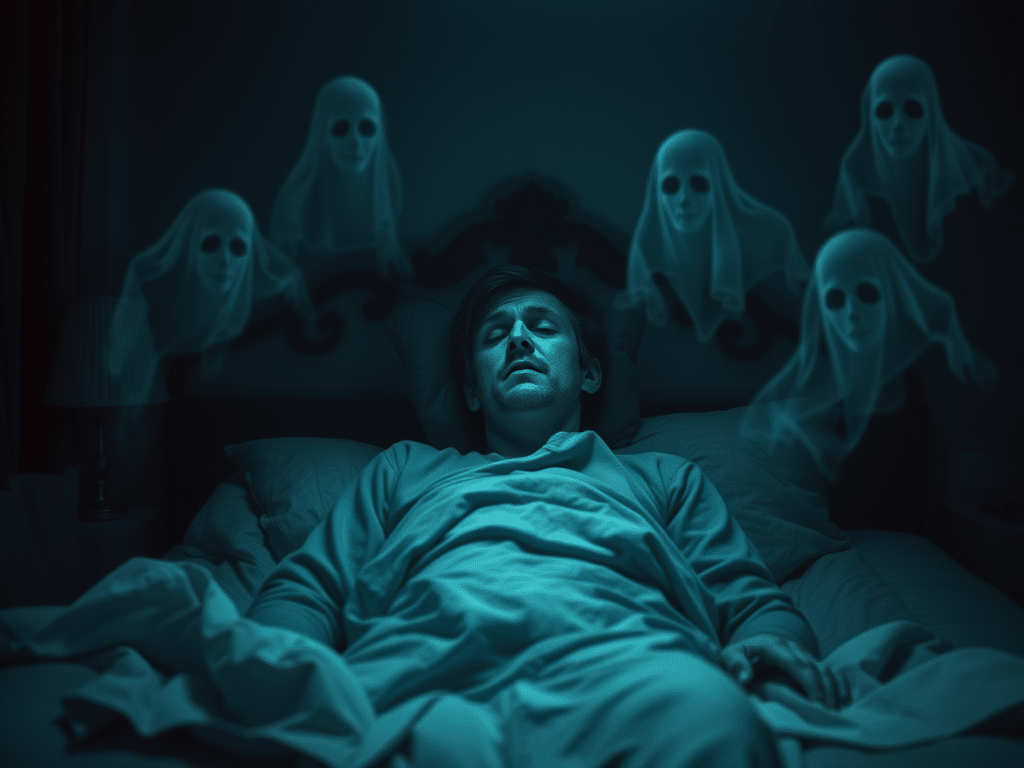
The goddess’s connection to nightmares is another important part of her divine portfolio, making her a scary figure for anyone who wanted to sleep peacefully. People thought that Melinoë would send scary visions to people while they slept, filling their dreams with images of death, ghosts, and supernatural horror that would wake them up in the dark. These weren’t just random nightmares; they were purposeful visits that people thought were messages from the gods or punishments for wronging the dead or the gods of the underworld. The Greeks thought that nightmares were not just random brain activity but real encounters with supernatural forces. Melinoë was a physical representation of this idea. She was especially scary because she could get into people’s sleep, and no one could completely avoid her influence by closing their doors or staying in safe places (Hermann, 1805).
Ancient Greeks believed that supernatural forces caused Melino’s disturbing link to insanity and mental disturbance. People thought she could drive people crazy by making them see ghosts and have nightmares for a long time, which would eventually break their grip on reality. This insanity wasn’t just confusion or forgetfulness; it was a deep disconnection from the real world, marked by seeing dead people and not being able to tell the difference between the living and the dead. When talking about mental illnesses that didn’t seem to have a physical cause, ancient medical writers and philosophers sometimes brought up supernatural forces like Melinoë. Her role in madness showed how the Greeks thought the mind was in a fragile balance, open to attack by forces from the underworld that could permanently damage a person’s sanity.
Impact
Melinoë significantly influenced ancient Greek religious practices and culture, although not as extensively as the principal Olympian deities, particularly in certain contexts and communities. She was a big part of Orphic mystery religions, which taught that there was secret knowledge about death, the afterlife, and the soul’s journey through different realms. People invoked her in rituals designed to ward off evil spirits and align themselves with the forces of the underworld. They considered her to be a goddess who could protect them because she controlled the forces that scared them. Her impact is evident in ancient Greek perspectives on death, burial customs, and the care of the deceased, all of which demonstrated a sincere belief that the dead could return to disturb the living if not adequately revered. The idea that a god was responsible for nightmares and madness also had an effect on Greek medicine and philosophy’s ideas about where mental illness comes from and how the physical and spiritual worlds are connected.
Melinoë is the main character in the video game Hades II. She is a chthonic nymph and the daughter of Hades and Persephone. Hecate, a witch, teaches her how to beat the titan Chronos, who has taken over the Underworld and locked up her family. People know that Melinoë can control ghosts and evil dreams. She looks young and graceful, and her design is both beautiful and meaningful. Her saffron-colored dress, lunar ornaments, and green tassels show that she is connected to Hecate and moon goddesses. Her prosthetic arm makes her look more intriguing. She was raised in secret and trained from a young age to carry out a prophecy to kill Chronos. Now, she wants revenge and to be with her family again. Her personality shows that she is both human and naive. She is determined and unsure of herself, but she is also kind, funny, and curious. Melinoë wants to ascend into the Underworld using witchcraft instead of brute force. This episode shows that their roles are different because they are both women. Zagreus, her brother, on the other hand, wants to leave the Underworld. Her story is about destiny, family, and the strength of women. It has strong ties to female characters like the Silver Sisters and Hecate. It has also been praised and criticized for showing women in the Hades universe in a new way (Laakkonen, 2025).
Conclusion
Melinoë is a goddess from Greek mythology who represents some of humanity’s most profound fears about death, the continuation of consciousness after death, and the susceptibility of the human mind to incomprehensible forces. Her striking look, which was a mix of darkness and deathly pallor, was a perfect representation of her role as a liminal figure who lived between worlds and between sanity and madness. She ruled over ghosts, nightmares, and insanity, which showed how the ancient Greeks thought that the line between life and death was not obvious. The dead could reach back and change the living in deep and scary ways. Melinoë may not be as well-known as other gods, but her place in Greek religious thought shows us important things about how people in the past dealt with death, fear, and the mysteries that lie beyond waking life. Her legacy lives on not in grand temples or epic poems, but in the fact that people still wake up from nightmares, feel haunted by the past, and face the fact that our minds are fragile.
References
Athanassakis, A. N., & Wolkow, B. M. (2013). The Orphic hymns. Johns Hopkins University Press.
Edmonds, R. G. (2014). Orphic mythology. In K. Dowden & N. Livingstone (Eds.), A companion to Greek mythology (1st ed.). Wiley-Blackwell. https://doi.org/10.1002/9781118785164
Graf, F. (2009). Serious singing: The Orphic hymns as religious texts. Kernos, 22, 169–182. https://doi.org/10.4000/kernos.1784
Hermann, G. (1805). Orphica. C. Fritsch. https://archive.org/details/Orphica1805
Hopkins, H. (2025). Maiden, mother, corpse: Greek goddesses’ dominion over life and death in myth and literature.
Laakkonen, R. (2025). Who’s the scariest of them all?: Effects of woke on female game protagonists and why women’s diverse representation matters.
Morand, A.-F. (2001). Études sur les hymnes orphiques [Studies on the Orphic hymns]. Brill.
Pedrucci, G. (2024). Was Kore/Persephone’s journey to the afterworld a path to infertility? Some evidence from modern southern Calabria. Acta Antiqua Academiae Scientiarum Hungaricae, 63(2–3), 219–232.


Leave a Reply