Haunted Bayou: Key Points
-
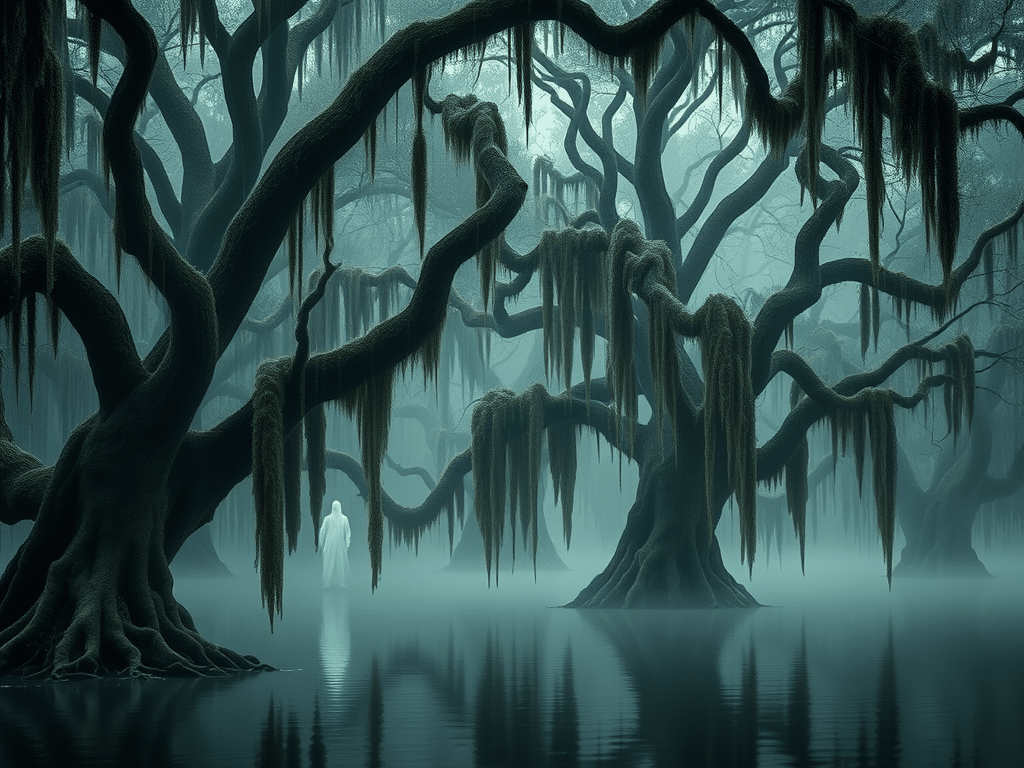
The Louisiana bayou is considered one of America’s most haunted landscapes, where the unique environment of dark waters, fog, and twisted trees creates an atmosphere where the supernatural feels particularly present.
-
Ghosts in the bayou include apparitions of enslaved people, voodoo practitioners, phantom pirates, and Native American spirits, each connected to the region’s traumatic history of slavery, disease, and natural disasters.
-
Paranormal theories suggest the bayou’s water, limestone deposits, and history of emotional trauma create conditions for storing psychic energy, while cultural practices like voodoo may intensify supernatural experiences.
-
Skeptics attribute ghostly encounters to natural phenomena like fog and animal sounds combined with psychological factors, arguing that ghost stories serve social functions like processing trauma and creating cultural identity.
-
The haunted reputation drives tourism, promotes historical preservation, and creates jobs, while profoundly affecting individuals who experience paranormal encounters by either providing comfort or causing lasting anxiety.
-
The future of bayou ghost stories faces threats from climate change destroying historic sites but also opportunities through technology that allows new generations to document and share their experiences.

Introduction
Spanish moss hangs like burial shrouds over old cypress trees, and the mist rising from dark waterways on the Louisiana bayou carries whispers of the dead. One of the most haunted places in the United States is the dark swamps that stretch from southern Louisiana to the Gulf of Mexico. For generations, stories have told of restless ghosts that roam the waterways, appearing as strange lights in the swamps at night and ghostly voices in the fog. These stories are not just for people who live in the bayou; they are part of their culture and the identity of this mysterious and beautiful place.
Overview
In many cultures, ghosts are the spirit or essence of a dead person who stays in some form after death. They are usually stuck in certain places or can’t move on because they have unfinished business or terrible things happened to them. Witnesses have seen them as full-bodied ghosts that look real and solid, transparent or shadowy figures that glide through walls and disappear into thin air, or strange things like sudden cold spots, strange sounds, or moving objects. Some people say they feel an overwhelming presence in some places, like being watched or chased by something they can’t see, and they have strong emotional reactions that range from fear to sadness they can’t explain. Some people who have seen ghosts say they looked like they did when they were alive, with clothes from that time and unique features. Others say they only saw vague shapes or light orbs that can’t be explained.
The Louisiana bayou is a unique landscape in the US. It has a network of slow-moving waterways, bogs, and marshlands. The water in these wetlands is dark and murky because of the dead plants, and there are enormous forests of cypress and tupelo trees that rise from the water on twisted roots. There are also thick carpets of duckweed and water lilies. The atmosphere is beautiful and scary at the same time, with the humidity, oppressive heat, and sounds of frogs croaking, insects buzzing, and the occasional alligator splashing into the lake. The bayou has been home to Cajun descendants of French-speaking Acadians who were kicked out of Canada, Creole people of mixed African, French, and Spanish descent, and Native American tribes that lived there before Europeans came. These rich cultural traditions, along with the area’s history of slavery, disease, natural disasters, and war, have led to ghost stories.
Ghosts in the Bayou
Ghosts in Louisiana’s bayous are important figures in folklore. La Llorona is a tradition that mixes local myths with stories from other cultures. The ghost of a grieving mother represents the pain of the community and warns against neglect (Piatti-Farnell, 2017). Piatti-Farnell (2017) posits that the Rougarou, a narrative concerning societal norms and the apprehension of the unknown, fortifies behavioral boundaries within social structures. Furthermore, stories about people coming back from the dead usually talk about their lives in scary but profound ways. Ghost stories from the bayou discuss the effects of past actions, showing a moral system that balances individual and group identities (Žikić, 2020).
The bayou’s remoteness and mystery seem to be perfect for ghost stories and otherworldly encounters. The swamp is haunted because the fog comes in suddenly and completely, making sounds difficult to hear and making the normal seem strange. The bayou looks like it hides secrets because of the thick plants and winding streams that make it difficult to see. Bioluminescent organisms that glow eerily, methane gas bubbles that rise from decaying matter and sometimes ignite spontaneously, and haunting animal calls that sound disturbingly human all contribute to a swamp atmosphere where the natural and supernatural are blurred. For generations, people who live in the area and people who visit have seen figures on the banks that disappear when they grow close, heard music and laughter coming from empty buildings deep in the swamp, and felt invisible hands grabbing at them while they were trying to locate their way through dark waterways at night.
The ghosts in the Louisiana bayou are as different as the people who have died there over the years (Reneaux, 1994). The spirits of enslaved people who died on the plantations in the area are probably the most well-known. Some stories say that whole groups of ghosts meet at certain places on certain nights to relive their last moments or look for freedom that they never found. Frenier’s voodoo priestess Julia Brown cursed the town before she died in 1915. People thought she had fulfilled her curse when a hurricane destroyed the town on the day of her funeral. They believed her spirit was still in the ruins. Rougarou sightings mix French werewolf stories with local legends to tell of a witch or cursed ghost that changes shape and punishes wicked people during Lent. Chloe, an enslaved woman who poisoned her family, now haunts the Myrtles Plantation in a green turban as one of the ghosts of this house on the bayou. Historians don’t agree on whether she was real.
Jean Lafitte and his gang are among the most famous figures in bayou folklore. They used the maze-like canals to hide their stolen treasures and avoid being caught by the police in the early 1800s. Witnesses have seen spirit ships sailing through the fog without a crew or Lafitte’s ghost guarding his hidden treasure. The ghost chases anyone who comes too close to his secret hiding places (Coen, 2018). The ghosts of people who died from yellow fever in Louisiana haunt old quarantine sites and cemeteries. Their moans and screams echo across the ocean on hot summer nights. People who disturb old burial grounds for treasure or development have caused curses and hauntings that can only be calmed by showing respect and following rituals on the bayou. Vietnamese fishermen who moved to Louisiana after the war have told their ghost stories about spirits from their homeland that followed them across the ocean and now live in the same waters where they fish. This mixes Asian spiritual practices with the strange things that happen in Louisiana.

Theories
Many paranormal theories use science and metaphysics to explain why the Louisiana bayou is so haunted. A common theory is that water can carry or store psychic energy. The bayou has a lot of water, which could make it a place where ghosts from the past might still be there, like in creepy videos. Some people who study the paranormal think that limestone and quartz in the ground can hold and release energy, which can lead to ghostly sightings and other strange events. The stone tape theory says that the environment can absorb strong emotions and then sensitive people can feel them later. This suggests that the intense emotional trauma many people experienced, from slavery to hurricanes and floods, may have shaped the bayou. Some scientists think that things in the environment, like mold that grows in humid places and makes spores that change brain chemistry, or natural infrasound, can make people feel uneasy, see things that aren’t there, or even have full-blown hallucinations.
The bayou has stood for life and death. Kate Chopin writes about loss, memory, and the supernatural in books like Beyond the Bayou and Ma’ame Pélagie. Stories told after the Civil War share similarities with these themes (Fox, 2022). People often consider the bayou to be a liminal space that blurs the lines between life and death (Žikić, 2020).
Cultural theorists assert that ghost narratives can confront social issues, encompassing moral deficiencies, tragedies, and historical events. These stories show what people in the community want and what they are worried about (Žikić, 2020). These stories use the history and environment of the area to make a plot that makes sense, with the bayou serving as both a real and figurative ghost landscape.
Bayou culture may also keep paranormal events going and worsen them, creating a self-fulfilling prophecy where belief changes how people see and experience things. Louisiana has a strong voodoo and hoodoo tradition that focuses on communicating with the spirit world and performing rituals to affect supernatural forces. This phenomenon may make people more likely to expect paranormal encounters and make them easier to see or understand. The oral storytelling tradition of Cajun and Creole cultures keeps ghost stories alive and adds to them, making sure that every generation knows that the bayou is haunted. Bayou communities, where families have lived in the same places for hundreds of years without contact with the outside world, have cultures that are closed off to new ideas and experiences. Paranormal theorists think that communities with strong spiritual or supernatural beliefs may draw in or cause paranormal events in a way that we don’t understand.
Skeptics and Impact
Skeptics argue that environmental, psychological, and cultural factors, rather than supernatural forces, cause ghost sightings in the Louisiana bayou. In the fog, dead trees look like people. Animals make sounds that echo and change until they sound strange. Moonlight and Spanish moss make shadows that move and change. The bayou’s disorganized mix of twisted branches, hanging plants, and strange shadows is perfect for pareidolia, which is when the brain sees faces or figures in random things. Those who expect to see or feel something odd in the swamp are more likely to think it’s a ghost because their brains create what they expect. Some bayou sightings, like feeling a presence or seeing shadowy figures in bed at night, could be explained by sleep paralysis and hypnagogic hallucinations. However, these explanations fail to account for the numerous sightings that occur when individuals are fully awake and engaged in their normal activities.
Skeptics think that ghost stories about the Louisiana bayou are more about social issues than real ghosts. These stories help communities confront shared trauma by making the terrible things that happened in these places real and remembering the people who were hurt. The stories teach kids and other people about the dangers of swamps by giving them safety tips in magical language that is more captivating than simple rules. Ghost stories help people today connect with their ancestors and the history of their area by giving everyone in the community a story they can tell. They also provide people wonderful stories in places with few modern conveniences, without using technology or spending money. Some people who don’t believe in ghosts think that people who say they do may have a more complicated relationship with the stories, like how people enjoy horror movies even though they don’t believe in the monsters.
Ghost stories and beliefs in the paranormal have an impact on Louisiana swamp tourism, culture, and psychology. Ghost tours, haunted hotels, and paranormal investigations in the bayou draw tourists from all over the world. These tourists spend money in local communities and create jobs for guides, hospitality workers, and small business owners. These initiatives could give people in poor areas other ways to make money, so they don’t have to leave their ancestral homes to find work. Ghost stories have also sparked interest in preserving history. Haunted sites become more valuable, and communities fight to keep them instead of tearing them down to make way for new buildings. Local historians say that people who come to see the ghosts often stay to learn about the area’s history of slavery, immigration, natural disasters, and cultural resilience.
Research indicates that the bayou’s cultural landscape facilitates narratives concerning complex social realities such as morality and the supernatural (Mallum et al., 2023). Modern ghost tours and folklore festivals teach people about these stories and keep them alive while also promoting cultural tourism (Mallum et al., 2023). The ghosts are very real to many.
People who have had paranormal experiences in the bayou may have long-lasting effects on their minds that change how they see the world and their reality. Some people say that their contacts, even if they can’t explain them, made them feel connected to something bigger than themselves. These incidents gave them comfort in the idea that their loved ones might still be alive. Some people discuss their trauma, anxiety about certain places or times, and how they cope with cognitive dissonance when their experiences contradict their worldview. When people share their stories with others who have had similar experiences, they form communities of believers who help each other confront these strange events, whether they happened in haunted places or in remote swamps that few people go to. Many bayou communities accept paranormal ideas, so people who have ghostly encounters are taken seriously and can talk about them openly and include them in their life stories.
The connection between believing in swamp ghosts and being skeptical raises important questions about what we think is real and what we accept as proof for strange claims. Scientists and skeptics assert that extraordinary claims necessitate extraordinary evidence and that anecdotes, regardless of their quantity or sincerity, cannot substitute for repeated, controlled observations that eliminate alternative explanations. But many veterans say that some things cannot be tested or recreated in a lab and that it’s closed-minded to dismiss all witness evidence as unreliable or deluded. If paranormal phenomena exist, they may be spontaneous and unmanageable, evading scientific investigation. This scenario creates a deadlock because both believers and skeptics can look at the same evidence and come to different conclusions, each thinking that the other is missing something obvious.
Conclusion
As the Louisiana swamp changes, ghost stories and beliefs in the supernatural face both problems and chances. Climate change and coastal erosion are threatening the physical landscape. Rising sea levels and stronger storms are destroying ancient sites and forcing people to move, which hurts ghost-location relationships. When younger people who have access to the internet and different worldviews don’t believe in the supernatural like their parents did, ghost stories may lose their cultural significance. The same technology that makes young people more skeptical also lets them share their experiences, connect with paranormal fans all over the world, and record possible evidence in ways that previous generations couldn’t. These factors could spark interest in the supernatural again. The rise of paranormal investigation as a hobby, thanks to TV shows and online content, has brought new ideas and ways of looking at bayou hauntings. It’s difficult to say if the phenomenon will lead to more knowledge or just more fun.
The Louisiana bayou is one of the most mysterious and haunted places in the United States because it has a long history, many tragedies, and a lot of cultural diversity. People who tell and retell these stories think the ghosts that haunt these waterways are real, psychological projections, cultural creations, or misunderstood natural events. These stories honor those who survived in this beautiful but harsh place, link people to their past, and remind us that some secrets can’t be solved. When you walk into marshes covered in fog and feel the weight of unseen eyes watching you from the shadows, the question of whether ghosts are real becomes less important than the profound experience of coming across something that goes against what we think is possible. The Louisiana bayou ghosts, whether real or imagined, will haunt these waterways for years to come if there are people to tell their stories and listen for whispers in the wind.
References
Chopin, K. (1894). Ma’ame Pélagie. In Bayou Folk (pp. 233-245). Houghton, Mifflin and Company.
Chopin, K. (1894). Beyond the Bayou. In Bayou Folk (pp. 176-183). Houghton, Mifflin and Company.
Coen, C. D. (2018). Haunted Lafayette, Louisiana. Arcadia Publishing.
Fox, H. A. (2022). Mapping spatial consciousness in kate chopin’s bayou folk (1894). Arranging Stories, 19-56. https://doi.org/10.14325/mississippi/9781496840516.003.0002
Mallum, F. B., Hayward, P., & Fleury, C. (2023). From bayou heritage to blue-green corridors: the development and contemporary urban functions of new orleans’ bayou st. john and lafitte greenway. Shima: The International Journal of Research Into Island Cultures, 17(2). https://doi.org/10.21463/shima.179
Piatti‐Farnell, L. (2017). “the blood never stops flowing and the party never ends”: the originals and the afterlife of new orleans as a vampire city. M/C Journal, 20(5). https://doi.org/10.5204/mcj.1314
Reneaux, J. J. (1994). Haunted Bayou, and Other Cajun Ghost Stories. august house.
Žikić, B. (2020). Haunted places in us culture. Etnoantropološki Problemi / Issues in Ethnology and Anthropology, 15(2), 449-468. https://doi.org/10.21301/eap.v15i2.4

Leave a Reply