Color of Lady Ghosts: Key Points
-
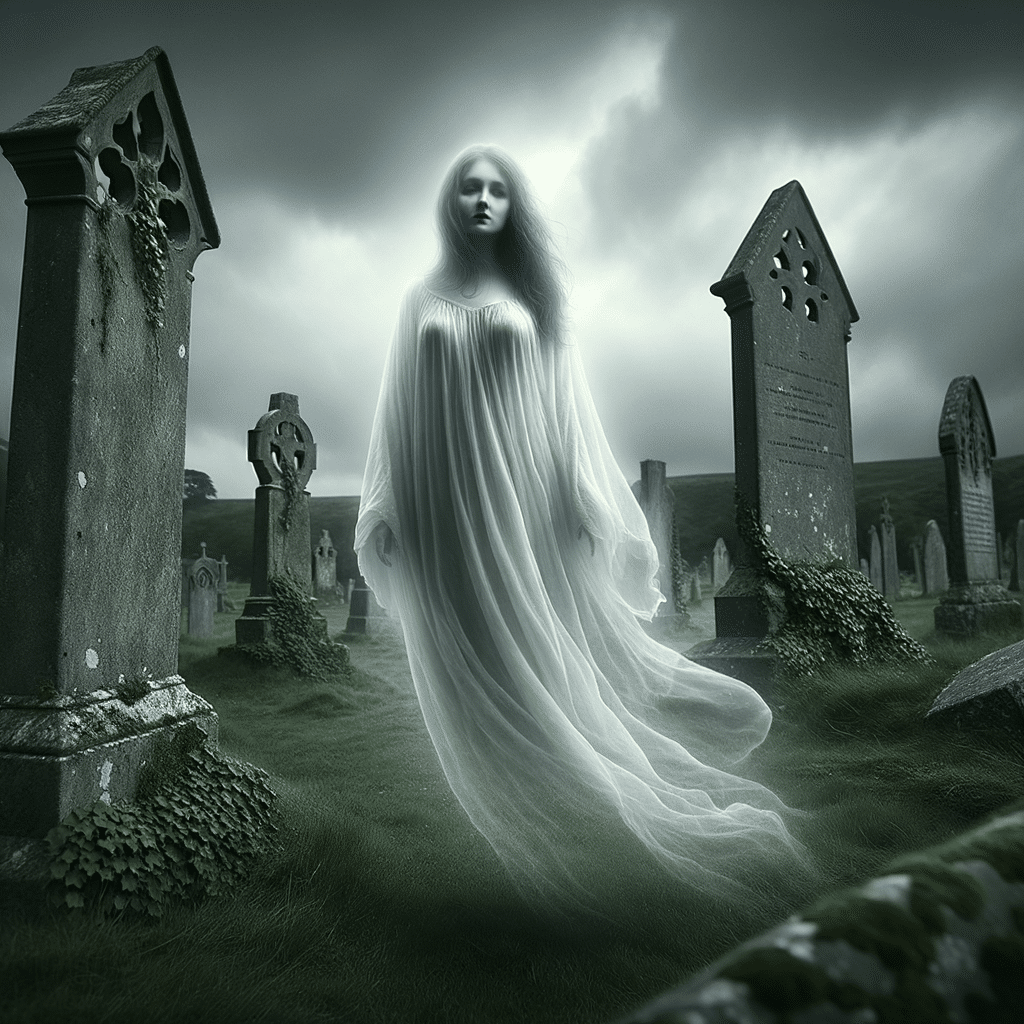
Lady ghosts are ethereal feminine apparitions distinguished by colors that communicate the circumstances of their deaths and unfinished business. These spirits typically manifest as translucent figures moving with otherworldly grace.
-
White Ladies symbolize tragic love, loss, or betrayal and are the most common manifestation worldwide. Grey Ladies embody deep sorrow, while Black Ladies bring mystery and foreboding.
-
Blue Ladies are rare and linked to unresolved emotions, while Green Ladies emerge from stories of betrayed noblewomen. Red Ladies are vengeful spirits driven by violent or passionate deaths.
-
White Ladies typically search or wait, Grey Ladies appear passively, and Red Ladies actively engage with the living. Many follow predictable patterns tied to the events of their deaths.
-
Theories range from psychological projections to paranormal energy frequencies, with some viewing color coding as a narrative device for processing tragedy. Cultural consistency across regions suggests deeper significance beyond environmental factors.
-
Lady ghost legends impact tourism and cultural heritage while serving as cautionary tales about injustice. These stories preserve women’s narratives and create bridges between past and present.

Introduction
People have been interested in the supernatural for a long time. The female ghosts that inhabit stories and haunted locations worldwide are among the most famous characters. These ghostly women stand out for their bright colors and ethereal nature. Each color has its meaning and sad story. The shades of gray that lady ghosts wear are like a visual language that tells us about how they died, what they left undone, and how their presence in our world makes us feel. Understanding these colored forms of ghosts helps us understand both the cultural meaning of ghost stories and the universal human feelings of loss, betrayal, and unfulfilled desire that these ghosts represent.
Overview
Lady ghosts usually show up as see-through or partially solid female forms. They often wear the clothes they were wearing when they died or clothes that were important to their lives on earth. People say these ghosts are lovely but tragic, and their faces can be clear or difficult to see, depending on how strong their manifestation is and how intensely they feel about their unresolved issues. Lady ghosts are said to move with an otherworldly grace, as if they were gliding instead of walking. When they are around, people often feel a quick decline in temperature or an overwhelming sadness. The appearance of these spirits often reflects their final moments on earth or their peak beauty, captured in a moment of time. Their faces usually show how they felt when they were still alive.
Different cultures often associate the colors associated with female ghosts with concepts such as beauty, purity, sorrow, and retribution. For example, in European folklore, the “White Lady” is often shown wearing long, flowing white dresses that represent both her ethereal nature and her tragic past, which is often linked to unfulfilled love and social expectations, like marriage and motherhood. As Hwang (2024) says, this ghost figure shows how color can reflect how a woman feels about her identity and the stresses of society.
Similar themes show up in Asian traditions. For example, the way ghosts like Arang from Korean folklore, Otsuyu from Japanese tales, and Nie Xiaoqian from Chinese mythology are portrayed is similar to the idea of beauty and tragedy being linked. These ghosts often represent the hopes and failures of women in a patriarchal society, showing how color (often white or shades of gray) helps to show how they lose their social and personal identity (Hwang, 2024; Landau, 2024).
Lady ghosts act in very different ways depending on what color they are and what they need to do. However, there are some trends that show up across all of their different forms. White Ladies typically appear to be searching for something or someone, as their manner of movement suggests they are perpetually on the lookout for something that never materializes. Most people think they are harmless but deeply sad. Grey Ladies tend to be more passive when they haunt, showing up and then leaving without interacting with people directly. It appears as though they exist within their own temporal bubble, perceiving the living world only intermittently. The more intense forms, like Red Ladies, may interact with or even threaten people who are still alive, especially if they are there to seek revenge or justice for wrongs done to them. Many lady ghosts show up at set times or follow predictable routines. This suggests that their spiritual energy is linked to the events of their deaths or the rhythms of their previous lives.
White Lady Ghosts
The White Lady is one of the most common ghosts in folklore around the world. Her pale dress is often used as a backdrop for stories about tragic love, terrible loss, childbirth, or harsh betrayal. These ghosts can be found in many places, from the White Lady of Hellfire Caves in England to the famous urban legend of Resurrection Mary in Chicago, who is said to have died on her way home from a dance. The white color represents both lost innocence and the traditional Western association of white with death and grief, making it a powerful visual representation of lives that were sadly cut short. People often see them on the anniversary of their deaths or in places where they were happiest before something tragic happened. They are said to be looking for something or someone they lost in life.
The White Lady is often shown as a white-clad ghost who is either sad about the death of a loved one or wants to seek revenge even for a wrong done. Many research projects on folklore have found that this ghost represents societal fears and cultural rules about femininity and death. In the Philippines, for example, urban tales about the White Lady reinforce gendered images in which men are the victims, which is a deeper social commentary on how men and women interact (Casibual, 2022). This theme shows up in many different ways around the world. For example, in the United States, White Ladies are often linked to love, betrayal, and ongoing conflict.

Grey Lady Ghosts
It’s a different kind of sadness that comes from the Grey Lady. Her soft voice shows deep grief and a sad past that won’t go away. Libraries, old buildings, and historic homes often host these ghosts, providing peaceful spaces for contemplation. They seem to wander around in a sad mood all the time. The Grey Lady at Indiana’s Willard Library is one of the best-known cases. She has been seen many times, and there are photos of her among the books. The color gray evokes the image of a spirit, caught between two worlds, only partially present. This liminal state of unresolved grief keeps them from moving on peacefully to whatever lies beyond.
In many different cultures, the Grey Lady has been a recurring theme. She often represents loss, grief, or ongoing conflict. Many cultures see the Grey Lady as having a sad past, usually one of betrayal or death that happened too soon. In legends about women like Lady Jane Grey, who was put to death by cruel political plots (Kowalska, 2012; Walczyk, 2024), the character’s personality often ties in with larger themes of women’s suffering and social expectations.
In particular, the story of Jane Grey is similar to many other cultures’ interpretations of ghostly figures. In these stories, the Lady represents societal norms and a tragic end, which makes her an intriguing subject for studies of folklore and legend construction (Kowalska, 2012; Walczyk, 2024). Research shows that these stories about these kinds of figures are meant to teach moral lessons and make people feel sorry for the unfair treatment of women throughout history (Walczyk, 2024).
Black Lady Ghosts
The Black Lady is mysterious and scary, and her dark clothes are often linked to death or secrets that are too horrible to say out loud. These cloaked figures can be found in castles and country houses across Europe. They are sometimes considered signs of death or bad luck for people who meet them. In contrast to the sad grey or white ladies, the Black Lady often comes with a warning or a shield, as if her darkness hides information that living things are not supposed to have. Her appearances are often scarier and less sympathetic than those of other lady ghosts. However, behind the scary exterior lies a story of deep injustice or betrayal that turned her into a defender of dark truths.
Black lady ghosts frequently symbolize complex emotions and mental distress. Researchers have found that these ghostly figures may represent a constant battle between traditional memory and modern identity (Narayan et al., 2020). In literature, ghosts are often used as a metaphor for the severe mental discomfort experienced by the children and grandchildren of people who were traumatized in the past. This metaphor connects past and present feelings of emotional unrest (Narayan et al., 2017). In her book Sing, Unburied, Sing, Jesmyn Ward talks about this two-sided nature of haunting by showing ghosts as symbols of the traumas of racial hierarchy and asking readers to face uncomfortable facts about privilege and disenfranchisement (Minnick, 2016). The ghosts become ways to talk about the big issues of social exclusion and past wrongs, which are a big part of American society.
Blue Lady Ghosts
The Blue Lady is a rare manifestation linked to unresolved feelings as cold and deep as the ocean. These ghosts, like the one at the Story Inn, have an ethereal quality that makes them different from other ghosts. They wear flowing blue dresses and have eyes that look like they are glowing with magical intensity. People have thought that the color blue represents both the depth of unfulfilled desire and the coldness of death. This combination makes for a haunting mix that makes meetings with these spirits especially memorable. Blue Ladies are rare in ghost stories, suggesting that the emotional conditions for their appearance are also rare. For example, the sad deaths that make other colored manifestations more common may need a different set of circumstances.
In ghost stories, the word “Blue Lady” is often used to refer to a ghostly figure, usually a woman dressed in blue, who is said to haunt places where she died or where certain events in her life happened. Many of the themes in these stories are similar to those in gothic literature, which is about loss, longing, and the creepy presence of ghosts. These kinds of themes make you contemplate the human situation and the psychological aspects of being afraid of and sad about death. In writing, the idea of the “uncanny” often represents feelings of loss and longing, which can be seen in modern stories as well. In folklore, these spirits remain stationary, aligning with the concept of emotional attachment to locations and recollections. This idea suggests that social fears and ideas shape how the living and the dead interact (Lindop, 2014).
Green Lady Ghosts
The Green Lady usually comes from stories about noblewomen who were betrayed or killed, and their green gowns will always remind people that they were the victims of romantic or courtly deception. The famous “Green Lady” of Château de Brissac in France is a prime example of this type of ghost. The castle’s old rooms echo her story of adultery and violent revenge. Real life often associates the color green with feelings of envy and jealousy. In death, the color green may also symbolize the toxicity of the betrayal these women experienced or the way their anger prevents them from moving on. It seems like these ghosts often show up in places where they used to be wealthy and prestigious, as if their high-class status in life confers them a stronger presence after death. They would rather not give up their claim to the places where they used to rule.
Scholars who study ghosts say that these ghostly figures often represent more than just supernatural events; they stand for traumatic events in society and unfinished histories. As an example, Lincoln and Lincoln (2015) say that ghosts in modern culture are things that people remember badly and that they represent the unfinished histories that affect both individuals and groups. This link between ghosts and memories is important for understanding characters like the “Green Lady,” who can represent wrongs done in the past or mental scars that women carry with them.
Roberts’s study of female ghosts in tourist stories focuses on the gendered aspects of haunting. Roberts (2014) suggests that we can use these ghostly figures to discuss gender issues in cultural settings. People often worry about the roles of women in the past and present through the feminine ghost, which starts a conversation about historical sexism and its effects that are still felt today. Kilroy-Marac also talks about how memory and history interact in hauntings and suggests using an ethnographic view to look at how these relationships work in different cultural settings (Kilroy-Marac, 2013). These ideas are similar to the “Green Lady,” who represents the memories of people who have been wronged, especially women whose stories are often ignored or hushed.
Red Lady Ghosts
The Red Lady channels the strongest feelings and often shows up as a spirit of revenge that is driven by the circumstances of a violent or passionate death. In Asian folklore, characters like the “Lady in Red” are common. In their stories, people often drown or die because of strong love, betrayal, or anger. The color red is a visual symbol of blood, violence, and the spirits’ strong desire for revenge or justice, which keeps them from finding peace. Unlike other lady ghosts, who are usually sad or mysterious, the Red Lady often actively chases the living. Her appearance isn’t just a passive haunting; it’s an active force that wants to solve problems through conflict or revenge.
It’s possible for the “Red Lady” archetype to represent bigger wrongs in history, especially when it comes to themes of displacement and pain. Stories where the ghost is a woman who has been wronged often show how society has been betrayed and how we all feel sadness as a group. The idea of hauntology supports this view by showing how the past can still affect our worries in the present and how unsolved traumas can haunt communities (Boğaç, 2020). People who were forced to move or who suffered because of problems in their family or society are often portrayed in ghost stories as symbols of unsolved traumas from the past.
Theories
There are many ideas that try to explain what colored lady ghosts are and why they show up in these specific color forms. Psychological theories say that witnesses project their cultural expectations onto vague sensory experiences. They see shadowy figures through the lens of well-known folklore and assign them colors based on what they see and how they feel. Paranormal experts think that the colors are made up of different frequencies of spiritual energy. They also think that each color represents a different emotional state or cause of death that leaves its mark on reality. Some folklorists say that the way ghosts are colored helps communities confront and talk about tragedies by giving them a common language to talk about how death and the future are difficult to explain. Some environmental factors, like lighting, building features, and even the mental state of witnesses, may also affect how colors are seen in apparitions. However, this doesn’t explain why color associations are so consistent across cultures and times.
The portrayal of these individuals can also incorporate feminist ideas that critique past exclusion. By looking at how women are presented in ghost stories, especially Victorian ones, we can see how these stories reflect or go against societal ideas about what it means to be a woman, what is right and wrong, and who has power. Ghosts are often used to speak out against patriarchal abuse and fights that are still important to talk about today (Briefel, 2022).
The lady ghost figures show how society worries about being feminine and how women have been treated as objects in the past. The change in these ghosts from simple beauty symbols to complicated symbols of revenge and empowerment shows how society’s ideas about women’s roles have changed over time (Hwang, 2024; Liu, 2020). For example, Japanese ghost tales often portray women as both beautiful and vengeful, addressing the duality of the patriarchal ideal and its monstrous counterpart (Landau, 2024). This episode shows that there is still a conversation going on about gender, memory, and modern social problems. It also shows how these representations continue to affect and resonate with modern cultural productions.
Impact
Lady ghost stories have effects on more than just scary stories. They can change literature, art, tourism, and even the mental health of the people who live in places where these stories start. Many people visit historic places that are known for having famous lady ghosts. Such behavior turns tragedy into a form of cultural heritage that brings in money and keeps historical stories alive. These stories play an important role in society because they teach people what can happen when you betray someone, hurt them, or treat them unfairly. They also assist communities in remembering and paying tribute to women whose stories would otherwise remain untold. The emotional power of lady ghost stories speaks to the common human experience of loss and unresolved grief. They connect the present with the past in a way that makes people feel and contemplate historical traumas. Additionally, the fact that these ghosts are exclusively female raises intriguing questions about how societies remember and create myths regarding female suffering, which may perpetuate certain narratives of women as victims while simultaneously giving a voice to the voiceless through supernatural stories.
Colors that are linked to female ghosts can also have deeper societal meanings. For example, in Philippine mythology, Maria Makiling is sometimes shown in lush green settings, which represents her link to nature and the unresolved conflicts between nature and society (Hwang, 2024). On the other hand, the ghostly characters in modern stories often go against what people usually think of when they hear the word “ghost.” Asmar (2014) says the “gothic aesthetics” of celebrities like Lana Del Rey show a move toward darker colors that stress sadness and defiance of social norms. These pictures show how female ghosts have changed over time from passive characters to ones with free will and power. Such an evolution lets modern versions include a wider range of colors that reflect a stronger woman’s story.
Conclusion
In supernatural legends, the colors of lady ghosts are more than just differences in how things look. They are part of a complex system of symbols that turns tragic events, unfair treatment, and emotional turmoil into memorable visual metaphors. Each chromatic form, from the sad White Lady to the angry Red Lady, has its story weight and emotional resonance, representing both individual stories and larger cultural patterns in how people confront death and remember the dead. These ghostly figures are a warning that the past never really goes away. It stays with us in our memories, taking on forms that make us feel our deepest fears and emotions. People are still fascinated, scared, and moved by the colored lady ghosts that haunt our folklore and our imaginations, whether they are seen as real ghosts or as powerful cultural constructs. This phenomenon shows that some stories go beyond life and death to become immortal through repeated telling.
References
Boğaç, C. (2020). The process of developing an emotional nexus between the self and an uncanny geography: An autoethnography. Emotion, Space and Society, 36, 100688. https://doi.org/10.1016/j.emospa.2020.100688
Branchini, B. R., Southworth, T. L., Salituro, L., Fontaine, D. M., & Oba, Y. (2016). Cloning of the Blue Ghost (Phausis reticulata) Luciferase Reveals a Glowing Source of Green Light. Photochemistry and Photobiology, 93(2), 473-478. https://doi.org/10.1111/php.12649
Briefel, A. (2022). Ghost Speed: The Strange Matter of Phantom Vehicles. Victorian Literature and Culture, 50(4), 693-720. https://doi.org/10.1017/s106015032100005x
Casibual, J. P. (2022). Of women and monsters: A case study of Philippine creature urban legends. Southeastern Philippines Journal of Research and Development, 27(2), 23-34. https://doi.org/10.53899/spjrd.v27i2.143
Hwang, K. (2024). The Role of A Beautiful Appearance in the Redemption of Female Ghosts. Journal of Craniofacial Surgery, 36(3), e288-e292. https://doi.org/10.1097/scs.0000000000010900
Johnson, A. A. (2020). Accidents and Agency: Death and Occult Economies in Thailand. Made in China Journal, 5(2), 138-143. https://doi.org/10.22459/mic.05.02.2020.15
Kilroy‐Marac, K. (2013). Speaking with revenants: Haunting and the ethnographic enterprise. Ethnography, 15(2), 255-276. https://doi.org/10.1177/1466138113505028
Kowalska, Z. (2012). Lady Jane Grey – prawowita królowa, czy uzurpatorka? Kwestia angielskiej sukcesji w 1553 r.. Przegląd Nauk Historycznych, 11(2), 5-24. https://doi.org/10.18778/1644-857x.11.02.01
Landau, S. (2024). Passionate Women, Vengeful Spirits: Female Ghosts and the Japanese Gothic Mode. Manusya Journal of Humanities, 27(1), 1-23. https://doi.org/10.1163/26659077-20242723
Lincoln, M. and Lincoln, B. (2015). Toward a Critical Hauntology: Bare Afterlife and the Ghosts of Ba Chúc. Comparative Studies in Society and History, 57(1), 191-220. https://doi.org/10.1017/s0010417514000644
Lindop, S. (2014). Carmilla, Camilla: The Influence of the Gothic on David Lynch’s Mulholland Drive.. M/C Journal, 17(4). https://doi.org/10.5204/mcj.844
Liu, R. (2020). Object-Oriented Diaspora Sensibilities, Disidentification, and Ghostly Performance. M/C Journal, 23(5). https://doi.org/10.5204/mcj.1685
Minnick, E. (2025). Understanding What’s Given: Ghostly Invocations of Racial Exclusion, Hierarchy, and Vulnerability in Jesmyn Ward’s Sing, Unburied, Sing. CEA Critic, 87(2), 159-170. https://doi.org/10.1353/cea.2025.a964722
Narayan, A. J., Ippen, C. G., Harris, W. W., & Lieberman, A. F. (2017). Assessing Angels in the Nursery: A Pilot Study of Childhood Memories of Benevolent Caregiving as Protective Influences. Infant Mental Health Journal, 38(4), 461-474. https://doi.org/10.1002/imhj.21653
Roberts, R. (2014). ‘The Untold Story’: The mediated female ghost in England’s Blenheim Palace. European Journal of Cultural Studies, 18(1), 35-51. https://doi.org/10.1177/1367549414557802
Usmar, P. (2014). Born To Die: Lana Del Rey, Beauty Queen or Gothic Princess?. M/C Journal, 17(4). https://doi.org/10.5204/mcj.856
Walczyk, K. (2024). Wizerunek lady Jane Grey w szesnastowiecznej historiografii i literaturze. Studia Historyczno-Społeczne: Prace Dedykowane Profesorowi Zenonowi Piechowi W Siedemdziesiątą Rocznicę Urodzin, 51-76. https://doi.org/10.12797/9788383681320.03


Leave a Reply