Celts and Megaliths: Key Points
-
The Celts were tribes sharing common linguistic and cultural traits who emerged during the late Bronze and early Iron Ages, with Druids serving as priestly intermediaries and knowledge maintained through oral tradition.
-
Megaliths are massive stone structures built during the Neolithic and early Bronze Ages, predating Celtic civilization by thousands of years, and often demonstrate sophisticated astronomical alignments.
-
When Celts migrated into regions with existing megalithic monuments, they adopted these ancient stones into their religious practices rather than destroying them, transforming them into active sacred spaces.
-
Within Celtic belief, megaliths were conceptualized as gateways between the world of the living and the otherworld, with passage tombs providing physical models for journeys between realms.
-
Scholars put forth a range of theories, suggesting that these structures served as territorial markers, astronomical instruments, and locations where cultural memory maintained fragmented knowledge over millennia through active Celtic participation.
-
Megaliths profoundly impacted Celtic culture by influencing their art, serving as gathering places for assemblies, and providing landmarks that anchored oral traditions, persisting as symbols of Celtic identity today.
Introduction
The ancient Celts, a people of the past, have left an enduring mark on the Western European landscape. Their megalithic structures, still standing, are mute testaments to a civilization intimately linked to both the natural and the unseen. These ancient structures, built millennia ago, are more than just impressive buildings. They are a testament to the spiritual convictions, astronomical understanding, and collective labor of civilizations that thrived long before anyone could write down their histories. The connection between the Celts and these ancient stone structures reveals a complex web of religious practices, cosmological views, and cultural traditions. This fact has fascinated both scholars and the general public for a long time. To understand this connection, we need to look at both the Celtic peoples and the megalithic structures they used, changed, and included in their myths.

The Celts
The Celts, a distinct cultural and linguistic group, emerged during the late Bronze Age and early Iron Age, roughly between 1200 and 500 BC. They spread across a large part of Europe, from the British Isles to the Iberian Peninsula, and also moved eastward into Asia Minor. They weren’t a single, cohesive empire. Instead, they were a patchwork of tribes, all linked by shared languages, artistic traditions, and religious beliefs. Central to their spiritual life was a strong priestly class, the Druids, who acted as go-betweens for the people and the gods. Celtic society, primarily agrarian and pastoral in nature, was structured around familial bonds and warrior elites. It relied on a robust oral tradition to transmit genealogies, legal codes, and mythological stories, all of which were memorized rather than recorded in written form (O’Brien, 2005).
The Celts were known for their metalworking skills, creating intricate jewelry and weapons. These objects were decorated with unique curvilinear designs and abstract patterns, which reflected their artistic style. Their religious beliefs were both animistic and polytheistic, recognizing divinity in natural features like springs, groves, and rivers. They also worshiped a group of gods and goddesses, each associated with specific aspects of life such as war, fertility, craftsmanship, and authority. This spiritual view shaped their understanding of the ancient stone monuments, which existed before they arrived in many areas. This perspective underscored the interconnection between the physical and spiritual realms (Loomis, 1931).
Megaliths and the Celts
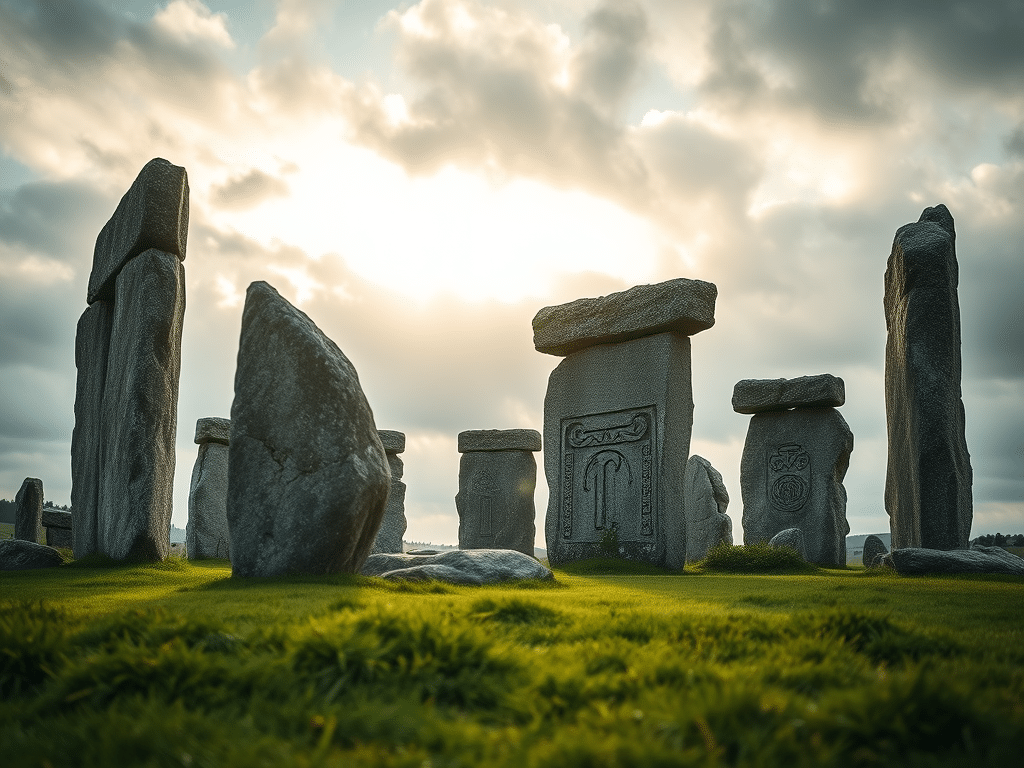
Megaliths are substantial stone constructions, a term rooted in the Greek “megas” for great and “lithos” for stone. These structures were built during the Neolithic and early Bronze Ages, roughly between 4500 and 1500 BC. Consequently, a positive number of them predate even the Celtic civilization by millennia. These ancient structures come in various shapes. Menhirs are simply solitary standing stones. Stone circles, or cromlechs, are circular formations. Dolmens, which served as burial chambers, feature massive capstones held aloft by vertical stones. Then there are passage tombs, characterized by lengthy stone corridors that lead to a central chamber.
The building of megaliths required a massive group effort and advanced engineering skills. Some of these stones weighed many tons. They had to be quarried, moved over long distances, and set up with extreme precision, all using only the technology available during the Stone Age. Many megalithic sites show remarkable astronomical alignments. These structures are often oriented toward the sun at solstices, the equinoxes, or important lunar events. This suggests that the people who built them had a detailed understanding of celestial cycles. Researchers continue to debate the original purposes of these monuments. However, it’s evident that they fulfilled a variety of purposes, such as serving as burial sites, territorial markers, locations for ceremonies, and potentially as astronomical observatories or calendars. The monumental size and enduring nature of megaliths suggest they were of considerable importance to the cultures that constructed them. These structures represented substantial allocations of labor and resources, which were likely warranted by strongly held convictions concerning mortality, lineage, the cosmos, and communal identity.
Megalithic structures, found in various places, show different cultural practices. In Ireland and Britain, the connection between megaliths and burial practices aligns closely with early Celtic traditions. Recent genomic studies have uncovered a link between individuals interred in megalithic sites and agricultural groups, which ultimately contributed to the Celtic lineage, indicating a shared cultural ancestry (National Academy of Sciences, 2019). Moreover, the use of stone in burial practices is seen not only in Europe but also in ancient Southeast Asian cultures, highlighting a widespread megalithic tradition (Nesterkina et al., 2022; Hayden, 2016). In Southeast Asia, the megalithic tradition, especially in areas like Sumba, is marked by social practices related to feasting and ancestor worship. This mirrors the cultural importance of megaliths seen in Celtic societies (Hayden, 2016). The cross-regional analysis supports the idea that megaliths were central to identity and community cohesion, serving as memorial sites that strengthened social bonds. These weren’t just random art projects.

Megaliths and Fairy Portals
As Celtic groups moved into areas already marked by ancient megalithic structures, they encountered landscapes filled with mystery and age. These structures, whose original builders and purposes were unknown, still had a powerful presence. This presence required explanation and incorporation into Celtic beliefs. Instead of destroying or ignoring these ancient stone structures, the Celts incorporated them into their religious practices and stories, creating new meanings that either blended with or replaced the original purposes of the Neolithic builders. Archaeological findings indicate that the Celts repurposed numerous megalithic locations for their funerary customs. They interred cremation urns and grave offerings within pre-existing passage tombs and dolmens. This practice allowed them to assert ownership over these locations as sacred spaces, while simultaneously acknowledging their ancestral significance.
Celtic legends, along with later writings that emerged after the arrival of Christianity, tell us that these stones were thought to be home to spirits, fairies, or even the gods. This belief turned the megaliths into living parts of the spiritual world, not just remnants of a bygone era. Classical sources and later traditions often link the Druids with stone circles and other large stone structures. However, the question of whether they built these structures or just used them for rituals has remained a historical mystery for a long time. The Celts’ incorporation and reinterpretation of megalithic sites illustrates their propensity to assimilate pre-existing sacred landscapes into their religious practices. They acknowledged the significance of locations imbued with power and sanctity by earlier cultures, thereby preserving a connection to the distant past while simultaneously imposing their own cultural perspectives.
In Celtic belief, megaliths were often considered connections or portals between different worlds, especially the world of the living and the otherworld, which was home to gods, ancestors, and supernatural beings. The passage tombs, characterized by their constricted stone passageways connecting external areas to shadowy inner sanctums, served as tangible representations of inter-worldly travel; moreover, Celtic mythology abounds with narratives depicting heroes who ventured into these burial mounds to interact with entities from the Otherworld or acquire esoteric wisdom. The Celtic calendar contained specific dates, such as Samhain, that marked the transition from the light half to the dark half of the year. These dates were believed to be times when the boundary between the living and the dead was less distinct. As a result, megalithic sites were considered especially powerful places where these crossings could occur.
Standing stones and stone circles were occasionally thought of as being turned to stone, perhaps ancient giants, warriors, or dancers, all caught in the act of breaking divine rules. This idea suggested that the stones were more than just markers; they were transformed beings caught between different existences. The presence of water sources near megalithic sites enhanced their liminal quality. Springs, wells, and streams were considered gateways to the otherworld in Celtic cosmology. Therefore, combining stone and water created particularly powerful sacred spaces. The interpretation of megaliths as gateways mirrors wider Celtic concerns regarding thresholds, transformations, and the fluidity of existence, concepts that are pervasive within their mythological narratives, ceremonial observances, and artistic creations.
Theories
Various scholarly perspectives have been advanced to elucidate the Celts’ association with megaliths, encompassing pragmatic factors and deep-seated spiritual traditions; however, the incomplete nature of the available evidence complicates the establishment of conclusive determinations. Some researchers argue that the Celts recognized megaliths as territorial markers built by earlier inhabitants. They strategically included these structures to support their claims of land ownership and ancestral rights, thus asserting their connection to the deep history of the areas they occupied. Some researchers suggest that the Celts might have used the astronomical alignments in megalithic structures for farming schedules and religious events. Their use would have allowed them to pass down practical knowledge over many generations, even as the original cultural settings changed.
Cultural memory theory suggests that oral traditions preserved incomplete but enduring knowledge of the original functions of monuments. Within their own mythological frameworks, the Celts reinterpreted this knowledge, creating new meanings that remained connected to the past. Archaeological investigations of votive offerings, burial customs, and settlement configurations in proximity to megalithic sites have demonstrated that Celtic communities maintained active involvement with these monuments across numerous centuries. This suggests that they were not simply passive recipients of these structures but rather active contributors to a continuous tradition of sacred place-making. Linguistic data derived from toponyms, frequently exhibiting pre-Celtic components alongside Celtic designations, suggests that the understanding and naming conventions linked to these locations traversed various cultural shifts, simultaneously maintaining ties to their primordial roots. These different theoretical viewpoints are not mutually exclusive; instead, they combine to create a complex picture of the interactions between Celtic peoples and megalithic structures. This interaction involved practical uses, spiritual beliefs, mythological stories, and social approval.
The influence of megaliths on Celtic culture extended beyond their religious uses, affecting art, social structures, how people saw their land, and the passing down of culture. These impacts lasted for centuries and continue to shape how we understand Celtic heritage today. The visual language of Celtic art, characterized by spirals, triskeles, and geometric designs, potentially draws inspiration from the decorative motifs observed in passage tombs such as Newgrange. This observation implies artistic continuities that persisted across the considerable temporal divide separating the Neolithic architects and the Iron Age Celts. Megalithic sites functioned as communal hubs, facilitating tribal assemblies, legal adjudications, and seasonal celebrations. These locations acted as neutral zones, enabling diverse Celtic groups to convene, engage in commerce, resolve conflicts, and strengthen social connections. Consequently, they played a crucial role in preserving Celtic identity within politically divided regions.
These large stone structures are often understood as symbols of power, territorial control, and a shared identity. The construction of large stone monuments, such as dolmens and menhirs, reflects the societal values and belief systems of the people who built them. In Celtic areas, these structures often served as important places for rituals related to death and remembrance (Surmely et al., 1996). The large size and placement of these stones suggest they were intentionally chosen to express ideas about ancestry and territorial claims (Surmely et al., 1996; Magail et al., 2022). Furthermore, the cultural layering seen in megalithic sites across different geographical areas shows how civilizations, including the Celts, combined their historical stories with the physical landscape. The variety seen in megalithic structures suggests a shared purpose: to mark important social and spiritual events, a purpose that goes beyond specific cultural boundaries (Rosmawati et al., 2022; Wiradnyana, 2018).
The connection of certain monuments with specific families or clans established genealogical markers. These markers linked Celtic oral traditions to physical locations within the landscape. This allowed for the preservation and transmission of narratives, legal codes, and family lineages across generations, all through the reference to enduring stone structures. The advent of Christianity in Celtic territories did not eliminate the importance of megalithic structures; instead, it engendered a transformation of their meaning. Numerous stones were marked with crosses, churches were constructed in proximity to pre-existing monuments, and Christian saints were associated with miraculous events at these locations. This illustrates the enduring nature of sacred geography, even amidst significant religious shifts. The multifaceted interpretations and applications of megaliths, spanning millennia, have rendered them pivotal to contemporary Celtic identity and heritage initiatives. These movements frequently invoke these ancient structures as emblems of cultural persistence, defiance against external control, and links to pre-Christian spiritual practices.
Celtic history shows a clear connection to megalithic traditions, which is evident in the development of burial practices and the construction of monuments. Archaeological evidence indicates that the megalithic culture in Northwest Iberia predated the Celts. This evidence indicates a foundation of cultural practices that the Celts later adopted and adapted (Silva, 2018). This ability to adapt highlights the Celts’ interaction with existing megalithic societies, which they integrated into their developing social structures. Even today, some megalithic practices continue, showing a strong cultural connection. In various regions, the enduring presence of megalithic rituals illustrates the continued relevance and importance of these ancient practices for modern communities (Hayden, 2016; Yondri, 2020). The continued importance of megalithic sites shows how they have consistently shaped regional identities.
Conclusion
The enduring presence of Celtic megaliths across Europe highlights humanity’s fundamental need to mark important places with lasting monuments. This practice also shows the desire to maintain connections with the past, even in the face of major changes in culture and time. The Celts’ interaction with these archaic edifices illustrates the capacity of subsequent cultures to incorporate, modify, and reinterpret the tangible legacies of their forebears, thereby generating novel significations while simultaneously maintaining a connection to their ancestral roots. Megaliths, whether viewed as portals to other realms, astronomical devices, territorial boundaries, or sacred assembly sites, fulfilled a range of interconnected roles within Celtic society. This multiplicity of functions underscores the intricate and varied character of human interactions with the physical environment, collective memory, and the divine. Scholars’ theoretical frameworks concerning this relationship acknowledge the practical and spiritual aspects of megalithic importance. They recognize that ancient societies, much like contemporary ones, functioned within contexts where practical needs and religious beliefs were deeply intertwined, rather than being separate areas of life. In studying these monuments and the cultures that built them, we are involved in the same process of creating meaning that the Celts used when they encountered megalithic sites. This process helps us understand and connect with a past that, through stone, has lasted for thousands of years.
10:58 AM
References
Hayden, B. (2016). The Sumban megalithic feasting complex. https://doi.org/10.21313/hawaii/9780824856267.003.0007
Loomis, L. H. (1931). Arthurian Tombs and Megalithic Monuments. The Modern Language Review, 26(4), 408-426.
Magail, J., Esin, Y., Gantulga, J., Monna, F., Rolland, T., & Allard, A. (2022). Megaliths of the world. https://doi.org/10.32028/9781803273204
National Academy of Sciences. (2019). In this issue. Proceedings of the National Academy of Sciences, 116(19), 9139-9141. https://doi.org/10.1073/iti1919116
Nesterkina, А., Portnova, А., Fedorova, A., & Yondri, L. (2022). The megalithic tradition of East and Southeast Asia. Archaeology Ethnology and Anthropology of Eurasia, 50(3), 39-48. https://doi.org/10.17746/1563-0110.2022.50.3.039-048
O’brien, W. (2005). Megaliths in a mythologised landscape: south-west Ireland in the Iron Age. In Monuments and landscape in Atlantic Europe (pp. 152-176). Routledge.
Rosmawati, R., Duli, A., Nur, M., Yusriana, Y., Saraka, E., Muda, K., Sabin, Y. S., Ramli, Z., Bulbeck, F. D., & Brumm, A. (2022). The function and meaning of megalithic cultural heritage in some sites in Bantaeng Regency, South Sulawesi. Mozaik Humaniora, 22(1), 114-128. https://doi.org/10.20473/mozaik.v22i1.32402
Silva, F. (2018). Before the Celts: Cosmology, landscape and folklore in Neolithic Northwest Iberia. CC, 22(1), 29-45. https://doi.org/10.46472/cc.0122.0205
Surmely, F., Hervé, A., Murat, R., & Liabeuf, R. (1996). Apports de l’étude de la localisation des monuments mégalithiques à la compréhension du phénomène mégalithique [Contributions of the study of megalithic monument location to understanding the megalithic phenomenon]. Bulletin de la Société Préhistorique Française, 93(3), 434-441. https://doi.org/10.3406/bspf.1996.10187
Wiradnyana, K. (2018). Proses pembuatan megalitik Nias sebagai bagian sistem upacara Owasa (Studi kasus proses sebagai sebuah sistem upacara Owasa di situs megalitik Orahili Fau) [The process of making Nias megaliths as part of the Owasa ceremony system (Case study of the process as an Owasa ceremony system at the Orahili Fau megalithic site)]. Berkala Arkeologi Sangkhakala, 11(21), 62-69. https://doi.org/10.24832/bas.v11i21.231
Yondri, L. (2020). Rethinking about megalithic term in Indonesian culture. https://doi.org/10.4108/eai.20-9-2019.2296643


Leave a Reply