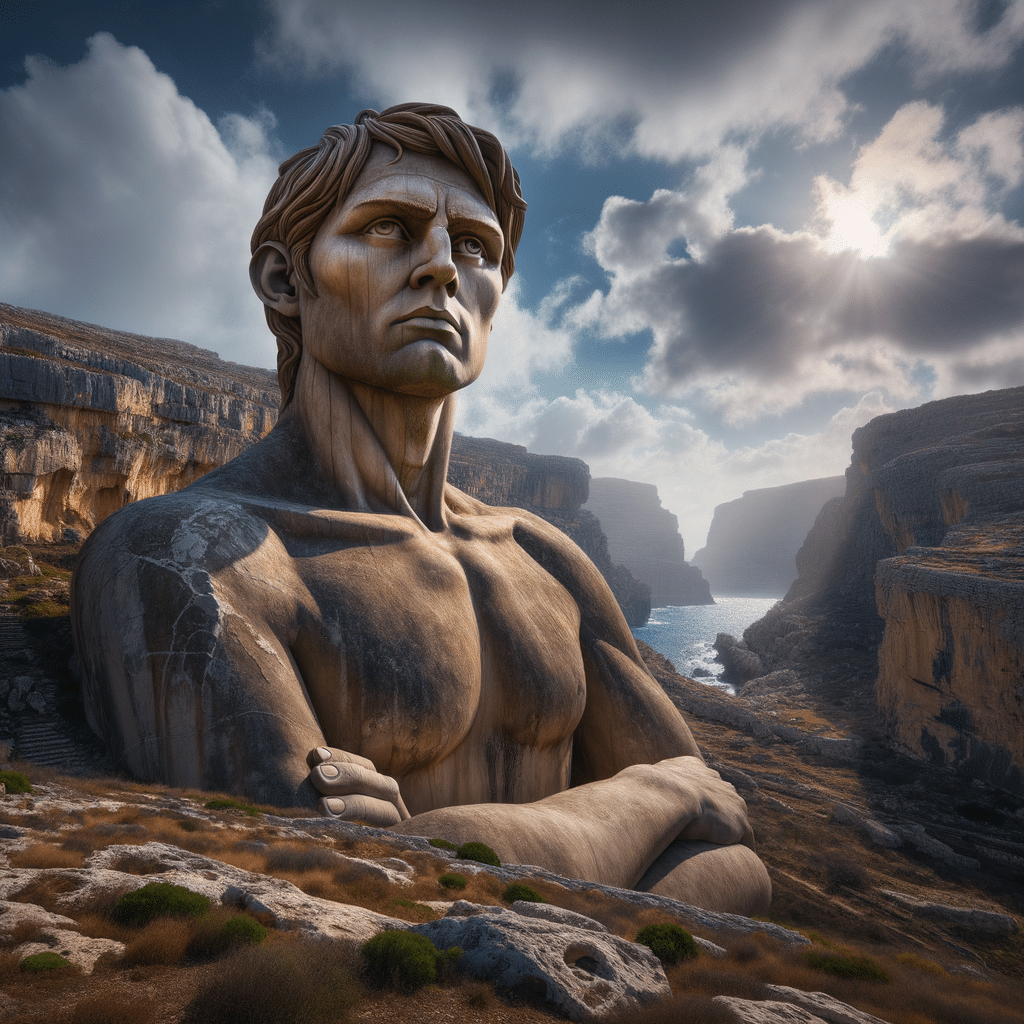
Did giants once wander the island of Malta in ancient times and di they leave behind amazing architectural feats?
The island nation of Malta has a long history of legends and folklore. One of the most enduring myths is that of giants having once inhabited the islands. Tales of massive humanoid beings living in Malta date back centuries and are deeply ingrained in Maltese culture. This essay will provide an overview of the belief in giants throughout Maltese history and its connection to the Knights of Malta that once ruled the islands.
Giants
Giants appear in the mythology and folklore of many cultures around the world. They are usually depicted as humanoid beings of enormous stature and strength. The concept of giants transcends geographical boundaries. From the Nephilim of biblical lore to the Jotunn of Norse mythology, these colossal beings are pervasive across cultures. Such entities are often ascribed incredible power, both in their physical might and their impact on human affairs. They are seen as builders of ancient monolithic structures and as entities that bridge the gap between the divine and the mortal.
In Malta, giants are part of local folk tales going back to at least the Middle Ages. According to the myths, ancient races of giants populated the Maltese islands in antiquity. They were said to have built megalithic temples and other cyclopean structures found on the islands. The giants were often portrayed as dim-witted but immensely strong beings frequently in conflict with normal sized humans.
While myths of giants are common worldwide, they have a particularly strong grip in Malta. Local legends tell of Giants who lived in caves and holes in the ground.

Temples
The Maltese archipelago is home to a remarkable collection of megalithic temples, each boasting an awe-inspiring history that stretches back thousands of years. These ancient structures, such as the renowned Ħaġar Qim, Mnajdra, and Ggantija temples, serve as tangible testaments to the exceptional architectural skills possessed by our ancestors.
These temples, dating back over 5,000 years, are some of the oldest free-standing structures in the world. The sheer size and weight of these stones raise questions about how they were transported and assembled. Dating as far back as 3600 BC, these sacred sites have captured the imagination of locals and visitors alike. Their colossal size and intricate construction have sparked curiosity and fueled countless legends surrounding their origins. It comes as no surprise then that local folklore attributes the creation of these extraordinary temples to beings of immense stature – giants.
The very name Ggantija itself stands as evidence of this mythical connection. Derived from the Maltese word for giant, ġgant, it serves as a symbolic link between these monumental structures and the mythical creatures believed to be responsible for their existence.
As one explores these hallowed grounds filled with enigmatic stone formations and sacred chambers carved into rock faces, it becomes increasingly difficult not to be captivated by their grandeur. The sheer scale alone remains a testament to the engineering prowess exhibited by our ancient ancestors.
However, despite modern advancements in technology allowing us insight into various aspects of archaeological exploration, many mysteries still shroud these astonishing megalith creations. How were they built? What techniques did our forebears employ? And perhaps most intriguingly – why?
Debate
While many view the giant tales as mere legends or myths, there is a faction that firmly believes in the reality of these colossal beings. This intriguing debate has sparked considerable interest among scholars, historians, and enthusiasts alike.
According to proponents of this theory, there are several compelling pieces of evidence that support the notion that giants once roamed the picturesque landscapes of Malta. Ancient texts and historical accounts from various civilizations mention encounters with these towering figures, describing their immense physical stature and awe-inspiring presence.
One significant source often referenced by those who advocate for the existence of Maltese giants is ancient folklore passed down through generations on this archipelago. These captivating narratives depict epic battles between humans and giants, showcasing extraordinary feats attributed to these larger-than-life beings.
Additionally, archaeological discoveries have provided some tantalizing clues that cannot be easily dismissed. The enigmatic megalithic structures scattered across Malta’s islands suggest an advanced civilization capable of constructing monumental edifices using enormous stones weighing up to several tons each. The sheer magnitude and intricacy involved in erecting such architectural wonders have led some to believe that only colossal beings could have achieved such remarkable feats.
While skeptics argue that these structures were created by skilled human hands utilizing innovative techniques for their time period, supporters posit alternative explanations rooted in giant lore. They propose that it was indeed these mythical creatures who designed and constructed these awe-inspiring monuments as
There are many other legends about giants in Malta. For example, there is a story about a giant who lived in a cave in Gozo. The giant was said to be so tall that he could reach over the sea and pick fruit from the trees on the other side. Another story tells of a giant who built the Azure Window, a natural arch that collapsed in 2017.
One famous site associated with Giants is Għar Dalam, the Cave of Darkness in Birżebbuġa. Fossils of dwarf elephants found here have fueled the idea that the island was once home to giant beings. Though considered mythical today, many Maltese once genuinely believed the islands had been inhabited by giant creatures in the distant past.
Culture
To the local populace of yesteryears, the belief in giants provided a plausible explanation for these architectural marvels. Without the tools and knowledge we possess today, the idea that only beings of great strength and stature could move and position these limestone blocks, some weighing over fifty tons, was a compelling one. Over time, these tales became an intrinsic part of Malta’s cultural tapestry.
The Knights Hospitaller, later known as the Knights of Malta, helped promote the myths of giants in Malta. The medieval Catholic military order ruled Malta from 1530 to 1798 and emphasized the island’s ancient Christian heritage. Legends of giants battling Christians and building prehistoric megaliths fit their narrative. The Knights used folk tales of larger-than-life beings from a pagan past to highlight their own Christian civilization in Malta’s present and future. Giant motifs appear on many coats of arms and gravestones of Knights from the 16th and 17th centuries.
Though not literally believed, the giants became part of the chivalric folklore and lore of the Knights of Malta. These stories helped to justify the knights’ military campaigns against the Turks, who were often seen as descendants of the giants.
Conclusion
Legends of giants in the Maltese islands have endured for centuries, from medieval folk tales to the height of the Knights of Malta. The myths have taken on layers of meaning, used at times to explain the unknown origins of megalithic sites and at other times appropriated to glorify Christianity. The giants of Malta demonstrate how folklore is shaped by, as well as shapes, cultural forces across generations. The ancient myths continue to inspire literature and popular culture on the islands today.
References
Caruana, A. A. (1896). Further Megalithic Discoveries and Explorations in the Islands of Malta During 1892 and 1893, Under the Governorship of Sir Henry A. Smyth, KCMG. Archaeological Journal, 53(1), 26-45.
Cowdy, S. (1874). Malta and its Knights. Transactions of the Royal Historical Society, 3, 395-407.
Haze, X. (2018). Ancient Giants: History, Myth, and Scientific Evidence from Around the World. Simon and Schuster.
Stroud, K. (2007). Of giants and deckchairs: Understanding the Maltese Megalithic temples. Cult in Context, 16-22.
Theuma, N., & Grima, R. (2006). The Megalithic Temples of Malta: towards a re-evaluation of heritage. In Managing World Heritage Sites (pp. 263-272). Routledge.



Leave a Reply