The earth is full of enormous megaliths. How and why were they constructed?
Megaliths are massive stone structures built without the use of mortar or concrete. The word megalithic comes from the Greek words mega, which means large, and lithos, which means stone.
Historians, archaeologists, and the general public have long captivated the attention of these ancient monuments found all over the world. Despite the numerous hypotheses concerning their function—from religious temples to astronomical observatories—many details of these historic buildings are still unknown. This essay investigates the mysteries surrounding a number of well-known megaliths.
Stonehenge
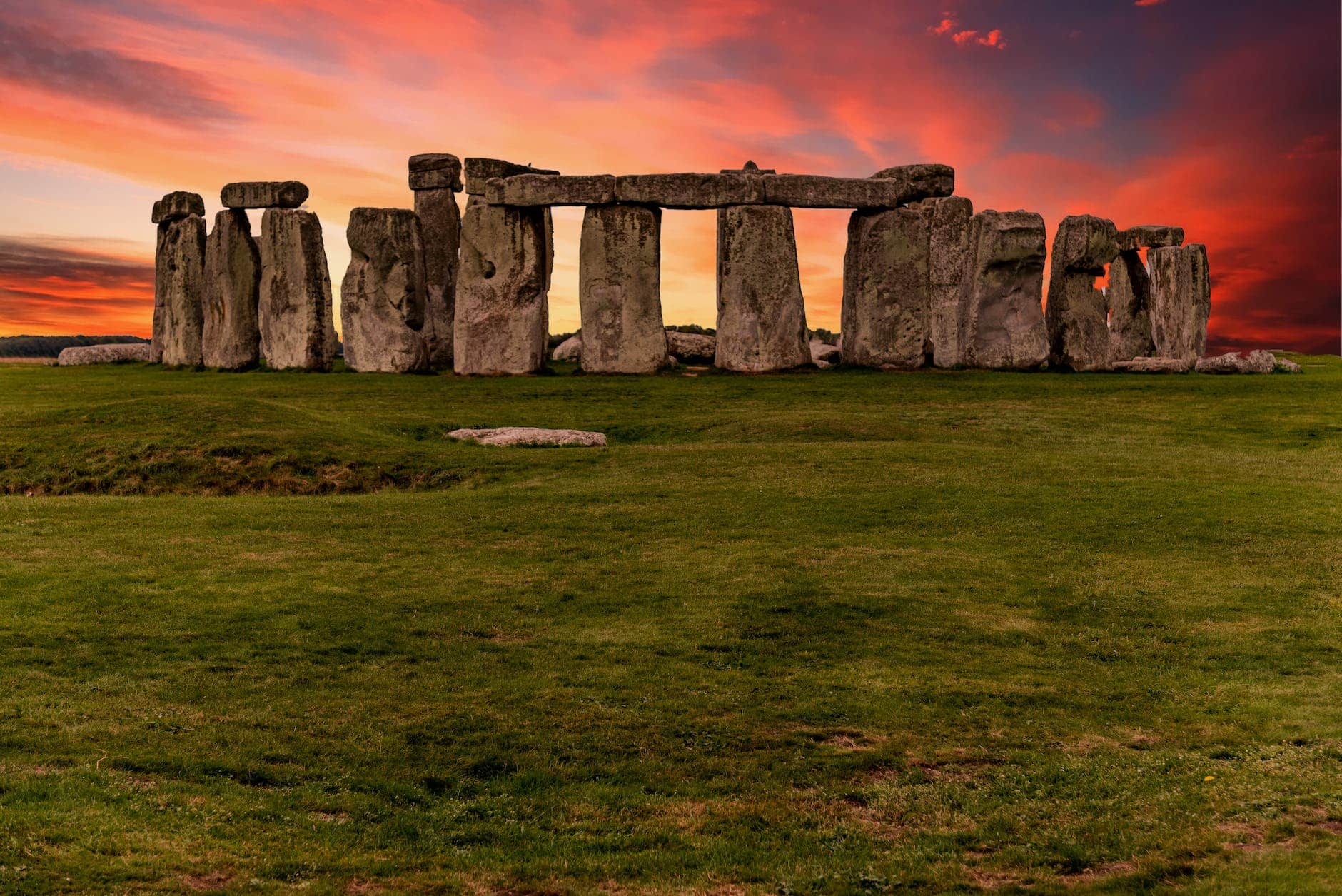
Located in the scenic region of Wiltshire, England, Stonehenge is a tribute to the building brilliance and inventiveness of prehistoric humans. It is considered one of the most famous megalithic constructions ever made, and its mysterious layout has fascinated people for ages. Made up of enormous stones that are mind-boggling in size and weight—some of them weighing up to an incredible 25 tons—Stonehenge’s complex circular design never ceases to inspire amazement and conjecture.
Stonehenge underwent six phases of construction between 3000 BC and 1500 BC. Around 3000 BC, the first phase involved excavating a circular ditch and bank.
The painstaking architecture of Stonehenge adds to its air of mystery. Prehistoric people painstakingly set each stone in exact places using simple tools. Transporting these enormous monoliths from far-off quarries adds even more mystery to their existence on Salisbury Plain.
In addition, everyone who sees Stonehenge nowadays is amazed by its enormous size. Without access to contemporary gear or engineering expertise, how did our forefathers accomplish such a remarkable feat? This question only strengthens the feeling of respect for those who roamed this place thousands of years ago.
Its intended use has been described as anything from a sacred burial place to an astronomical observatory, but no single explanation has been proven by solid evidence.
Carnac Stones
The Carnac Stones, located in Carnac, France, are a group of Neolithic megalithic constructions composed of thousands of standing stones arranged in alignments, rings, and rows. It is believed that the prehistoric inhabitants of the area constructed the stones, dating from 4,500 to 3,300 BC.
The stones range in size, from many tons in weight and twenty feet in height to smaller and more intricately carved pieces. The numerous kilometers of alignments that make up the Carnac Stones create a singular and breathtaking environment that draws visitors and researchers from all over the world.
Every stone has a distinct history and function, presenting us with a ton of unanswered questions. These monoliths marked the boundaries or markers of ancient lands or sacred locations, according to certain hypotheses. Others claim that they were employed for astronomical observations because of their alignment with celestial bodies.

Machu Picchu
Located high in Peru’s Andes Mountains, Machu Picchu is sometimes misidentified as a megalithic construction. Despite not being a megalithic construction in the traditional sense, Machu Picchu is a striking example of prehistoric masonry. Constructed in the 15th century by the Incas, it is notable for its exact building methods, particularly the use of interlocking stones without the need for mortar.
It is believed by some that Machu Picchu functioned as a refuge for the elite class of the Incans, offering them a break from the busy life of Cusco, the capital. One theory holds that Machu Picchu served as an experimental farm. The location was perfect for experimenting with various crop species due to its varied microclimates. Some argue that Machu Picchu was a sacred site, a location for carrying out spiritual and ceremonial acts in line with celestial events, because of its magnificence and isolation. Some people assume that Inca astronomers used the building as a highly developed observatory, as its structures aligned with astronomical occurrences. Some people think that Machu Picchu served as a tactical military stronghold to stave off any invaders in the southern Inca Empire. According to many theories, Machu Picchu served as a center of learning for the Inca aristocracy, teaching them advanced subjects like astronomy and agriculture.
Gobekli Tepe
One of the earliest temples ever found is Gobekli Tepe, an archeological site in southeast Turkey. The site is home to some 200 stone megalithic constructions dating back 11,000 BC, which are at least 7,000 years older than Stonehenge and the Giza Pyramids. Among the constructions are enormous six-meter-tall T-shaped stone pillars, some of which have animal and insect pictograms engraved into them. The location is noteworthy because it represents a 7,000-year leap in the sophistication of human construction. This suggests that Paleolithic communities exhibited a higher level of social order than previously thought. The reason behind its intentional burial by the locals at the time could be its ceremonial value as a holy or sacred location. The precise function of Gobekli Tepe and the circumstances behind its abandonment are still unknown. It offers important hints on the development of human spirituality, intricate social networks, and labor capacities throughout the Paleolithic era.
Easter Island
Easter Island’s Moai are enormous stone monoliths that line the island’s shoreline and serve as enigmatic sentinels. These magnificent statues, with their enormous heads and extended faces, were made by the island’s early Polynesian settlers between 1250 and 1500 AD. They rank among the most important creative and archaeological achievements of the Pacific civilization. The Rapa Nui people say that the Moai are the embodied souls of their ancestors, sent to guard and watch over their towns. According to some anthropologists, the Moai originated from rival clans or tribes competing with one another to produce the largest and most expertly crafted statues on the island. According to one interpretation, the Moai were built in reaction to the island’s changing environment, maybe in an effort to please the gods and bring the ecosystem back into equilibrium. Some people think that the purpose of the Moai, which are essentially enormous headstones or memorials, was to honor and preserve the memory of notable chiefs or warriors.

Avebury
Avebury is a massive Neolithic henge monument that encircles a village in Wiltshire. It is less well-known than Stonehenge but just as mysterious. In contrast to Stonehenge, Avebury has more stone circles, and its wider footprint implies a different—possibly more communal—purpose. The immense size and amount of work it took to build the monument indicate a highly developed society with deep-seated goals.
The henge consists of a large circular ditch and bank, encompassing approximately 28 acres. Three stone rings can be seen inside the henge; the largest is around 1100 feet in diameter and was formerly home to about 100 huge standing stones. The monument’s construction began in the Neolithic era, between 2850 and 2600 BC, and the addition of the stone circles likely occurred several centuries later. Avebury may have served as a venue for astronomy-related rites and ceremonies, ancestor worship, or other spiritual or religious activities, although its exact function and significance remain unknown.
Callanish Stones
The Callanish Stones are a group of standing stones arranged in a cruciform configuration on Scotland‘s Isle of Lewis. Unidentified builders probably built them during the Neolithic era, between 3000 and 2900 BC. They have a distinct astronomical alignment and are roughly 500 years older than Stonehenge. The site has deep roots in local customs and storytelling, with folklore linking the stones to petrified giants who refused to convert to Christianity. The main stone circle has a central stone monolith surrounded by 13 stones, some of which are up to five meters high, set in a cross configuration. The surrounding area is around 800 square meters, with several stone circles and rows. Theories about the stones’ significance and purpose range from astronomical observations to ritual locations, burial tombs, or territory marks.
Analysis
Preliterate societies built all of these sites, so no written documents exist to explain their purpose or the techniques used in their creation. This is something that their prehistoric beginnings share. Modern archaeological methods, such as soil analysis and remote sensing, have generated new problems and provided insights. The accurate astronomical alignments discovered in several megalithic constructions reveal that these ancient people were far from the barbaric barbarians long thought, indicating a sophisticated awareness of celestial happenings.
We often use myth and pseudoarchaeology to bridge the gaps in our understanding of megaliths. This can involve references to extinct societies, alien influence, or the use of arcane or lost technologies. Although the scientific community generally rejects these theories because they lack empirical support and are frequently based more on sensationalism than on careful examination, they do have the ability to capture the public’s attention.
One could easily believe that aliens constructed these ancient sites. Realizing that our predecessors were intelligent and capable of tremendous accomplishments, on the other hand, is even more astounding. Giving credit to anyone else is disrespectful to their memory. They didn’t need extraterrestrials, future visitors, or inhabitants of Atlantis. They completed it on their own.
Conclusion
Megaliths, which are physical links to our ancient past, continue to exert a strong influence on our collective imagination. Their creation by societies so dissimilar from our own yet able to accomplish such amazing feats of collaboration and manual work attests to a universal human inventiveness throughout history. The mysteries surrounding their uses, construction techniques, and the communities that erected them remind us of the vast amount of human history that remains unexplored. With the advancement of archaeology and related fields, we may eventually learn more about these mysterious constructions. Megaliths continue to be a fascinating and stunning mystery for the time being, a reminder of the intricate and unexplored periods of human history.
References
Holtorf, C. J. (1996). Towards a chronology of megaliths: understanding monumental time and cultural memory. Journal of European archaeology, 4, 119-152.
Laporte, L., Large, J. M., Nespoulous, L., Scarre, C., & Steimer-Herbet, T. (Eds.). (2022). Megaliths of the World. Archaeopress Publishing Ltd.
Midgley, M. (2010). Monuments and monumentality: The cosmological model of the world of megaliths. Documenta Praehistorica, 55-64.
Nash, D. J., Ciborowski, T. J. R., Ullyott, J. S., Pearson, M. P., Darvill, T., Greaney, S., … & Whitaker, K. A. (2020). Origins of the sarsen megaliths at Stonehenge. Science Advances, 6(31), eabc0133.
Scarre, C. (2018). Megalithic people, megalithic missionaries: the history of an idea. Estud. Arqueol. Oeiras, 24, 161-74.



Leave a Reply