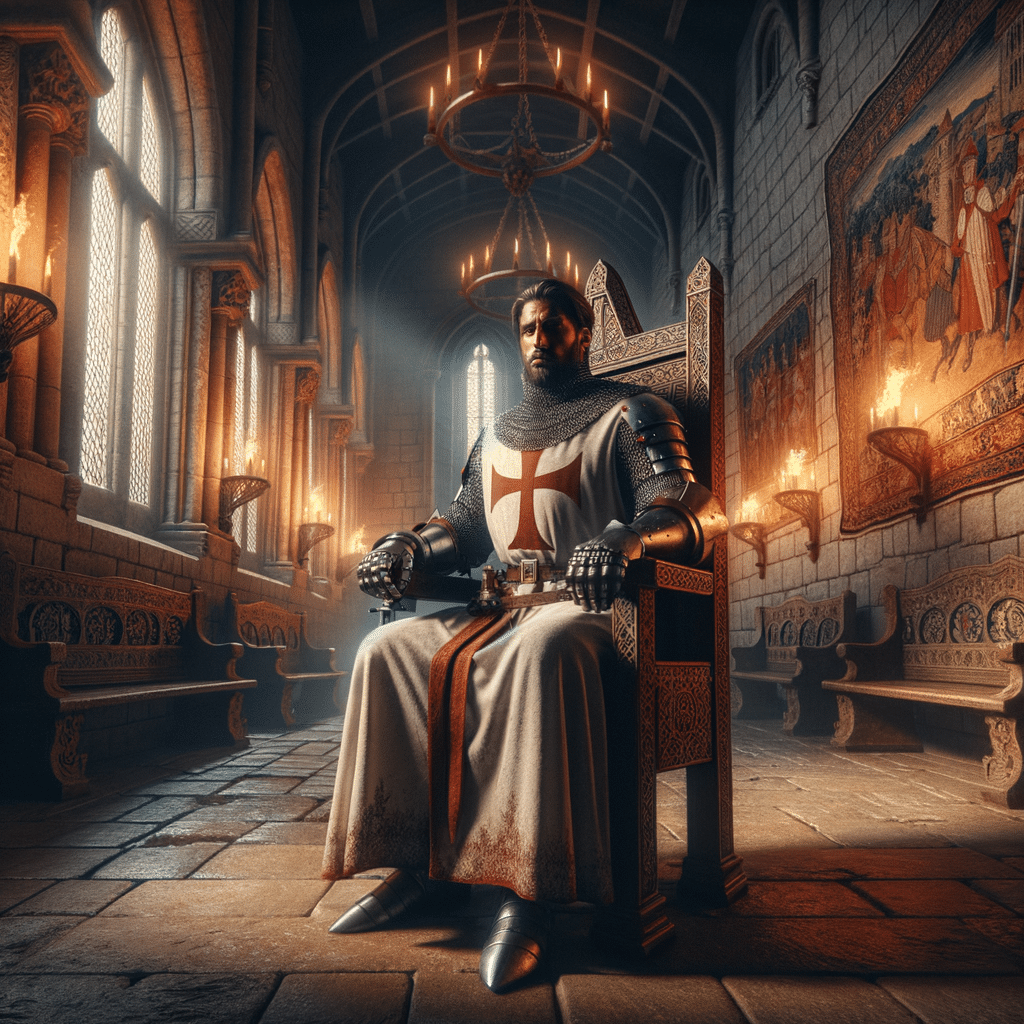
Did the modern fear of Friday the 13th originate in medieval times, due to an unfortunate connection with the Knights Templar?
Every society and era is rife with superstitions, which take many different and frequently mysterious forms. A well-known superstition in Western culture is the dread of Friday, the 13th. Many believe that this superstition connects historical events involving the Knights Templar, a medieval Christian military order. This essay will explore the history of the Knights Templar, the roots of the Friday the 13th superstition, and the alleged link between the two. It will also look at other theories about the origins of the Friday the 13th superstition.
Friday the 13th
The Friday the 13th superstition is largely a Western phenomenon that has its roots in cultural beliefs and historical circumstances. The number 13 has long been associated with misfortune in a variety of cultures and religions. For instance, Christianity considers the number 13 to be unfortunate due to its connection to the Last Supper, where Judas Iscariot is believed to have been the thirteenth guest before betraying Jesus.
In a similar vein, Friday has a reputation for being unlucky across many civilizations. Some people believe that Norse mythology connected Fridays to misery and bad luck. Furthermore, Good Friday in Christianity commemorates the crucifixion of Jesus Christ, a momentous occasion that caused believers to feel terror and grief.
Combining the negative associations with Friday and the number 13 can significantly increase anxiety for many individuals on this particular day. As a result, there is a common belief about increased misfortune, which has unexpected effects on behavior and judgment.
There is a term for this ingrained fear of Friday, the 13th: paraskevidekatriaphobia. This phrase refers to the millions of people who, every year, feel varied degrees of apprehension in the run-up to this auspicious event. Its effects on people’s lives are significant and should not be understated; they might range from completely avoiding travel or making crucial decisions to participating in superstitious rituals meant to stave off bad luck.

Knights Templar
Founded in the early 12th century, the Knights Templar became a well-known medieval Christian organization renowned for its steadfast dedication to defending Christian pilgrims during the Crusades. They first appeared as protectors of those going to the Holy Land, fervently defending these pious pilgrims from all perils and assaults during their torturous journeys. With the passage of time, their reputation as courageous defenders expanded rapidly, putting them in positions of great power in the political and ecclesiastical spheres.
The Templars gradually accumulated significant riches and authority through their unwavering commitment and tactical partnerships with prominent figures throughout Europe. Because of their abundant wealth, they were able to build a large network of monasteries, financial institutions, and fortifications across all of Christendom. Their increased wealth not only strengthened their defense capabilities but also made it easier for them to support future crusades.
But even though this once-respected order enjoyed wealth for a number of decades, a sequence of unanticipated occurrences led to a stunning turn of events that drastically changed its course in the early 14th century. Even to this day, the precise events surrounding their downfall are a source of contention and intrigue.
The Templar Knights, who were well-known for their heroic efforts to protect travelers in the Holy Land during the Middle Ages, finally had a difficult task: preventing the Muslims from taking control of Jerusalem and other holy places. The Templars did not succeed in preserving Christian rule over these hallowed sites, even in spite of their heroic efforts.
But in the face of a growing Muslim presence in the Holy Land, the Templars faced tremendous challenges despite their admirable dedication. The ceaseless military operations spearheaded by Islamic factions presented a constant risk to both Christian locals and pilgrims. Even with their unmatched valor and great determination, these noble knights were ultimately unable to stop Muslim troops from capturing Jerusalem.
End of the Templars
King Philip IV’s unwavering pursuit of financial control over his realm was the pivotal moment. Due to expensive wars with England and Flanders and the growing debt his monarchy owed, he was in dire need of money and saw an opening to target the affluent Templars, who were no longer required in the Holy Land and had grown more independent of papal authority.
The mass arrest of the Knights Templar on Friday, October 13, 1307, is a significant historical event that will always associate this unfortunate date with superstition and fear. Philip, driven by his lust for their riches and possessions, teamed up with Pope Clement V to plan a massive plot to destroy the powerful group.
On that fateful Friday, the evil scheme culminated with the large-scale capture of the Templars across France. They suddenly accused the once-respected knights of a wide range of crimes and labeled them as heretics. Years of arduous trials characterized the terrible time that followed, using horrifying acts of torture to coerce confessions.
The public’s fury, stoked by misinformation about the Templars’ supposed wrongdoings, grew as these trials went on, but it soon became clear that their doom was predetermined even before they entered the courtroom. Many members faced brutal execution, burning at the stake like other criminals who were convicted without a fair trial or due process.
Clearly, this marked the end of an era for the glorious history of one of Europe’s strongest military orders. Thus, it seems logical that certain hypotheses have surfaced, pointing to a direct connection between these terrifying incidents and our contemporary identification of Friday, the 13th, as a day fraught with disaster, dread, and betrayal.
Although the Templar idea is strong, there are other explanations for the origins of the Friday the 13th superstition that are worth considering. Some people link the fear of the number 13 to a Norse myth, according to which a 13th unwelcome guest upsets a dinner party of 12 gods, causing mayhem and death. Others link the superstition to Christian doctrine, particularly the Last Supper, observed by 13 people, including Jesus’s betrayer Judas Iscariot.
Furthermore, Friday’s reputation as a bad day predates the Templar tragedy. Christians believe that Friday is unlucky because it marks the day of Jesus’ crucifixion.
Conclusion
It is still up for contention whether the fear of Friday, the 13th, stemmed from earlier cultural and religious beliefs or from the demise of the Knights Templar. But it’s certain that a confluence of historical occurrences, religious symbolism, and popular superstitions has contributed to the enigmatic and unsettling atmosphere surrounding Friday, the 13th. Even though the origins of this belief may never be fully known, its continued existence nonetheless demonstrates our innate ability to see patterns and our ongoing curiosity about the mysterious interactions between fate, history, and superstition.
References
Barber, M. (1993). The New Knighthood: A History of the Order of the Temple. Cambridge University Press.
Burman, E. (1986). The Templars: Knights of God. Crucible Press.
Howarth, S. (1982). The Knights Templar. Atheneum / Barnes & Noble.
Partner, P. (1982). The Murdered Magicians: The Templars and Their Myth. Oxford University Press.
Read, P. P. (1999). The Templars: The Dramatic History of the Knights Templar, the Most Powerful Military Order of the Crusades. Da Capo Press.
Baigent, M., & Leigh, R. (1988). The Temple and the Lodge. Jonathan Cape.



Leave a Reply