Bridgewater Triangle: Key Points
-
The Bridgewater Triangle is a 200-square-mile area in southeastern Massachusetts known for centuries of concentrated paranormal phenomena.
-
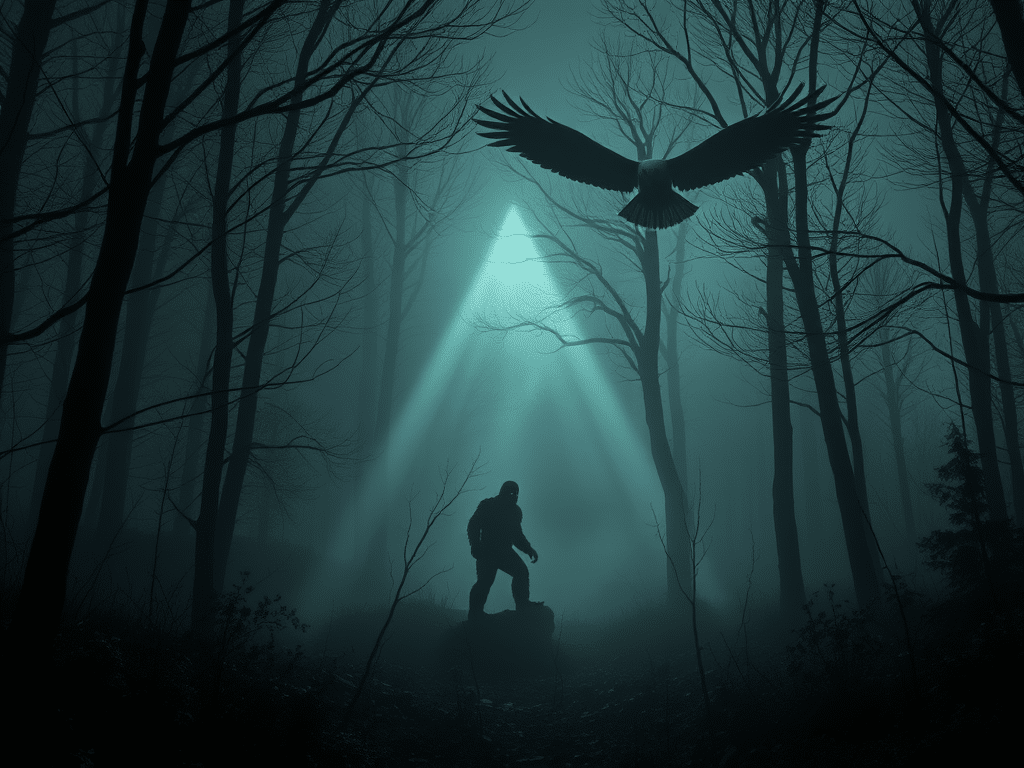
Reported activity includes Bigfoot sightings, giant thunderbirds, UFOs, ghostly apparitions, and disturbing cult activity, including ritual animal mutilations.
-
The Hockomock Swamp, meaning “place where spirits dwell,” serves as the epicenter where most compelling paranormal encounters occur.
-
Theories range from electromagnetic anomalies and geological features to residual spiritual energy from tragic history and Native American sacred sites.
-
Cryptozoologist Loren Coleman coined the term “Bridgewater Triangle” in his 1983 book Mysterious America, transforming scattered legends into a recognized phenomenon.
-
The phenomenon has impacted the region through paranormal tourism and media attention while contributing significantly to broader paranormal research.

Introduction
The Bridgewater Triangle is one of the most active places in the US for paranormal activity. It has more unexplained happenings than even more famous places. This location, which is around 200 square miles and in southeastern Massachusetts, has seen many unusual things happen over the years, from before the colonists arrived to the present day. People usually think of the cities of Abington, Rehoboth, and Freetown as the corners of the triangle. Within it are many smaller towns and natural places where people have seen everything from cryptids to UFOs. Not only are there a lot of reports from this location, but there are also a lot of different types of strange events that seem to happen in this very small area, including sightings of cryptids, UFO encounters, and other unexplained phenomena. This is what makes it so interesting to paranormal researchers.
Origins and Geographic Boundaries
Cryptozoologist Loren Coleman came up with the name “Bridgewater Triangle” in the 1970s, notably in his 1983 book Mysterious America, where he wrote about and made known the high number of strange events that happen in this part of southeastern Massachusetts. Coleman got the idea for his story from the Bermuda Triangle, which is a place where strange things happen a lot. He chose the name since Bridgewater lies in the middle of the triangle, which makes it a useful reference point for the area. Coleman transformed scattered local stories and reports of the many weird things that happen in this area into a well-known phenomenon with clear borders and a catchy name. Scholarly accounts of modern American legends often say that Coleman came up with the word and then defined its regional range (Gencarella, 2022).
The Bridgewater Triangle is around 200 square miles in size and is shaped like a triangle. It contains sections of many towns and cities in southeastern Massachusetts. Bridgewater is in the center, with Abington to the north, Rehoboth to the west, and Freetown to the south. The Hockomock Swamp, the Freetown-Fall River State Forest, and various Native American sites that have long been thought to have spiritual importance are all located inside this triangle (Ocker, 2022). Dense forests, swamps, and canals make the place feel isolated, even though it is close to cities like Boston and Providence. This landscape has remained wild and undeveloped in many areas, preserving the mysterious quality that has attracted paranormal investigators and enthusiasts for decades (D’Agostino & Nicholson, 2023).

Cryptid Encounters
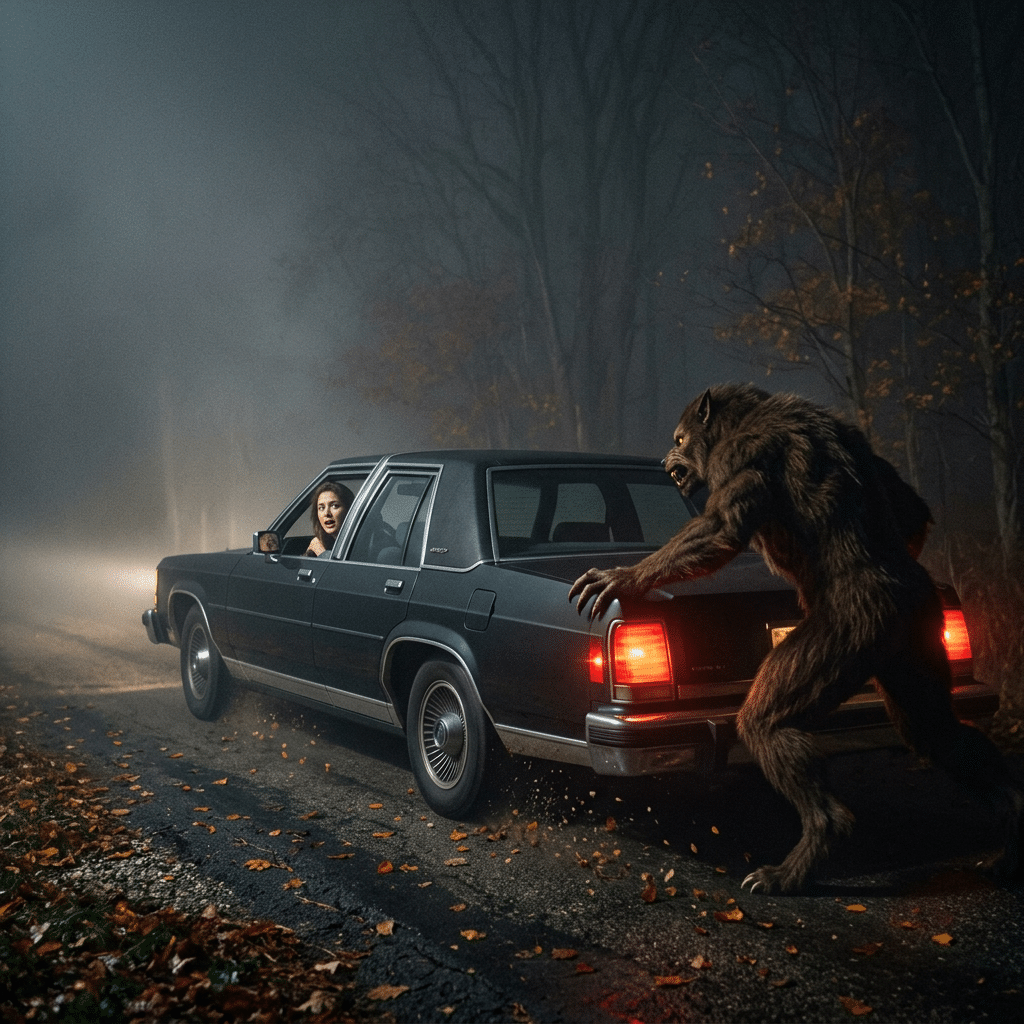
Witnesses have seen a creature that looks like Bigfoot or Sasquatch in the Bridgewater Triangle. They say it is a big, two-legged, ape-like creature with dark hair all over its body. These sightings go back hundreds of years. Native American stories tell of a giant creature that lived in the swamps and forests of the area. Modern accounts have kept coming in with astonishing regularity. Witnesses have described seeing a creature that was between seven and eight feet tall, smelled bad, and was incredibly strong and fast. People have sometimes claimed to have seen footprints, heard weird screams, and other physical signs, but there is still no solid confirmation. People regularly see the monster near the Hockomock Swamp and in the Freetown-Fall River State Forest. These are places that would give a cryptid the thick cover and privacy it needs (Coleman, 1983).
There are also many accounts of enormous birds, which are often called thunderbirds, soaring above the triangle. Witnesses have said that the birds were enormous, having wingspans of eight to twelve feet, which is much bigger than any native species in Massachusetts. People commonly say that these animals seem like pterodactyls or condor-like birds from the past. Some reports go back to the colonial period. Most often, people see these animals near bodies of water or in open places where they might be hunting for food. The fact that these claims are consistent across time and come from witnesses who don’t seem to know each other adds some legitimacy to the occurrence, even though ornithologists are having a challenging time figuring out what species could fit these descriptions. Some scientists think that these might be colonies of birds that are still alive, while others think that they are just misidentified large birds like eagles or herons in strange lighting (Coleman, 1983).
UFO Sightings and Aerial Phenomena
There have been many accounts of UFOs in the skies above the Bridgewater Triangle, from simple lights to close encounters with constructed structures. Witnesses have reported witnessing disc-shaped things, triangular craft, and balls of light that can move in ways that normal planes can’t (Frater, 2014). Some stories have multiple witnesses who saw the same thing at the same time, making them more credible. There have been many UFO claims in the area during the 1960s and 1970s, but there have been stories of them going back much further (Schulte, 2009). Some of the more convincing claims come from police officers and other professional observers who have said they saw crafts hovering above the Hockomock Swamp or traveling silently through the night sky at very high speeds. There has never been a satisfactory explanation for these sightings, and UFO researchers still come to the area in the hopes of documenting these strange aerial events.
Paranormal Activity and Cult Involvement
Ghostly sightings and other strange things happen in the Bridgewater Triangle all the time. There are many places where these things happen (Weisberg, 2010). Many people think that the area’s rich history, which includes murders, suicides, and other sad events, has left behind a lot of spiritual energy. People who have been there say they have seen ghostly hitchhikers, Native Americans, and the ghosts of colonial settlers in different parts of the triangle. Hikers and campers have said that the Freetown-Fall River State Forest is especially haunted. Hikers and campers have reported hearing disembodied voices, witnessing unexplainable lights, and feeling as though someone was watching or following them. People say that old graves all across the area are haunted, with claims of ghosts, strange noises, and chilly areas that can’t be explained. Some researchers think that the area’s high level of paranormal activity makes it easier for spirits to show themselves than in other places.
There have also been reports of worrisome cult activity in the Bridgewater Triangle, especially in the Freetown-Fall River State Forest, where ritualistic crimes and occult practices have taken place (Mallett, 2013). The area became famous in the 1970s and 1980s for stories of animal mutilations, occult graffiti, and signs of satanic rituals happening in the forest’s most remote areas. Law enforcement officials have recorded many instances of cow mutilations on farms in the triangle. The animals were found with strange surgical-like cuts and no blood. It appears that people and groups who are interested in dark occult practices have been drawn to these places because they are remote, have a lot of history, and are reputed for being ghostly. Not all cult activity in the area is linked to the paranormal, but many researchers think that those who are drawn to these rituals are attracted to the area’s reputation for supernatural events and may be trying to use or interact with whatever forces are thought to be there.
The Hockomock Swamp and Theoretical Explanations
The Hockomock Swamp, a 16,950-acre wetland that is the site of much of the region’s paranormal activity, is at the core of the Bridgewater Triangle. The name “Hockomock” stems from a Native American word that means “place where spirits dwell.” This suggests that the area’s enigmatic reputation goes back well before Europeans arrived (Struzik, 2021). The swamp’s thick plants, dangerous ground, and creepy ambiance have made it a popular place for paranormal investigators and a scary place for people who live nearby. The marsh is home to several of the most intriguing Bigfoot sightings, UFO sightings, and ghostly sightings. Some of the area’s strange events may be explained by its natural features, such as methane gas releases that can cause unusual lights and its role as a navigation hazard for tiny planes. However, these explanations do not cover all of the observed activities (Vieira & Conway, 2017). The marsh is still one of the best places to learn about the Bridgewater Triangle as a whole.
There are many different ideas on why there is so much paranormal activity around the Bridgewater Triangle, from scientific to supernatural. Certain scientists think that the location is built on geological features that generate electromagnetic anomalies, which might cause hallucinations or mess with electronics in ways that could explain certain sightings. Some people say that the area’s terrible past, which includes fights between Native Americans and European immigrants, is a source of leftover spiritual energy that shows itself as paranormal events. Some people think that the triangle was spiritually important even before current paranormal claims started because there are so many Native American sacred places there. Skeptics say that the Bridgewater Triangle is just a case of observer bias and folklore, where people think they see supernatural things happening when they don’t. But so many credible witnesses reporting the same thing over a long period of time makes this explanation difficult to believe as complete.
Cultural Impact and Ongoing Significance
The Bridgewater Triangle phenomenon has an effect on more than just the place where it happened. It has an effect on popular culture, tourism, and the study of paranormal occurrences in general. This area has inspired many books, movies, and TV shows about unexplained mysteries. Paranormal tourism has helped local economies by bringing in ghost tours, investigation groups, and fans who come to the area often. The triangle has also helped paranormal research become more accepted in general. This success is because the concentration of occurrences in one place gives researchers a natural place to study them, which can lead to more significant findings and a better understanding of paranormal phenomena. People who live in the neighborhood feel both proud and worried by the phenomenon. Some people like the attention it gets, while others are worried about it. Police and park officials have to establish a balance between conserving the area’s natural resources and letting people who are keen to learn more about it do so. This phenomenon has sometimes led to confrontations and safety concerns.
In the early 1980s, the Bridgewater Triangle was given its name, which led to further interest in the area’s paranormal activity and more methodical research and documentation of recorded events (Gencarella, 2024). Coleman’s classification established a framework that enabled academics and enthusiasts to perceive unrelated events as potentially interconnected, fostering a more thorough examination of the area. The term has subsequently become well-known in both paranormal literature and popular culture, showing up in many books, documentaries, and investigations (Johnson, 2023). Some people in the area were not happy that their home region was becoming known as a paranormal hotspot, but the name stuck and the Bridgewater Triangle is now one of the most famous places in the United States for unexplained events. This recognition is mostly thanks to Coleman’s work in finding and naming this fascinating area.
Conclusion
The Bridgewater Triangle is one of the best examples of paranormal activity in North America because it has many strange incidents that can’t be easily explained. The triangle contains a long list of mysteries that have interested investigators for generations. These include sightings of Bigfoot, UFOs, ghosts, and signs of sinister cult activity. Hockomock Swamp seems to be the heart of this activity, which adds to the mystery by linking recent events to old Native American ideas about the area’s spiritual importance. Whether you believe, doubt, or are just curious about these accounts, the Bridgewater Triangle is a strange place that makes people wonder about the nature of reality and what we can know. The Bridgewater Triangle will continue to be a topic of interest and research as long as people keep reporting unusual things happening there. This makes us think about things that go beyond what we usually think, such as the possibility of supernatural phenomena or the limits of human understanding in the face of the unknown.
References
Coleman, L. (1983). Mysterious America: The ultimate guide to the nation’s weirdest wonders, strangest spots, and creepiest creatures. Simon and Schuster.
D’Agostino, T., & Nicholson, A. (2023). New England’s haunted route 44. History Press.
Frater, J. (2014). Listverse.com‘s epic book of mind-boggling top 10 lists: Unbelievable facts and astounding trivia on movies, music, crime, celebrities, history, and more. Simon and Schuster.
Gencarella, S. (2022). Soft racism in the contemporary legend of Anawan Rock: A critique. Journal of Folklore Research, 59(1), 59-100. https://doi.org/10.2979/jfolkrese.59.1.03
Gencarella, S. (2024). Folk research: A query and a critique. Cultural Analysis, 22(1).
Johnson, B. (2023). The big book of cryptid trivia: Fun facts and fascinating folklore about Bigfoot, Mothman, Loch Ness Monster, the Yeti, and more elusive creatures. Simon and Schuster.
Mallett, R. (2013). Haunted colleges & universities of Massachusetts. Arcadia Publishing.
Ocker, J. W. (2022). The United States of cryptids: A tour of American myths and monsters. Quirk Books.
Schulte, M. (2009). The Dover demon. Greenhaven Publishing LLC.
Struzik, E. (2021). Swamplands: Tundra beavers, quaking bogs, and the improbable world of peat. Island Press.
Vieira, M. J., & Conway, J. N. (2017). New England rocks: Historic geological wonders. Arcadia Publishing.
Weisberg, T. (2010). Ghosts of the SouthCoast. History Press.
Leave a Reply