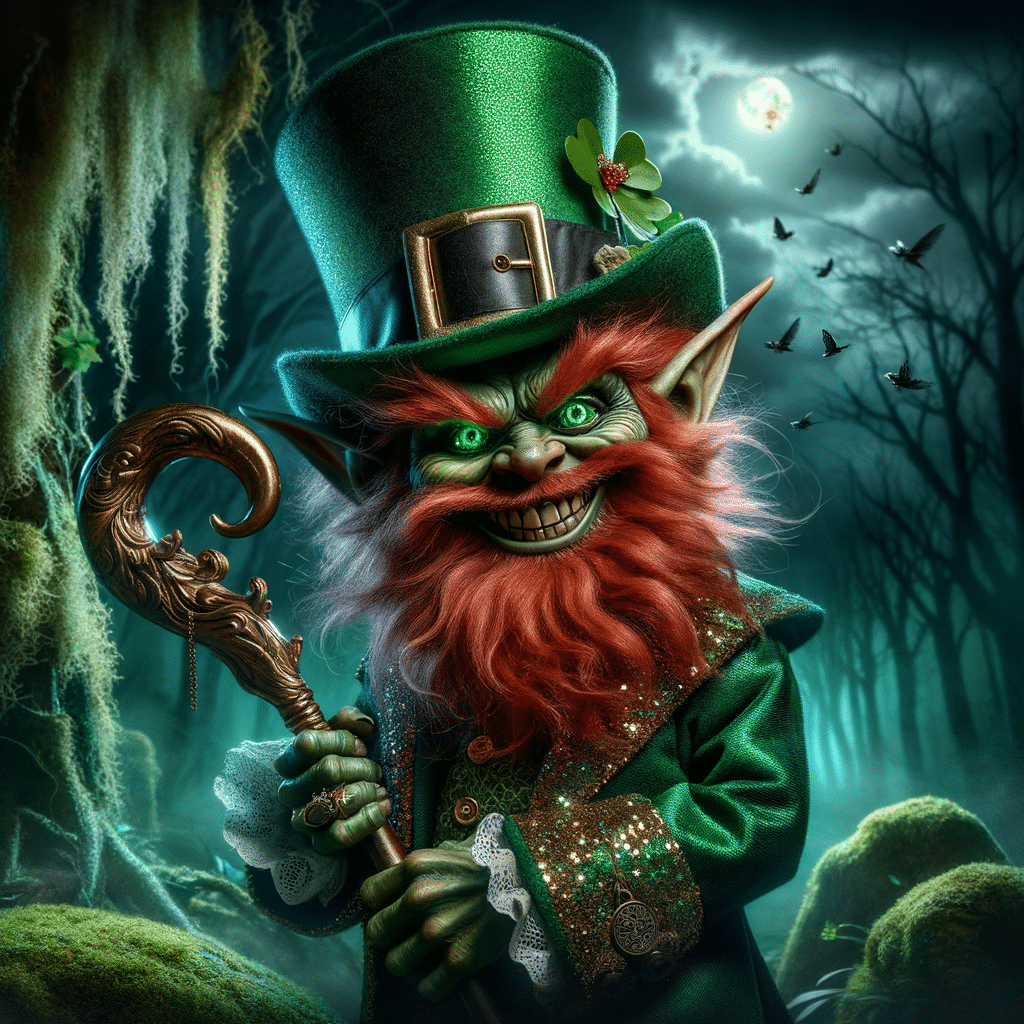
Famous in Irish mythology, leprechauns are creatures whose likeness is frequently linked to fortune, pots of gold, and rainbows. But these creatures have a darker side that is frequently ignored. Leprechauns were thought to be mischievous and occasionally evil creatures that could harm people in Irish legend. Their cunning and deception, as well as open violence and alcoholism, are only a few examples of their destructive and malicious behavior.
Leprechauns are a prominent figure in Irish folklore, appearing as small humanoid creatures with beards and wearing traditional clothing like coats and caps. They are known for their mischievous behavior, often playing pranks on humans who cross their paths. Legends say that leprechauns keep hidden pots of gold at the end of rainbows, guarded by the creatures in their underground lairs. Leprechauns have also been referred to as shoemakers of legend due to their craftsmanship when it comes to repairing shoes and other pieces of leatherwork. In some stories they even use magic powers to complete these tasks quickly or even bring them alive! Many people still believe that if you can catch a leprechaun, he may grant you three wishes in exchange for his freedom.

Violence
The leprechauns’ violent reputation is one of the most concerning aspects of their dark side. Leprechauns are sometimes portrayed as having short tempers and being easily angered, quickly lashing out against anyone they perceive to have wronged them. They may even resort to physical violence if provoked or threatened, using their magical abilities to cause harm that can last for hours or days depending on the severity. Reports suggest that some victims have been cursed with bad luck for weeks after encountering a hostile leprechaun, while others have suffered long-term physical injuries inflicted by these mythical creatures.
In one tale, a farmer captures a leprechaun and commands him to reveal the location of his pot of gold. As the farmer declines, the leprechaun attacks him in a fit of wrath, leaving him wounded and scarred.
The tale of the farmer and leprechaun demonstrates just how dangerous a leprechaun’s temper can be. Despite their small stature, they are capable of inflicting serious harm when provoked. The story also illustrates their strong sense of autonomy; it is clear that leprechauns will not yield to anyone who attempts to control or manipulate them against their will. This fierce independence has earned them both respect and fear from humans, as well as an understanding that one should never attempt to capture or coerce a leprechaun into revealing his pot of gold. While these creatures may seem like harmless tricksters in some tales, this particular story serves as a reminder that they can be powerful and unpredictable adversaries if provoked.
Deceit
The leprechaun’s reputation for deceit and treachery is well-known, but its darker side has been largely overlooked. Leprechauns are infamous for their devious practical jokes that often have malicious intent. They can steal goods or manipulate people with false promises of great rewards – only to disappear into the shadows when they’ve gotten what they wanted. In some cases, they may even pretend to be another creature or entity in order to deceive unsuspecting victims into making poor decisions that could lead them down a path of destruction. This further cements their image as dangerous, untrustworthy monsters who will stop at nothing to get what they want.
The folklore of the leprechaun is full of stories about their mischievous natures and their ability to pull off clever pranks. In one tale, a man captures a leprechaun and demands that he hand over his gold pot. The leprechaun agrees but only after the man counts to 100 with his eyes closed. When the man opens his eyes again, he realizes that he has been tricked as the leprechaun has vanished in the meantime. This story speaks volumes about how cunning and manipulative these mythical creatures can be when it comes to achieving what they want. It highlights not only their cleverness, but also their capacity to influence people into playing along with their schemes no matter how good they may seem on paper!

Alcohol
The connection between leprechauns and drunkenness has been a part of Irish legends for centuries. Leprechauns are often depicted as strong drinkers who use alcohol to fuel their mischievous behavior, making them more dangerous than they would be sober. Some stories even suggest that leprechauns will go so far as to steal alcohol from people or concoct their own brews in order to get drunk, which can sometimes contain poison or other deadly substances. The fact that these creatures rely on alcohol is one of the darkest features of their evil side and something many people fear when it comes to encountering a leprechaun.
It’s said that they often invite unsuspecting bystanders into their revelries, luring them with promises of good times and copious amounts of alcohol. The next morning, however, those same people find themselves in a ditch somewhere – hungover, disoriented and confused about how it happened. This is because leprechauns are known for their trickery; they take advantage of those drawn into their worlds by making them consume too much liquor until they pass out. By exploiting this weakness for intoxication, these conniving sprites can leave even the most sensible people feeling embarrassed or worse for wear when facing reality again.
Conflict
The dark side of leprechauns extends far beyond how they treat people, as some legends suggest that they can be extremely competitive and even engage in violent conflicts or warfare with one another. These battles are often fought over disputed territory, resources, or other matters. Those who find themselves in the midst of these confrontations may be in a dangerous situation with no certain outcome. In addition to being potentially hazardous for those involved, these disputes can also cause significant destruction to the environment around them which could have long-term effects on the local ecology and wildlife habitats.
In one tale, a land dispute between two leprechauns escalates into a full-scale conflict. The battle between the leprechauns lasts for several days and involves all kinds of weapons, including rocks, sticks, and magic spells. This tale emphasizes how leprechauns can be violent toward other leprechauns due to their aggressive and territorial mentality.
In early Irish mythology, leprechauns were rarely mentioned and usually played only a minor role in the stories. However, their presence became more frequent as time went on. This increase of leprechaun references can be seen in much of the folklore associated with them, such as people trying to capture one for his pot of gold or stories about their mischievous behavior. As these tales grew more popular over time, so did the belief that leprechauns were solitary fairies who could bring good luck if they chose to do so. The idea that they could hold a person’s fortune has only added to this mythical creature’s allure and made it even harder for some to resist chasing after a pot of gold at the end of every rainbow!
But as we can see, those tales are full of caution. You deal with leprechauns at your own risk!
Conclusion
Leprechauns are sometimes associated with luck and riches, but they also have a dark side that serves as a reminder that even seemingly good-natured creatures can have a wicked or dangerous side. Leprechauns have a complicated and frequently unsettling mythology that exposes the darker side of Irish tradition, whether it is due to their propensity for violence, their love of deceit and deception, their association with drinking, or their competitive drive.



Leave a Reply