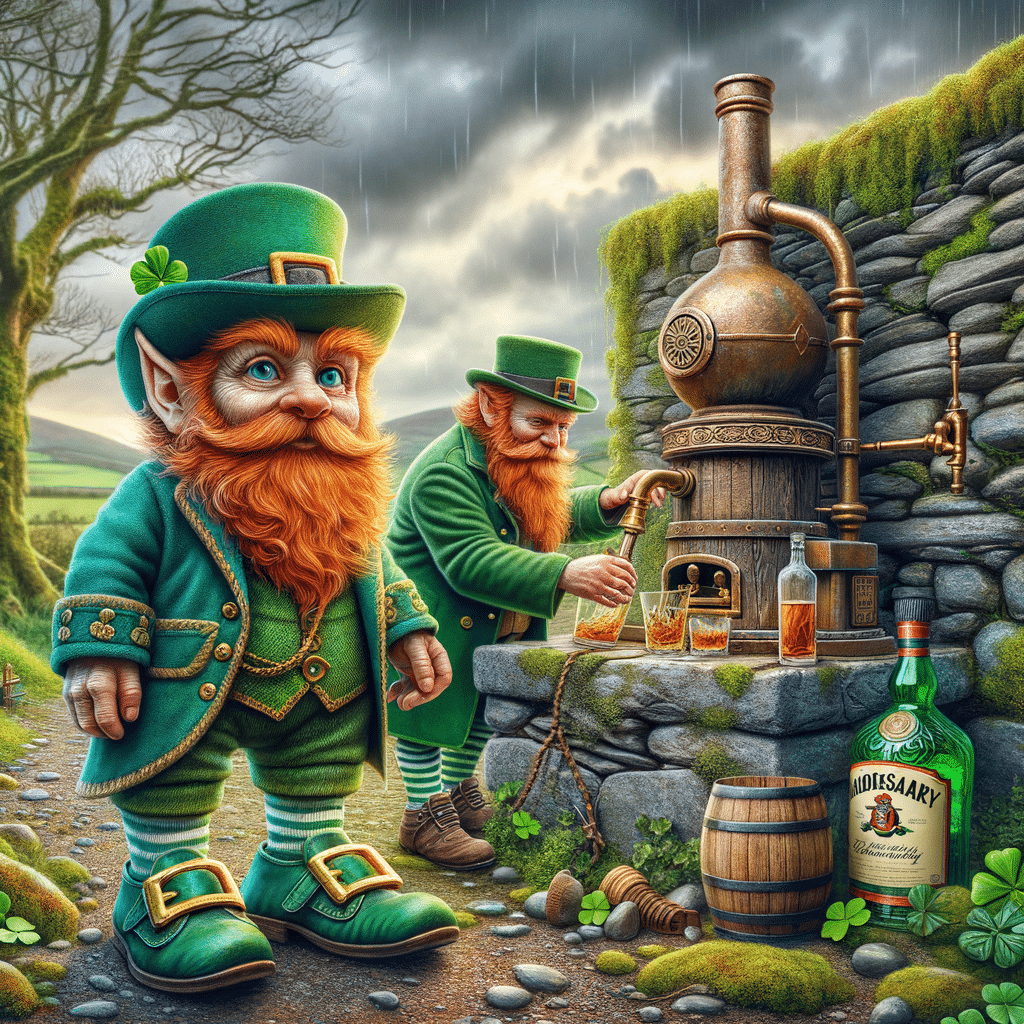
One of Ireland’s oldest and most intricate folklore stories is that of leprechauns and their connection to alcohol. From their Celtic origins, these legendary fae have developed into internationally known representations of Irish culture, especially when it comes to drinking and having a wonderful time. The relationship between leprechauns and alcohol provides interesting insights into Irish storytelling, cultural development, and contemporary economic exploitation.

Alcoholic Leprechauns
According to traditional Irish folklore, leprechauns are lone, small artisans, usually cobblers, who are three feet tall and wear red or green clothing. According to legend, these mystical creatures were part of the Aos Sí, or fairy folk, who lived in Ireland long before people arrived. Leprechauns were renowned for their craftiness, cunning, and infamous capacity to trick those who were looking for their fabled pot of gold (Winberry, 1976).
The association between leprechauns and alcoholic beverages, specifically whiskey and poitín (Irish moonshine), originates from historical legends in which these beings were frequently depicted as heavy drinkers who made their own liquor. Leprechauns are said to drink from leather pouches or little cups, and because of their passion for alcohol, they occasionally act irresponsibly enough to be apprehended by people. While some traditions assert that drinking was a leprechaun’s greatest weakness, others argue that it strengthened its magical abilities (Curran, 2017).
Evolution of Myth
Over the ages, leprechaun mythology has experienced substantial transformations. Early medieval Irish manuscripts barely mentioned these beings, and it was only in later traditions that they became associated with gold and rainbows. Throughout the Victorian era, leprechauns shed their initially reckless and occasionally evil characteristics, adopting a more comical portrayal. As Irish immigrants took their stories to America in the 19th and 20th centuries, the association with alcohol grew stronger.
Celtic civilization in pre-Christian Ireland revered alcohol, particularly fermented beverages. During this period, leprechauns’ affinity with alcohol reflected its spiritual significance, viewing their drinking habits and magical brewing skills as spiritual linkages rather than moral flaws. People interpreted the leprechaun’s drinking as a source of strength and knowledge, reflecting the respect society has for alcohol in religious and cultural rituals.
The categorization started to change during the Christian Middle Ages. The portrayal of leprechauns’ drinking habits became increasingly conflicted as the Church’s power grew. Their continued engagement with drink began to contain undertones of paganism and moral depravity, reflecting the Church’s complicated relationship with pre-Christian traditions and growing concerns about alcohol misuse.
The story of the leprechaun and alcohol underwent a dramatic change during the Victorian era. During this period of growing temperance movements, leprechauns’ drinking frequently became a cautionary tale. People increasingly depicted their inebriated behavior as stupid rather than magical, even though they retained aspects of charm and mischief. This preserved some romanticization of drinking culture while reflecting growing social unease over alcohol intake.
Another change occurred during the 19th and early 20th century American immigration period. Prejudice against Irish immigration led the community to both exploit the drunken leprechaun as a stereotype against Irish-Americans and reclaim it as a symbol. During the Prohibition era, the leprechaun’s rebellious drinking and cunning dodging of the law resonated with anti-prohibition emotions (González-Casademont, 2017).
Modern times have mostly monetized the leprechaun-alcohol relationship, mirroring the privatization of drinking in our consumer culture. Marketing imagery promoting everything from Irish pubs to St. Patrick’s Day celebrations has largely superseded the traditionally intricate spiritual and cultural connotations. This change reflects how alcohol is becoming more casual and commercialized in today’s society (Goarzin, 2019).
Academics and skeptics have offered numerous explanations about the origins of leprechaun stories and their connection to alcohol. Others say that leprechauns symbolized the ancient Celtic ideas about the transformative and magical effects of wine, while others suggest that the stories originated from meetings with drunk people who claimed to have seen little animals. Anthropologists have observed parallels between the traditions of leprechauns and other mythologies around the world that feature supernatural creatures who enjoy drinking.

Alcohol and Other Mythological Creatures
Leprechauns are just one intriguing example of the widespread association between mythical creatures and alcohol across many cultures. Perhaps the most well-known mythological figure connected to alcohol is Dionysus, the god of wine and revelry in ancient Greek mythology (or Bacchus in Roman mythology). Dionysus personified the transforming and holy qualities of wine itself, in contrast to leprechauns, who are depicted as drinkers and occasionally producers of alcohol. His followers, the Maenads, had a more disastrous relationship with drink than the usually mischievous leprechauns, frequently portrayed in states of heavenly lunacy brought on by wine (Perris, 2008).
Characters like the Valkyries, who supplied soldiers in Valhalla with mead, reveal intriguing connections in Norse mythology. The Valkyries’ connection with alcohol was one of service and ceremony, whereas leprechauns either consume it for their own pleasure or fiercely preserve it. Furthermore, compared to the lone-drinking leprechaun, the Norse deity Aegir was seen as a heavenly brewer who hosted feasts for the gods, demonstrating a more complex and communal relationship with alcohol.
Li Tieguai, one of the Eight Immortals in Chinese legend, carried a gourd of wine with magical properties. Li Tieguai, like leprechauns, links his drinking to magical skills; however, unlike the often unruly leprechaun, his drinking is associated with knowledge and healing. In contrast to the recreational use of leprechauns, the Japanese Shinto sake deities, such as Matsuo, symbolize a more ceremonial and agricultural relationship with alcohol.
Native American myths have characters such as the goddess of pulque and agave, the Mayahuel of Aztec folklore, and others. These deities, who symbolized the spiritual value of fermented beverages in religious and social life, were important to their cultures’ concept of alcohol itself. This is in contrast to leprechauns, who are more incidental beings who also happen to drink.
African folklore links palm wine and other traditional alcoholic beverages to a variety of spirits and deities. Unlike leprechauns, these creatures frequently act as stewards of ancient brewing techniques and appropriate drinking practices. The focus is on the social and spiritual benefits of alcohol intake rather than personal gratification.
Different from leprechauns, beer sprites and wine spirits are also part of medieval European folklore. Like leprechauns, these creatures were capable of mischief, but their relationship to the brewing process itself was more direct; they were frequently depicted as either assisting or impeding the process of making alcohol rather than just drinking it. Leprechauns and the German Kleesage, ghosts that would consume beer while left alone, are somewhat comparable, but they don’t have the same complicated personalities or extensive mythology.
Leprechauns stand out among this pantheon of legendary creatures connected to alcohol because of their transformation from intricate folklore characters to commercial representations of drinking culture. Leprechauns underwent a unique metamorphosis, particularly as a result of Irish-American cultural exchange and contemporary marketing. This transformation led them to become somewhat detached from their original context while maintaining their association with alcohol, unlike many other mythological figures who maintained their religious or cultural significance.
Popular culture, particularly in entertainment and advertising, has widely marketed the connection between leprechauns and alcohol. The image of the drunken leprechaun has become a marketing standard, appearing in everything from Lucky Charms cereal to Irish-themed bars across the globe. Films, television series, and literature frequently portray leprechauns as cheerful, drunk characters, further strengthening this link. However, critics occasionally point out that these portrayals reinforce negative preconceptions about Irish drinking and culture.
Conclusion
The long-standing tradition of leprechauns and their connection to alcohol reflects the intricate relationship between mythology, cultural identity, and business interests. Modern interpretations have frequently reduced these creatures to simplistic representations of Irish drinking culture and revelry, although the original mythology saw them as multifaceted supernatural entities with a variety of traits. These changing portrayals still impact how people throughout the world view Irish culture and its connection to alcohol.
References
Curran, R. (2017). The truth about leprechauns. The O’Brien Press Ltd.
Goarzin, A. (2019). Leprechauns, Cute Cats and Tasty Treats: The Circulation of Irish Images in Online Culture. Imaginaires, (22), 144-158.
González-Casademont, R. (2017). Irish drinking culture on the screen. In National Identities and Imperfections in Contemporary Irish Literature: Unbecoming Irishness (pp. 183-199). London: Palgrave Macmillan UK.
Perris, S. (2008). Dionysus the Leprechaun: Genre, Identity, and Parody in Derek Mahon’s” Bacchae”. Arion: A Journal of Humanities and the Classics, 16(1), 53-82.
Winberry, J. J. (1976). The elusive elf: some thoughts on the nature and origin of the Irish leprechaun. Folklore, 87(1), 63-75.

Leave a Reply