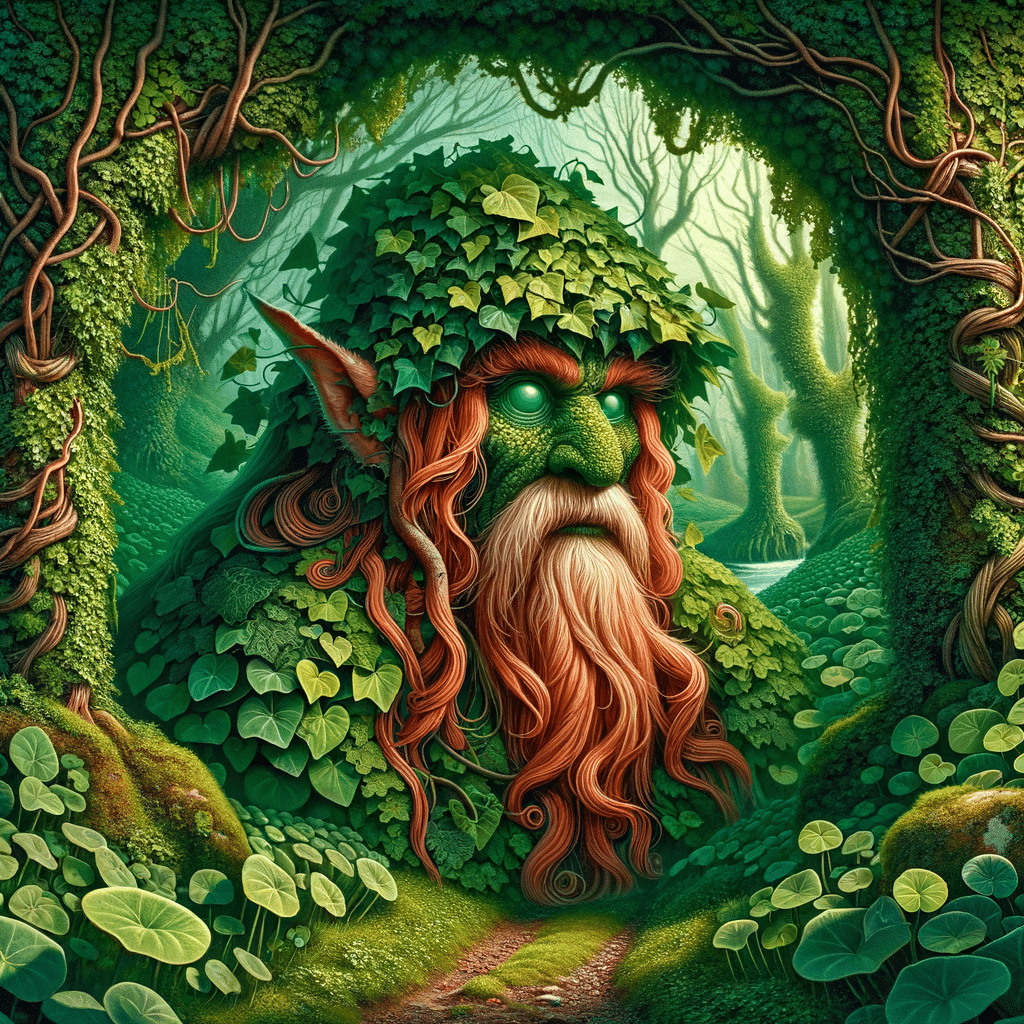
Numerous mysterious creatures are included in the tales passed down through the ages in the rich tapestry of Irish mythology. One of them is the Grogoch, sometimes referred to as the Grogochán or the Red Dwarf. With its playful antics and strong bond with nature, this otherworldly being captivates the imagination. The Grogoch has been the source of humorous folktales and stern warnings throughout Ireland’s rural landscapes and outdoor spaces, acting as a link between the natural world and the otherworldly domains of the supernatural.
The Grogoch is described as a small creature that is usually two to three feet tall. Its unique red skin, together with its untamed hair and long, grey beard that give it an aged, ageless aspect, distinguish it from other mythological creatures. The Grogoch is frequently portrayed wearing ragged clothing, which reflects its untamed and wild personality. Even though it is modest in appearance, the Grogoch attracts attention with its fun mischievous behavior and benign trickery tendency.
The Grogoch has a well-known reputation for being fond of playing practical tricks on unsuspecting humans. It enjoys causing small annoyances, which are seldom damaging or hazardous, even though they are bothersome. These interruptions act as a constant reminder of the Grogoch’s existence and gregarious nature.

The Link Between the Grogoch and the Land
A fascinating feature of the Grogoch may be its connection to certain, frequently hallowed, sites. The Grogoch are said to keep an eye on old ruins, sacred locations, and ancient trees. The monster is revered as these locations’ guardian, and it does not tolerate abuse or disregard for its charges. These are the positions where the protective side of the Grogoch is most evident, exposing a deeper meaning beneath its playful exterior.
The Grogoch is portrayed in several stories as both a mischievous spirit and a guardian of the natural world and the creatures that live there. Because of this trait, the Grogoch is positioned as a symbol of ecological guardianship—a entity that makes sure human involvement doesn’t upset the natural world’s harmony and balance.

Examining the Grogoch’s Function
The Grogoch is a symbol of the interaction between nature and humanity. The Grogoch frequently acts as a reminder of how important it is to protect the environment. Its guarded posture over particular areas represents the desire to conserve and respect the land’s holiness.
Furthermore, one could see the playful character of the Grogoch as a metaphor for the erratic and untamed elements of nature itself. Similar to how the Grogoch enjoys pulling harmless practical jokes, nature can also be wacky and unexpected in its manifestations. The animal’s benign actions serve as a powerful reminder that, despite its occasional disruptiveness, nature is mostly benign and can even bring happiness due to its spontaneity.
Conclusion
A vivid and vibrant character in a bigger story that addresses the interaction between humans and the natural world is the Irish mythological figure known as the Grogoch. Even though the Red Dwarf is still a source of entertainment and interest, its stories have deeper messages about environmental respect and care. The Grogoch is more than simply a cunning sprite; it is a reminder of our responsibility as land stewards and a symbol of the magic of the natural world. We see a reflection of our own need to safeguard and preserve the enchantment and mystery of nature for future generations in the playful antics and vigilante care of the Grogoch.
Further Reading
Yeats, W. B. (1990). Fairy and Folk Tales of the Irish Peasantry. New York, NY: Dover Publications.
This anthology, curated by the renowned Irish poet W. B. Yeats, is a seminal collection of Irish folklore, including tales of fairies, leprechauns, and other mythical beings such as the Grogoch. It is important because it preserves the oral traditions of Irish peasantry, presenting them in a literary form that has influenced countless readers and scholars interested in the mythological heritage of Ireland.
Briggs, K. (1976). An Encyclopedia of Fairies: Hobgoblins, Brownies, Bogies, & Other Supernatural Creatures. New York, NY: Pantheon Books.
Katharine Briggs’s work is a comprehensive reference that delves into the lore of various supernatural creatures from different cultures, including the Irish Grogoch. The encyclopedia is a vital resource for enthusiasts and academics alike, providing detailed descriptions and cross-cultural comparisons of fairy folklore, thus enriching the understanding of these beings within a wider mythological context.
Lysaght, P. (1997). The Banshee: The Irish Death Messenger. Boulder, CO: Roberts Rinehart Publishers.
Patricia Lysaght’s book is a meticulous study of the Banshee, another significant figure in Irish folklore, often associated with the Grogoch in terms of cultural significance and mythological function. While focusing on the Banshee, the book offers insights into the broader realm of Irish supernatural belief and its impact on the community’s relationship with life, death, and the natural world. This work is crucial for understanding the social and cultural underpinnings of such folklore and its place in Irish identity.
Leave a Reply