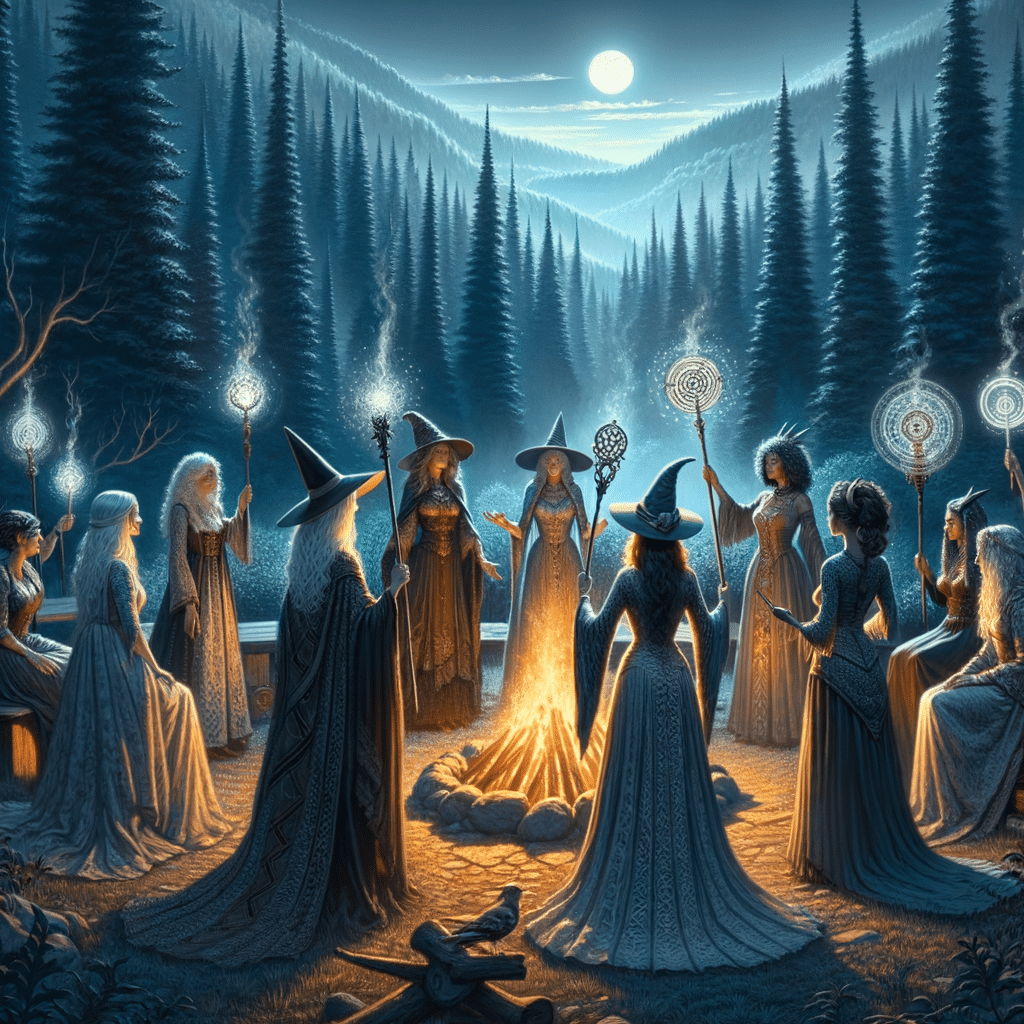
Many people believe that faeries, witches, and werewolves are real and that they are the hidden folk of Appalachia.
Nestled within the dense forests and mist-shrouded mountains of the Eastern United States lies a region steeped in mystery and folklore. Appalachia, with its deep valleys and ancient peaks, has long been a repository of American storytelling, with a particular penchant for tales of the supernatural. The cultural fabric of this region is woven with threads of superstitions and beliefs about hidden folk, including faeries, witches, werewolves, and other elusive populations. These tales are not mere fiction; they are the echoes of a region’s soul, the whispers of its ancestors, and the shadows of its wilderness. This video seeks to explore the rich tapestry of these beliefs, examining their origins, their manifestations, and their significance in the Appalachian cultural landscape.
Appalachia
Appalachia is more than just a geographical term; it’s an evocative word that conjures up images of rugged landscapes and resilient people. The Appalachian Mountains, among the oldest on the planet, extend from Newfoundland in Canada to central Alabama in the United States, forming a natural barrier that has historically isolated the region from surrounding areas. This isolation has fostered unique communities where storytelling thrives as a primary form of entertainment and education.
The Appalachians are home to a remarkable biodiversity, with thousands of species of plants and animals, many of which are found nowhere else on earth. This biodiversity is matched by cultural diversity; the region has been a crossroads for various ethnic groups, including Native Americans, Europeans, and Africans, each contributing to the region’s folklore. The old ways persist here more than in other places, with oral traditions and folk practices passed down through generations, often infused with a deep appreciation for the natural world and its unseen powers.
Faeries
In the hollows and hills of Appalachia, the belief in faeries is a tapestry woven from threads of Celtic and Native American lore. These little people or good folk are often envisioned as diminutive, ethereal beings with a close connection to the natural world. Appalachian faeries are thought to be guardians of the wilderness, sometimes helpful to those who respect their domains but quick to punish any slight.
The faeries of Appalachia are not the sanitized sprites of children’s tales but rather complex characters that reflect the hardships of life in the mountains. They are often capricious, as likely to bestow good fortune as they are to carry out pranks or enact retribution for offenses. Stories tell of faeries leading travelers astray with will-o’-the-wisps or rewarding kind-hearted souls with unexpected bounties. The belief in faeries has been a way for Appalachians to express a sense of wonder and caution regarding the natural world that sustains them.
It is believed that finding a small cross-shaped stone, known as a fairy cross, can protect the bearer from ill will and curses. These stones are especially prized and are thought to be gifts from the fae.
The fae are said to be most active during twilight, the time between day and night, when the veil between worlds is thinnest. Travelers are warned not to follow strange lights or music in the woods, lest they be led astray by the fae or trapped in their realm.
The Native American influence on Appalachian folklore is profound, with the Cherokee and other tribes contributing their understanding of the spiritual world. The Nunnehi, considered by the Cherokee to be a type of fae folk, are a particularly sacred aspect of this cultural exchange. The Nunnehi are described as a race of immortals who live in the highlands of the Southern Appalachians, invisible to the human eye and dwelling in places where the earth’s energy is said to be strong.
The tales of the Nunnehi are rich with themes of protection and intercession. These spirits are said to watch over the land and its people, sometimes interceding in human affairs, especially to protect the tribe from threats or to guide them in times of trouble. The Nunnehi are also said to be fierce warriors when provoked, and stories of their battles with negative forces are common. These tales highlight the Native American respect for the interconnectedness of life and the importance of living in harmony with the environment.
Witches
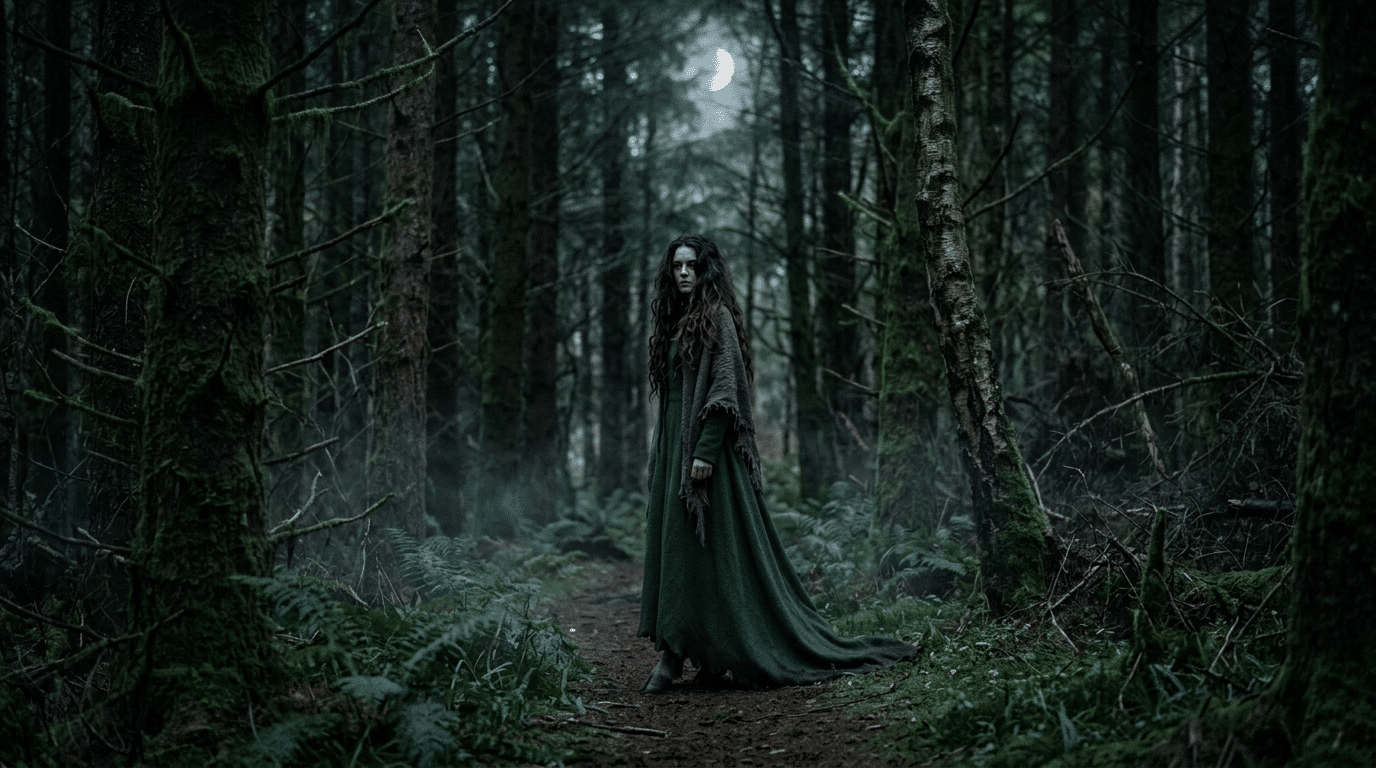
Witchcraft in Appalachia is a complex mix of African, Native American, and European practices, blending into a unique tradition that is deeply rooted in the region’s culture. Witches in Appalachian lore are often portrayed as possessing deep knowledge of herbal medicine, midwifery, and the supernatural. They are respected, feared, and sometimes revered figures who navigate the boundaries between the known and the unknown.
Witches, both good and evil and in between, are still believed to live in the woods alone or in communities and best approached with caution or avoided all together. These witches remain hidden although their presence is often known to locals.
Glass orbs, or witch balls, are hung in windows to ward off evil spirits and protect the home from a witch’s influence.
Barns and houses are sometimes adorned with hex signs, intricate patterns and symbols designed to protect against witchcraft.
One of the most chilling tales of witchcraft in the region is that of the Bell Witch, a legend that has haunted the folklore of Tennessee for over two hundred years. The story begins in the early 19th century with the Bell family, who were tormented by a malevolent force that could cause physical harm, speak with a disembodied voice, and even shape-shift. The entity, thought to be the spirit of a wronged woman, became known as the Bell Witch and is a central figure in Southern ghost stories. The tale encapsulates the pervasive fear of curses and the supernatural retribution that can befall those who are seen to cross societal or moral boundaries.
Monsters
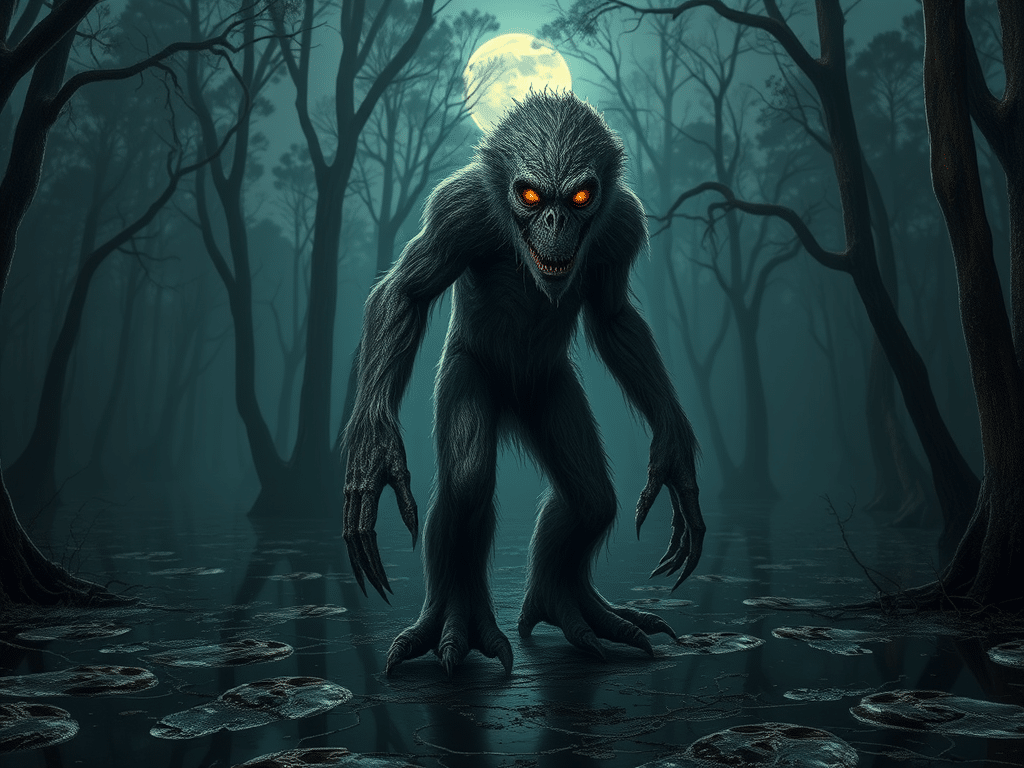
Werewolf legends in Appalachia are rooted in a confluence of European werewolf lore and Native American skin-walker tales. These stories involve individuals who can transform into wolves or other creatures, often under the influence of a curse or through the use of dark magic. In Appalachia, with its rugged terrain and vast expanses of wilderness, such creatures could easily hide from the human eye, lending a sense of credibility to the tales.
The isolation of the Appalachian region, with its dense forests and hidden caves, provides the perfect backdrop for stories of werewolves. The howl of a wolf, or even the sound of an unknown animal in the night, could easily be interpreted as evidence of a werewolf. These stories often serve as cautionary tales about the wildness within both nature and humanity and the thin line that separates the civilized world from the untamed.
Moreover, the Appalachian werewolf narratives often intersect with the theme of transformation, reflecting the harsh and changing conditions of life in the mountains. The werewolf’s ability to change from human to beast could symbolize the adaptability required to survive in such a challenging environment.
Appalachian folklore teems with creatures that defy explanation, a veritable bestiary of the bizarre. One such entity is the Mothman, a winged creature with glowing red eyes, first sighted in the mid-20th century in West Virginia. Described as a harbinger of doom, the Mothman has been linked to various disasters, and its legend has become a staple of cryptozoological study.
The Snallygaster, another creature of note, is a fearsome predator of legend, said to resemble a dragon with bird-like features. It swoops silently from the sky to carry off its unsuspecting prey. The tales of the Snallygaster serve to personify the dangers of the Appalachian wilds, embodying the fears of what might lurk in the unexplored regions of the mountains.
A host of other mysterious creatures are said to roam the Appalachian wilds. Giant thunderbirds with immense wingspans have been reportedly sighted in the skies. The hideous wampus cat, like a cougar with horned feet, is believed to stalk the forests of Appalachia. These cryptozoological creatures along with serpents and other magical beings populate the lore of the ancient mountains.
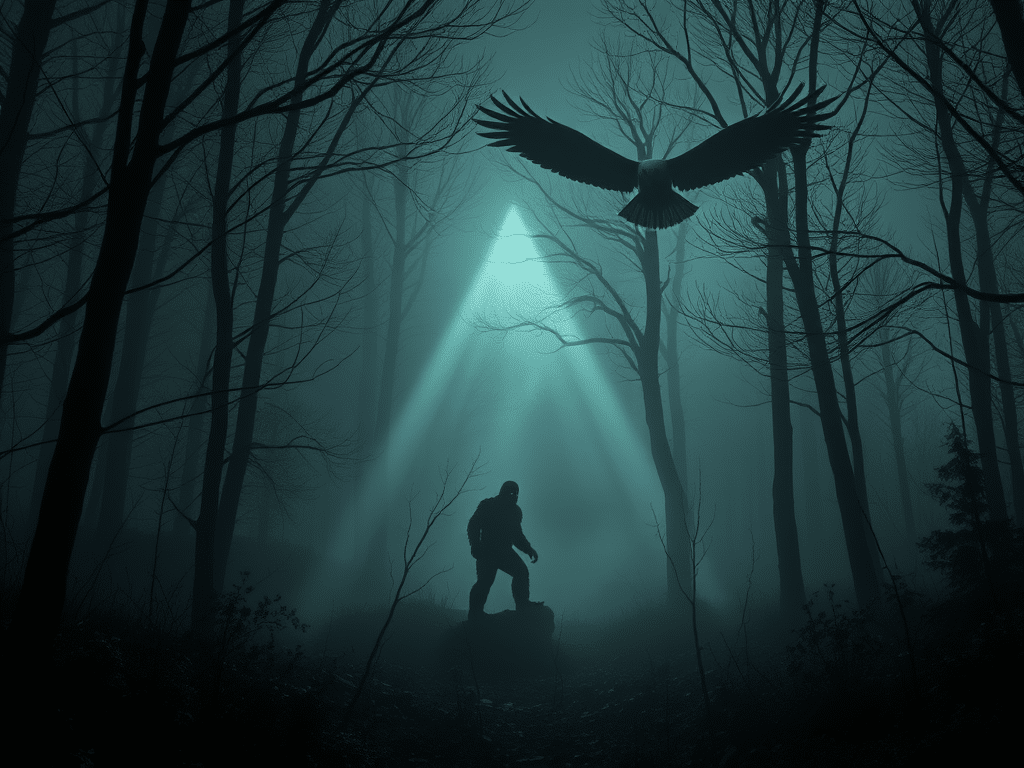
The Appalachian wildmen are another intriguing aspect of the region’s folklore. These creatures, also known as woodboogers or yowies, or simply Bigfoot, are described as large, hairy humanoids that emit strange howls and are said to dwell deep within the forests. While some believe that these wildmen are simply misidentified bears or other animals, others maintain that they are a separate species entirely. Sightings of these creatures have been reported throughout the Appalachians, and they continue to be a source of fascination and intrigue for many.
Appalachian stories are rife with tales of spirits and ghosts. Phantom hitchhikers, spectral animals, and lost travelers are said to haunt remote roads and trails.
Folklore
The myriad superstitions and beliefs about hidden folk in Appalachia are not mere relics of a bygone era; they are living aspects of the region’s cultural identity. These stories fulfill several functions: they explain the mysterious and the unknown, they enforce community norms through cautionary tales, and they provide a means of social cohesion, connecting individuals through shared narratives.
Moreover, these beliefs reflect the interaction between humans and their environment. They underscore a recognition of nature’s power and mystery, and they embody the complexities of human psychology—our fears, our desires, and our need for meaning. The hidden folk of Appalachia represent the unseen forces that Appalachians have sensed in the forests and mountains that shape their lives, as well as the internal struggles and triumphs of the human spirit.
Conclusion
Appalachia’s folklore, rich in tales of hidden folk, is as enduring as the mountains themselves. From the mischievous faeries and the noble Nunnehi to the sinister Bell Witch and the elusive werewolves, these beings speak to the heart of Appalachian identity. They embody the fears and hopes of a people living in close communion with a land that is both beautiful and daunting.
These stories are more than just entertainment; they are a cultural legacy, a way of understanding the world, and a testament to the power of the human imagination. As Appalachia continues to evolve, so too will the tales of its hidden folk, adapting to new circumstances while remaining rooted in the ancient soil of the mountains. In the end, they provide a window into the soul of Appalachia, revealing a world where the veil between the known and the unknown remains thin, and the whispers of the past are never far from the ears of the present.
Leave a Reply